
BuddhistCatholicContemplativeEvangelicalGeneral ChristianHinduJewishLatter-day SaintMuslimNew VisionsProgressive Christian
Beliefs
- Buddhist
- Catholic
- Contemplative
- Evangelical
- General Christian
- Hindu
- Jewish
- Latter-day Saint
- More Voices
- Muslim
- New Visions
- Pagan
- Progressive Christian
Topics
- Religion News
- Food and Religion
- Sports and Religion
- Religious Art
- Religious Music and Entertainment
- Religious Events
- History and Religion
- Style and Religion
- Politics and Religion
- Women in Religion
- Recreation Outdoors and Religion
- Business Finance and Religion
- Careers Workplace and Religion
- Education and Religion
- Family Parenting and Religion
- Health Fitness and Religion
- Home and Religion
- Relationships and Religion
- Technology and Religion
- Travel and Religion
Columnists
- Buddhist Columnists
- Business Finance and Religion Columnists
- Careers Workplace and Religion Columnists
- Catholic Columnists
- Contemplative Columnists
- Education and Religion Columnists
- Evangelists Columnists
- Family Parenting and Religion Columnists
- General Christian Columnists
- Health Fitness and Religion Columnists
- Hindu Columnists
- History and Religion Columnists
- Home and Religion Columnists
- Jewish Columnists
- More Voices Columnists
- Latter Day Columnists
- Muslim Columnists
- New Visions Columnists
- Nonreligious Columnists
- Pagan Columnists
- Politics and Religion Columnists
- Progressive Columnists
- Recreation Outdoors and Religion Columnists
- Relationships and Religion Columnists
- Religion News Columnists
- Religious Art Columnists
- Religious Events Columnists
- Religious Music and Entertainment Columnists
- Sports and Religion Columnists
- Style and Religion Columnists
- Technology and Religion Columnists
- Travel and Religion Columnists
- Women in Religion Columnists
Resource Library
- 2026 Calendar
- Library of World Religions
- The 100 Most Holy Places on Earth
- Patheos Answers
- Podcasts
- Videos
- Faith Leaders Database
- Anglican Episcopalian
- Bahai
- Baptist
- Buddhism
- Christianity
- Confucianism
- Eastern Orthodoxy
- Hinduism
- Holiness and Pentecostal
- ISKCON
- Islam
- Judaism
- Lutheran
- Methodist
- The Church of Jesus Christ of Latter-day Saints
- New Age
- Paganism
- Presbytarian and Reformed
- Protestantism
- Religion Behind the Scenes
- Roman Catholic
- Scientology
- Shia Islam
- Sikhism
- Sufism
- Sunni Islam
- Taoism
- Zen
- See all religions
Research Tools
 Ad-Free & Subscriber Log-In Subscription Support
Ad-Free & Subscriber Log-In Subscription Support
Follow Patheos 

- Trending:
- Forgiveness
- |
- Marriage
- |
- Consciousness
- |
- Death Penalty
- |
- Election
- |
- Halloween

- Home
- Progressive Christian
- The Reformation is Over: Long Live the Eco-Reformation!
The Reformation is Over: Long Live the Eco-Reformation!
Last updated on: November 7, 2017 at 9:01 am by Leah D. Schade
The Reformation is Over: Long Live the Eco-Reformation! 2017-11-07T09:01:57-04:00 Leah D. Schade
Patheos Explore the world's faith through different perspectives on religion and spirituality! Patheos has the views of the prevalent religions and spiritualities of the world.
The celebration of the 500th anniversary of the Protestant Reformation is over. Now what? It’s time for an ‘Eco-Reformation’!
The strains of “A Mighty Fortress” have faded and the images of Luther nailing the 95 Theses to the door in Wittenberg have been shelved for another year. On October 29, 2017, Protestant churches around the world marked the 500th anniversary of the Reformation by wearing red, singing Luther’s hymns, hosting special lectures and forums, and holding joint services of reconciliation with their Catholic neighbors. This past year has been a time of looking back on the significance of that era, with a critical assessment of the good and not-so-good fall-out from that tumultuous period (persecution of Anabaptists and the 30 Years War, not so good).
The “Next Reformation”
Now it’s time to look ahead to “the next reformation.” Brian McClaren has written an excellent piece contrasting the differences between the historic Reformation, and the reformation that’s needed for the next 500 years. What resonated for me as an ecotheologian was his recognition of the need to address the ecological crisis of this planet:
The next reformation is coming to be during a struggle not to defeat or oppress other religions, but to learn to live peaceably as neighbors, and more than neighbors: allies … allies in a struggle against forces that threaten all of human existence – including environmental degradation due to greed and ignorance, the proliferation of weapons – especially weapons of mass destruction, and the growing gap between super-rich elites and everyone else. . . . The last reformation argued which church had the best guarantee to evacuate souls to heaven after death. The next reformation seeks to build a movement to protect God’s beloved creation, including all people (no exceptions), from human sin before death.
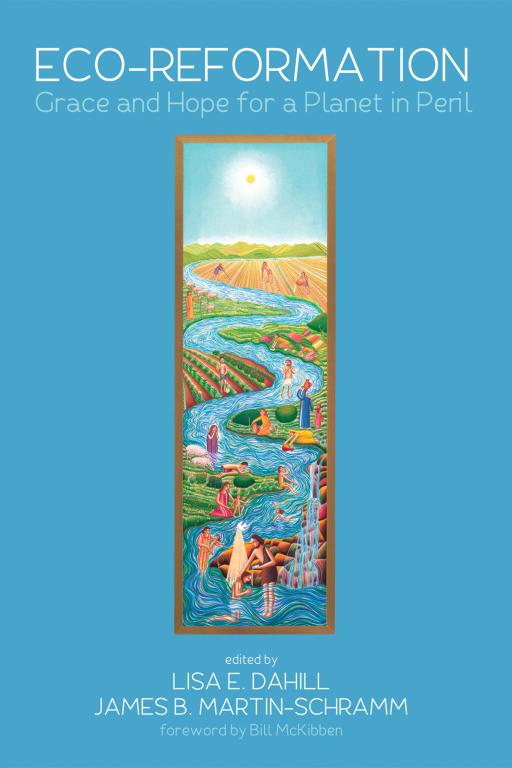
To help us move into this next reformation, sixteen Lutheran scholars have written a book about the need for an ecological reformation, and it should be required reading for all Christians – Protestant and Catholic alike.
Eco-Reformation: Grace and Hope for a Planet in Peril
Eco-Reformation: Grace and Hope for a Planet in Peril contains important theological resources as well as fresh insights for the critical task of healing our planet. As David Rhoads declares in the opening chapter:
We need a new Copernican revolution: from being human-centered to being creation-centered; from focusing on God’s relationship with humans alone to focusing on God’s relationship with all of creation; from fostering the extreme individualism of our culture to fostering the common good of the planet. We humans need to see ourselves embedded in the rest of nature and find our proper place and role in it – both our responsibilities and our limitation. (4-5)
Building bridges between faith and science
Finding our proper place means learning from and working alongside science to understand the natural world. Every author in Eco-Reformation either implicitly or explicitly makes the case that the divisions between science and religion are not only unhelpful, they are downright harmful when it comes to finding partners for tackling climate change, pollution, eco-racism, species extinction, and the nexus between socioeconomics and environmental issues. Ernest L. Simmons is one of many authors who make the case for bridging the gap between Christianity and science. As a professor at a Lutheran college, he insists that “all education is environmental education.” He calls for schools in the liberal arts tradition to form critical, courageous citizens for global/climate and local ecological leadership that engages the scientific and social complexities of our time. Similarly, Lisa E. Dahill describes a process of “rewilding” Christian spirituality that involves healing the rift between religion and science so that each may be in conversation with, and enhanced by, the other.
Drawing on the Protestant Reformation and Lutheran theology
All the authors use the paradigm shift of the 16th century Protestant Reformation to frame the shift that is needed today for a clean-energy future and an environmentally-sustainable reformation of global systems. Bill McKibben, writer of the book’s foreword, insists that we must “switch from [a] world of centralized energy to a distributed model that depends on local sun and wind. It’s not entirely different from the move from a central church to the localized autonomy of Protestantism,” (ix).
To this end, Norman Habel’s contribution was to write a new set of critiques (á la Martin Luther) of our contemporary society and its power-structures: “Ninety-Five Eco-Theses.” Meanwhile, Wanda Deifelt’s essay frames the environmental question within the concepts of the theology of the cross and Creation as God’s “mask.” And Terra Rowe’s chapter critically examines the way the Lutheran concept of “free grace” has been commodified by the capitalist economy.
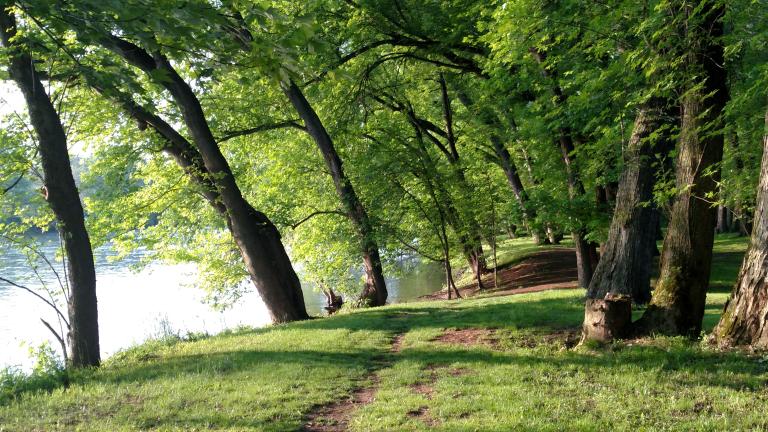
Photo credit: Leah D. Schade
Another step on the road to reconciliation between Lutherans and Catholics
The essays also reflect the ongoing reconciliation process between Lutherans and Catholics. The two former ecclesiastical enemies have already made great strides toward greater visible unity through the joint document released in 2015 entitled “Declaration on the Way: Church, Ministry and Eucharist.” Eco-Reformation could serve as further stimulus for finding common ground – literally the ground of this planet which both denominations have taken bold steps to declare sacred and worthy of environmental protection.
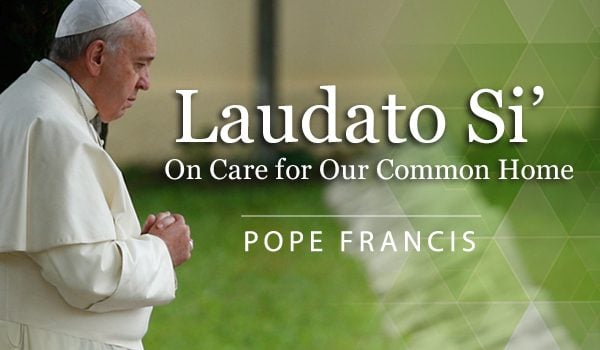
In fact, of the essays in this volume, six of them – fully one-third – contain references to Pope Francis’ encyclical Laudato Sí, the papal letter concerning ecology and caring for God’s Creation. H. Paul Santmire, in his essay “The Two Voices of Nature,” celebrates the fact that “all revisionist Lutherans can now work in a new ecumenical partnership with the Church of Rome, in a way that would have probably shocked Luther himself,” (74).
This is not to say that the authors in this volume take an uncritical stance in their eco-ecumenical engagement, however. Terence Fretheim notes, for example, that the encyclical relies on traditional images of God, which are neither true to the biblical text, nor helpful in deconstructing paradigms of power and control.
Tackling the “rough terrain”
In fact, none of the authors shy away from entering what Cynthia Moe-Lobeda calls “rough terrain” that necessitates critiques of certain aspects of religion that have, in fact, contributed to our ecological crisis. Anthropocentric theology, for instance, is often named as the source of a worldview that privileges human “progress” over environmental sustainability. Scholars such as Larry Rasmussen also shine a light on the ways in which American culture, neoliberal capitalism, and the abuses of rights-depriving governments have led to our current ecologically-bereft state.
How could your church use this book?
Congregations may consider using Eco-Reformation for Lenten small group studies, reading two or three chapters a week over the course of five weeks. For instance, Robert Saler’s chapter on Joseph Sittler would pair well with James Martin-Schramm’s provocative essay on Dietrich Bonhoeffer in light of climate change. He notes that Bonhoeffer’s call for direct political action by the church against the Nazi state is exactly what is necessary for combatting the forces that drive climate change today. In light of President Trump’s decisions to roll back environmental regulations and withdraw the U.S. from the Paris Climate Accord, civil disobedience of the kind Bonhoeffer practiced may become even more necessary.
Preach the Eco-Reformation!
Preachers can draw on Eco-Reformation for a sermon series for Epiphany, Lent, or during the season of Pentecost. Barbara Rossing’s essay is specifically geared to preaching about apocalyptic texts during this time of ecological crisis. She urges preachers to “open up the space between denial and despair” while lifting up the biblical image of the tree of life as one of healing and renewed community (151 – 157). In fact, trees are a recurring theme throughout this collection – from the “tree” of the crucifixion, to Wangari Matthai planting trees in Africa where blood and destruction had reigned. This last is highlighted in Victor Thasiah’s powerful essay describing the role of the Lutheran church in Rwanda helping to restore democracy through a reforestation program after the genocide of the 1990’s.
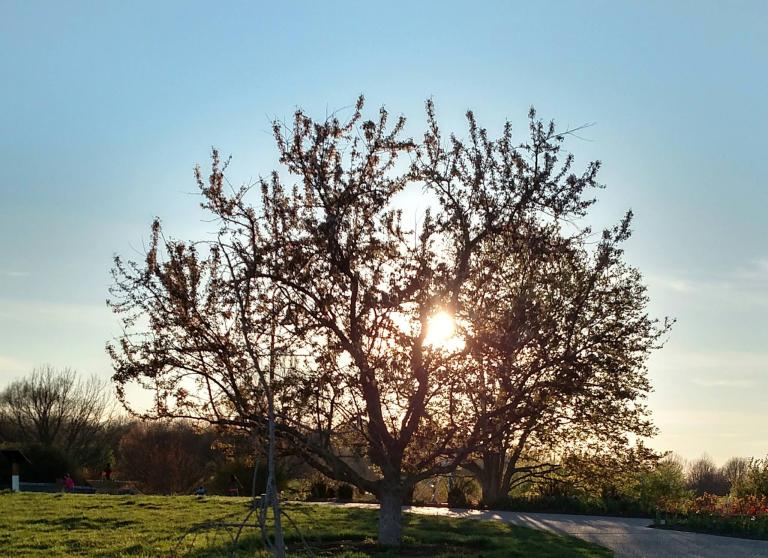
Photo credit: Leah D. Schade
Eco-Reformation contains leaves for the “healing of the nations” (Rev 22:2). From Benjamin Stewart’s chapter reconsidering the liturgical role of water in the eco-reformation, to Aana Marie Vigen’s essay reminding us of the importance of addressing race issues as they pertain to environmental justice, this book empowers our faith to engage in action on behalf of this planet and those most vulnerable. The essays in this book can be viewed as ecotheological “antibodies” within a system that is suffering a sickness unto death.
Eco-Reformation: Grace and Hope for a Planet in Peril is edited by Lisa E. Dahill and James B. Martin-Schramm. Cascade Books, Wipf and Stock Publishers, 283 pp., $36.00
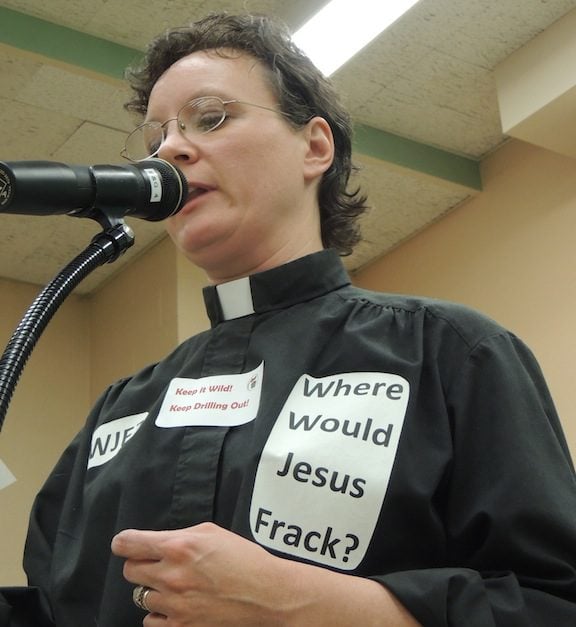
Leah D. Schade is the Assistant Professor of Preaching and Worship at Lexington Theological Seminary (Kentucky) and author of the book Creation-Crisis Preaching: Ecology, Theology, and the Pulpit (Chalice Press, 2015).
Twitter: @LeahSchade
Facebook: https://www.facebook.com/LeahDSchade/.
Read more of Leah’s ecotheological book reviews:
Dar Tellum: 1970s Children’s Book about Climate Change
Flight Behavior and Resisting Structural Evil, a Joint Book Review
Previous Post

November 2, 2017
Webinar: Preaching Controversial Issues
Next Post

November 6, 2017 On the 8th day, God Created Guns: A Reading from the Gun Bible
Browse Our Archives
Select a Category Academy of Homiletics Addiction Advent AI (Artificial Intelligence) Animals Apocalypse Appalachia Ash Wednesday Baptism Bible Black Lives Matter Blade Runner Book review Children in church Christian Nationalism Christian/Islamic relations Christmas Church Clergy Climate change COVID-19 Creation Data Centers Death penalty Devotional Dialogue Doubt Earth Day Easter Ecofeminism EcoPreacher 1-2-3 ELCA ELCA Youth Gathering Election Environment/ecology Epiphany Faith Faith and Politics Feminism Film review Food Food and Faith Forgiveness Fracking Good Friday Good Omens Grief Gun violence Holy Humor Sunday Holy Week Howard Thurman ICE Immigration Indigenous wisdom Interview Jesus Kentucky Lafayette High School Marching Band Leadership Lent LGBTQIA+ Marching band Martin Luther Martin Luther King Jr. Mary Maundy Thursday Michael Sheen Mother of Jesus Nature New Year's Eve Palm Sunday Parables Pentecost Poem, Poetry Politics Poor People's Campaign Pop culture Prayers Preaching Progressive Christianity Public theology Purple Zone Racism and White Privilege Religion Religion and environment Religion and politics Religion and pop culture Religion and violence Rev. Nelson Rabell Gonzalez Sermons Spanish language resources for preaching Technology Thanksgiving Theological education theology Trees Trump Uncategorized Vegan War Women and religion Workshop Worship
Select a Month October 2026 September 2026 July 2026 June 2026 May 2026 April 2026 March 2026 February 2026 January 2026 December 2025 November 2025 October 2025 September 2025 May 2025 April 2025 March 2025 February 2025 January 2025 December 2024 November 2024 October 2024 September 2024 August 2024 July 2024 June 2024 May 2024 April 2024 March 2024 February 2024 January 2024 December 2023 November 2023 October 2023 September 2023 August 2023 July 2023 June 2023 May 2023 April 2023 March 2023 February 2023 January 2023 December 2022 November 2022 October 2022 August 2022 July 2022 June 2022 May 2022 April 2022 March 2022 February 2022 January 2022 December 2021 November 2021 October 2021 September 2021 August 2021 July 2021 June 2021 May 2021 April 2021 March 2021 January 2021 December 2020 November 2020 October 2020 September 2020 August 2020 July 2020 June 2020 May 2020 April 2020 February 2020 January 2020 December 2019 November 2019 October 2019 September 2019 August 2019 July 2019 June 2019 May 2019 April 2019 March 2019 January 2019 December 2018 November 2018 October 2018 September 2018 August 2018 July 2018 June 2018 May 2018 April 2018 March 2018 February 2018 January 2018 December 2017 November 2017 October 2017 September 2017 August 2017 July 2017 June 2017 May 2017 April 2017
Follow Us!
TAKE THE
Religious Wisdom Quiz
In which garden did Jesus pray before His arrest?
Select your answer to see how you score.
Paradise Gethsemane Eden Golgotha
Books by This Author Books by Leah D. Schade
Related posts from EcoPreacher

Love Your Neighbor – Including Earth-Kin: Lev. 19,...

Preaching About Climate Change: What Clergy Need Most

Eco-Wedding Liturgy: Creation-Centered Ideas for Weddings
An Ecological Stations of the Cross, 2026
TRENDING AT PATHEOS Progressive Christian

What Being a Modern-Day Apostle Means to Me
In my last column, I discussed the ins and outs of modern-day...

Did Ancient China Once Worship the God of...
Across human history, a common thread weaves through the origins of the...

Love Your Neighbor – Including Earth-Kin: Lev. 19,...
God’s command to love your neighbor means acting in an ethical and...

Lead a Church Study of “Jesus and Lao...
Guest writer Jack Thomas (The Irreverent Reverend) reflects on leading his church...

Pastoral Wisdom for Responding to Sermon Pushback
Getting sermon pushback on your social justice sermon? Learn practical, Proverbs-based strategies...

Principles for Understanding the Apostolic Ministry Today
Whenever people discover that my formal ministry title is "apostle," as in...
view all Progressive Christian blogs
Ad-Free & Subscriber Log-In Subscription Support
- About Us
- 2026 Calendar
- Videos
- Podcasts
- Library of World Religions
- Faith In Media Tracker
- Advertise With Us
- Write for Us
- Privacy Policy
- Terms of Service
- Do Not Sell My Data
- Contact Us
- Radiant Digital
- Manage Newsletter Subscriptions
- Unsubscribe From Notifications
- Sitemap
Copyright 2008-2026, Patheos. All rights reserved.
Subscription Support Ad-Free & Subscriber Log-In
Follow Patheos