
BuddhistCatholicContemplativeEvangelicalGeneral ChristianHinduJewishLatter-day SaintMuslimNew VisionsProgressive Christian
Beliefs
- Buddhist
- Catholic
- Contemplative
- Evangelical
- General Christian
- Hindu
- Jewish
- Latter-day Saint
- More Voices
- Muslim
- New Visions
- Pagan
- Progressive Christian
Topics
- Religion News
- Food and Religion
- Sports and Religion
- Religious Art
- Religious Music and Entertainment
- Religious Events
- History and Religion
- Style and Religion
- Politics and Religion
- Women in Religion
- Recreation Outdoors and Religion
- Business Finance and Religion
- Careers Workplace and Religion
- Education and Religion
- Family Parenting and Religion
- Health Fitness and Religion
- Home and Religion
- Relationships and Religion
- Technology and Religion
- Travel and Religion
Columnists
- Buddhist Columnists
- Business Finance and Religion Columnists
- Careers Workplace and Religion Columnists
- Catholic Columnists
- Contemplative Columnists
- Education and Religion Columnists
- Evangelists Columnists
- Family Parenting and Religion Columnists
- General Christian Columnists
- Health Fitness and Religion Columnists
- Hindu Columnists
- History and Religion Columnists
- Home and Religion Columnists
- Jewish Columnists
- More Voices Columnists
- Latter Day Columnists
- Muslim Columnists
- New Visions Columnists
- Nonreligious Columnists
- Pagan Columnists
- Politics and Religion Columnists
- Progressive Columnists
- Recreation Outdoors and Religion Columnists
- Relationships and Religion Columnists
- Religion News Columnists
- Religious Art Columnists
- Religious Events Columnists
- Religious Music and Entertainment Columnists
- Sports and Religion Columnists
- Style and Religion Columnists
- Technology and Religion Columnists
- Travel and Religion Columnists
- Women in Religion Columnists
Resource Library
- 2026 Calendar
- Library of World Religions
- The 100 Most Holy Places on Earth
- Patheos Answers
- Podcasts
- Videos
- Faith Leaders Database
- Anglican Episcopalian
- Bahai
- Baptist
- Buddhism
- Christianity
- Confucianism
- Eastern Orthodoxy
- Hinduism
- Holiness and Pentecostal
- ISKCON
- Islam
- Judaism
- Lutheran
- Methodist
- The Church of Jesus Christ of Latter-day Saints
- New Age
- Paganism
- Presbytarian and Reformed
- Protestantism
- Religion Behind the Scenes
- Roman Catholic
- Scientology
- Shia Islam
- Sikhism
- Sufism
- Sunni Islam
- Taoism
- Zen
- See all religions
Research Tools
 Ad-Free & Subscriber Log-In Subscription Support
Ad-Free & Subscriber Log-In Subscription Support
Follow Patheos 

- Trending:
- Forgiveness
- |
- Marriage
- |
- Consciousness
- |
- Death Penalty
- |
- Election
- |
- Halloween

- Home
- Progressive Christian
- Preserving the Holy Remnant: Kentucky Natural Lands Trust
Preserving the Holy Remnant: Kentucky Natural Lands Trust
Last updated on: December 6, 2017 at 10:10 am by Leah D. Schade
Preserving the Holy Remnant: Kentucky Natural Lands Trust 2017-12-06T10:10:31-04:00 Leah D. Schade
Patheos Explore the world's faith through different perspectives on religion and spirituality! Patheos has the views of the prevalent religions and spiritualities of the world.
Preserving the Holy Remnant: Kentucky Natural Lands Trust
The first thing I noticed was the sweet, pungent aroma of sunset-colored leaves in autumn. The trees breathing out their moist, oxygen-rich exhalation. Moss-carpeted rocks and soil draped in emerald beauty, giving off their earthy scent.
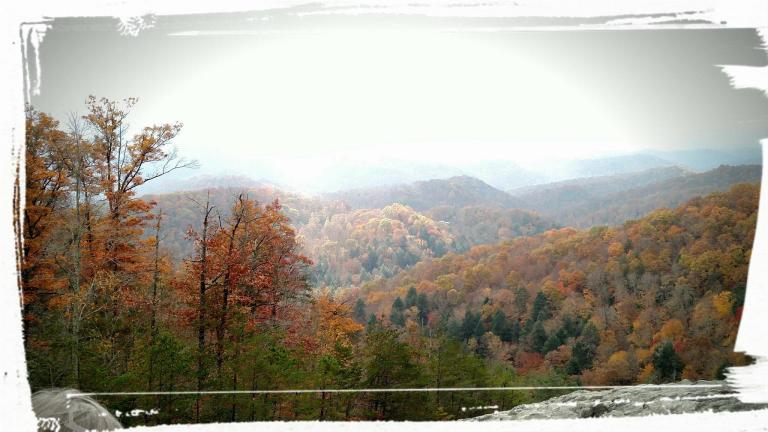
Sun breaking through clouds at Blanton Forest, Pine Mountain, Ky. Photo credit: Leah D. Schade. All rights reserved.
Breathe in that air!
As we walked with our guides into Blanton Forest Preserve on Pine Mountain, Kentucky, my 10-year-old son Benjamin and I breathed in the air and marveled at the array of life before us. Blanton Forest, near Harlan, is the largest tract of old-growth forest remaining in the Commonwealth of Kentucky. In 1995 a group of friends discovered the rich biodiversity of these woods and decided to work to protect the land. This was the start of Kentucky Natural Lands Trust, a state-wide nonprofit committed to preserving the last remaining natural places in the state. Their goal is to protect Kentucky’s rich biodiversity and ensure a future that will continue to inspire new generations of environmental stewards.
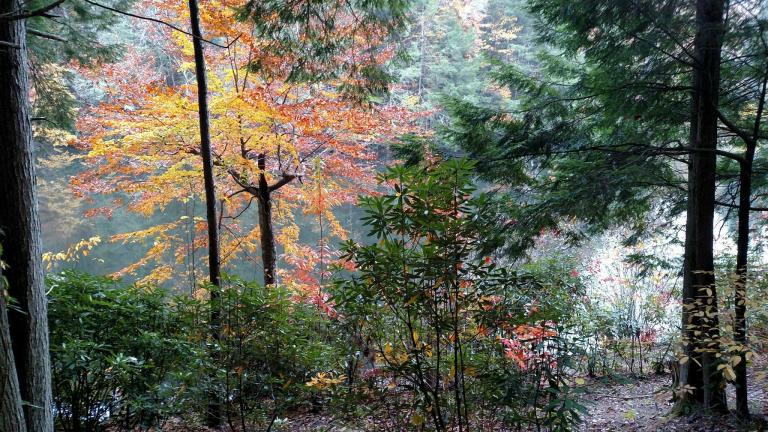
Lake at Blanton Forest, Pine Mountain, Ky. Photo by Leah D. Schade. All rights reserved.
Entering the forest cathedral
We hiked into the 3,510-acre preserve with KNLT’s Executive Director, Hugh Archer, Program Director, Donna Alexander, and Board Member, Laurie Keller. It was as if we were making a pilgrimage into a place of holiness. 350-year-old trees arched over us like the vaulted ceiling of a sanctuary. A stream with darting minnows (including some endangered species) flowed down the mountain as we hiked up, its fresh waters reminding me of the source of my own baptism. The congregants were rocks and boulders robed in lichen, spiders weaving their altar linens, and rhododendrons kneeling in prayer – all of them hushed and reverent.
We were walking on holy ground.
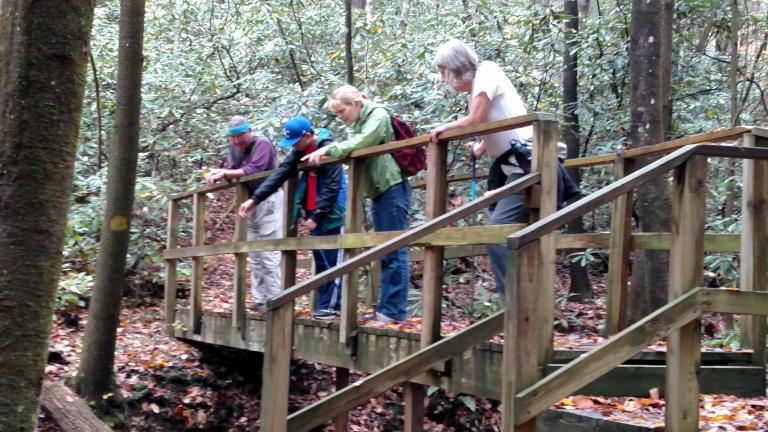
Hugh Archer, KNLT Exec. Dir.; Benjamin Schade; Donna Alexander; Prog. Dir.; Laurie Keller, Board Mem.
Pine Mountain is home to a mixed mesophytic forest, which means that it is one of the most diverse temperate forests in the world. It’s the largest conservation effort in Kentucky’s history, where native plants and wildlife are allowed to live without threat of chainsaws, bulldozers, or drills. No hunting, fishing, or trapping will threaten the animals. The way God’s hand fashioned this land is the way it will remain. Human visitors are permitted, but are to leave no trace of their visit when they’re gone.
An Eden oasis
As we walked, I kept thinking of the garden paradise established by God for human beings in the first two chapters of Genesis. For my son and me, it was like discovering an Eden oasis right here in Kentucky. And yet when we looked at the map of coal mining sites lining the ridge on both sides, it was a grim reminder that the sanctity of this place is hemmed in by relentless human pressure all around.
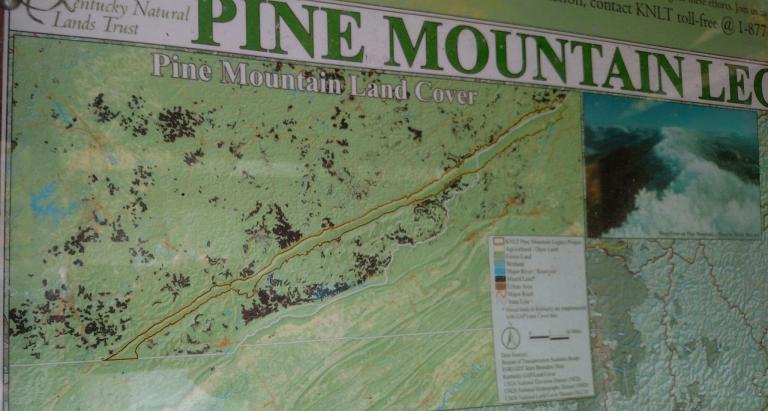
Notice all the mining sites marked in brown on both sides of the Pine Mountain corridor.
Just a few miles beyond this sacred place is the other side of the Eden story – where the ground is cursed and human beings are engaged in constant battle with the Earth from which they were brought forth.
A “holy remnant”
Pine Mountain is a critical refuge and migratory route that runs through a region with extensive resource extraction. We might say that this land is a “holy remnant” of what God had created. In the Hebrew Bible, the people of Israel were attacked, their land and temple destroyed, and their people taken away as slaves into foreign lands. The ones who survived were called a “holy remnant.” The word remnant means “what is left,” particularly what may remain after a battle or a great calamity. Although remnants are often regarded only as worthless scraps, God assigned high value to those who were left. And that remnant had a holy purpose – to carry the memories of their people, and to rebuild for the next generation.
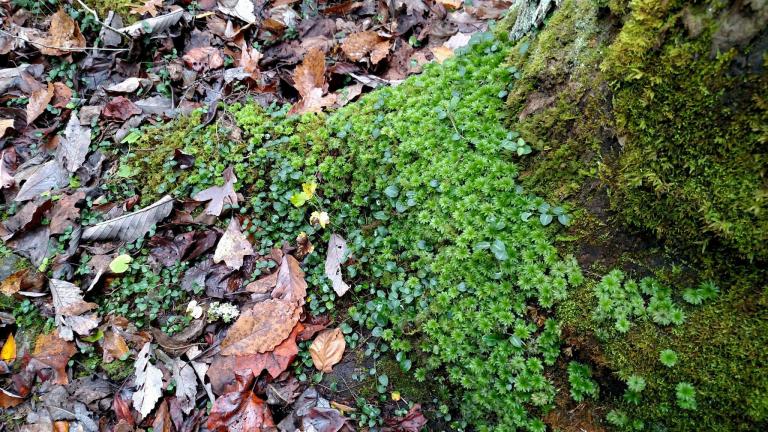
Cedum growing on tree trunk, Blanton Forest. Photo by Leah D. Schade. All rights reserved.
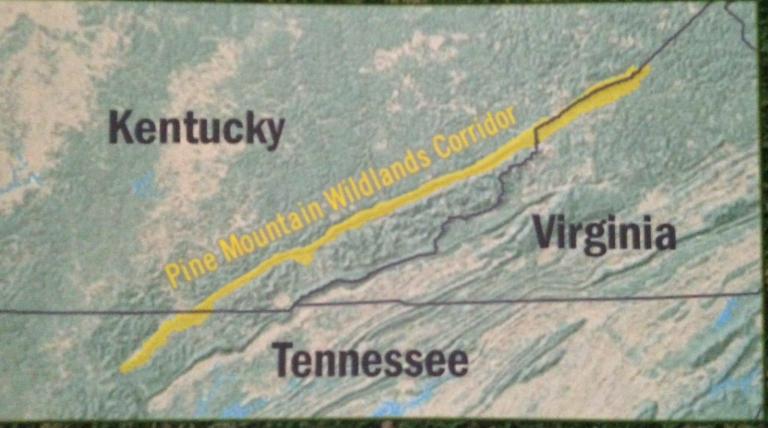
Pine Mountain is part of a “holy remnant” of the untouched forests that remains after humans have ravaged the land since the Industrial Revolution. The ridge is a 125-mile intact natural lands corridor in the midst of coal country stretching from Virginia through Kentucky to Tennessee. There are nearly 100 species of rare plants and animals known to live on the mountain, some found nowhere else on the planet.
Why donate to a natural lands trust?
Sitting at dinner the evening before our hike, Hugh explained that their efforts of preservation are made possible by the thousands of donors who give their money for the purpose of saving these holy remnants. I asked Hugh why people decide to give their money to preserve these places? Is it for name recognition? Ego? Why do they donate to KNLT?
“Most of them don’t want their name listed, so ego is not a big factor,” Hugh clarified. “They want to preserve what’s left of these old-growth forests. Many donors have roots in Kentucky. They want to give something back.”
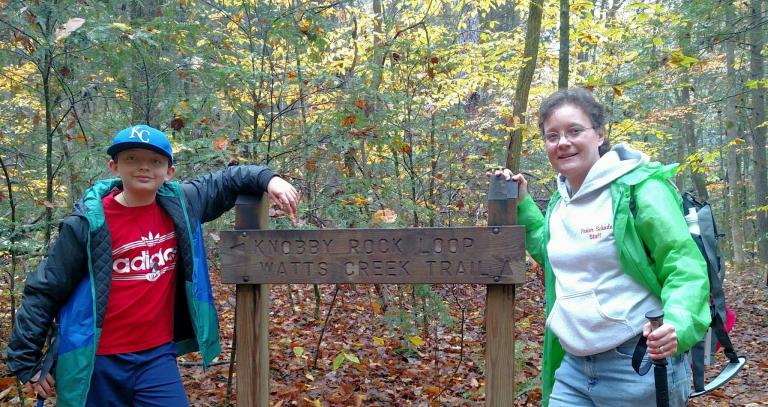
Leah Schade and son Benjamin, Blanton Forest, Ky.
Donna noted that many of the donors say, “Even if I never get to go there, just knowing that the land exists and that is protected is enough.”
“Many of them are like us,” added Laurie. “They wandered in the woods as kids, turning over logs to see what’s underneath.”
I was one of those kids.
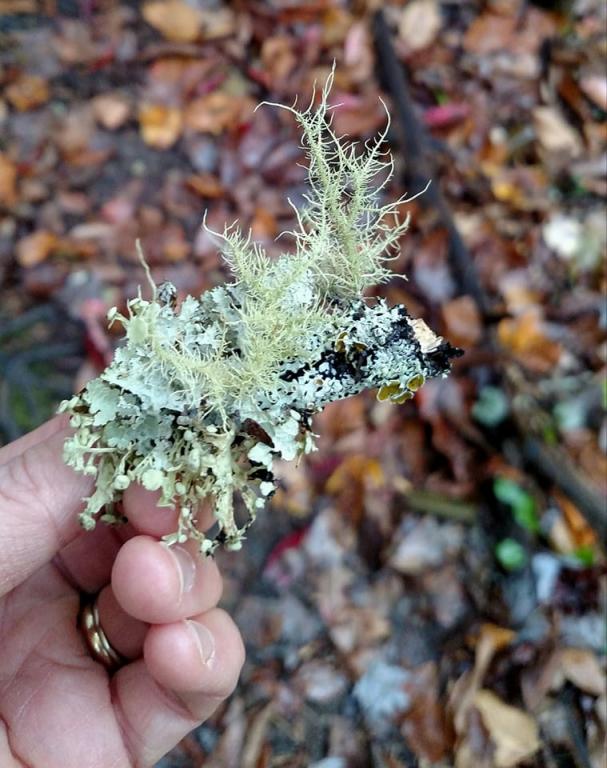
Feathery lichen. Blanton Forest, Ky. Photo credit: Leah D. Schade. All rights reserved.
The woods of my childhood were the other “church” I attended in my youth. I spent countless hours in the patch of woods near my house building forts, living a secret life of adventure away from grown-up eyes. Some of my best friends were the trees where I would climb to sit among the branches reading Ray Bradbury and C. S. Lewis books. Yes, I was a “tree-hugger.” And the trees hugged me back, cradled me, even. This was my hide-out from mean kids, my sanctuary from a chaotic home life, and the sacred space where my buddies and I would meet for hours on end of unstructured, imaginative play.
Then one day the bulldozers appeared.
Yellow tape cordoned off the trees silently awaiting their execution. We watched in horror as the wooden sentries of our youth were ripped up from their roots. In less than a day our childhood had been razed to a flat, brown expanse. They would be building houses for humans over the place where we had played.
As a young person, I mourned the losses of these natural places as I had my own grandparents.
Adults’ total disregard for the “feelings” of the trees and animals had caused me much pain and sadness as a child. I instinctively felt an intimate connection between these sacred places in nature and my own small self, a connection that felt deeply violated whenever I helplessly witnessed the destruction of these wild landscapes. I was angered and frustrated to tears that I could do nothing to anticipate or speak out against the planned decimation of my favorite wooded places, much less prevent their deaths.
When I would try to talk to the adults in my life about my concerns, they would gently explain that the rights of those who owned the land superseded the needs of the land itself, not to mention those of a little tomboy. No argument I could make for the “rights” of the land and its other-than-human occupants withstood the argument which ended all discussion: money. End of conversation.
But it’s not the end of the conversation for the One who created the land.
Chapter 3 of Genesis shows us that God set out limits for human beings in how they were to exist in the garden. They were forbidden from eating the fruit of the tree of knowledge. For the good of Adam and Eve, for the good of the tree, for the good of the entire garden, God essentially said: “This far and no farther.” God established a boundary for the mutual protection of the relationship between humankind and the created world.
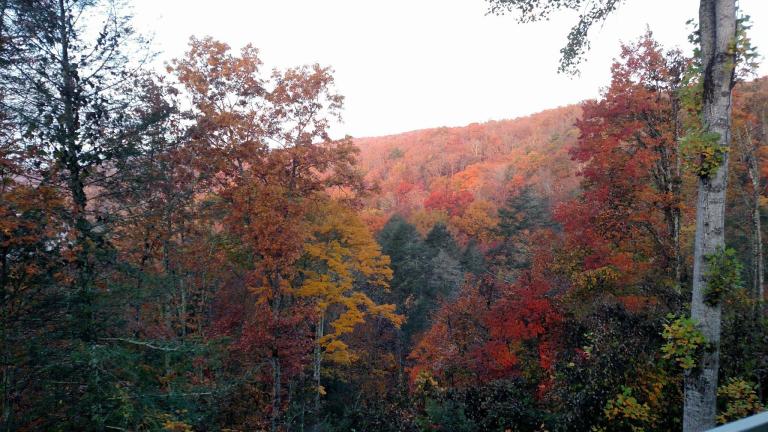
Pine Mountain Ridge in autumn, Kentucky. Photo credit: Leah D. Schade. All rights reserved.
Did the original humans respect these boundaries? No.
They did not obey the limits God set for them. They ignored the warnings, flouted the rules, and crossed the line. There’s almost a feeling of entitlement you sense from Eve and Adam’s rationalization of their disobedience. It’s as if they’re saying, “This is our garden after all. God gave it to us. We should be allowed to do anything we want with it. Look, the fruit is good to eat. The sale of the wood and the resources in the ground will enrich us. As the Tempter said, God is just afraid that we’ll know what God knows. And why shouldn’t we know?”
Now we know.
We are learning that there are limits as to what Earth can withstand. There are boundaries that need to be established and respected. But we have done more than just cross the line. We have decimated the entire garden. And we are now living with the consequences of a planet whose climate and landscapes are changing too rapidly for the atmosphere and ecosystems to adapt.
That’s one of the reasons the preservation of Pine Mountain is so necessary.
It’s an example of “resilience modeling,” meaning that the various altitudes within the preserve allow flora and fauna to move freely to higher elevations as the temperature warms.
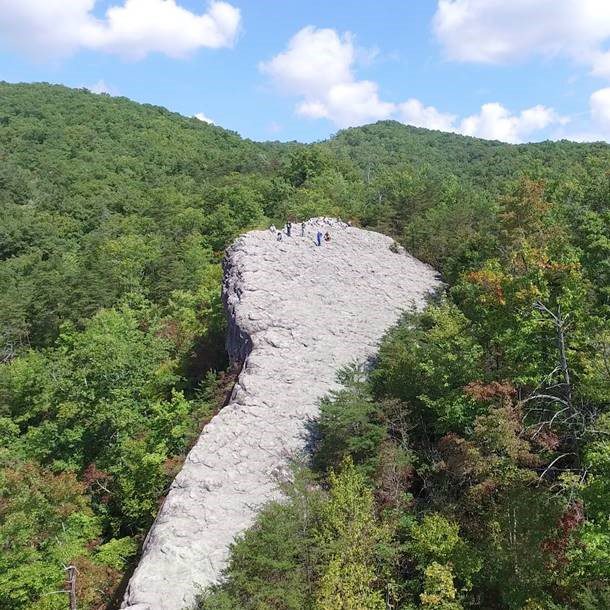
Knobby Rock at Pine Mountain, Ky. Photo credit: Bill Lancaster. All rights reserved. Used with permission.
Blanton Forest and other tracts within the corridor will be important places to study as the effects of climate change alter the migratory patterns of animals, birds, and butterflies. Think of it as a sort of “living laboratory” enabling us to observe the changes on this planet to areas that are otherwise protected from human hands.
“But I’m not an environmentalist. Why should I care about the preservation natural lands?”
I get this question from time to time when talking about my passion for protecting the natural world. Others ask, “What good is a forest if we can’t sell what’s in it? Or put up a resort to enjoy the vista? Or clear the land for agriculture?”
What people often do not understand is that wildlands represent a wealth of “natural capital.”
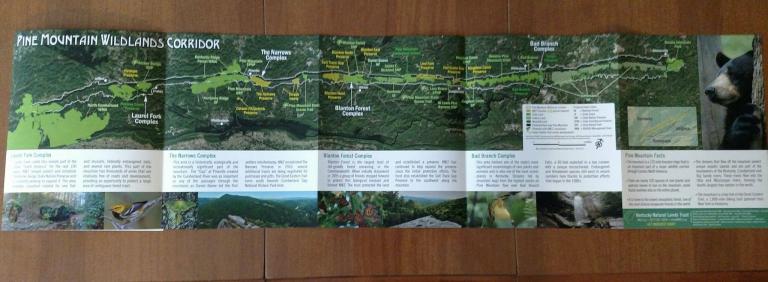
Pine Mountain Woodlands Corridor
The resiliency of local, regional, and global communities depends on functioning natural systems that can withstand threats through adaption and change. This is of particular importance in the face of a shifting climate. For example, Kentucky growing season is already changing from Zone 6 to Zone 7. According to the U.S. Department of Agriculture, Kentucky is generally one 5-degree Fahrenheit half-zone warmer than the previous map showed from 1990. This warming is being recorded throughout much of the United States.
What difference will it make to protect these forests?
Keeping natural lands “wild” not only stabilizes of the ecosystem for the state, it is also vital to both economic and human health.
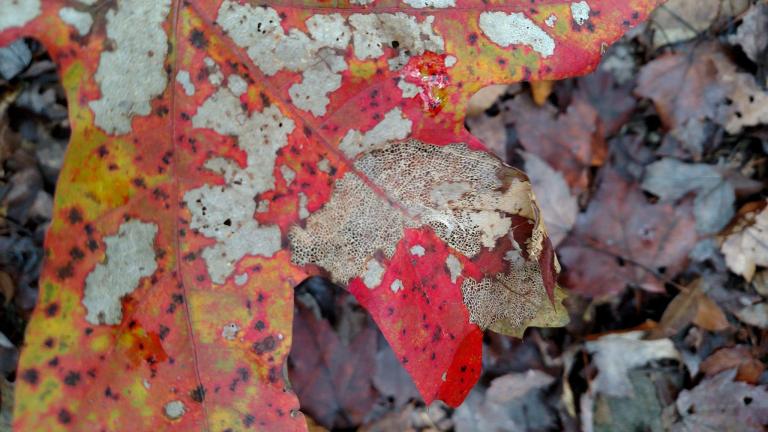
Lacy autumn leaf in Blanton Forest, Ky. Photo credit: Leah D. Schade. All rights reserved.
Untouched forests are huge “carbon sinks,” meaning that they absorb the carbon dioxide which is playing havoc with the climate. The longer we protect these lands – and the more lands we place under protection – the better it will be for everyone, human and other-than-human alike.
This far and no farther
Pine Mountain is a beautiful example of human beings finally obeying the command of God in the Garden of Eden – this far and no farther. And every time another tract of land is saved through Kentucky Natural Lands Trust, it means that the wildlife, plants, water, and soil of that place can never be destroyed.
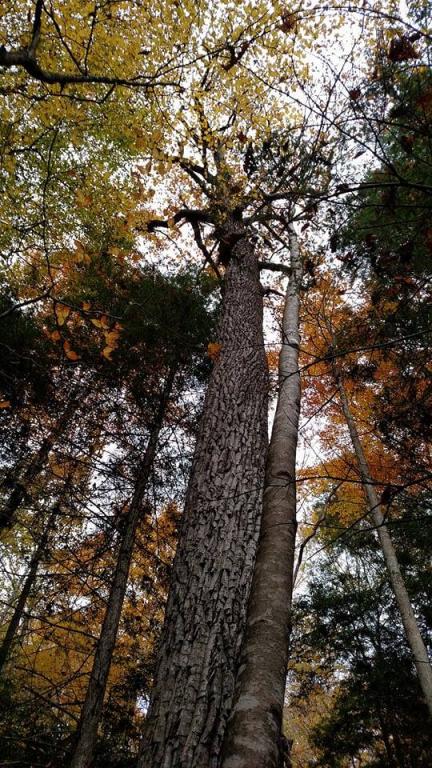
Chestnut Oak, Blanton Forest, Ky. Photo credit: Leah D. Schade. All rights reserved.
No bulldozer will rip an ancient oak tree up from its roots. No luxury home will displace a den of foxes. No mown soccer grass will supplant the carpet of moss and cedum. No parking lot will ever be paved over a wetland that absorbs and filters the rainwater from the surrounding hillsides.
Sometimes there is great blessing in establishing boundaries and protecting them.
Sometimes foregoing short-term profit in order to preserve a natural legacy reaps rewards far beyond monetary wealth. And sometimes the best way to know who we are as human beings is by walking through these primeval forest cathedrals.
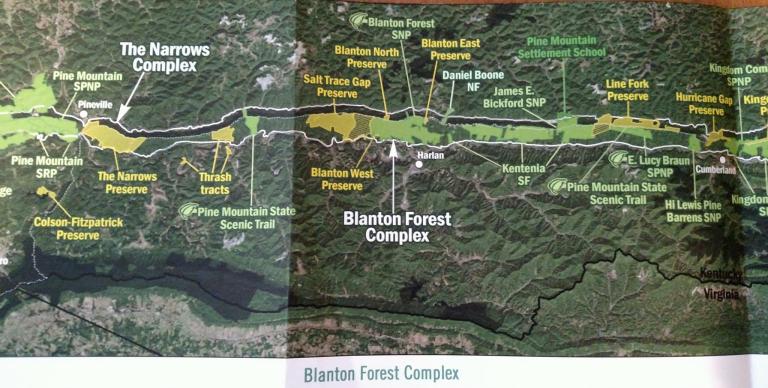
Blanton Forest Preserve, Pine Mountain, Kentucky
The poet David Whyte writes in his book, Midlife and the Great Unknown, about his growing realization that if he did not pay attention to the wild places, not only would they disappear, but so would he. “If I wasn’t paying attention, it seemed there was nothing coming towards me to find me.” He would lose his sense of belonging, his sense of self. “Without any faculties of attention, there was actually no person to be found. My identity actually depended on how fierce of attention I was paying to the world. If I wasn’t looking, listening, feeling, then there was no one to have the conversation with.”
Protecting natural lands is integral to my faith
As a Christian, as a clergyperson, and as a seminary professor, I am committed to helping people learn how to do their part to care for God’s Creation and support eco-justice issues. We need to put in place the strongest protections possible to defend public health, the fragile atmosphere of our planet, and the communities – both human and other-than-human – that will bear the costs and suffering from climate change, pollution, and loss of wild places.
Proud to be a “tree hugger”
As my son and our guides continued on the trail, I kept lagging behind, beckoned by lacy leaves and sea-shell-shaped fungus to look, look, look.
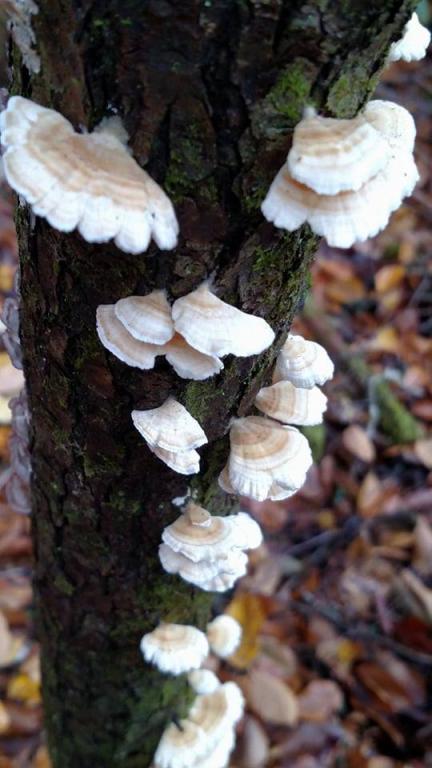
Tree fungus, Blanton Forest, Ky. Photo credit: Leah D. Schade. All rights reserved.
And, yes, I did hug several trees. To steady myself on slippery rocks and steep inclines, I placed my hand upon sturdy trunks. And sometimes I would pause to wrap my arms around the whole way. Many of these trees are older than me, older than anyone alive, older than this nation. I was taught to respect my elders. Why should I not extend that respect and love to these chestnut oaks, these hickories, these hemlocks?
Shouldn’t I teach my children to respect their elders in the same way?
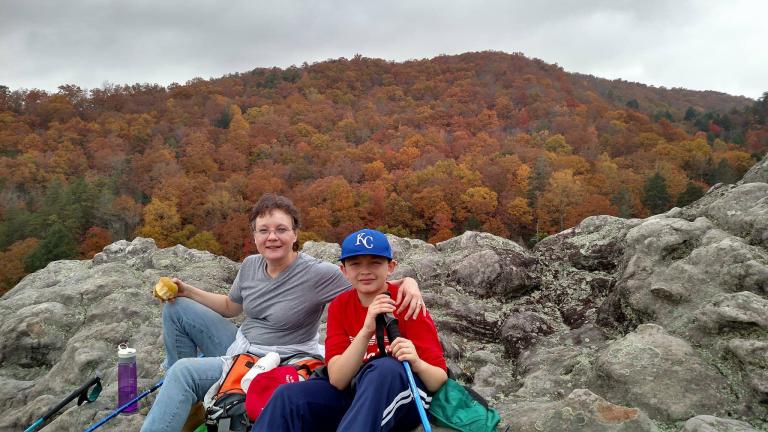
Leah Schade and son Benjamin on Knobby Rock, Blanton Forest, Ky.
As Benjamin and I reached Knobby Rock at the top of our climb 2000 feet above sea level, we gazed out at the seemingly vast untouched wilderness. I knew that we were part of that “holy remnant” as well – the small percentage of people who do care about these places. Who are proud to be called “tree huggers.” Who take it as their holy purpose to carry the memories of these places, and to encourage the sacred trust of these lands for the next generation.
I contend that protecting these wild places is what will truly help make America great again.
My husband and I are teaching our children that protecting these natural lands is part of our faith, our heritage, and our duty as patriotic citizens. I invite you to be part of this “holy remnant.”
To learn more about Kentucky Natural Lands Trust, including how you can donate or volunteer, visit: http://knlt.org/.
Leah D. Schade is the Assistant Professor of Preaching and Worship at Lexington Theological Seminary (Kentucky) and author of the book Creation-Crisis Preaching: Ecology, Theology, and the Pulpit (Chalice Press, 2015).
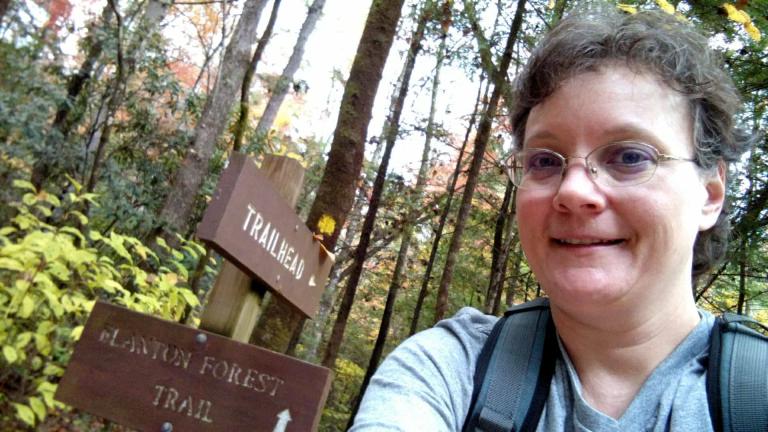
Leah Schade, Blanton Forest, Ky.
Twitter: @LeahSchade
Facebook: https://www.facebook.com/LeahDSchade/.
Read Leah’s poem with more pics from Blanton Forest: Nature’s Last Gold is Green: Autumn Tribute to Frost
More posts about teaching children to know about climate change, and to cherish and protect nature:
Dar Tellum: 1970s Children’s Book about Climate Change
Children’s Sermon Ideas for Earth Day
Welcoming Children into God’s Creation: 4 Things You Can Do Now
Healthy Trees, Healthy People: Why Citizen Scientists Are Needed as Climate Changes
Previous Post
November 10, 2017
Nature's Last Gold is Green: Autumn Tribute to Frost
Next Post

November 15, 2017 How to Survive a Red/Blue Thanksgiving: Creating a 'Purple Zone'
Browse Our Archives
Select a Category Academy of Homiletics Addiction Advent AI (Artificial Intelligence) Animals Apocalypse Appalachia Ash Wednesday Baptism Bible Black Lives Matter Blade Runner Book review Children in church Christian Nationalism Christian/Islamic relations Christmas Church Clergy Climate change COVID-19 Creation Data Centers Death penalty Devotional Dialogue Doubt Earth Day Easter Ecofeminism EcoPreacher 1-2-3 ELCA ELCA Youth Gathering Election Environment/ecology Epiphany Faith Faith and Politics Feminism Film review Food Food and Faith Forgiveness Fracking Good Friday Good Omens Grief Gun violence Holy Humor Sunday Holy Week Howard Thurman ICE Immigration Indigenous wisdom Interview Jesus Kentucky Lafayette High School Marching Band Leadership Lent LGBTQIA+ Marching band Martin Luther Martin Luther King Jr. Mary Maundy Thursday Michael Sheen Mother of Jesus Nature New Year's Eve Palm Sunday Parables Pentecost Poem, Poetry Politics Poor People's Campaign Pop culture Prayers Preaching Progressive Christianity Public theology Purple Zone Racism and White Privilege Religion Religion and environment Religion and politics Religion and pop culture Religion and violence Rev. Nelson Rabell Gonzalez Sermons Spanish language resources for preaching Technology Thanksgiving Theological education theology Trees Trump Uncategorized Vegan War Women and religion Workshop Worship
Select a Month October 2026 September 2026 July 2026 June 2026 May 2026 April 2026 March 2026 February 2026 January 2026 December 2025 November 2025 October 2025 September 2025 May 2025 April 2025 March 2025 February 2025 January 2025 December 2024 November 2024 October 2024 September 2024 August 2024 July 2024 June 2024 May 2024 April 2024 March 2024 February 2024 January 2024 December 2023 November 2023 October 2023 September 2023 August 2023 July 2023 June 2023 May 2023 April 2023 March 2023 February 2023 January 2023 December 2022 November 2022 October 2022 August 2022 July 2022 June 2022 May 2022 April 2022 March 2022 February 2022 January 2022 December 2021 November 2021 October 2021 September 2021 August 2021 July 2021 June 2021 May 2021 April 2021 March 2021 January 2021 December 2020 November 2020 October 2020 September 2020 August 2020 July 2020 June 2020 May 2020 April 2020 February 2020 January 2020 December 2019 November 2019 October 2019 September 2019 August 2019 July 2019 June 2019 May 2019 April 2019 March 2019 January 2019 December 2018 November 2018 October 2018 September 2018 August 2018 July 2018 June 2018 May 2018 April 2018 March 2018 February 2018 January 2018 December 2017 November 2017 October 2017 September 2017 August 2017 July 2017 June 2017 May 2017 April 2017
Follow Us!
TAKE THE
Religious Wisdom Quiz
Who was thrown into a fiery furnace but survived?
Select your answer to see how you score.
Noah Daniel Shadrach, Meshach, Abednego Joseph
Books by This Author Books by Leah D. Schade
Related posts from EcoPreacher

Love Your Neighbor – Including Earth-Kin: Lev. 19,...

Preaching About Climate Change: What Clergy Need Most
When The Data Center Wolf Is At Your...

Making Space for Eco-Grief—and Hope—in Your Church
TRENDING AT PATHEOS Progressive Christian

What Being a Modern-Day Apostle Means to Me
In my last column, I discussed the ins and outs of modern-day...

Did Ancient China Once Worship the God of...
Across human history, a common thread weaves through the origins of the...

Love Your Neighbor – Including Earth-Kin: Lev. 19,...
God’s command to love your neighbor means acting in an ethical and...

Lead a Church Study of “Jesus and Lao...
Guest writer Jack Thomas (The Irreverent Reverend) reflects on leading his church...

Pastoral Wisdom for Responding to Sermon Pushback
Getting sermon pushback on your social justice sermon? Learn practical, Proverbs-based strategies...

Principles for Understanding the Apostolic Ministry Today
Whenever people discover that my formal ministry title is "apostle," as in...
view all Progressive Christian blogs
Ad-Free & Subscriber Log-In Subscription Support
- About Us
- 2026 Calendar
- Videos
- Podcasts
- Library of World Religions
- Faith In Media Tracker
- Advertise With Us
- Write for Us
- Privacy Policy
- Terms of Service
- Do Not Sell My Data
- Contact Us
- Radiant Digital
- Manage Newsletter Subscriptions
- Unsubscribe From Notifications
- Sitemap
Copyright 2008-2026, Patheos. All rights reserved.
Subscription Support Ad-Free & Subscriber Log-In
Follow Patheos