
BuddhistCatholicContemplativeEvangelicalGeneral ChristianHinduJewishLatter-day SaintMuslimNew VisionsProgressive Christian
Beliefs
- Buddhist
- Catholic
- Contemplative
- Evangelical
- General Christian
- Hindu
- Jewish
- Latter-day Saint
- More Voices
- Muslim
- New Visions
- Pagan
- Progressive Christian
Topics
- Religion News
- Food and Religion
- Sports and Religion
- Religious Art
- Religious Music and Entertainment
- Religious Events
- History and Religion
- Style and Religion
- Politics and Religion
- Women in Religion
- Recreation Outdoors and Religion
- Business Finance and Religion
- Careers Workplace and Religion
- Education and Religion
- Family Parenting and Religion
- Health Fitness and Religion
- Home and Religion
- Relationships and Religion
- Technology and Religion
- Travel and Religion
Columnists
- Buddhist Columnists
- Business Finance and Religion Columnists
- Careers Workplace and Religion Columnists
- Catholic Columnists
- Contemplative Columnists
- Education and Religion Columnists
- Evangelists Columnists
- Family Parenting and Religion Columnists
- General Christian Columnists
- Health Fitness and Religion Columnists
- Hindu Columnists
- History and Religion Columnists
- Home and Religion Columnists
- Jewish Columnists
- More Voices Columnists
- Latter Day Columnists
- Muslim Columnists
- New Visions Columnists
- Nonreligious Columnists
- Pagan Columnists
- Politics and Religion Columnists
- Progressive Columnists
- Recreation Outdoors and Religion Columnists
- Relationships and Religion Columnists
- Religion News Columnists
- Religious Art Columnists
- Religious Events Columnists
- Religious Music and Entertainment Columnists
- Sports and Religion Columnists
- Style and Religion Columnists
- Technology and Religion Columnists
- Travel and Religion Columnists
- Women in Religion Columnists
Resource Library
- 2026 Calendar
- Library of World Religions
- The 100 Most Holy Places on Earth
- Patheos Answers
- Podcasts
- Videos
- Faith Leaders Database
- Anglican Episcopalian
- Bahai
- Baptist
- Buddhism
- Christianity
- Confucianism
- Eastern Orthodoxy
- Hinduism
- Holiness and Pentecostal
- ISKCON
- Islam
- Judaism
- Lutheran
- Methodist
- The Church of Jesus Christ of Latter-day Saints
- New Age
- Paganism
- Presbytarian and Reformed
- Protestantism
- Religion Behind the Scenes
- Roman Catholic
- Scientology
- Shia Islam
- Sikhism
- Sufism
- Sunni Islam
- Taoism
- Zen
- See all religions
Research Tools
 Ad-Free & Subscriber Log-In Subscription Support
Ad-Free & Subscriber Log-In Subscription Support
Follow Patheos 

- Trending:
- Forgiveness
- |
- Marriage
- |
- Consciousness
- |
- Death Penalty
- |
- Election
- |
- Halloween

- Home
- Progressive Christian
- Holy Communion – YOUR Incarnation, EARTH’S Incarnation
Holy Communion – YOUR Incarnation, EARTH’S Incarnation
Last updated on: November 30, 2017 at 6:20 am by Leah D. Schade
Holy Communion – YOUR Incarnation, EARTH’S Incarnation 2017-11-30T06:20:35-04:00 Leah D. Schade
Patheos Explore the world's faith through different perspectives on religion and spirituality! Patheos has the views of the prevalent religions and spiritualities of the world.
A Reflection on Holy Communion.
One of my favorite poets, David Whyte, describes tasting as an act of incarnation. When we fully participate in our own lives, bringing our whole selves to each moment, we incarnate – become flesh – in a way that is wholly unique. No one else has ever embodied this frontier of existence in quite the same way. And no one will ever experience this confluence of tasting, smelling, seeing, touching, and smelling in this way again (Midlife and the Great Unknown by David Whyte).
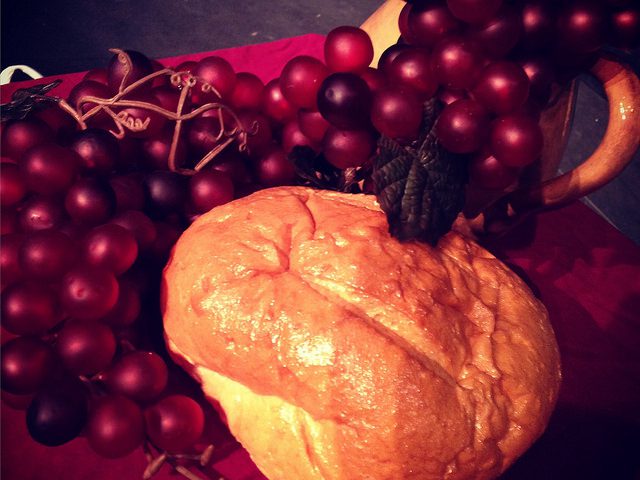
Eucharist. By David Mulder. Some rights reserved. www.flickr.com
A new perspective on Holy Communion
As I listened to Whyte describe this poignant phenomenon of human existence, it gave me a new perspective on the ritual of Holy Communion. Every time you come to the table, to the cup and the bread, you are bringing the whole of yourself. The holy incarnates in you as you taste. And you incarnate the holy as well. No one has ever embodied this moment of existence in quite the same way. And as you accumulate these moments of ritual in your body over time, they not only shape who you are, but you add to the meaning of the meal by your very presence.
We may think it is a mundane and repetitive thing to do the same rituals every time. Every week, always the same.
But each time you come, you are a bit different. Sometimes you are a lot different. And this matters not just for your own life, but for the life of your church, for the meal itself, and for the whole of God’s Creation.
I remember as a child sometimes getting bored with the same routine week in and week out. But then there was the time when I took communion after my grandmother had died. And I realized I had changed. My world had shifted, and not for the better. At that meal I held the wafer and the bittersweet wine touched my tongue. This was the same tasting I had done every week with a teenager’s attitude of “here we go again.” But this time I knew something was different. At that moment the communion meal became a gift of solace that I never knew was possible, or that I would ever need. That same old boring meal was now a comfort of familiarity in a world that had suddenly become unfamiliar now that my grandmother was gone.
The meal had incarnated in me in a new way.
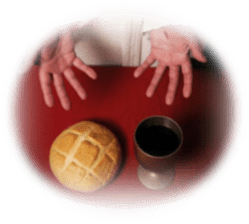
Holy Communion
On another occasion a year or so later, I took communion kneeling beside the young man I had fallen in love with and would one day marry. My world had shifted again. I had changed, this time in a glorious, heart-expanding way. As I kneeled at the rail and held out my hand for the bread and cup, my shoulder touched my beloved’s. The communion meal was a marker and a witness to our blossoming relationship. The meal had incarnated in me – and in him – in a new way.
Each time the bread and cup are offered, I spiral back around to the ritual with my whole self.
Sometimes it seems like nothing changes. I barely perceive the shifts that are incremental. Other times I feel like a completely different person. My very cells are changed by . . . pregnancy . . . birthing . . . nursing. My incarnation at the meal means that I bring all of my grief, all of my joy, my physical pains, my long-term relationships, my short-term anxieties.
And when I bring my whole self, I also bring all that has accumulated in me from the environment in which I live.
If I lived in Flint, Michigan, I would bring my body laced with lead from tainted drinking water. If I lived in “Cancer Alley” along the Mississippi River where heavy industry pollutes the air and land, I would bring my body that had absorbed all the toxins around me. And when I lived in Central Pennsylvania, I brought my body that had absorbed traces of fracking fluids that flowed down the mountain streams into the Susquehanna River – the source of my drinking water. You and I are each an incarnation of Earth – and the fullness therein – at every instance when we partake of the ritual of communion.
At the same time, I take into myself all that the communion elements have brought to me from the environment in which they grew and were harvested. In ways I never did as a child, I worry about the wheat and the grapes that I am ingesting. What was the quality of the water they absorbed? What chemicals were used on them in the growing process? When I come to the table, I think about the vineyards that were lost to flames and charred earth in the Sonoma Valley from the wildfires. I worry how climate change will affect the growth of the grains and grapes. However these changes occur, Earth will continue to incarnate in me. Creation comes to me through the communion meal with all its pain and pollution, with the consequences of a thousand choices made before I even bring the bread and wine to my lips.
Field and vineyard
Liturgical theologian Benjamin Stewart describes a field trip he took to visit first a vineyard and then a high-desert wheat farm. He writes in his book A Watered Garden: Christian Worship and Earth’s Ecology (Augsburg Fortress, 2011) about the many facts he learned about the food. Who grows it. Were it is produced. How it travels to where it will be consumed. But something more profound occurred to him on that trip:
Something more like wonder arced out between the fields, the vineyards, my mind, and the liturgical celebrations of my community. I could now imagine the very particular land on which our bread had been ‘scattered over the hills and was gathered together and became one,’ in the words in which the Didache encourages us to pray. In the vineyard, I had seen how the branches that abided in the vine bore much fruit, as John remembers Jesus teaching (John 15:1-11). Images of care, labor, and worth associated with vineyards in scripture were now filled out by the bodily experience of the hard and hurried work we did to bring in the precious, fragile grapes.
In what was certainly a brief encounter with field and vineyard, my own eucharistic participation and prayer were enriched by encountering biblical and liturgical images and experiences that were, in fact, unavailable to me within the boundaries of the Sunday liturgy itself (pp. 60 – 61).
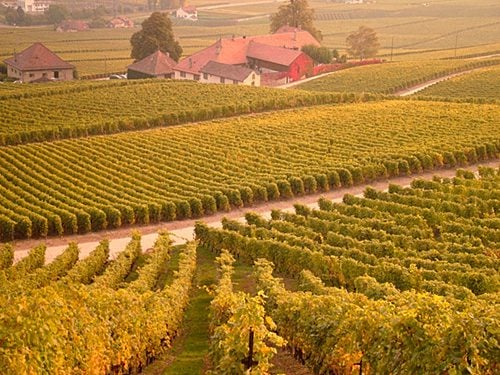
Vineyard. Photo by Mark Goebel. Some rights reserved. www.flickr.com
Stewart’s description of the field and vineyard reminds me that the meal incarnates God’s Creation in me every time.
And I incarnate that meal with all that I am every time. Even when I’m bored, distracted, or annoyed. When I’m amused by the child dancing. Or wincing as I watch the man make his way to the table with crutches. When I’m winking at my daughter who now offers me the cup as a newly confirmed member of the church. Or waving at my son who carries the fragile flame as an acolyte. No matter the state of my mind or my body, the communion meal meets me where I am every time.
2000 years ago, a man promised that this meal would be the taste of accompaniment, the aroma of abiding presence.
His followers believed it so much that they preserved this ritual and practiced it at every weekly gathering. They did more than enshrine a formula of sacred words and actions. The eating and drinking are at once a holy remembrance and an act of trust in the future of that divine presence. Taken together, we call it faith.
May your incarnation hold – and be held by – this sacred meal.
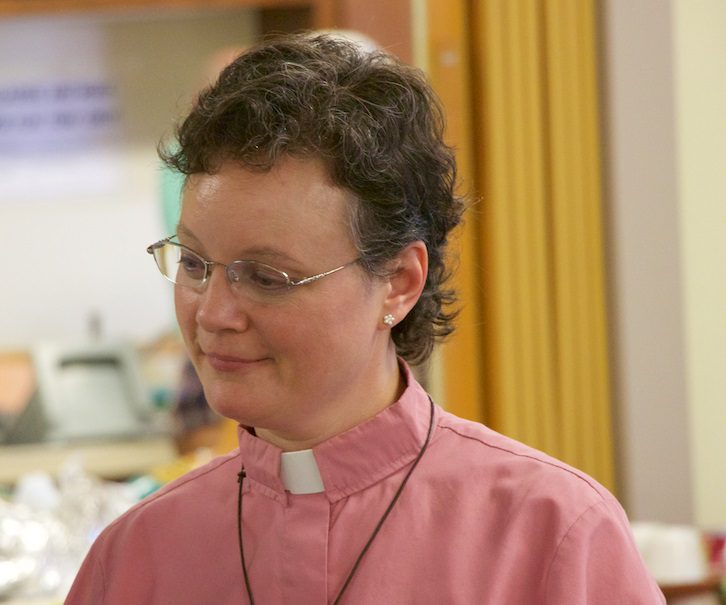
Leah D. Schade is the Assistant Professor of Preaching and Worship at Lexington Theological Seminary (Kentucky) and author of the book Creation-Crisis Preaching: Ecology, Theology, and the Pulpit (Chalice Press, 2015). She is ordained clergy in the Evangelical Lutheran Church in America.
Twitter: @LeahSchade
Facebook: https://www.facebook.com/LeahDSchade/.
Previous Post

November 23, 2017
Learning to Welcome the Dark: Advent 1
Next Post

December 1, 2017 Words of Advice for Good Men: #MeToo Meet #YouToo
Browse Our Archives
Select a Category Academy of Homiletics Addiction Advent AI (Artificial Intelligence) Animals Apocalypse Appalachia Ash Wednesday Baptism Bible Black Lives Matter Blade Runner Book review Children in church Christian Nationalism Christian/Islamic relations Christmas Church Clergy Climate change COVID-19 Creation Data Centers Death penalty Devotional Dialogue Doubt Earth Day Easter Ecofeminism EcoPreacher 1-2-3 ELCA ELCA Youth Gathering Election Environment/ecology Epiphany Faith Faith and Politics Feminism Film review Food Food and Faith Forgiveness Fracking Good Friday Good Omens Grief Gun violence Holy Humor Sunday Holy Week Howard Thurman ICE Immigration Indigenous wisdom Interview Jesus Kentucky Lafayette High School Marching Band Leadership Lent LGBTQIA+ Marching band Martin Luther Martin Luther King Jr. Mary Maundy Thursday Michael Sheen Mother of Jesus Nature New Year's Eve Palm Sunday Parables Pentecost Poem, Poetry Politics Poor People's Campaign Pop culture Prayers Preaching Progressive Christianity Public theology Purple Zone Racism and White Privilege Religion Religion and environment Religion and politics Religion and pop culture Religion and violence Rev. Nelson Rabell Gonzalez Sermons Spanish language resources for preaching Technology Thanksgiving Theological education theology Trees Trump Uncategorized Vegan War Women and religion Workshop Worship
Select a Month October 2026 September 2026 July 2026 June 2026 May 2026 April 2026 March 2026 February 2026 January 2026 December 2025 November 2025 October 2025 September 2025 May 2025 April 2025 March 2025 February 2025 January 2025 December 2024 November 2024 October 2024 September 2024 August 2024 July 2024 June 2024 May 2024 April 2024 March 2024 February 2024 January 2024 December 2023 November 2023 October 2023 September 2023 August 2023 July 2023 June 2023 May 2023 April 2023 March 2023 February 2023 January 2023 December 2022 November 2022 October 2022 August 2022 July 2022 June 2022 May 2022 April 2022 March 2022 February 2022 January 2022 December 2021 November 2021 October 2021 September 2021 August 2021 July 2021 June 2021 May 2021 April 2021 March 2021 January 2021 December 2020 November 2020 October 2020 September 2020 August 2020 July 2020 June 2020 May 2020 April 2020 February 2020 January 2020 December 2019 November 2019 October 2019 September 2019 August 2019 July 2019 June 2019 May 2019 April 2019 March 2019 January 2019 December 2018 November 2018 October 2018 September 2018 August 2018 July 2018 June 2018 May 2018 April 2018 March 2018 February 2018 January 2018 December 2017 November 2017 October 2017 September 2017 August 2017 July 2017 June 2017 May 2017 April 2017
Follow Us!
TAKE THE
Religious Wisdom Quiz
How did Moses' mother save him as a baby?
Select your answer to see how you score.
Hid him in a cave Placed him in a basket on the river Dressed him as a girl Sent him to another city
Books by This Author Books by Leah D. Schade
Related posts from EcoPreacher

Love Your Neighbor – Including Earth-Kin: Lev. 19,...

Preaching About Climate Change: What Clergy Need Most

Making Space for Eco-Grief—and Hope—in Your Church
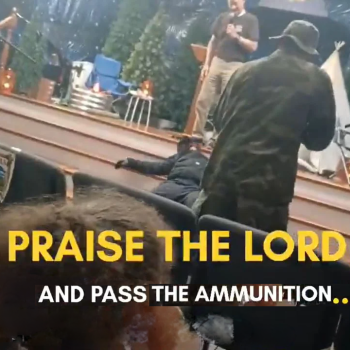
VBS Murder Skit: When a Church Teaches Children...
TRENDING AT PATHEOS Progressive Christian

What Being a Modern-Day Apostle Means to Me
In my last column, I discussed the ins and outs of modern-day...

Did Ancient China Once Worship the God of...
Across human history, a common thread weaves through the origins of the...

Love Your Neighbor – Including Earth-Kin: Lev. 19,...
God’s command to love your neighbor means acting in an ethical and...

Lead a Church Study of “Jesus and Lao...
Guest writer Jack Thomas (The Irreverent Reverend) reflects on leading his church...

Pastoral Wisdom for Responding to Sermon Pushback
Getting sermon pushback on your social justice sermon? Learn practical, Proverbs-based strategies...

Principles for Understanding the Apostolic Ministry Today
Whenever people discover that my formal ministry title is "apostle," as in...
view all Progressive Christian blogs
Ad-Free & Subscriber Log-In Subscription Support
- About Us
- 2026 Calendar
- Videos
- Podcasts
- Library of World Religions
- Faith In Media Tracker
- Advertise With Us
- Write for Us
- Privacy Policy
- Terms of Service
- Do Not Sell My Data
- Contact Us
- Radiant Digital
- Manage Newsletter Subscriptions
- Unsubscribe From Notifications
- Sitemap
Copyright 2008-2026, Patheos. All rights reserved.
Subscription Support Ad-Free & Subscriber Log-In
Follow Patheos