
BuddhistCatholicContemplativeEvangelicalGeneral ChristianHinduJewishLatter-day SaintMuslimNew VisionsProgressive Christian
Beliefs
- Buddhist
- Catholic
- Contemplative
- Evangelical
- General Christian
- Hindu
- Jewish
- Latter-day Saint
- More Voices
- Muslim
- New Visions
- Pagan
- Progressive Christian
Topics
- Religion News
- Food and Religion
- Sports and Religion
- Religious Art
- Religious Music and Entertainment
- Religious Events
- History and Religion
- Style and Religion
- Politics and Religion
- Women in Religion
- Recreation Outdoors and Religion
- Business Finance and Religion
- Careers Workplace and Religion
- Education and Religion
- Family Parenting and Religion
- Health Fitness and Religion
- Home and Religion
- Relationships and Religion
- Technology and Religion
- Travel and Religion
Columnists
- Buddhist Columnists
- Business Finance and Religion Columnists
- Careers Workplace and Religion Columnists
- Catholic Columnists
- Contemplative Columnists
- Education and Religion Columnists
- Evangelists Columnists
- Family Parenting and Religion Columnists
- General Christian Columnists
- Health Fitness and Religion Columnists
- Hindu Columnists
- History and Religion Columnists
- Home and Religion Columnists
- Jewish Columnists
- More Voices Columnists
- Latter Day Columnists
- Muslim Columnists
- New Visions Columnists
- Nonreligious Columnists
- Pagan Columnists
- Politics and Religion Columnists
- Progressive Columnists
- Recreation Outdoors and Religion Columnists
- Relationships and Religion Columnists
- Religion News Columnists
- Religious Art Columnists
- Religious Events Columnists
- Religious Music and Entertainment Columnists
- Sports and Religion Columnists
- Style and Religion Columnists
- Technology and Religion Columnists
- Travel and Religion Columnists
- Women in Religion Columnists
Resource Library
- 2026 Calendar
- Library of World Religions
- The 100 Most Holy Places on Earth
- Patheos Answers
- Podcasts
- Videos
- Faith Leaders Database
- Anglican Episcopalian
- Bahai
- Baptist
- Buddhism
- Christianity
- Confucianism
- Eastern Orthodoxy
- Hinduism
- Holiness and Pentecostal
- ISKCON
- Islam
- Judaism
- Lutheran
- Methodist
- The Church of Jesus Christ of Latter-day Saints
- New Age
- Paganism
- Presbytarian and Reformed
- Protestantism
- Religion Behind the Scenes
- Roman Catholic
- Scientology
- Shia Islam
- Sikhism
- Sufism
- Sunni Islam
- Taoism
- Zen
- See all religions
Research Tools
 Ad-Free & Subscriber Log-In Subscription Support
Ad-Free & Subscriber Log-In Subscription Support
Follow Patheos 

- Trending:
- Forgiveness
- |
- Marriage
- |
- Consciousness
- |
- Death Penalty
- |
- Election
- |
- Halloween

- Home
- Progressive Christian
- Blade Runner 2049: 5 Star Review
Blade Runner 2049: 5 Star Review
Last updated on: October 9, 2017 at 11:38 am by Leah D. Schade
Blade Runner 2049: 5 Star Review 2017-10-09T11:38:02-04:00 Leah D. Schade
Patheos Explore the world's faith through different perspectives on religion and spirituality! Patheos has the views of the prevalent religions and spiritualities of the world.
Blade Runner 2049 is a cinematic masterpiece with superb visual effects, an absorbing storyline, fascinating characters, and poignant religious/philosophical themes.
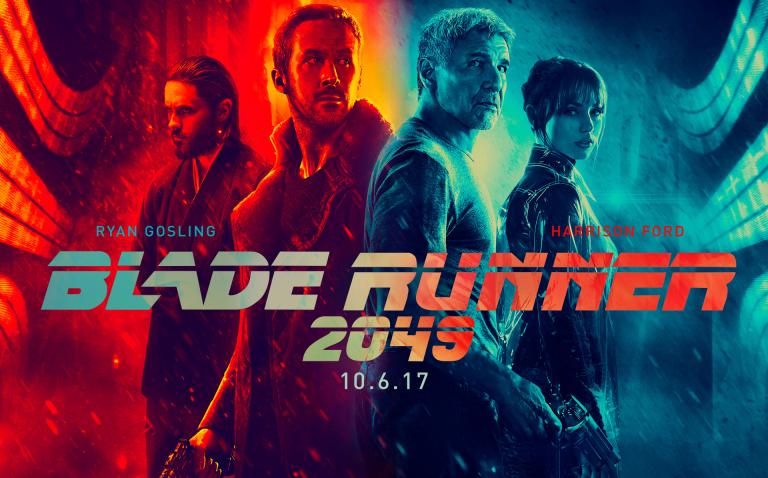
After fan-girling over Blade Runner for 35 years, I expected Blade Runner 2049 to fall short of its predecessor. I assumed there was no way the new film could come close to the grim beauty and existential poetry of Ridley Scott’s original dystopian vision. How could any actors even approach the chic of the original cast? Harrison Ford, the epitome of gritty coolness, and the rest of the actors are now virtually iconic. Not to mention the impossible task of matching Vangelis’ gorgeous synth-soundtrack that still exhilarates my chakras.
Expectations: Exceeded!
But Blade Runner 2049 is a brilliantly conceived, masterfully produced, and deeply satisfying continuation of the story. The film takes its time to layer the complex plot while inviting the eye to savor every high-concept frame. Ryan Gosling, as Officer K, achieves the Blade Runner cool with steely aplomb, while his fellow cast members inhabit a host of well-crafted characters. Plus, fans of the original will thrill to see both Edward James Olmos and Sean Young provide key plot points for the movie.

Harrison Ford? He’s still got it. Like a bottle of fine wine aged and carefully turned over the decades, his appearance is saved for something special. As an actor, his face registers every emotion, every memory with silent, simmering intensity. He is particularly effective at the movie’s end, in a scene that is simply virtuosic.
As for the soundtrack, with its churning, vibrating bass and soaring layers of synth-sound – it pays homage to Vangelis’ aural masterpiece while adding its own mystique. It also contains a key musical cameo from the original soundtrack that seals the deal for me on this film.
For fans new and old
My hunch is that even those who have never seen the original Blade Runner will find this a stunning movie. The story draws in neophytes to the Blade Runner world and creates a captivating stand-alone experience. If you enjoy sci-fi movies like The Matrix, Mad Max, and Tron: Legacy, then Blade Runner 2049 is for you. The visual effects are a wonder, the violence is shocking but artful (and never gratuitous), and the mood is both brooding and compelling.
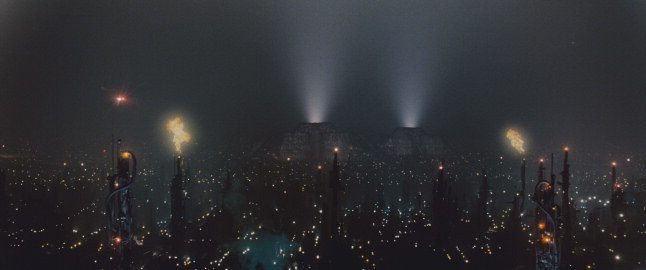
For fans of the original movie*,* the director and producers obviously put a great deal of thought and effort into creating an experience that feels like Blade Runner. Flying cars swoop through driving rain across vast desiccated landscapes. Glowing umbrellas and oversized neon ads light the garish urban interior. And the imagistic and aural “quotes” that hearken back to the first film alternately transported me backward and forward. It’s a movie I will want to view and study just as much as the original.
Asking the big questions
Blade Runner 2049, like the original movie, is not afraid to ask the big philosophical questions that make us wrestle with what it means to be human, and how far we should push the limits of technology and genetic engineering. The original movie is loosely based on Philip K. Dick’s science fiction novel, Do Androids Dream of Electric Sheep. It told the story of a policeman named Deckard (Ford) from the Blade Runner unit dispatched to “retire” (kill) rogue androids called Replicants.
[If you’re one of those fans intrigued by the perennial question of whether or not Deckard is himself a Replicant, Blade Runner 2049 resolves that mystery. You’ll want to go back and watch the original movie after having finished 2049, regardless of whether you’ve never seen it, or have viewed it multiple times.]
The new movie picks up the story thirty years later, where humans are once again feeling threatened by the next generation of Replicants.

This time the Blade Runner unit is on the trail of a secret that threatens to undo the precarious balance between humans and Replicants. Part thriller and part mystery, Blade Runner 2049 sees each character wrestling with their own identity as they walk the knife edge of what is real and what is manufactured. All the while, they (and we) wonder what it means to truly love, and what we are willing to sacrifice for that love.
“Memories of Green” – Blade Runner 2049 as Cli-Fi (Climate Fiction)
The theme of memory weaves throughout both films – both in form and content – and creates a through-line that ties the two movies together. Fittingly, my favorite song from the first Blade Runner is a piece called “Memories of Green.” It captures the pathos of what has been lost in this futuristic world – the beauty of nature.
As I noted in my previous reflection on “Blade Runner and Climate Change,” the movie imagines a dismal world in which the effects of global warming eliminate nearly all animals, greenery, and basic human compassion. Climate fiction is a genre that can help folks understand climate change more effectively than charts and numbers. It’s the stories that help us imagine what lies ahead – and what is worth saving now.
One tree
2049 takes us further into that world where the only real tree that exists is dead, kept upright through stakes and ropes. Las Vegas is a red-tinted ghost town recovering from toxic levels of radiation. And San Diego is nothing more than a massive dumping ground for the metallic refuse of Los Angeles, itself a forbidding panorama of concrete and eerie lights.

It is within the techno-graveyard of San Francisco that we see rows and rows of bald children disassembling electronic equipment to reuse the metal innards. But this is not just science fiction. This happens today in countries where children’s tiny fingers are put to work recycling our old cell phones and computers. In the process, they are exposed to lethal metals and toxins that wreak havoc on their young bodies. Like the machines they pry open with their delicate hands, the children are disposable – both in reality and in the film.
“Every civilization was built on the back of a disposable workforce.”
Children are not the only dispensable ones. As I argued in “Watching ‘Blade Runner’ in the Age of Black Lives Matter,” the first movie contained an implicit critique of the still-embedded slave-class structure of America. 2049 reiterates the slavery theme. Replicants, like people of color in American history, are the forced labor that enables humanity to survive and the wealthy class to thrive. (Though I must note that 2049 repeats the mistake of having white actors in the major roles, relegating people of color to supporting parts.)
But as with every slave saga from Egypt to America, the spirit of freedom cannot be chained forever. And no matter how strong, how high, or how wide we try to build our walls to keep out the “undesirables,” we soon discover the truth. We have actually been imprisoning ourselves. And the ones we feared turn out to have eyes looking back at us from the mirror.
The god’s-eye view
Not only does the movie give us a god’s-eye view of the future of the planet, it also incorporates religious imagery and biblical references that got my attention as a theologian. Angels, miraculous births, and baptismal waters are all referenced in Blade Runner 2049. And the character of Wallace – the creative genius behind the next generation of Replicants – is supremely malevolent in his hubristic god-like power. He kills and makes alive, while planning to “storm Eden and retake her.” But we’ve already seen what happens when humans overtake Eden. The results are devastating, and fund nothing but an artificial world on the verge of collapse.
Is there hope?
A single bee answers that question. As we watch bee colonies collapsing today – canaries in our climate-crisis coal mine – I couldn’t help but note the irony of the bee on Officer K’s hand. He then discovers an entire thriving apiary in the desert. How is this possible? Bees need flowers. They need pollen, sunlight, greenery. Their presence means that somehow, somewhere, in this apparently god-forsaken world there is a resurgence of organic life . . . and hope.
Blade Runner 2049 does not show us the source of this fledgling life.
But we know it must exist, just as surely as the Replicants are rising to claim their humanity, their love, and their freedom. This hope in what is yet unseen is the reason for watching this film. When you go see it, keep this passage from Romans 8:18-25 in mind:
I consider that the sufferings of this present time are not worth comparing with the glory about to be revealed to us. 19For the creation waits with eager longing for the revealing of the children of God; 20for the creation was subjected to futility, not of its own will but by the will of the one who subjected it, in hope 21that the creation itself will be set free from its bondage to decay and will obtain the freedom of the glory of the children of God. 22We know that the whole creation has been groaning in labour pains until now; 23and not only the creation, but we ourselves, who have the first fruits of the Spirit, groan inwardly while we wait for adoption, the redemption of our bodies. 24For in hope we were saved. Now hope that is seen is not hope. For who hopes for what is seen? 25But if we hope for what we do not see, we wait for it with patience.

Leah D. Schade is the Assistant Professor of Preaching and Worship at Lexington Theological Seminary (Kentucky) and author of the book Creation-Crisis Preaching: Ecology, Theology, and the Pulpit (Chalice Press, 2015).
Twitter: @LeahSchade
Facebook: https://www.facebook.com/LeahDSchade/
Leah’s pieces on the original Blade Runner:
Do You Like Our Owl? ‘Blade Runner’ and Climate Change
Watching ‘Blade Runner’ in the Age of Black Lives Matter
Previous Post

October 6, 2017
Blade Runner 2049: Cli-Fi at Its Best
Next Post

October 14, 2017 315 Today - A Poem about Gun Violence
Browse Our Archives
Select a Category Academy of Homiletics Addiction Advent AI (Artificial Intelligence) Animals Apocalypse Appalachia Ash Wednesday Baptism Bible Black Lives Matter Blade Runner Book review Children in church Christian Nationalism Christian/Islamic relations Christmas Church Clergy Climate change COVID-19 Creation Data Centers Death penalty Devotional Dialogue Doubt Earth Day Easter Ecofeminism EcoPreacher 1-2-3 ELCA ELCA Youth Gathering Election Environment/ecology Epiphany Faith Faith and Politics Feminism Film review Food Food and Faith Forgiveness Fracking Good Friday Good Omens Grief Gun violence Holy Humor Sunday Holy Week Howard Thurman ICE Immigration Indigenous wisdom Interview Jesus Kentucky Lafayette High School Marching Band Leadership Lent LGBTQIA+ Marching band Martin Luther Martin Luther King Jr. Mary Maundy Thursday Michael Sheen Mother of Jesus Nature New Year's Eve Palm Sunday Parables Pentecost Poem, Poetry Politics Poor People's Campaign Pop culture Prayers Preaching Progressive Christianity Public theology Purple Zone Racism and White Privilege Religion Religion and environment Religion and politics Religion and pop culture Religion and violence Rev. Nelson Rabell Gonzalez Sermons Spanish language resources for preaching Technology Thanksgiving Theological education theology Trees Trump Uncategorized Vegan War Women and religion Workshop Worship
Select a Month October 2026 September 2026 July 2026 June 2026 May 2026 April 2026 March 2026 February 2026 January 2026 December 2025 November 2025 October 2025 September 2025 May 2025 April 2025 March 2025 February 2025 January 2025 December 2024 November 2024 October 2024 September 2024 August 2024 July 2024 June 2024 May 2024 April 2024 March 2024 February 2024 January 2024 December 2023 November 2023 October 2023 September 2023 August 2023 July 2023 June 2023 May 2023 April 2023 March 2023 February 2023 January 2023 December 2022 November 2022 October 2022 August 2022 July 2022 June 2022 May 2022 April 2022 March 2022 February 2022 January 2022 December 2021 November 2021 October 2021 September 2021 August 2021 July 2021 June 2021 May 2021 April 2021 March 2021 January 2021 December 2020 November 2020 October 2020 September 2020 August 2020 July 2020 June 2020 May 2020 April 2020 February 2020 January 2020 December 2019 November 2019 October 2019 September 2019 August 2019 July 2019 June 2019 May 2019 April 2019 March 2019 January 2019 December 2018 November 2018 October 2018 September 2018 August 2018 July 2018 June 2018 May 2018 April 2018 March 2018 February 2018 January 2018 December 2017 November 2017 October 2017 September 2017 August 2017 July 2017 June 2017 May 2017 April 2017
Follow Us!
TAKE THE
Religious Wisdom Quiz
Who was Jacob's first wife?
Select your answer to see how you score.
Rachel Rebekah Leah Dinah
Books by This Author Books by Leah D. Schade
Related posts from EcoPreacher
Inside Out 2 Parallels Faith Journey, Theological Education

Nye: A Review by an American in Kentucky

Michael Sheen’s The Passion of Port Talbot is...

Like Tears in Rain: Rutger Hauer, Blade Runner,...
TRENDING AT PATHEOS Progressive Christian

What Being a Modern-Day Apostle Means to Me
In my last column, I discussed the ins and outs of modern-day...

Did Ancient China Once Worship the God of...
Across human history, a common thread weaves through the origins of the...

Love Your Neighbor – Including Earth-Kin: Lev. 19,...
God’s command to love your neighbor means acting in an ethical and...

Lead a Church Study of “Jesus and Lao...
Guest writer Jack Thomas (The Irreverent Reverend) reflects on leading his church...

Pastoral Wisdom for Responding to Sermon Pushback
Getting sermon pushback on your social justice sermon? Learn practical, Proverbs-based strategies...

Principles for Understanding the Apostolic Ministry Today
Whenever people discover that my formal ministry title is "apostle," as in...
view all Progressive Christian blogs
Ad-Free & Subscriber Log-In Subscription Support
- About Us
- 2026 Calendar
- Videos
- Podcasts
- Library of World Religions
- Faith In Media Tracker
- Advertise With Us
- Write for Us
- Privacy Policy
- Terms of Service
- Do Not Sell My Data
- Contact Us
- Radiant Digital
- Manage Newsletter Subscriptions
- Unsubscribe From Notifications
- Sitemap
Copyright 2008-2026, Patheos. All rights reserved.
Subscription Support Ad-Free & Subscriber Log-In
Follow Patheos