
BuddhistCatholicContemplativeEvangelicalGeneral ChristianHinduJewishLatter-day SaintMuslimNew VisionsProgressive Christian
Beliefs
- Buddhist
- Catholic
- Contemplative
- Evangelical
- General Christian
- Hindu
- Jewish
- Latter-day Saint
- More Voices
- Muslim
- New Visions
- Pagan
- Progressive Christian
Topics
- Religion News
- Food and Religion
- Sports and Religion
- Religious Art
- Religious Music and Entertainment
- Religious Events
- History and Religion
- Style and Religion
- Politics and Religion
- Women in Religion
- Recreation Outdoors and Religion
- Business Finance and Religion
- Careers Workplace and Religion
- Education and Religion
- Family Parenting and Religion
- Health Fitness and Religion
- Home and Religion
- Relationships and Religion
- Technology and Religion
- Travel and Religion
Columnists
- Buddhist Columnists
- Business Finance and Religion Columnists
- Careers Workplace and Religion Columnists
- Catholic Columnists
- Contemplative Columnists
- Education and Religion Columnists
- Evangelists Columnists
- Family Parenting and Religion Columnists
- General Christian Columnists
- Health Fitness and Religion Columnists
- Hindu Columnists
- History and Religion Columnists
- Home and Religion Columnists
- Jewish Columnists
- More Voices Columnists
- Latter Day Columnists
- Muslim Columnists
- New Visions Columnists
- Nonreligious Columnists
- Pagan Columnists
- Politics and Religion Columnists
- Progressive Columnists
- Recreation Outdoors and Religion Columnists
- Relationships and Religion Columnists
- Religion News Columnists
- Religious Art Columnists
- Religious Events Columnists
- Religious Music and Entertainment Columnists
- Sports and Religion Columnists
- Style and Religion Columnists
- Technology and Religion Columnists
- Travel and Religion Columnists
- Women in Religion Columnists
Resource Library
- 2026 Calendar
- Library of World Religions
- The 100 Most Holy Places on Earth
- Patheos Answers
- Podcasts
- Videos
- Faith Leaders Database
- Anglican Episcopalian
- Bahai
- Baptist
- Buddhism
- Christianity
- Confucianism
- Eastern Orthodoxy
- Hinduism
- Holiness and Pentecostal
- ISKCON
- Islam
- Judaism
- Lutheran
- Methodist
- The Church of Jesus Christ of Latter-day Saints
- New Age
- Paganism
- Presbytarian and Reformed
- Protestantism
- Religion Behind the Scenes
- Roman Catholic
- Scientology
- Shia Islam
- Sikhism
- Sufism
- Sunni Islam
- Taoism
- Zen
- See all religions
Research Tools
 Ad-Free & Subscriber Log-In Subscription Support
Ad-Free & Subscriber Log-In Subscription Support
Follow Patheos 

- Trending:
- Forgiveness
- |
- Marriage
- |
- Consciousness
- |
- Death Penalty
- |
- Election
- |
- Halloween

- Home
- Progressive Christian
- Write a Different Ending: Phineas and the ‘Butter Battle’
Write a Different Ending: Phineas and the ‘Butter Battle’
Last updated on: September 3, 2017 at 8:38 pm by Leah D. Schade
Write a Different Ending: Phineas and the ‘Butter Battle’ 2017-09-03T20:38:39-04:00 Leah D. Schade
Patheos Explore the world's faith through different perspectives on religion and spirituality! Patheos has the views of the prevalent religions and spiritualities of the world.
I preached at a church recently where they were doing a sermon series on Dr. Seuss books. I chose to preach on The Butter Battle, and contrasted it with the little-known story of Phineas and the tribes of Israel in Joshua Chapter 22.
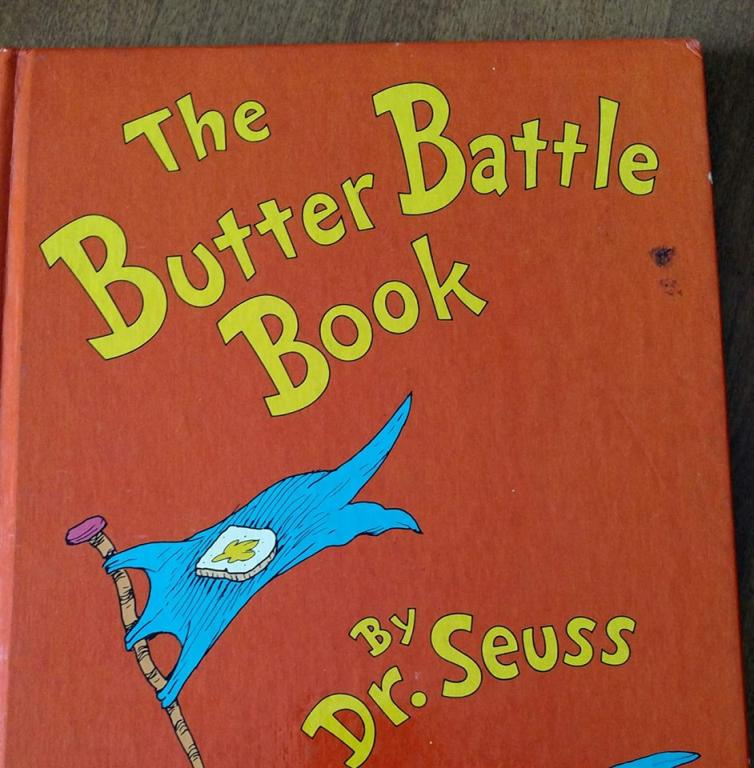
I began with a children’s sermon reading parts of the book.
The Zooks are in conflict with the Snooks over something very silly – whether to eat bread with the butter side up or the butter side down.
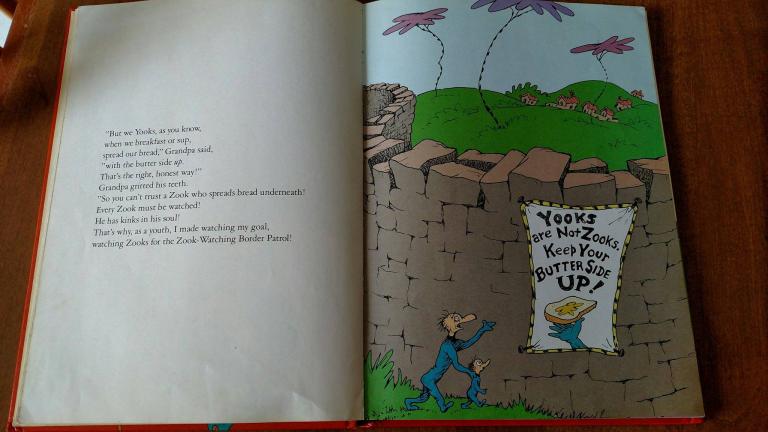
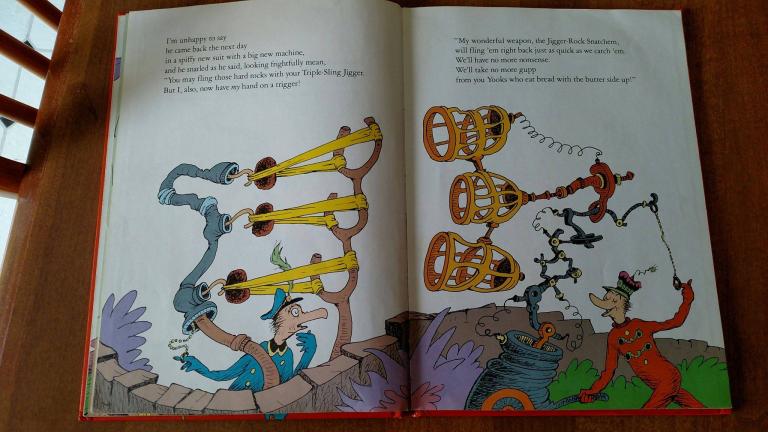
First they build a wall, then patrol the wall with weapons, then with bigger weapons and bigger armies, until each side is poised on the wall ready to drop an atomic bomb.
I pointed to the blank page at the end of the story. I asked, “How do you think this story will end?” One boy said they would blow each other up.
“Yes, that’s one way it could end,” I said. “But if we could write the ending of this story, what would we like to see happen?”
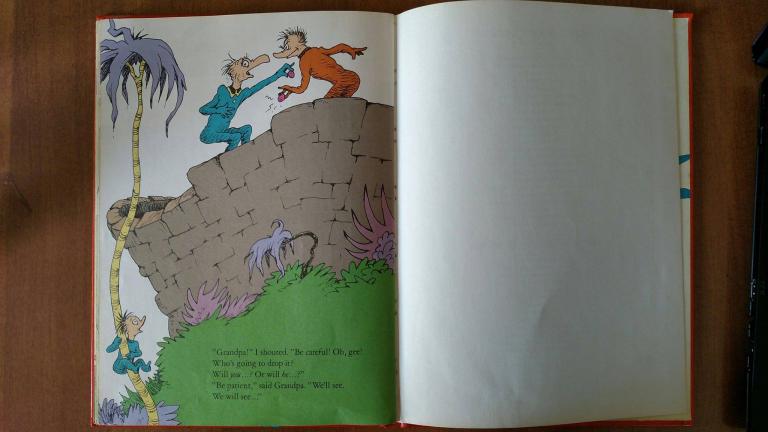
We talked about wanting to see the little boy go up to the men and tell them to bury the bombs in the ground, tear down the wall, and eat butter bread together.
I invited them to think about that ending as they listened to the story of another kind of “butter battle” in the book of Joshua.
Watch the video of the sermon here: https://www.youtube.com/watch?v=K5nPev5QlXw
Sometimes I feel like I’m living in the middle of The Butter Battle book.
I see the headlines and watch the news. I hear about potential wars, armies in a stand-off against each other. And I get very nervous. It makes me feel scared. I’m scared for myself and my children. For children in other countries.
And I wonder – where is God in the midst of our “butter battles”?
The text from Joshua 22 has some interesting parallels to this Dr. Seuss story about the butter battle. The Israelites had just come off a conflict where they had been worshiping idols at a place called Peor. God was very angry with them and punished them for this idolatry. So they were very sensitive about anything that might resemble idol-worship.
The Reubenites, the Gadites, and the half-tribe of Manasseh
After the Israelites had invaded and conquered Canaan, each of the twelve tribes was given a parcel of land. The Reubenites, the Gadites, and the half-tribe of Manasseh received land across the River Jordan. It wasn’t a wall, like between the Zooks and the Snooks, but it was a natural barrier that separated them from the other ten tribes of Israel.
The Reubenites, the Gadites, and the half-tribe of Manasseh were worried that in future generations, the other tribes of Israel would say to their descendants, “You are not part of us. You don’t belong to the nation of Israel. You’re across the river. You’re on the wrong side of the tracks.”
So they built an altar to stand as a witness that they are all part of the same nation of Israel. But that’s not how the rest of the tribes saw it at first. The other Israelites saw them building this altar, and they assumed that these tribes were about to engage in idol-worship. This is what got them in so much trouble to begin with. They were afraid that God would punish all of them, just like God did at Peor.
What happens next mirrors the butter battle.
They gather their soldiers, build up their armies, put on their uniforms, stock-pile their weapons, and ready themselves for war. In their minds, it’s better for them to destroy the Reubenites, the Gadites, and the half-tribe of Manasseh, than it is for God to punish them all.
But here’s where the story takes a turn and shows us what can happen on the blank at the end of the story.
The Bible gives us a picture of what can happen when God’s will is accepted in the midst of preparations for war.
Instead of just launching into attack, Phineas the priest takes with him a delegation of leaders from the ten tribes to go talk to the wayward tribes. Instead of attacking right off the bat, they pause, take a deep breath and ask some questions. “Why are you doing this? Why are you bringing this upon us?” They’re asking the tribes to explain why this altar is there. They’re giving their cousins a chance to explain.
That is what doesn’t happen in the butter battle. In the Dr. Seuss book, there’s no conversation. They just build higher walls and bigger weapons.
But Phineas and the leaders ask the questions, and then wait for an answer. They give their kinsmen a chance to explain what’s going on instead of starting a war. This allows the Reubenites, the Gadites, and the half-tribe of Manasseh a chance to offer a reasoned response.
“We were afraid.”
“We didn’t want your future generations to exclude our children from being able to worship God. This altar isn’t about worshiping other Gods. It’s meant to stand as a witness that we are all in the same worshiping community.”
Then Phineas and the other leaders basically say, “Oh! Now we get it! Now we understand! You weren’t actually doing anything bad. You were doing something good! And we can see that the Lord is present here.”
A sigh of relief
Not only do they say this to the Reubenites, the Gadites, and the half-tribe of Manasseh, they go back to their own tribes and say, “It’s okay. Lay down your weapons. Everybody just take a deep breath. We’re going to explain what this altar is really about.”
And you can feel the whole community go, “Phew!” Because nobody really wanted a war. In war, women and children die. Animals die. Men die in battle. The earth is scorched. Nobody truly wants a war.
Phineas and the other tribes were understandably afraid when they saw that altar. But instead of responding to fear with violence, they stopped, took a deep breath, asked some questions, and waited for an answer. They engaged in conversation and arrived at understanding.
Our churches are to engage in this kind of godly behavior.
And we, as Christians, are to engage in this kind of behavior. If you’re like me and you’re nervous and fearful about all this talk of war, worried about conflicts with people who are different than us, this story from Joshua can be very helpful.
This is not to minimize the very real threats around us. And, admittedly, the story in Joshua assumed rational minds not jacked up on super-charged egos. We don’t have such leaders in place today. And, obviously, none of us are heads of state to be able to have these high-level talks. We don’t serve as international emissaries.
But we can serve as emissaries of peace within our own spheres of influence.
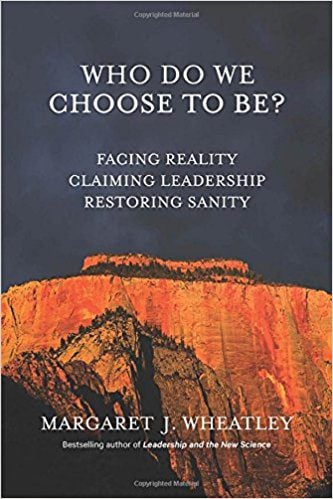
There’s a book I’m reading right now by Margaret Wheatley called Who Do We Choose to Be? Facing Reality, Embracing Leadership, Creating Sanity. In this book she acknowledges that in many ways the world is falling apart. But part of our job as leaders is to create “islands of sanity” in the midst of chaos.
That means that whatever sphere of influence is, you have been tasked by God to create islands of sanity.
So in your own home, if there is a conflict with someone in your family, instead of escalating – stop, take a deep breath, engage in conversation to arrive at understanding.
In your workplace, if people are getting on your nerves or things are getting heated – take a step back, ask some questions, and try to reach some understanding.
For students in school, you know how it can be with the drama. There are conflicts and rumors and things can escalate very quickly between kids. It can become a kind of social war. As Christians, you are called to calm down, take a breath, ask some questions, and be a zone of peace in the midst of the insanity.
Our churches can do the same. God is calling us to create islands of sanity in the midst of this insane world.
So in our Bible studies and at coffee hour and in the parking lot when we hear strong words and escalation, we can stop and say, “Wait a minute. Remember Phineas? He calmed things down, took a step back and engaged in conversation.”
Because we don’t want to see more weapons and more walls. We want to see more doors open for conversation. We want to pass through and talk. When we engage in that kind of peacemaking, do you know what they’re going to say?
They’re going to say, “The Lord is present here. Thanks be to God.”
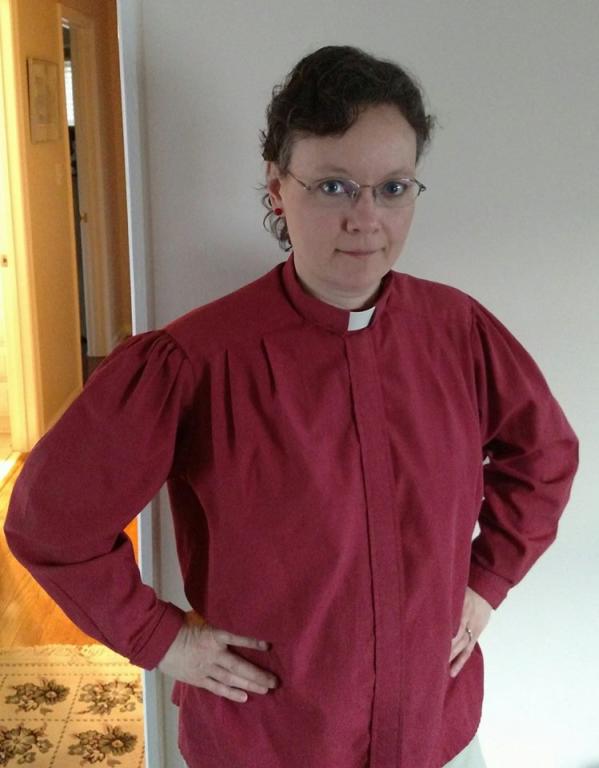
Leah D. Schade is the Assistant Professor of Preaching and Worship at Lexington Theological Seminary (Kentucky) and author of the book Creation-Crisis Preaching: Ecology, Theology, and the Pulpit (Chalice Press, 2015).
Twitter: @LeahSchade
Facebook: https://www.facebook.com/LeahDSchade/.
Previous Post
August 21, 2017
Psalm 137: The Beautifully Dangerous Psalm
Next Post

September 4, 2017 Your Work Matters to God: A Christian Reflection for Labor Day
Browse Our Archives
Select a Category Academy of Homiletics Addiction Advent AI (Artificial Intelligence) Animals Apocalypse Appalachia Ash Wednesday Baptism Bible Black Lives Matter Blade Runner Book review Children in church Christian Nationalism Christian/Islamic relations Christmas Church Clergy Climate change COVID-19 Creation Data Centers Death penalty Devotional Dialogue Doubt Earth Day Easter Ecofeminism EcoPreacher 1-2-3 ELCA ELCA Youth Gathering Election Environment/ecology Epiphany Faith Faith and Politics Feminism Film review Food Food and Faith Forgiveness Fracking Good Friday Good Omens Grief Gun violence Holy Humor Sunday Holy Week Howard Thurman ICE Immigration Indigenous wisdom Interview Jesus Kentucky Lafayette High School Marching Band Leadership Lent LGBTQIA+ Marching band Martin Luther Martin Luther King Jr. Mary Maundy Thursday Michael Sheen Mother of Jesus Nature New Year's Eve Palm Sunday Parables Pentecost Poem, Poetry Politics Poor People's Campaign Pop culture Prayers Preaching Progressive Christianity Public theology Purple Zone Racism and White Privilege Religion Religion and environment Religion and politics Religion and pop culture Religion and violence Rev. Nelson Rabell Gonzalez Sermons Spanish language resources for preaching Technology Thanksgiving Theological education theology Trees Trump Uncategorized Vegan War Women and religion Workshop Worship
Select a Month October 2026 September 2026 July 2026 June 2026 May 2026 April 2026 March 2026 February 2026 January 2026 December 2025 November 2025 October 2025 September 2025 May 2025 April 2025 March 2025 February 2025 January 2025 December 2024 November 2024 October 2024 September 2024 August 2024 July 2024 June 2024 May 2024 April 2024 March 2024 February 2024 January 2024 December 2023 November 2023 October 2023 September 2023 August 2023 July 2023 June 2023 May 2023 April 2023 March 2023 February 2023 January 2023 December 2022 November 2022 October 2022 August 2022 July 2022 June 2022 May 2022 April 2022 March 2022 February 2022 January 2022 December 2021 November 2021 October 2021 September 2021 August 2021 July 2021 June 2021 May 2021 April 2021 March 2021 January 2021 December 2020 November 2020 October 2020 September 2020 August 2020 July 2020 June 2020 May 2020 April 2020 February 2020 January 2020 December 2019 November 2019 October 2019 September 2019 August 2019 July 2019 June 2019 May 2019 April 2019 March 2019 January 2019 December 2018 November 2018 October 2018 September 2018 August 2018 July 2018 June 2018 May 2018 April 2018 March 2018 February 2018 January 2018 December 2017 November 2017 October 2017 September 2017 August 2017 July 2017 June 2017 May 2017 April 2017
Follow Us!
TAKE THE
Religious Wisdom Quiz
Who said, "Even though I walk through the valley of the shadow of death, I will fear no evil"?
Select your answer to see how you score.
Job Paul Moses David
Books by This Author Books by Leah D. Schade
Related posts from EcoPreacher

Cancer Alley Prophets: Jeremiah 20, Matthew 10

10 Principios para la Predicación Ecológica

75th Anniversary Sermon, Reformation Lutheran, Media, PA

This Flag Has Legs: A Sermon Inviting Dialogue...
TRENDING AT PATHEOS Progressive Christian

What Being a Modern-Day Apostle Means to Me
In my last column, I discussed the ins and outs of modern-day...

Did Ancient China Once Worship the God of...
Across human history, a common thread weaves through the origins of the...

Love Your Neighbor – Including Earth-Kin: Lev. 19,...
God’s command to love your neighbor means acting in an ethical and...

Lead a Church Study of “Jesus and Lao...
Guest writer Jack Thomas (The Irreverent Reverend) reflects on leading his church...

Pastoral Wisdom for Responding to Sermon Pushback
Getting sermon pushback on your social justice sermon? Learn practical, Proverbs-based strategies...

Principles for Understanding the Apostolic Ministry Today
Whenever people discover that my formal ministry title is "apostle," as in...
view all Progressive Christian blogs
Ad-Free & Subscriber Log-In Subscription Support
- About Us
- 2026 Calendar
- Videos
- Podcasts
- Library of World Religions
- Faith In Media Tracker
- Advertise With Us
- Write for Us
- Privacy Policy
- Terms of Service
- Do Not Sell My Data
- Contact Us
- Radiant Digital
- Manage Newsletter Subscriptions
- Unsubscribe From Notifications
- Sitemap
Copyright 2008-2026, Patheos. All rights reserved.
Subscription Support Ad-Free & Subscriber Log-In
Follow Patheos