
BuddhistCatholicContemplativeEvangelicalGeneral ChristianHinduJewishLatter-day SaintMuslimNew VisionsProgressive Christian
Beliefs
- Buddhist
- Catholic
- Contemplative
- Evangelical
- General Christian
- Hindu
- Jewish
- Latter-day Saint
- More Voices
- Muslim
- New Visions
- Pagan
- Progressive Christian
Topics
- Religion News
- Food and Religion
- Sports and Religion
- Religious Art
- Religious Music and Entertainment
- Religious Events
- History and Religion
- Style and Religion
- Politics and Religion
- Women in Religion
- Recreation Outdoors and Religion
- Business Finance and Religion
- Careers Workplace and Religion
- Education and Religion
- Family Parenting and Religion
- Health Fitness and Religion
- Home and Religion
- Relationships and Religion
- Technology and Religion
- Travel and Religion
Columnists
- Buddhist Columnists
- Business Finance and Religion Columnists
- Careers Workplace and Religion Columnists
- Catholic Columnists
- Contemplative Columnists
- Education and Religion Columnists
- Evangelists Columnists
- Family Parenting and Religion Columnists
- General Christian Columnists
- Health Fitness and Religion Columnists
- Hindu Columnists
- History and Religion Columnists
- Home and Religion Columnists
- Jewish Columnists
- More Voices Columnists
- Latter Day Columnists
- Muslim Columnists
- New Visions Columnists
- Nonreligious Columnists
- Pagan Columnists
- Politics and Religion Columnists
- Progressive Columnists
- Recreation Outdoors and Religion Columnists
- Relationships and Religion Columnists
- Religion News Columnists
- Religious Art Columnists
- Religious Events Columnists
- Religious Music and Entertainment Columnists
- Sports and Religion Columnists
- Style and Religion Columnists
- Technology and Religion Columnists
- Travel and Religion Columnists
- Women in Religion Columnists
Resource Library
- 2026 Calendar
- Library of World Religions
- The 100 Most Holy Places on Earth
- Patheos Answers
- Podcasts
- Videos
- Faith Leaders Database
- Anglican Episcopalian
- Bahai
- Baptist
- Buddhism
- Christianity
- Confucianism
- Eastern Orthodoxy
- Hinduism
- Holiness and Pentecostal
- ISKCON
- Islam
- Judaism
- Lutheran
- Methodist
- The Church of Jesus Christ of Latter-day Saints
- New Age
- Paganism
- Presbytarian and Reformed
- Protestantism
- Religion Behind the Scenes
- Roman Catholic
- Scientology
- Shia Islam
- Sikhism
- Sufism
- Sunni Islam
- Taoism
- Zen
- See all religions
Research Tools
 Ad-Free & Subscriber Log-In Subscription Support
Ad-Free & Subscriber Log-In Subscription Support
Follow Patheos 

- Trending:
- Forgiveness
- |
- Marriage
- |
- Consciousness
- |
- Death Penalty
- |
- Election
- |
- Halloween

- Home
- Progressive Christian
- Interview with Jim Minick, author of ‘Fire is Your Water’
Interview with Jim Minick, author of ‘Fire is Your Water’
Last updated on: September 21, 2017 at 10:48 am by Leah D. Schade
Interview with Jim Minick, author of ‘Fire is Your Water’ 2017-09-21T10:48:56-04:00 Leah D. Schade
Patheos Explore the world's faith through different perspectives on religion and spirituality! Patheos has the views of the prevalent religions and spiritualities of the world.
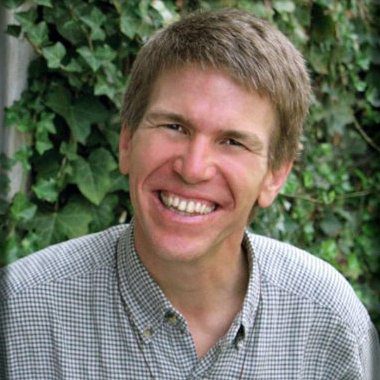
An interview with Fire is Your Water novelist, Jim Minick.
About the book
Set in the south-central Pennsylvania valleys of the Blue and Kittatinny Mountains in 1953, Fire is Your Water tells the story of a young couple whose love blossoms within a tight-knit farming community of Appalachia, and under the watchful eye of a raven named Cicero. Ada Franklin, a young faith healer, and Will Burk, an agnostic, meet while they are both working at a Pennsylvania Turnpike service station. With the Korean War and the growing commerce of America impinging upon their idyllic community, Ada and Will forge a relationship out of fires that sear both their bodies and their spirits. Partly inspired by the storied love affair of his own parents, as well as the legends of his great-grandmother as a “pow-wow” practitioner within the Pennsylvania Dutch tradition, Fire is Your Water combines lyric story-telling, questions of faith and doubt, and magical realism set against the beauty of Appalachia.
[See my review of the book: Fire is Your Water by Jim Minick: Book Review.]
This book resonated with me on a personal level
One of the reasons the book was so compelling for me is that I grew up in Pennsylvania and spent a great deal of time going through the very landscapes Minick describes in the book – the rolling farmlands of Path Valley, the woodlands draping the Appalachian Mountains, and the small towns nestled in between.
My father has a hunting camp in Tell Township, Huntington County, so we would travel many times through the back-to-back tunnels of the Pennsylvania Turnpike, meander alongside the creeks and streams, and hike up into the woods. As I read Minick’s book, I felt transported to these places that I loved growing up. And it occurred to me – hardly anyone writes novels about this area of Pennsylvania.
So I wanted to find out more about the author and how he came to so beautifully capture this geography that is close to my heart. I contacted Jim and asked if he would be willing to be interviewed about the book, and to share some of the behind-the-scenes process that went into creating such a finely-crafted novel.
Jim Minick is the author of five books, including The Blueberry Years, winner of the Best Nonfiction Book of the Year form the Southern Independent Booksellers Association. His work has appeared in Oxford American, Shenandoah, Orion, The Sun, to name a few. He teaches at Augusta University and Converse College.
Here are excerpts from our conversation:
Why was it important for you to write about this area of Pennsylvania?
I grew up in Newburg, four miles from the Blue Mountain exit of the Turnpike. You can see the Blue Mountain service plazas and tunnels from Newburg. My mother was born on the other side of the mountain in Path Valley, so every Sunday during my childhood we would ride over and visit my grandmother and aunt. Those places are home.
The love story of Will and Ada meeting at the service plaza was based on my parents meeting there. My mother worked in the Howard Johnson’s, and my father worked [the gas station].
Also, my grandmother was a healer and worked in the Howard Johnson. She would talk to my mother about her grandson who worked out there pumping gas. Finally my dad built up the courage after about a year to go in and ask for a scoop of ice cream. My mother gave him the cone and a wink, and that’s how it all began.
The character of Cicero the raven is fascinating because it combines elements of myth, biblical imagery, and Native American legend. Can you talk about the shape-shifting aspects of the bird?
First, did you look at the cover?
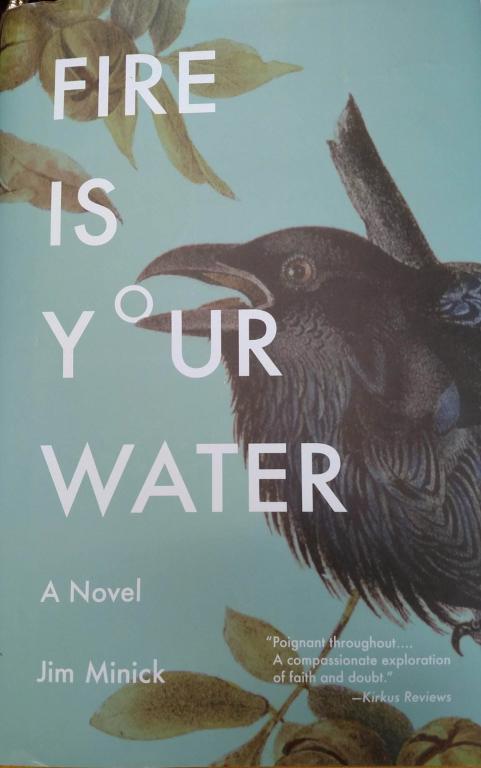
Yes, I loved the image of the raven holding the “o” because it references something in the book.
Now take the dust jacket off.
Oh, look – the “o” is missing from the title!
Now turn the book over.
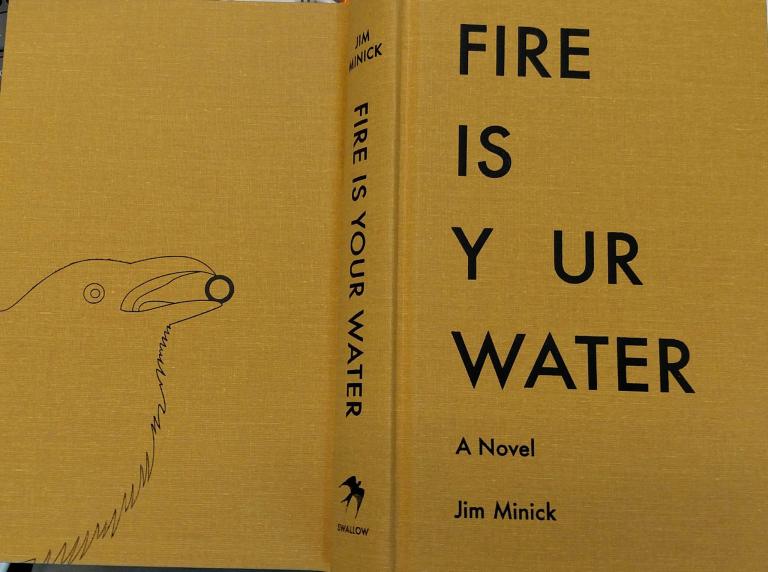
And there it is in Cicero’s beak! What a great cover!
Yes, I was thrilled with that.
Have you had many encounters with ravens?
I’ve always loved birds. Originally Cicero was going to be a crow, but I did some research and found out that ravens are smarter. So I talked with some ornithologists and spent a day with a man who rehabilitated large birds, especially ravens. He and some other birders had some good stories to share with me.
Religion, faith, doubt, and healing are all themes in this book. Can you tell me about your own background that led you to write with these motifs in mind?
All through high school I thought I was going to be a minister. I was raised in a very religious family. It was Methodist. It seemed the safest and most logical thing to do with my love of language and what I enjoyed about the church. But then I went to college and I realized how confining that was. So now I’m not a Christian. Which is the funny thing about this book – when it went up for approval with the publishing board, one person’s opinion was that it was too Christian. So in a way that’s a compliment, especially in the way I rendered the character of Ada. But I did go back and think about a way to create some distance through the introduction of doubt.
I was especially taken with the scene where Ada has a “burning bush” vision in the woods. As an ecofeminist theologian, the connection between the feminine, religion, and nature was something that really resonated with me. Can you speak to that intersection?
Church for me is in the woods. Trying to be awake to the beauty and grandeur of it all is something that I think we all need to try to practice. Sitting still in the woods is a kind of religious act. To be able to write about that was a huge risk. I wasn’t sure if it was going to work or not, so I’m glad it did for you.
What audiences have been interested in Fire Is Your Water?
The readership has been pretty wide. People who know that area of Pennsylvania like the book. Also people who are interested in faith and religion, but not having pat answers. I’ve had some luck with book clubs and festivals. People who love birds also like the book. And readers who lived in the 50s have said the book resonated with them.
I’d thought about recommending it for church reading groups, but there is a bit of salty language sprinkled throughout.
That’s true. You could say – “Recommended for church groups as long as they can tolerate a bird that swears”!
Is there anything else you would like people to know about the book?
One reader said to me, “They don’t make this type of book anymore.” I think it’s partly because it’s a love story, but also because of the magical realism as well. And people have been interested in the family connections, because Ada is based on my great-grandmother Ida, who was a healer. The story of the healing of the cow, for example, that was a family gem that happened before I was born. And when Ada heals an epileptic – that was a family story as well. One of the reasons I went to fiction is so I could use these stories.
For me, the book is a love song to that area of the Cumberland Valley. It’s my family home, and area that I still love – the mountain-valley region of south-central Pennsylvania.
Visit Jim Minick’s website to learn more about Fire Is Your Water and his other works: http://www.jim-minick.com/wpdev/.
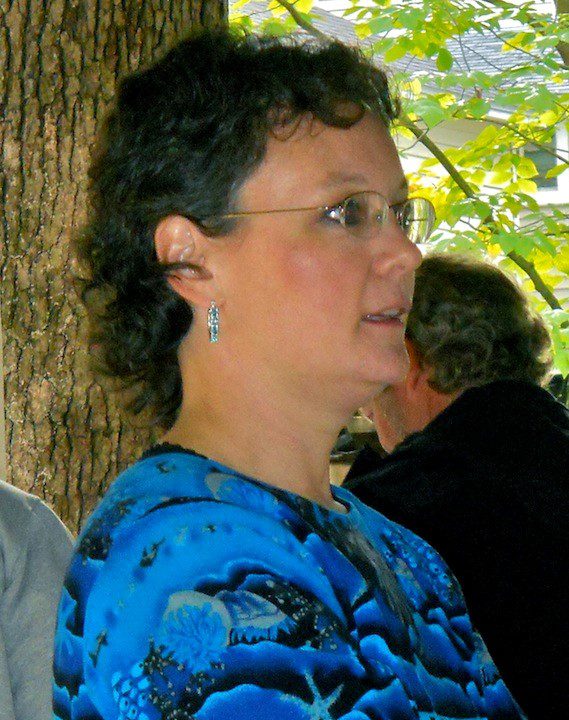
Leah D. Schade is the Assistant Professor of Preaching and Worship at Lexington Theological Seminary (Kentucky) and author of the book Creation-Crisis Preaching: Ecology, Theology, and the Pulpit (Chalice Press, 2015).
Twitter: @LeahSchade
Facebook: https://www.facebook.com/LeahDSchade/.
Previous Post

September 21, 2017
Fire is Your Water by Jim Minick: Book Review
Next Post

September 26, 2017 Shoes in the Vineyard: Immigration and Jesus' Parable
Browse Our Archives
Select a Category Academy of Homiletics Addiction Advent AI (Artificial Intelligence) Animals Apocalypse Appalachia Ash Wednesday Baptism Bible Black Lives Matter Blade Runner Book review Children in church Christian Nationalism Christian/Islamic relations Christmas Church Clergy Climate change COVID-19 Creation Data Centers Death penalty Devotional Dialogue Doubt Earth Day Easter Ecofeminism EcoPreacher 1-2-3 ELCA ELCA Youth Gathering Election Environment/ecology Epiphany Faith Faith and Politics Feminism Film review Food Food and Faith Forgiveness Fracking Good Friday Good Omens Grief Gun violence Holy Humor Sunday Holy Week Howard Thurman ICE Immigration Indigenous wisdom Interview Jesus Kentucky Lafayette High School Marching Band Leadership Lent LGBTQIA+ Marching band Martin Luther Martin Luther King Jr. Mary Maundy Thursday Michael Sheen Mother of Jesus Nature New Year's Eve Palm Sunday Parables Pentecost Poem, Poetry Politics Poor People's Campaign Pop culture Prayers Preaching Progressive Christianity Public theology Purple Zone Racism and White Privilege Religion Religion and environment Religion and politics Religion and pop culture Religion and violence Rev. Nelson Rabell Gonzalez Sermons Spanish language resources for preaching Technology Thanksgiving Theological education theology Trees Trump Uncategorized Vegan War Women and religion Workshop Worship
Select a Month October 2026 September 2026 July 2026 June 2026 May 2026 April 2026 March 2026 February 2026 January 2026 December 2025 November 2025 October 2025 September 2025 May 2025 April 2025 March 2025 February 2025 January 2025 December 2024 November 2024 October 2024 September 2024 August 2024 July 2024 June 2024 May 2024 April 2024 March 2024 February 2024 January 2024 December 2023 November 2023 October 2023 September 2023 August 2023 July 2023 June 2023 May 2023 April 2023 March 2023 February 2023 January 2023 December 2022 November 2022 October 2022 August 2022 July 2022 June 2022 May 2022 April 2022 March 2022 February 2022 January 2022 December 2021 November 2021 October 2021 September 2021 August 2021 July 2021 June 2021 May 2021 April 2021 March 2021 January 2021 December 2020 November 2020 October 2020 September 2020 August 2020 July 2020 June 2020 May 2020 April 2020 February 2020 January 2020 December 2019 November 2019 October 2019 September 2019 August 2019 July 2019 June 2019 May 2019 April 2019 March 2019 January 2019 December 2018 November 2018 October 2018 September 2018 August 2018 July 2018 June 2018 May 2018 April 2018 March 2018 February 2018 January 2018 December 2017 November 2017 October 2017 September 2017 August 2017 July 2017 June 2017 May 2017 April 2017
Follow Us!
TAKE THE
Religious Wisdom Quiz
Who was Abraham asked to offer as a sacrifice?
Select your answer to see how you score.
Shem Jacob Ishmael Isaac
Books by This Author Books by Leah D. Schade
Related posts from EcoPreacher

Love Your Neighbor – Including Earth-Kin: Lev. 19,...

Eco-Wedding Liturgy: Creation-Centered Ideas for Weddings
In the Lion’s Den, State of the Union:...
For God So Loved the World: Creation and...
TRENDING AT PATHEOS Progressive Christian

What Being a Modern-Day Apostle Means to Me
In my last column, I discussed the ins and outs of modern-day...

Did Ancient China Once Worship the God of...
Across human history, a common thread weaves through the origins of the...

Love Your Neighbor – Including Earth-Kin: Lev. 19,...
God’s command to love your neighbor means acting in an ethical and...

Lead a Church Study of “Jesus and Lao...
Guest writer Jack Thomas (The Irreverent Reverend) reflects on leading his church...

Pastoral Wisdom for Responding to Sermon Pushback
Getting sermon pushback on your social justice sermon? Learn practical, Proverbs-based strategies...

Principles for Understanding the Apostolic Ministry Today
Whenever people discover that my formal ministry title is "apostle," as in...
view all Progressive Christian blogs
Ad-Free & Subscriber Log-In Subscription Support
- About Us
- 2026 Calendar
- Videos
- Podcasts
- Library of World Religions
- Faith In Media Tracker
- Advertise With Us
- Write for Us
- Privacy Policy
- Terms of Service
- Do Not Sell My Data
- Contact Us
- Radiant Digital
- Manage Newsletter Subscriptions
- Unsubscribe From Notifications
- Sitemap
Copyright 2008-2026, Patheos. All rights reserved.
Subscription Support Ad-Free & Subscriber Log-In
Follow Patheos