
BuddhistCatholicContemplativeEvangelicalGeneral ChristianHinduJewishLatter-day SaintMuslimNew VisionsProgressive Christian
Beliefs
- Buddhist
- Catholic
- Contemplative
- Evangelical
- General Christian
- Hindu
- Jewish
- Latter-day Saint
- More Voices
- Muslim
- New Visions
- Pagan
- Progressive Christian
Topics
- Religion News
- Food and Religion
- Sports and Religion
- Religious Art
- Religious Music and Entertainment
- Religious Events
- History and Religion
- Style and Religion
- Politics and Religion
- Women in Religion
- Recreation Outdoors and Religion
- Business Finance and Religion
- Careers Workplace and Religion
- Education and Religion
- Family Parenting and Religion
- Health Fitness and Religion
- Home and Religion
- Relationships and Religion
- Technology and Religion
- Travel and Religion
Columnists
- Buddhist Columnists
- Business Finance and Religion Columnists
- Careers Workplace and Religion Columnists
- Catholic Columnists
- Contemplative Columnists
- Education and Religion Columnists
- Evangelists Columnists
- Family Parenting and Religion Columnists
- General Christian Columnists
- Health Fitness and Religion Columnists
- Hindu Columnists
- History and Religion Columnists
- Home and Religion Columnists
- Jewish Columnists
- More Voices Columnists
- Latter Day Columnists
- Muslim Columnists
- New Visions Columnists
- Nonreligious Columnists
- Pagan Columnists
- Politics and Religion Columnists
- Progressive Columnists
- Recreation Outdoors and Religion Columnists
- Relationships and Religion Columnists
- Religion News Columnists
- Religious Art Columnists
- Religious Events Columnists
- Religious Music and Entertainment Columnists
- Sports and Religion Columnists
- Style and Religion Columnists
- Technology and Religion Columnists
- Travel and Religion Columnists
- Women in Religion Columnists
Resource Library
- 2026 Calendar
- Library of World Religions
- The 100 Most Holy Places on Earth
- Patheos Answers
- Podcasts
- Videos
- Faith Leaders Database
- Anglican Episcopalian
- Bahai
- Baptist
- Buddhism
- Christianity
- Confucianism
- Eastern Orthodoxy
- Hinduism
- Holiness and Pentecostal
- ISKCON
- Islam
- Judaism
- Lutheran
- Methodist
- The Church of Jesus Christ of Latter-day Saints
- New Age
- Paganism
- Presbytarian and Reformed
- Protestantism
- Religion Behind the Scenes
- Roman Catholic
- Scientology
- Shia Islam
- Sikhism
- Sufism
- Sunni Islam
- Taoism
- Zen
- See all religions
Research Tools
 Ad-Free & Subscriber Log-In Subscription Support
Ad-Free & Subscriber Log-In Subscription Support
Follow Patheos 

- Trending:
- Forgiveness
- |
- Marriage
- |
- Consciousness
- |
- Death Penalty
- |
- Election
- |
- Halloween

- Home
- Progressive Christian
- Psalm 137: The Beautifully Dangerous Psalm
Psalm 137: The Beautifully Dangerous Psalm
Last updated on: August 22, 2017 at 4:44 pm by Leah D. Schade
Psalm 137: The Beautifully Dangerous Psalm 2017-08-22T16:44:59-04:00 Leah D. Schade
Patheos Explore the world's faith through different perspectives on religion and spirituality! Patheos has the views of the prevalent religions and spiritualities of the world.
Psalm 137 is rarely ever used in worship. Why? Because it is a dangerous psalm. But we need to read it, study it, and listen to the voice of anguished rage. Because God is listening to those voices as well.
Have you ever listened to the song, “On the Willows”?
http://www.youtube.com/watch?v=RcgRQT8L7Zw
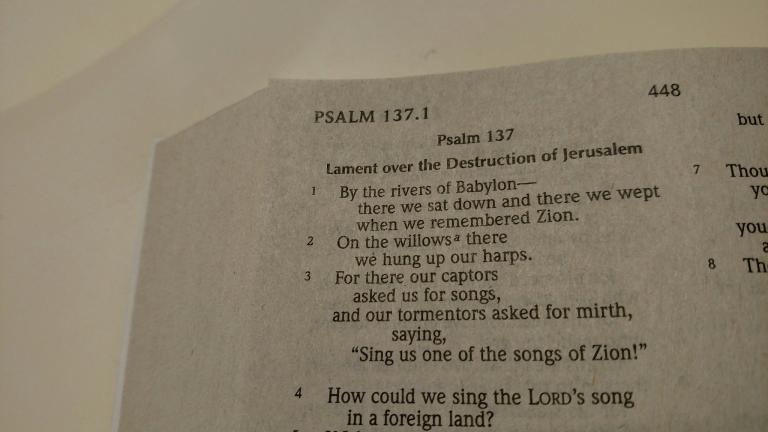
I remember the first time I heard this music from Godspell. What a beautiful, mournful song, I thought to myself. And I know I’ve heard those words before . . . “On the willows there we hung up our lyres.” Such beautiful, haunting words. Where have I heard them before? And then it hit me – Psalm 137. But I noticed that the song’s lyrics stopped short of the last verses of the Psalm: “Happy will be the one who does to you what you did to us, O Babylon. Blessed will be the one who dashes your little ones, your babies against the rock.”
What an awful image!
It’s hard to believe a Psalm like this is in the Bible. It is so violent! It speaks of killing babies, of all things. This is a far cry from Jesus’ words of forgiving your enemies and those who persecute you.
This is raw, uncensored hatred and desire for revenge. Most people don’t even realize this Psalm is in the Bible. In fact, a previous version of the ELCA hymnal, The Lutheran Book of Worship, even censored out this psalm altogether from its collection.
Why? Because it is a dangerous psalm – a beautifully dangerous psalm.
[Watch the video of this sermon: https://www.facebook.com/glclex/videos/1385217761586027/]
So why is Psalm 137 in the Bible? What are we to do with a psalm like this?
The presence of this kind of violent and vengeful language is off-putting to many people. Some may even claim that this kind of wording authorizes revenge and retaliation. So we have to handle this psalm with care. Used in the wrong way, it could serve as an excuse to continue the cycle of violence and result in further bloodshed.
But we must also be careful in our reading here.
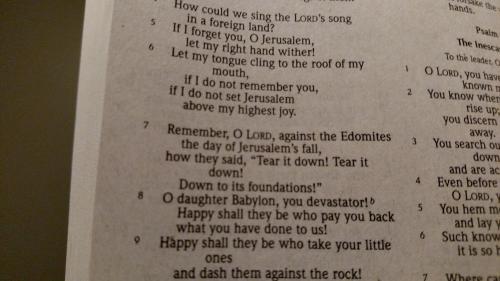
The psalmist is not saying that we should go out and kill children and seek revenge.
Yes, it is expressing those thoughts and those wishes. But it’s done as a prayer to God. And that’s a very different thing than acting on those feelings and carrying them out.
Let’s be honest – “desire for retribution and violence are in fact part of the human condition.” (Murphy, 43). Think back to the vitriolic language that erupted after the attacks on our country on Sept. 11, over a 15 years ago. I heard more than one person say, “We should just bomb the whole Middle East. I don’t care if we kill their children – might as well get them before they grow up to be terrorists and attack us. Let’s just bomb them back to the stone age!”
And . . . we have. We may not be personally bashing babies’ heads in. But our bombs and our guns have taken the lives of countless innocent children – so-called “collateral damage.”
Yes, these are difficult words to hear.
Here we are worshiping in this beautiful church with our friends – we don’t like to talk about these things. We don’t like conflict, and we just want to get along and be good people. So a psalm like this is embarrassing, even offensive to us.
Why? Because most of us have never “lost that much, been abused that much, or hoped that much,” (Brueggemann, p. 75). It is so difficult for us to pray this psalm because we simply cannot identify with it. So what are we to do with it? Is there another approach to this beautifully dangerous psalm? Yes!
Here’s what we must do: We must listen to the voices of Psalm 137.
We must hear the agony and even the expression of the desire for sinful violence. And we must listen to Psalm 137 precisely because it is said in the context of prayer. “These expressions of rage exemplify the demonic in every human heart. . . When they are heard in prayer, they serve to illuminate our own feelings and even to accuse us of our own acts of vengeance.” (Murphy, 46).
We live in a world marked by violence and revenge – wouldn’t it be prudent to put those feelings into a context of prayer instead of acting on them?
Wouldn’t it be wise to invite God into these feelings?
That’s just what the psalmist does here. You see, we have to understand the specific historical event that this psalm makes reference to. This psalm reveals the sufferings and sentiments of people who experienced first-hand the terrible days of the conquest and destruction of Jerusalem in 587 B.C. This was their September 11. Their temple was destroyed – the very center of their faith.
And, like the Africans who were brought to this country against their will, the Hebrews were forced into the Babylonian captivity. They were taken far from Jerusalem and subjugated as slaves of the Babylonians. Even worse, they watched their conquerors kill their children. “Adults might be spared to serve various purposes for the conquerors, but the infants were killed to end the community’s future.” (Eaton, 455).
Psalm 137 is a psalm for this moment.
Because these words from the Bible help us understand why African Americans are so upset to see monuments to their enslavers. It reinforces the humiliation they suffered and reminds them of their enslavement. And this resurgence of Nazis reminds Jews of the threats of annihilation they have faced throughout history. It’s why so many people are standing against the KKK and Nazi rallies around the country. Because white nationalists want to repeat the horrors that led to the expression of these words in Psalm 137.
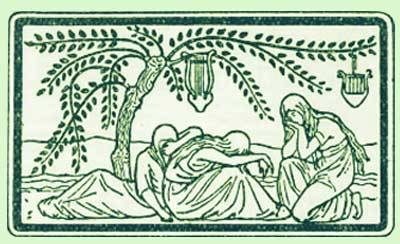
When the Israelites were captives in Babylon, they experienced profound homesickness, grief, depression, and despondency. This scene from the psalm describes the Hebrew musicians sitting by one of the rivers in this hated land. Their captors come along, taunting them, ordering them to sing happy songs about Zion. What an ignorant, arrogant insult. Of course they cannot sing happy songs about Zion in this foreign land. The holy songs cannot be sung on ground not dedicated to the Lord. To do so would be sacrilegious and bitterly ironic.
So they hung up their instruments in protest.
This kind of thing actually happened in the Nazi death camps, where Jews were forced to sing and dance their music and songs while the soldiers mocked them and laughed at them. “It was a part of the humiliation intending to rob Jews of their identity, their dignity, and their hope,” (Brueggemann, p. 75).
Never forget.
The psalmist then makes a personal vow not to forget Jerusalem. To never forget the Temple that has been leveled, the city that has been burned, the king and leaders and musicians and teachers who have been led away to captivity in Babylon. And then with a fury that nearly explodes from the page, he wishes for someone to exact revenge on the Edomites who plundered Jerusalem after the Israelites were gone, and upon the Babylonians who so mercilessly killed their children.
We can only look upon these feelings with either stunned horror or detached numbness.
Because unless you have lived through something similar, I don’t think any of us have ever experienced this kind of suffering. In fact, we want to keep that kind of suffering far away. We don’t want to hear about the history of slavery and Jim Crow. We don’t want to hear about the Holocaust and anti-Semitism. It’s so much easier to forget the ugly history of what Europeans did to the native peoples of North America. We don’t want to deal with the woman who has been brutally raped.
We cannot bear such suffering.
So we avert our eyes, shush their voices, blame them for what happened, or even deny that it ever happened in the first place. And sometimes we express outrage that such intensity of pain and desire for revenge is even voiced, much less in the Bible. Some people are probably upset that we are even talking about this in church.
I can tell you that there are pastors across the country who have been working diligently and faithfully to figure out how to preach during this difficult time. And some of them will get negative push-back for talking about these realities. “Can’t we have just one hour in the week when we don’t have to think about these things?”
But Old Testament historian Walter Brueggemann suggests that it is absolutely necessary to listen to this Psalm. Because it speaks with unfailing honesty about the abuse that was done, and is still done, to individuals and to whole groups of people. And it is necessary for us to hear how it feels to suffer this kind of violence and humiliation. We want to move so quickly from this Psalm to Jesus’ words telling us to forgive. But, as Brueggemann asks, “Could it be that genuine forgiveness is possible only when there has been a genuine articulation of [anger] and hatred?” (Brueggemann, 77).
How to help them heal
We need to recognize that healing is not just something we long for in our own bodies and in our personal relationships. Healing is something that is needed by our brothers and sisters around the world who have experienced the most humiliating kind of brutality. By listening to their words, hearing their stories, believing them, and holding those powerful, violent emotions as best we can, we are at least acknowledging that, yes, this has happened. It’s not fair, it’s not right, and your pain is worthy of healing.
Psalm 137 gives permission, and actually authorizes the powerless who have been brutalized to vent their indignation and turn to God for justice. “It is an act of profound faith to entrust one’s most precious hatreds to God, knowing they will be taken seriously.” (Brueggemann, 77). And that is, finally, where we must direct our prayers.
Emmanuel – God with us
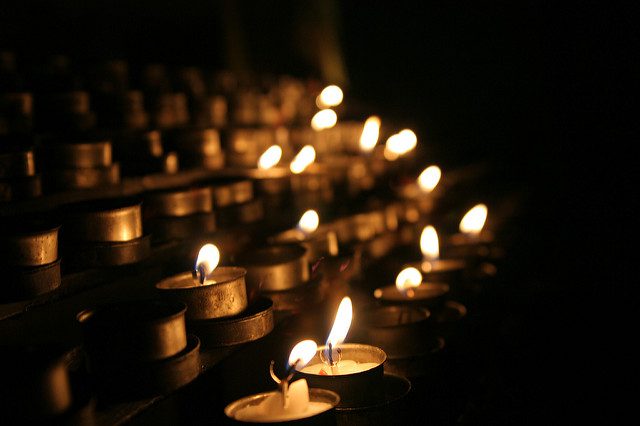
I invite you to come forward to this table of candles as we sing the hymn, “O Come, O Come Emmanuel.” Yes, this is an Advent hymn, but it is so appropriate for those who are mourning in lonely exile, as the Israelites did, as the slaves did, as the Native Americans did, as so many refugees do across this planet, and as so many suffer in our world today. This hymn asks for God’s presence. That’s what Emmanuel means – “God with us.” And we can certainly all agree that we need God’s presence with us in our nation, in our world.
Maybe you’ll light a candle as a symbol for your own need for healing. Or maybe you will see the candles and remember that someone is burning with pain and rage which needs to be seen and heard and healed. Maybe you are even feeling anger yourself right now. And that’s okay. Give that anger to God, and let God transform it.
O Come, O Come, Emmanuel – God is with us. Amen.
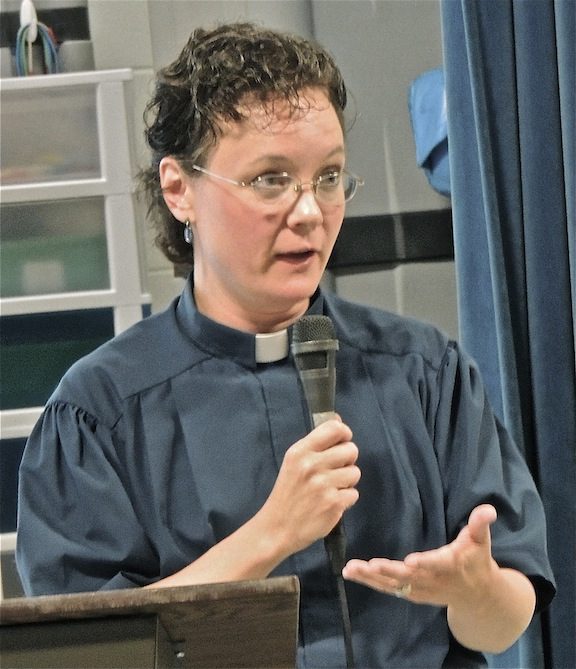
Leah D. Schade is the Assistant Professor of Preaching and Worship at Lexington Theological Seminary (Kentucky) and author of the book Creation-Crisis Preaching: Ecology, Theology, and the Pulpit (Chalice Press, 2015).
You can follow Leah on Twitter at @LeahSchade, and on Facebook at https://www.facebook.com/LeahDSchade/.
For more on preaching about Charlottesville, racism, and white privilege:
9 Reasons You Need to Preach about Charlottesville
How to Preach When You are Afraid
8 Ways to Preach about Charlottesville, White Supremacy, and Racial Justice
The Harp Sermon: A Response to Charlottesville and Racial Hatred
Sources:
* Brueggemann, Walter, The Message of the Psalms: A Theological Commentary, Augsburg Publishing House, 1984.
* Eaton, John, The Psalms: A Historical and Spiritual Commentary withe and Introduction and New Translation, Continuum, New York, 2005.
* Murphy, Roland E., The Psalms, Job, from Proclamation Commentaries, Foster McCurley, Editor; Fortress Press, Philadelphia,1977.
Previous Post
August 19, 2017
How to Preach When You Are Afraid
Next Post
September 3, 2017 Write a Different Ending: Phineas and the 'Butter Battle'
Browse Our Archives
Select a Category Academy of Homiletics Addiction Advent AI (Artificial Intelligence) Animals Apocalypse Appalachia Ash Wednesday Baptism Bible Black Lives Matter Blade Runner Book review Children in church Christian Nationalism Christian/Islamic relations Christmas Church Clergy Climate change COVID-19 Creation Data Centers Death penalty Devotional Dialogue Doubt Earth Day Easter Ecofeminism EcoPreacher 1-2-3 ELCA ELCA Youth Gathering Election Environment/ecology Epiphany Faith Faith and Politics Feminism Film review Food Food and Faith Forgiveness Fracking Good Friday Good Omens Grief Gun violence Holy Humor Sunday Holy Week Howard Thurman ICE Immigration Indigenous wisdom Interview Jesus Kentucky Lafayette High School Marching Band Leadership Lent LGBTQIA+ Marching band Martin Luther Martin Luther King Jr. Mary Maundy Thursday Michael Sheen Mother of Jesus Nature New Year's Eve Palm Sunday Parables Pentecost Poem, Poetry Politics Poor People's Campaign Pop culture Prayers Preaching Progressive Christianity Public theology Purple Zone Racism and White Privilege Religion Religion and environment Religion and politics Religion and pop culture Religion and violence Rev. Nelson Rabell Gonzalez Sermons Spanish language resources for preaching Technology Thanksgiving Theological education theology Trees Trump Uncategorized Vegan War Women and religion Workshop Worship
Select a Month October 2026 September 2026 July 2026 June 2026 May 2026 April 2026 March 2026 February 2026 January 2026 December 2025 November 2025 October 2025 September 2025 May 2025 April 2025 March 2025 February 2025 January 2025 December 2024 November 2024 October 2024 September 2024 August 2024 July 2024 June 2024 May 2024 April 2024 March 2024 February 2024 January 2024 December 2023 November 2023 October 2023 September 2023 August 2023 July 2023 June 2023 May 2023 April 2023 March 2023 February 2023 January 2023 December 2022 November 2022 October 2022 August 2022 July 2022 June 2022 May 2022 April 2022 March 2022 February 2022 January 2022 December 2021 November 2021 October 2021 September 2021 August 2021 July 2021 June 2021 May 2021 April 2021 March 2021 January 2021 December 2020 November 2020 October 2020 September 2020 August 2020 July 2020 June 2020 May 2020 April 2020 February 2020 January 2020 December 2019 November 2019 October 2019 September 2019 August 2019 July 2019 June 2019 May 2019 April 2019 March 2019 January 2019 December 2018 November 2018 October 2018 September 2018 August 2018 July 2018 June 2018 May 2018 April 2018 March 2018 February 2018 January 2018 December 2017 November 2017 October 2017 September 2017 August 2017 July 2017 June 2017 May 2017 April 2017
Follow Us!
TAKE THE
Religious Wisdom Quiz
I am the vine; you are the branches. If you remain in me and I in you, you will bear much ____; apart from me you can do nothing.
Select your answer to see how you score.
Faith Joy Fruit Peace
Books by This Author Books by Leah D. Schade
Related posts from EcoPreacher

Pastoral Wisdom for Responding to Sermon Pushback

What Matt. 21:23-32 Teaches About Integrity In An...

Preaching About Climate Change: What Clergy Need Most

When The Data Center Wolf Is At Your...
TRENDING AT PATHEOS Progressive Christian

What Being a Modern-Day Apostle Means to Me
In my last column, I discussed the ins and outs of modern-day...

Did Ancient China Once Worship the God of...
Across human history, a common thread weaves through the origins of the...

Love Your Neighbor – Including Earth-Kin: Lev. 19,...
God’s command to love your neighbor means acting in an ethical and...

Lead a Church Study of “Jesus and Lao...
Guest writer Jack Thomas (The Irreverent Reverend) reflects on leading his church...

Pastoral Wisdom for Responding to Sermon Pushback
Getting sermon pushback on your social justice sermon? Learn practical, Proverbs-based strategies...

Principles for Understanding the Apostolic Ministry Today
Whenever people discover that my formal ministry title is "apostle," as in...
view all Progressive Christian blogs
Ad-Free & Subscriber Log-In Subscription Support
- About Us
- 2026 Calendar
- Videos
- Podcasts
- Library of World Religions
- Faith In Media Tracker
- Advertise With Us
- Write for Us
- Privacy Policy
- Terms of Service
- Do Not Sell My Data
- Contact Us
- Radiant Digital
- Manage Newsletter Subscriptions
- Unsubscribe From Notifications
- Sitemap
Copyright 2008-2026, Patheos. All rights reserved.
Subscription Support Ad-Free & Subscriber Log-In
Follow Patheos