
BuddhistCatholicContemplativeEvangelicalGeneral ChristianHinduJewishLatter-day SaintMuslimNew VisionsProgressive Christian
Beliefs
- Buddhist
- Catholic
- Contemplative
- Evangelical
- General Christian
- Hindu
- Jewish
- Latter-day Saint
- More Voices
- Muslim
- New Visions
- Pagan
- Progressive Christian
Topics
- Religion News
- Food and Religion
- Sports and Religion
- Religious Art
- Religious Music and Entertainment
- Religious Events
- History and Religion
- Style and Religion
- Politics and Religion
- Women in Religion
- Recreation Outdoors and Religion
- Business Finance and Religion
- Careers Workplace and Religion
- Education and Religion
- Family Parenting and Religion
- Health Fitness and Religion
- Home and Religion
- Relationships and Religion
- Technology and Religion
- Travel and Religion
Columnists
- Buddhist Columnists
- Business Finance and Religion Columnists
- Careers Workplace and Religion Columnists
- Catholic Columnists
- Contemplative Columnists
- Education and Religion Columnists
- Evangelists Columnists
- Family Parenting and Religion Columnists
- General Christian Columnists
- Health Fitness and Religion Columnists
- Hindu Columnists
- History and Religion Columnists
- Home and Religion Columnists
- Jewish Columnists
- More Voices Columnists
- Latter Day Columnists
- Muslim Columnists
- New Visions Columnists
- Nonreligious Columnists
- Pagan Columnists
- Politics and Religion Columnists
- Progressive Columnists
- Recreation Outdoors and Religion Columnists
- Relationships and Religion Columnists
- Religion News Columnists
- Religious Art Columnists
- Religious Events Columnists
- Religious Music and Entertainment Columnists
- Sports and Religion Columnists
- Style and Religion Columnists
- Technology and Religion Columnists
- Travel and Religion Columnists
- Women in Religion Columnists
Resource Library
- 2026 Calendar
- Library of World Religions
- The 100 Most Holy Places on Earth
- Patheos Answers
- Podcasts
- Videos
- Faith Leaders Database
- Anglican Episcopalian
- Bahai
- Baptist
- Buddhism
- Christianity
- Confucianism
- Eastern Orthodoxy
- Hinduism
- Holiness and Pentecostal
- ISKCON
- Islam
- Judaism
- Lutheran
- Methodist
- The Church of Jesus Christ of Latter-day Saints
- New Age
- Paganism
- Presbytarian and Reformed
- Protestantism
- Religion Behind the Scenes
- Roman Catholic
- Scientology
- Shia Islam
- Sikhism
- Sufism
- Sunni Islam
- Taoism
- Zen
- See all religions
Research Tools
 Ad-Free & Subscriber Log-In Subscription Support
Ad-Free & Subscriber Log-In Subscription Support
Follow Patheos 

- Trending:
- Forgiveness
- |
- Marriage
- |
- Consciousness
- |
- Death Penalty
- |
- Election
- |
- Halloween
 Eating Peaches
- Home
- Catholic
- Saint Mary Josepha Rossello: Surprised by Vocation
Saint Mary Josepha Rossello: Surprised by Vocation
Last updated on: December 12, 2018 at 7:18 am by Marina S. Brungardt
Saint Mary Josepha Rossello: Surprised by Vocation 2018-12-12T07:18:18-07:00 Marina S. Brungardt
Patheos Explore the world's faith through different perspectives on religion and spirituality! Patheos has the views of the prevalent religions and spiritualities of the world.
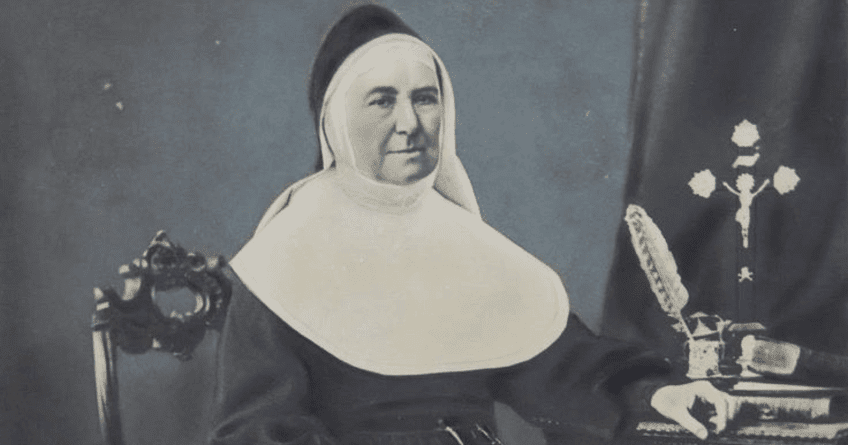
Image via A Catholic Inspiration
Saint Mary Josepha Rossello
Feast Day: December 7
Biography
As the fourth of nine children, it should come as no surprise that Benedetta Rossello, later Saint Mary Josepha Rossello, would grow up with a desire to care for the young. Her parents, who were poor, worked as pottery makers near Savona, Italy, work that all their children helped them to complete. Being with her parents, Benedetta was influenced by her parents’ teachings and examples. She also had the opportunity to attend the local school, where she loved reading stories, particularly those about saints. These stories led her as a child to tell her parish priest she wanted to grow up to become a hermit, doing penance and praying in the desert, and a missionary, teaching children who were unbaptized about God’s love.
Her love for God eventually led her to become a Third Order Franciscan at age 16, observing the Rule of Saint Francis in her daily life, attending Mass, and spending time in Adoration of the Blessed Sacrament. The couple she worked for as a companion teased her, saying she was already becoming a saint, but Benedetta replied, “No…I am not saint material. I am just sinner material,” to which her employer replied, “Don’t laugh, just remember someday how I said that in the future the angels might come to help you with your own work in the fields.”
As Benedetta grew up, her kindness and piety attracted the attention of a young man who sought her hand in marriage. At 19, Benedetta turned down the offer, telling her parents that her future was entirely the Lord’s, and while she was unsure what that would look like exactly, she knew that it did not involve marriage. After nine years of working for the Monteleones, she came to the conclusion she wanted to enter the convent, despite her employers’ offer to adopt her and leave her their heir upon their death. Despite her desire, her lack of a dowery made it impossible for her to enter a convent; she was rejected from all the ones she applied to.
Despite the seeming stall in her vocation, in 1843 when Benedetta was 23 years old, the Bishop of Savona had begun to seek out a group of sisters to care for the homeless, uneducated young girls of the city. Benedetta learned of his desire and approached him with her own desire to serve the Church through acts of Mercy. The Bishop asked her to find some companions to join her in this work.
With three of her childhood friends, Pauline Barla, Angela Pessio, and Domenica Pessio, Benedetta founded the Daughters of Our Lady of Mercy, and on October 22,1837 took their vows, donned their habits, and received their new names. Benedetta became Sister Mary Josepha, the order’s first novice mistress. Two years later, the sisters took their final vows. By that time, the order had opened a day school and a boarding school for wealthy girls who could pay tuition that allowed them to then open both a free day school and free boarding school for the poor girls in their community. They also had started local catechism classes in Savona.
In 1840, Sr. Josepha was elected to the role of Mother Superior, a calling she fulfilled until her death in 1880. Due to her own experience, she insisted on accepting girls into the order who had no dowery. The order expanded its mission in this time from teaching to also include hospitals and other works of charity, including encouraging vocations to the priesthood. Another ministry Mother Mary Josepha was very committed to was rescuing African girls who had been kidnaped by slave traders. At the time of her death, the Daughters of Mercy (as they were commonly called) had established 67 hospitals, schools, and homes for abandoned girls. She was canonized by Pope Pius XII on June 12, 1949.
What’s She Got to Do with Me?
Saint Mary Josepha stands as a particularly relatable saint to modern young adults. Her poverty seemed to limit her ability to follow her vocation, and when she attempted to pursue what she was sure God was calling her towards, she was rejected by the convents she sought to enter. To anyone who has found themselves following what they were sure was God’s will for their vocation only to find the relationship breaking up, being turned away from a religious order, or discerning out of the seminary, Saint Mary Joseph provides an image of hope. She reminds us that God’s providence and plan is far grander and more particular than we could have ever imagined, even when it looks like it could never possibly happen.
She also reminds us that, tempting as it may be to solve big problems far away from where we are, often times the opportunity to serve Christ’s Body can be found in our own towns, with those who are rejected. Whether serving the poor, volunteering to foster children, working as a mentor with troubled teenagers, working at a local woman’s shelter, or even visiting a retirement home to visit those who are so often forgotten and ignored by society, we all have opportunities to perform acts of charity in our own towns and cities. Serving God, becoming a saint, as Saint Mary Josepha shows us, often simply requires that we show up willing to fulfill a need facing the Church today.
Interesting Facts
- When the exhumed her body to move it to the grounds of the order’s new motherhouse in 1917, Saint Mary Josepha’s body was found to be incorrupt. It was still incorrupt when it was again exhumed prior to her beatification on June 12, 1949. In fact, in this later exhumation, it was discovered her heart still gave off blood.
- The heart was found to be incorrupt after it was surgically removed at the request of her order, that the old motherhouse be allowed to to retain a relic of their sainted founder.
- You can still join the order, which has houses in Europe, North and South America, India, and Africa, to this day. Check out The Daughters of Our Lady of Mercy here.
In Her Own Words
- “The hands should be at work, the heart with God.”
- When the girls were difficult to work with, she reminded the sisters, “They have been unhappy. We must make them happy. We must be angels toward them.”
- “To Saint Joseph, all children are images of the Child he reared.”
- “We must look upon our sick sisters as our most reliable support. They, by their patience, their suffering, and their prayers, maintain the house and, in fact, the whole institute, since they seek and obtain for us from the Father of Mercy the blessing of heaven.”
Further Reading
- Modern Saints Book 2: Their Lives and Their Faces by Anne Ball
- Wheat for This Plating: The Biography of Saint Mary Joseph Rossello, Foundress of the Daughters of Our Lady of Mercy by Katherine Burton
Resources
- Modern Saints Book 2: Their Lives and Their Faces by Anne Ball
- https://www.catholicforlife.com/2010-2/
- https://www.catholic.org/saints/saint.php?saint_id=4482
- https://www.roman-catholic-saints.com/saint-mary-joseph-rossello.html
- https://www.thecompassnews.org/2009/12/she-became-a-sister-even-without-a-dowry/
- http://todaywiththesaints.blogspot.com/2013/12/december-7-saint-mary-joseph-rossello.html
Previous Post
December 6, 2018
Saint Nicholas of Myra
Next Post
December 7, 2018 Mary: The Immaculate Conception
Browse Our Archives
Select a Category Body Problems Fatherhood Feast Day Friendship Grace Building on Nature Holy Days and Liturgy Living Life in Christ Love and Marriage and Other Responsibilities Mary Motherhood Philosophic Wanderings Podcasts Reality of Things Saint of the Day The Beautiful The Good The Habit of Being In The Polis The Reality Superelevating Things The True Transcendentals Transcendentals Trinity Uncategorized Virtue
Select a Month December 2018 June 2017 May 2017 April 2017 March 2017 February 2017 January 2017 December 2016 September 2016 August 2016 July 2016 June 2016 May 2016
Follow Us!
TAKE THE
Religious Wisdom Quiz
Who led the Israelites into the Promised Land?
Select your answer to see how you score.
Aaron Caleb Moses Joshua
Related posts from Eating Peaches
Mary, Mother of God: The Theotokos

Saint Lucy of Syracuse: Looking to God
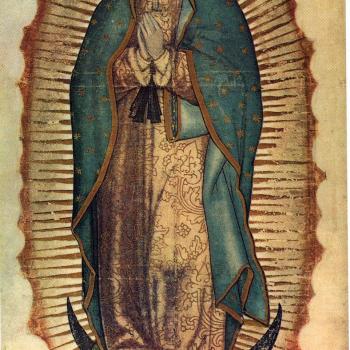
Our Lady of Guadalupe: Empress of the Americas

Pope Saint Gregory III: Against the Iconoclasts
TRENDING AT PATHEOS Catholic

The Parable Of The Sower And The Word...
One of Christ’s most famous parables is that of the sower who...

Rejecting Doom: Christian Hope And Human Action
Christianity is a religion of hope. We are to have hope and...

Why I Choose the Eucharist Over the Sermon
Choose the Eucharist, Not the Sermon What are we supposed to get...

5 Design Elements Found in Spiritually Rooted Homes
Putting Spirituality Into Home Decor Our homes are more than our living...

Credo: A Story of God Told with the...
About 10 years ago, I began to imagine a personal "Credo" that...

The Anatomy of Divine Revelation in Catholic Thought
The claim that God has made Himself known to human beings is...
view all Catholic blogs
Ad-Free & Subscriber Log-In Subscription Support
- About Us
- 2026 Calendar
- Videos
- Podcasts
- Library of World Religions
- Faith In Media Tracker
- Advertise With Us
- Write for Us
- Privacy Policy
- Terms of Service
- Do Not Sell My Data
- Contact Us
- Radiant Digital
- Manage Newsletter Subscriptions
- Unsubscribe From Notifications
- Sitemap
Copyright 2008-2026, Patheos. All rights reserved.
Subscription Support Ad-Free & Subscriber Log-In
Follow Patheos