
BuddhistCatholicContemplativeEvangelicalGeneral ChristianHinduJewishLatter-day SaintMuslimNew VisionsProgressive Christian
Beliefs
- Buddhist
- Catholic
- Contemplative
- Evangelical
- General Christian
- Hindu
- Jewish
- Latter-day Saint
- More Voices
- Muslim
- New Visions
- Pagan
- Progressive Christian
Topics
- Religion News
- Food and Religion
- Sports and Religion
- Religious Art
- Religious Music and Entertainment
- Religious Events
- History and Religion
- Style and Religion
- Politics and Religion
- Women in Religion
- Recreation Outdoors and Religion
- Business Finance and Religion
- Careers Workplace and Religion
- Education and Religion
- Family Parenting and Religion
- Health Fitness and Religion
- Home and Religion
- Relationships and Religion
- Technology and Religion
- Travel and Religion
Columnists
- Buddhist Columnists
- Business Finance and Religion Columnists
- Careers Workplace and Religion Columnists
- Catholic Columnists
- Contemplative Columnists
- Education and Religion Columnists
- Evangelists Columnists
- Family Parenting and Religion Columnists
- General Christian Columnists
- Health Fitness and Religion Columnists
- Hindu Columnists
- History and Religion Columnists
- Home and Religion Columnists
- Jewish Columnists
- More Voices Columnists
- Latter Day Columnists
- Muslim Columnists
- New Visions Columnists
- Nonreligious Columnists
- Pagan Columnists
- Politics and Religion Columnists
- Progressive Columnists
- Recreation Outdoors and Religion Columnists
- Relationships and Religion Columnists
- Religion News Columnists
- Religious Art Columnists
- Religious Events Columnists
- Religious Music and Entertainment Columnists
- Sports and Religion Columnists
- Style and Religion Columnists
- Technology and Religion Columnists
- Travel and Religion Columnists
- Women in Religion Columnists
Resource Library
- 2026 Calendar
- Library of World Religions
- The 100 Most Holy Places on Earth
- Patheos Answers
- Podcasts
- Videos
- Faith Leaders Database
- Anglican Episcopalian
- Bahai
- Baptist
- Buddhism
- Christianity
- Confucianism
- Eastern Orthodoxy
- Hinduism
- Holiness and Pentecostal
- ISKCON
- Islam
- Judaism
- Lutheran
- Methodist
- The Church of Jesus Christ of Latter-day Saints
- New Age
- Paganism
- Presbytarian and Reformed
- Protestantism
- Religion Behind the Scenes
- Roman Catholic
- Scientology
- Shia Islam
- Sikhism
- Sufism
- Sunni Islam
- Taoism
- Zen
- See all religions
Research Tools
 Ad-Free & Subscriber Log-In Subscription Support
Ad-Free & Subscriber Log-In Subscription Support
Follow Patheos 

- Trending:
- Forgiveness
- |
- Marriage
- |
- Consciousness
- |
- Death Penalty
- |
- Election
- |
- Halloween
 Eating Peaches
- Home
- Catholic
- The Habit of Being In: Rootedness and Moving Again
The Habit of Being In: Rootedness and Moving Again
Last updated on: July 31, 2016 at 9:03 pm by Marina S. Brungardt
The Habit of Being In: Rootedness and Moving Again 2016-07-31T21:03:53-07:00 Marina S. Brungardt
Patheos Explore the world's faith through different perspectives on religion and spirituality! Patheos has the views of the prevalent religions and spiritualities of the world.

This is cool, being alone, in the desert, just me, here, alone, mobile |
Photo via Josh Willink at www.pexels.com/u/josh-willink-11499/
I am moving. Again. Counting college, this will be my twelfth move in eight years. And the truth of the matter is, I hate moving. I’m also not alone in this, I expect. An informal survey of friends ages 18-35(ish) on Twitter and Facebook revealed that even in my own digital circles, my twelve moves since entering college weren’t exactly anomalous.
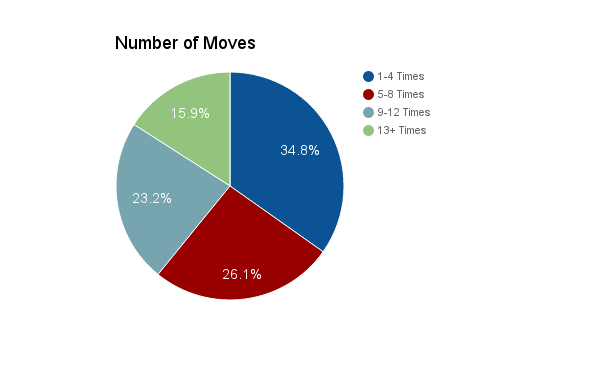
The majority have moved at least 5 times since college. For some, the experience has been one which has helped them to distill who they are and what they want. For many others, however, the experience has been like mine—one of anticipating an eventual rootedness. As one friend who has moved 10 times commented, “I can’t wait to be in one space for a long while.”
One space for a long while. Being rooted. It’s a beautiful idea, so there must be truth to it, though after enough moves, one begins to develop a certain cynicism towards the possibility of rootedness. In fact, I wonder at times if all of the emphasis on Instagram of #wanderlust and #vanlife aren’t in part because if we can’t be somewhere, we might as well be everywhere, which ultimately means we are nowhere in particular—an odd sort of specified, rather than existential, nihilism. I know that, for myself at least, the more places I am, the more I long for a place in which I can get into the habit of being—a place that would arise from the ashes of a thousand burned cardboard boxes. Somewhere that I can wear myself into through the living out of life in such a way that the scratches and cracks remain and are not simply painted over with the cheap repair-off-white paint so common in the pod-like rentals of young adulthood. A place where I care about the coffee I spill on the carpet not because it could fail to return me my deposit, but because if I don’t clean it, I will see it every day and know I should. My own home—a place I where I can get into the habit of being in.
Perhaps this is the childhood nostalgia of the nomad, but if it is nostalgia, it is of a common sort; a few years back in the London Review of Books, James Wood suggested in his essay On Not Going Home that “home swells as a sentiment because it has disappeared as an achievable reality.” It is not just a place to lay my head that I long for, but a place to build in and that can in return build me. I don’t just mean in terms of language and food and customs and manners and weather, though those things are important. After all, when you live somewhere long enough, those things take shape in you: you laugh when the Metro is late because the track froze, you listen to your friends in Boston alternate between complaining and bragging about their thirteen feet of snow, you know your friends in the Southwest would just die if they couldn’t eat good Mexican food. It’s those things, and art and music and literature and history and pacing and a thousand other little things like if you build houses out of brick or wood or stucco or concrete.
Yet with all of that, as Flannery O’Connor wrote in one of her many letters, “it’s not simply a matter of present-place, but a matter of the place’s continuity and the shared experience of the people who live there.” It’s the notion of being somewhere particular. It’s the place and people of life which and whom we impact through our living and yet which and who will extend beyond my own life there. It’s a longing for the lived reality of real presence in this existing place with and through the people I encounter in my time there.
I don’t just want to be somewhere, I want to be, and know I will be for a while, somewhere specific in community with others, engaged by my habit of being in the place in a project reaching beyond my own limits of being. I think, when we look at the rise of millennial nu-folk culture—beautiful, long lasting objects, artisanal goods, folk-influenced music, even vaguely boho trends—it reveals a deep-seated desire for permanence. A desire for place that extends beyond the mere where-you-are and bleeds into the what-you-are. Yet, the what-you-are is not simply local in the sense of geography, but local in the sense of people, in the sense of the community that built the place and is built by the place.
Previous Post

July 12, 2016
Vocation: Get Food On the Table, Then We Can Talk About Beatitude
Next Post

July 26, 2016 When Good Catholic Women Take Birth Control
Browse Our Archives
Select a Category Body Problems Fatherhood Feast Day Friendship Grace Building on Nature Holy Days and Liturgy Living Life in Christ Love and Marriage and Other Responsibilities Mary Motherhood Philosophic Wanderings Podcasts Reality of Things Saint of the Day The Beautiful The Good The Habit of Being In The Polis The Reality Superelevating Things The True Transcendentals Transcendentals Trinity Uncategorized Virtue
Select a Month December 2018 June 2017 May 2017 April 2017 March 2017 February 2017 January 2017 December 2016 September 2016 August 2016 July 2016 June 2016 May 2016
Follow Us!
TAKE THE
Religious Wisdom Quiz
How many sons did Jacob (Israel) have?
Select your answer to see how you score.
Twelve Ten Nine Seven
Related posts from Eating Peaches

Is Work Valuable?: A Question for the Feast...
St. Joseph, Masculinity, and Embracing Impositions

Please Stop Panicking About NFP: The Internet Makes...

Silence, Predestination, and the Primacy of God’s Love
TRENDING AT PATHEOS Catholic

Creation, Preservation, and Teleology in Catholic Theology
As I write this, it is very early Monday morning. Like millions...

The Parable Of The Sower And The Word...
One of Christ’s most famous parables is that of the sower who...

Rejecting Doom: Christian Hope And Human Action
Christianity is a religion of hope. We are to have hope and...

Why I Choose the Eucharist Over the Sermon
Choose the Eucharist, Not the Sermon What are we supposed to get...

5 Design Elements Found in Spiritually Rooted Homes
Putting Spirituality Into Home Decor Our homes are more than our living...

Credo: A Story of God Told with the...
About 10 years ago, I began to imagine a personal "Credo" that...
view all Catholic blogs
Ad-Free & Subscriber Log-In Subscription Support
- About Us
- 2026 Calendar
- Videos
- Podcasts
- Library of World Religions
- Faith In Media Tracker
- Advertise With Us
- Write for Us
- Privacy Policy
- Terms of Service
- Do Not Sell My Data
- Contact Us
- Radiant Digital
- Manage Newsletter Subscriptions
- Unsubscribe From Notifications
- Sitemap
Copyright 2008-2026, Patheos. All rights reserved.
Subscription Support Ad-Free & Subscriber Log-In
Follow Patheos