
BuddhistCatholicContemplativeEvangelicalGeneral ChristianHinduJewishLatter-day SaintMuslimNew VisionsProgressive Christian
Beliefs
- Buddhist
- Catholic
- Contemplative
- Evangelical
- General Christian
- Hindu
- Jewish
- Latter-day Saint
- More Voices
- Muslim
- New Visions
- Pagan
- Progressive Christian
Topics
- Religion News
- Food and Religion
- Sports and Religion
- Religious Art
- Religious Music and Entertainment
- Religious Events
- History and Religion
- Style and Religion
- Politics and Religion
- Women in Religion
- Recreation Outdoors and Religion
- Business Finance and Religion
- Careers Workplace and Religion
- Education and Religion
- Family Parenting and Religion
- Health Fitness and Religion
- Home and Religion
- Relationships and Religion
- Technology and Religion
- Travel and Religion
Columnists
- Buddhist Columnists
- Business Finance and Religion Columnists
- Careers Workplace and Religion Columnists
- Catholic Columnists
- Contemplative Columnists
- Education and Religion Columnists
- Evangelists Columnists
- Family Parenting and Religion Columnists
- General Christian Columnists
- Health Fitness and Religion Columnists
- Hindu Columnists
- History and Religion Columnists
- Home and Religion Columnists
- Jewish Columnists
- More Voices Columnists
- Latter Day Columnists
- Muslim Columnists
- New Visions Columnists
- Nonreligious Columnists
- Pagan Columnists
- Politics and Religion Columnists
- Progressive Columnists
- Recreation Outdoors and Religion Columnists
- Relationships and Religion Columnists
- Religion News Columnists
- Religious Art Columnists
- Religious Events Columnists
- Religious Music and Entertainment Columnists
- Sports and Religion Columnists
- Style and Religion Columnists
- Technology and Religion Columnists
- Travel and Religion Columnists
- Women in Religion Columnists
Resource Library
- 2026 Calendar
- Library of World Religions
- The 100 Most Holy Places on Earth
- Patheos Answers
- Podcasts
- Videos
- Faith Leaders Database
- Anglican Episcopalian
- Bahai
- Baptist
- Buddhism
- Christianity
- Confucianism
- Eastern Orthodoxy
- Hinduism
- Holiness and Pentecostal
- ISKCON
- Islam
- Judaism
- Lutheran
- Methodist
- The Church of Jesus Christ of Latter-day Saints
- New Age
- Paganism
- Presbytarian and Reformed
- Protestantism
- Religion Behind the Scenes
- Roman Catholic
- Scientology
- Shia Islam
- Sikhism
- Sufism
- Sunni Islam
- Taoism
- Zen
- See all religions
Research Tools
 Ad-Free & Subscriber Log-In Subscription Support
Ad-Free & Subscriber Log-In Subscription Support
Follow Patheos 

- Trending:
- Forgiveness
- |
- Marriage
- |
- Consciousness
- |
- Death Penalty
- |
- Election
- |
- Halloween
 East Meets West Social Worker
- Home
- Evangelical
- Family, Parenting and Religion
- Overcoming Compassion Fatigue
Overcoming Compassion Fatigue
Last updated on: January 12, 2018 at 2:25 pm by Kim Parker, LCSW
Overcoming Compassion Fatigue 2018-01-12T14:25:39+00:00 Kim Parker, LCSW
Patheos Explore the world's faith through different perspectives on religion and spirituality! Patheos has the views of the prevalent religions and spiritualities of the world.
Well, it’s been almost 4 weeks since Hurricane Harvey struck Texas, 2 weeks since Irma visited Florida, followed by lots of bad news around the world about deaths and destruction caused by flooding, earthquakes, and terrorist acts/war in other countries.
For my fellow Americans, our news outlets are stressing us out with story after story of ongoing political tensions and protests, whether the issue is about immigration, ethnicity/race, or religious freedom.
Then if you are a parent, you’ve no doubt had to deal with children’s needs in the form of meltdowns by young children or anger/depression by older ones. And if you are a fellow therapist, there’s always a need to watch for “burn out.”
Compassion fatigue is a term for the condition of being physically or emotionally exhausted due to feeling compassion for fellow human beings. Mental health counselors, social workers, first responders, and others in the helping profession tend to struggle with this.
When tragedy strikes, like a 9/11 or earthquake or flood, people’s initial reaction is usually that of compassion for the victims. We care about our neighbors and fellow Americans. The interconnectedness of this global world through immigration, travel, and social media also allows us to also care for our fellow human beings who suffer around around the world.
The initial pang of sympathy and empathy is often followed by high energy motivation to get involved and make a difference. Whether we are motivated by survivor’s guilt or genuine empathy, people are often quick to help out initially. We want to show that we are quality human beings who care. We want to reach out and touch someone in the shared bond of brotherhood and sisterhood. We want to go out and save someone’s life, donate our precious goods, or just encourage someone who has lost so much. It’s the right thing to do and the blessed thing to do.
However, two weeks after Hurricane Harvey made national and international headlines, the out of town journalists left, the videocameras stopped rolling, and the local flood survivors returned back to work. Things started to settle down. And as is typical for post crisis sitations, the initial surge of warm feelings and altruistic thoughts and behaviors give way to pessimism, cynicism, and exhaustion as the needs prolong but the responsibilies have not lessened.
I, along with other residents who were not directly affected by this tragic event, also resumed work and daily routines. However, it was impossible to ignore the humungous, incredible pile of destruction left on the sides of the roads. After a couple of days and weeks, both our energy and rainy day funds seem to be spent. We are physically tired from helping, emotionally drained from empathizing, and financially broke from giving so much.
We don’t want to hear of any more tragedies. We just want to turn off the news or watch something upbeat for once. We want a feel good story to take us away from all the grief and loss. We just want to escape to a different reality–one filled with no suffering, no responsibilities, only joy, love, and peace. On a beautiful remote island, preferably.
That is compassion fatigue. It’s when we’ve had enough of connecting with another’s suffering. We are through with all the selfless helping. Everyone seems to have a need, including our spouse and kids, not just the clients or the victims of natural disasters. We get tired and drained. We want to get back to normal life, whatever that means we don’t even know anymore. We are just done feeling. Spent. Finished.

Anyone who has experienced compassion fatigue can take comfort–it’s the ultimate sign that we are human. We are not God, or superheroes. We feel and think and care deeply. But a tender heart can easily break. We must guard our fragile hearts from hardening. As Proverbs 4:23 advises, “watch over your heart with all diligence, for from it flows the springs of life.”
Compassion fatigue is our body’s natural way to instinctively protect itself. It is okay to turn off the sights and sounds, turn away from the stressors, and breathe. Focus on one day at a time, one step at a time, and one person at a time, starting with taking care of ourselves first. Let’s practice self care, like what the helping professionals have to do in order to avoid burn out. It is not selfish, but rather natural, realistic, and quite progressive.
We can use humor to protect our tender hearts. Everyone can relate to good ol’ self deprecating humor. It is not only good for the body, but great for the soul as well. It helps us to connect to each other, bring down the walls of demographic divisions, so that we are one family, one human race. We do our best, and sometimes we don’t do our best. But as humans, we all struggle in one way or another.
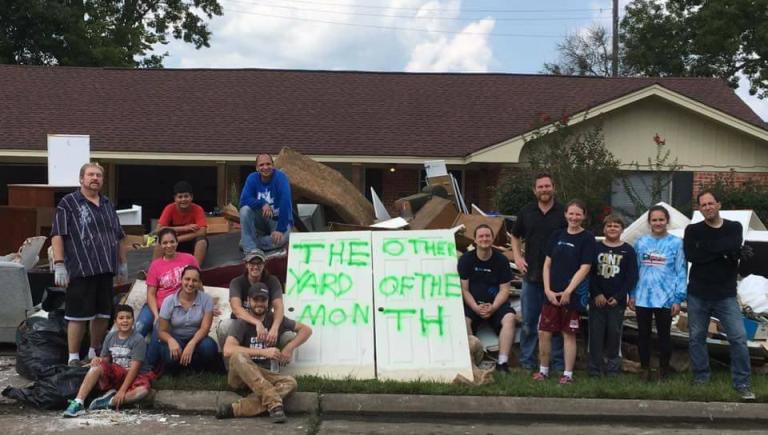
Houstonians posted some funny memes on social media as a way to cope. Enjoy these:

FB: Mark Linabury
FB: Jared Hammonds

For more laughs, check out this amazing compilation of Harvey humor
.
Previous Post

September 6, 2017
Survivor's Guilt: Questions & Answers
Next Post

October 20, 2017 East Meets West in the Classroom
Browse Our Archives
Select a Category Asian Americans Asians Black Lives Matter Blogging bullying Christianity complementariansim culture Diversity/Multiculturalism Feminism Good Friday Healthy Relationships immigration love marriage Mental health Moms Parenting Race refugees Religion socialjustice spirituality Suicide Uncategorized
Select a Month May 2020 April 2020 January 2020 July 2019 May 2019 April 2019 March 2019 February 2019 December 2018 November 2018 October 2018 September 2018 August 2018 July 2018 June 2018 May 2018 April 2018 March 2018 February 2018 January 2018 December 2017 November 2017 October 2017 September 2017 August 2017 July 2017 June 2017 May 2017 April 2017 March 2017 February 2017 January 2017 December 2016 November 2016 October 2016 September 2016 August 2016 July 2016 June 2016 May 2016 April 2016 March 2016 February 2016 January 2016
Follow Us!
TAKE THE
Religious Wisdom Quiz
What is the term for the 40 days Jesus spent in the wilderness, remembered by Christians in Lent?
Select your answer to see how you score.
Sermon on the Mount Crucifixion Temptation of Christ Transfiguration
Related posts from East Meets West Social Worker

8 Simple Steps for Crisis Parenting: Parents as...
Understanding Your Power and Privilege and Taking Responsibility

7 Consequences of Retaining Anger: And How You...

Law and Order Allows America to Continue Welcoming...
TRENDING AT PATHEOS Evangelical

The REST of Your Life: A Creative Wrestles...
This week I had a conversation with a good friend from church....

How the author of the world's best hymn...
I've been working with John Newton for a while now. This makes...

Long before this Lectio Divina, Psalm 130 - the song - started...

What About the Trees? Another Living Parable
After I finished writing the last article about falling leaves as a...

Why Classical Education Is a Conversation, Not a...
Come and Read: Joy in Classical Education When I was a little...

Cornell University has received a great deal of negative publicity and intense...
view all Evangelical blogs
Ad-Free & Subscriber Log-In Subscription Support
- About Us
- 2026 Calendar
- Videos
- Podcasts
- Library of World Religions
- Faith In Media Tracker
- Advertise With Us
- Write for Us
- Privacy Policy
- Terms of Service
- Do Not Sell My Data
- Contact Us
- Radiant Digital
- Manage Newsletter Subscriptions
- Unsubscribe From Notifications
- Sitemap
Copyright 2008-2026, Patheos. All rights reserved.
Subscription Support Ad-Free & Subscriber Log-In
Follow Patheos