
BuddhistCatholicContemplativeEvangelicalGeneral ChristianHinduJewishLatter-day SaintMuslimNew VisionsProgressive Christian
Beliefs
- Buddhist
- Catholic
- Contemplative
- Evangelical
- General Christian
- Hindu
- Jewish
- Latter-day Saint
- More Voices
- Muslim
- New Visions
- Pagan
- Progressive Christian
Topics
- Religion News
- Food and Religion
- Sports and Religion
- Religious Art
- Religious Music and Entertainment
- Religious Events
- History and Religion
- Style and Religion
- Politics and Religion
- Women in Religion
- Recreation Outdoors and Religion
- Business Finance and Religion
- Careers Workplace and Religion
- Education and Religion
- Family Parenting and Religion
- Health Fitness and Religion
- Home and Religion
- Relationships and Religion
- Technology and Religion
- Travel and Religion
Columnists
- Buddhist Columnists
- Business Finance and Religion Columnists
- Careers Workplace and Religion Columnists
- Catholic Columnists
- Contemplative Columnists
- Education and Religion Columnists
- Evangelists Columnists
- Family Parenting and Religion Columnists
- General Christian Columnists
- Health Fitness and Religion Columnists
- Hindu Columnists
- History and Religion Columnists
- Home and Religion Columnists
- Jewish Columnists
- More Voices Columnists
- Latter Day Columnists
- Muslim Columnists
- New Visions Columnists
- Nonreligious Columnists
- Pagan Columnists
- Politics and Religion Columnists
- Progressive Columnists
- Recreation Outdoors and Religion Columnists
- Relationships and Religion Columnists
- Religion News Columnists
- Religious Art Columnists
- Religious Events Columnists
- Religious Music and Entertainment Columnists
- Sports and Religion Columnists
- Style and Religion Columnists
- Technology and Religion Columnists
- Travel and Religion Columnists
- Women in Religion Columnists
Resource Library
- 2026 Calendar
- Library of World Religions
- The 100 Most Holy Places on Earth
- Patheos Answers
- Podcasts
- Videos
- Faith Leaders Database
- Anglican Episcopalian
- Bahai
- Baptist
- Buddhism
- Christianity
- Confucianism
- Eastern Orthodoxy
- Hinduism
- Holiness and Pentecostal
- ISKCON
- Islam
- Judaism
- Lutheran
- Methodist
- The Church of Jesus Christ of Latter-day Saints
- New Age
- Paganism
- Presbytarian and Reformed
- Protestantism
- Religion Behind the Scenes
- Roman Catholic
- Scientology
- Shia Islam
- Sikhism
- Sufism
- Sunni Islam
- Taoism
- Zen
- See all religions
Research Tools
 Ad-Free & Subscriber Log-In Subscription Support
Ad-Free & Subscriber Log-In Subscription Support
Follow Patheos 

- Trending:
- Forgiveness
- |
- Marriage
- |
- Consciousness
- |
- Death Penalty
- |
- Election
- |
- Halloween
 Christian Podcast Central
- Home
- Evangelical - Sponsored
- Reasonable Faith Podcast: What Jesus Can Teach Today’s Muslims
Reasonable Faith Podcast: What Jesus Can Teach Today’s Muslims
Last updated on: September 27, 2017 at 8:08 am by Christian Podcast Central
Reasonable Faith Podcast: What Jesus Can Teach Today’s Muslims 2017-09-27T08:08:32-08:00 Christian Podcast Central
Patheos Explore the world's faith through different perspectives on religion and spirituality! Patheos has the views of the prevalent religions and spiritualities of the world.

What Jesus Can Teach Today’s Muslims
A Muslim writes in the the New York Times that the Islam world needs to listen to Jesus!
 Reasonable Faith Podcast: What Jesus Can Teach Today's Muslims Play Now | Play in Popup | Download
KEVIN HARRIS: Bill, there is an article in The New York Times from a Muslim called “What Jesus Can Teach Today’s Muslims.” Without even looking at this article, I bet you probably have a lot of thoughts just from your studies in Islam on what Jesus can teach today’s Muslims. Let’s get those comments from you, but also look at what this Muslim himself is saying. Mustafa Akyol says,
What is the trouble with Islam? Why are there so many angry Muslims in the world who loathe the West? Why do self-declared Islamic states impose harsh laws that oppress minorities, women and “apostates”? Why are there terrorists who kill in the name of Allah?
DR. WILLIAM LANE CRAIG: The thing that immediately struck me about these questions is that the answers are not the same in every case. It seems to me that there are quite different answers to these various questions.
***KEVIN HARRIS:***He says,
Many in the West have been asking these kinds of questions for decades. . . . The Islamic civilization, once the world’s most enlightened, has lately been going through an acute crisis with severe consequences.
In your study of Islam, is that true? Was it once the most enlightened?
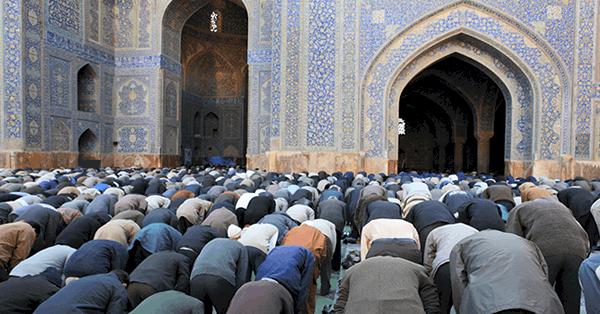 DR. CRAIG: That is hard to say. Certainly medieval Islamic culture was highly advanced scientifically and artistically. But the Christian and Jewish minorities within those lands were still discriminated against. They were referred to as the dhimmi. They were second-class citizens who weren’t granted full rights. So the idea that this was some sort of a tolerant society such as we would espouse in the West today is a myth. Also, I don’t know whether it would be fair to say that this was more enlightened than, for example, Chinese civilization or medieval Europe. It is hard to say. But in any case certainly it was a great civilization.
KEVIN HARRIS: Yeah, when you look at the kalam argument, how developed that was. Then you’ve taken it since. The article continues:
One of the prominent minds of the past century, the British historian Arnold Toynbee, also pondered the crisis of Islam, in a largely forgotten 1948 essay, “Islam, the West, and the Future.” The Islamic world has been in a crisis since the 19th century, Toynbee wrote, because it was outperformed, defeated and even besieged by Western powers. Islam, a religion that has always been proud of its earthly success, was now “facing the West with her back to the wall,” causing stress, anger and turmoil among Muslims.
DR. CRAIG: Although I haven’t read this essay by Toynbee, it seems to me that this is a very perceptive analysis. What we need to appreciate about Islam is that when the Muslim looks out at the extent of Islam around the world today he does not feel proud of this. He sees a failure. Islam is supposed to take over the entire world and bring all nations into submission to the teachings of Islam and of the Qur’an, and it has failed to do so. Instead, as Toynbee says, the Western powers have defeated the forces of Islam, the great Ottoman Empire, which persisted with the Caliphate in Istanbul for some eight to nine centuries, collapsed by the end of the First World War. The Islamic countries of the Middle East were dominated by British and European powers. So it is very true, I think, that the contemporary Islamic world suffers from a deep inferiority complex, from a sense of failure. It has not succeeded in the way that they anticipated or promised that it would. This, I think as Toynbee rightly saw, results in stress and anger and turmoil.
KEVIN HARRIS: Toynbee says if you want to see a parallel in history, look at a much older religion:
. . . the plight of the Jews in the face of Roman domination in the first century B.C. The Jews, too, were a monotheistic people with a high opinion of themselves, but they were defeated, conquered and culturally challenged by a foreign empire. This ordeal, Toynbee explained, bred two extreme reactions: One was “Herodianism,” which meant collaborating with Rome and imitating its ways. The other was “Zealotism,” which meant militancy against Rome and a strict adherence to Jewish law.
Looks like a pretty good parallel, don’t you think?
DR. CRAIG: Well, it is sort of interesting. It is probably oversimplistic, but as the author points out you can point to parallels today in Muslims that would accommodate themselves to Western culture and values and thinking and imitate it. He gives the example of Kemal Ataturk, the founder of modern-day Turkey, who is deeply committed to the triumph of Western culture and value and society in Turkey and rebuilt modern Turkey after his image – an image which is now being deeply compromised by the increasingly conservative government in Turkey which seems to be betraying Ataturk’s vision of a secular society in a Muslim country. Then, on the other hand, he says you have those who would be like the Jewish Zealots who would be using violence in the defense of Islam. I would simply add that there is a strong difference here between Jewish Zealots and those who perpetrate jihad in the name of Allah. There is nothing in the Old Testament that would say Jews should carry out religious wars to propagate Judaism. War and violence was not a means of evangelization. Jews were never commanded to spread Judaism by the sword. Yet, in the Qur’an, you do have commands given to faithful Muslims to fight against both pagans and the people of the book (namely, Jews and [Christians]) in order to spread Islam and to bring other nations into submission to Islam. The reason that there are jihadis and those who would use violence to propagate Islam is because this is commanded in the Qur’an and they are fundamentalists who take these commands literally and are seeking to obey them faithfully.
KEVIN HARRIS: He says Muslim intellectuals and reformers have been looking for a third way for a long time – somewhere between the Herodians and the Zealots. Neither one of those is acceptable, so there needs to be a third way. Now he is starting to point to Jesus.
Jesus claimed to be the very savior — the Messiah — that his people awaited. But unlike other Messiah claimants of his time, he did not unleash an armed rebellion against Rome. He did not bow down to Rome, either. He put his attention to something else: reviving the faith and reforming the religion of his people. In particular, he called on his fellow Jews to focus on their religion’s moral principles, rather than obsessing with the minute details of religious law.
DR. CRAIG: And here is where I think he goes wrong. He interprets Jesus as a moral reformer – that the burden of Jesus’ ministry is to focus on these broad ethical principles rather than legal minutiae. That is not the burden of Jesus of Nazareth. The burden of the ministry of Jesus of Nazareth was the proclamation of the in-breaking of God’s Kingdom in human history in his person. When he celebrated the Last Supper with his disciples he symbolically portrayed in the blood and the bread his death and inauguration of a new covenant between God and man in which he would bear the sin and the wrath of God that would make reconciliation with God possible. In any case, even if you think that the proclamation of Jesus as dying for our sins and bringing salvation and eternal life wasn’t the centerpiece of Jesus’ ministry, it was clearly the message of the apostles. And it was this message that changed the Roman Empire and eventually the Roman world so that within three centuries Christianity becomes the religion of the Roman Empire. It was the message that the apostles preached of Jesus Christ as the Savior of the world, the sin-bearer, and the one who reconciles us to God and redeems us. The problem there, you see, is that there isn’t anything comparable to that in Islam. There is no such person that can play that role. So this author can advocate that Muslims also adopt ethical reforms whereby they get rid of the legalities of Sharia Law in favor of broad ethical principles. That is fine, but that is not going to give you a person like Jesus which can bring about the change that he wrought in the world.
KEVIN HARRIS: He says,
Christians, of course, know this story well. Yet Muslims need to take notice, too. Because they are going through a crisis very similar to the one Jesus addressed: While being pressed by a foreign civilization, they are also troubled by their own fanatics who see the light only in imposing a rigid law, Shariah, and fighting for theocratic rule.
Just stopping right there, obviously Jesus did address the extremes – the legalism. There was a lot more to him than just moral reformation.
DR. CRAIG: Right.
KEVIN HARRIS:
Would it be a totally new idea for Muslims to learn from Jesus? To some extent, yes. While Muslims respect and love Jesus — and his immaculate mother, Mary — because the Quran wholeheartedly praises them, most have never thought about the historical mission of Jesus, the essence of his teaching and how it may relate to their own reality.
Wow. Do you think they are ignorant of Jesus?
DR. CRAIG: That is undoubtedly true of the average, nominal Muslim. But more to that, I think he is ignorant of Jesus and at least what the message of Jesus was that changed the world and that introduced this change into the Roman world that eventually changed the world. It wasn’t the sort of ethical reform that he contemplates for Islam. There just isn’t anything in Islam that occupies the position of Jesus that can produce this third creative way that he is looking for.
KEVIN HARRIS: At the end of the article he quotes a notable Islamic scholar – Muhammad Abduh, an Egyptian scholar who was impressed with Jesus. He says,
As a Muslim, he did not agree with the Christian theology about Jesus, but he still was moved by Jesus’s teachings, which were relevant to a problem Abduh observed in the Muslim world. It was the problem of “being frozen on the literal meaning of the law,” he wrote, and thus failing to “understanding the purpose of the law.”
What are we getting here? The letter of the law and the spirit of the law?
DR. CRAIG: Right. He wants to have an ethical reform within Islam which would give up the legalism of Sharia Law in favor of broad ethical humanistic principles. He thinks that this can bring about a revolution comparable to what Jesus brought about in the first century. My argument is that he has got it wrong about Jesus and what produced that revolution within the Roman Empire, and therefore in the absence of a person like Jesus there really isn’t any hope for this kind of creative alternative in Islam.
KEVIN HARRIS: He wraps it up by saying in the same way that Jesus said, “The Sabbath was made for man, not man for the Sabbath,” he says,
Can we Muslims also reason, “The Shariah is made for man, not man for the Shariah”? Or, like Jesus, can we also suggest that the Kingdom of God — also called “the Caliphate” — will be established not within any earthly polity, but within our hearts and minds? If Jesus is “a prophet of Islam,” as we Muslims often proudly say, then we should think on these questions. Because Jesus addressed the very problems that haunt us today and established a prophetic wisdom perfectly fit for our times.
DR. CRAIG: Well, the way they could do this would be to turn to Jesus!
KEVIN HARRIS: Really!
DR. CRAIG: They could turn to Jesus as their Savior and suggest that he has established the Kingdom of God, not as an earthly kingdom but within our hearts and minds, and that he is in fact the Savior of the world. He is more than a prophet. So, yes, the Muslim can abandon Islam and turn to Jesus!
KEVIN HARRIS: But you just can’t do that if you are a Muslim.
DR. CRAIG: No, you’d have to cease to be a Muslim.
KEVIN HARRIS: He is not quite willing to go there, is he?
DR. CRAIG: No. And that is because he has this diminished view of Jesus as just an ethical reformer.
KEVIN HARRIS: OK, Bill, I think that kind of sums it up. There might be a pragmatic or practical solution here in a third way of a more liberal Islam that says Sharia Law was made for man, not man for Sharia Law, but it does miss the point of who Jesus is and the claims of Christ.
DR. CRAIG: Right. Nor does it address the inferiority complex and anger that Toynbee spoke of that lies at the source of so much of the frustration and anger and bitterness that exists in the Islamic world today.
(This podcast is by Reasonable Faith / William Lane Craig. Discovered by Christian Podcast Central and our community — copyright is owned by the publisher, not Christian Podcast Central, and audio is streamed directly from their servers.)
Previous Post

September 26, 2017
Unorthodox Bench Press: An Interview with Zack Quilici
Next Post

September 27, 2017 White Horse Inn: Do I Have to Go to Church to Be a Christian?
Browse Our Archives
Select a Category Brad Stine Has Issues Christian Podcast Central Classic Podcast Experience God Life Grounded Ouxano Parent Like You Mean It The Protest Show with Thor Ramsey The Summit Lecture Series Uncategorized What You’ve Been Searching For
Select a Month July 2022 June 2022 May 2022 April 2022 March 2022 February 2022 January 2022 December 2021 November 2021 September 2021 August 2021 July 2021 June 2021 May 2021 April 2021 March 2021 February 2021 January 2021 December 2020 November 2020 October 2020 October 2019 September 2019 August 2019 July 2019 June 2019 May 2019 April 2019 March 2019 June 2018 April 2018 March 2018 February 2018 January 2018 December 2017 November 2017 October 2017 September 2017 August 2017 July 2017 June 2017 May 2017 April 2017 March 2017 February 2017 January 2017 December 2016 November 2016 October 2016 September 2016 August 2016 July 2016 June 2016 May 2016 April 2016 March 2016 February 2016 January 2016 December 2015 November 2015 October 2015 September 2015 August 2015 July 2015 June 2015 May 2015 April 2015 March 2015 February 2015 January 2015 December 2014 November 2014 October 2014 September 2014 August 2014 July 2014 June 2014 May 2014 April 2014 March 2014 February 2014
Follow Us!
TAKE THE
Religious Wisdom Quiz
How many times did Elijah pray for rain?
Select your answer to see how you score.
7 9 5 3
Related posts from Christian Podcast Central

Parent Like You Mean It: Rooting for the...
Summit Lecture Series: Intro To The Postmodern Worldview

Summit Lecture Series: Self-sacrifice is the Christian worldview
Summit Lecture Series: Six Fundamental Beliefs About Islam
TRENDING AT PATHEOS Evangelical - Sponsored

The REST of Your Life: A Creative Wrestles...
This week I had a conversation with a good friend from church....

How the author of the world's best hymn...
I've been working with John Newton for a while now. This makes...

Long before this Lectio Divina, Psalm 130 - the song - started...

What About the Trees? Another Living Parable
After I finished writing the last article about falling leaves as a...

Why Classical Education Is a Conversation, Not a...
Come and Read: Joy in Classical Education When I was a little...

Cornell University has received a great deal of negative publicity and intense...
view all Evangelical - Sponsored blogs
Ad-Free & Subscriber Log-In Subscription Support
- About Us
- 2026 Calendar
- Videos
- Podcasts
- Library of World Religions
- Faith In Media Tracker
- Advertise With Us
- Write for Us
- Privacy Policy
- Terms of Service
- Do Not Sell My Data
- Contact Us
- Radiant Digital
- Manage Newsletter Subscriptions
- Unsubscribe From Notifications
- Sitemap
Copyright 2008-2026, Patheos. All rights reserved.
Subscription Support Ad-Free & Subscriber Log-In
Follow Patheos