
BuddhistCatholicContemplativeEvangelicalGeneral ChristianHinduJewishLatter-day SaintMuslimNew VisionsProgressive Christian
Beliefs
- Buddhist
- Catholic
- Contemplative
- Evangelical
- General Christian
- Hindu
- Jewish
- Latter-day Saint
- More Voices
- Muslim
- New Visions
- Pagan
- Progressive Christian
Topics
- Religion News
- Food and Religion
- Sports and Religion
- Religious Art
- Religious Music and Entertainment
- Religious Events
- History and Religion
- Style and Religion
- Politics and Religion
- Women in Religion
- Recreation Outdoors and Religion
- Business Finance and Religion
- Careers Workplace and Religion
- Education and Religion
- Family Parenting and Religion
- Health Fitness and Religion
- Home and Religion
- Relationships and Religion
- Technology and Religion
- Travel and Religion
Columnists
- Buddhist Columnists
- Business Finance and Religion Columnists
- Careers Workplace and Religion Columnists
- Catholic Columnists
- Contemplative Columnists
- Education and Religion Columnists
- Evangelists Columnists
- Family Parenting and Religion Columnists
- General Christian Columnists
- Health Fitness and Religion Columnists
- Hindu Columnists
- History and Religion Columnists
- Home and Religion Columnists
- Jewish Columnists
- More Voices Columnists
- Latter Day Columnists
- Muslim Columnists
- New Visions Columnists
- Nonreligious Columnists
- Pagan Columnists
- Politics and Religion Columnists
- Progressive Columnists
- Recreation Outdoors and Religion Columnists
- Relationships and Religion Columnists
- Religion News Columnists
- Religious Art Columnists
- Religious Events Columnists
- Religious Music and Entertainment Columnists
- Sports and Religion Columnists
- Style and Religion Columnists
- Technology and Religion Columnists
- Travel and Religion Columnists
- Women in Religion Columnists
Resource Library
- 2026 Calendar
- Library of World Religions
- The 100 Most Holy Places on Earth
- Patheos Answers
- Podcasts
- Videos
- Faith Leaders Database
- Anglican Episcopalian
- Bahai
- Baptist
- Buddhism
- Christianity
- Confucianism
- Eastern Orthodoxy
- Hinduism
- Holiness and Pentecostal
- ISKCON
- Islam
- Judaism
- Lutheran
- Methodist
- The Church of Jesus Christ of Latter-day Saints
- New Age
- Paganism
- Presbytarian and Reformed
- Protestantism
- Religion Behind the Scenes
- Roman Catholic
- Scientology
- Shia Islam
- Sikhism
- Sufism
- Sunni Islam
- Taoism
- Zen
- See all religions
Research Tools
 Ad-Free & Subscriber Log-In Subscription Support
Ad-Free & Subscriber Log-In Subscription Support
Follow Patheos 

- Trending:
- Forgiveness
- |
- Marriage
- |
- Consciousness
- |
- Death Penalty
- |
- Election
- |
- Halloween

- Home
- Progressive Christian
- The Book of Job, Part 2 – Job Doesn’t Know God
The Book of Job, Part 2 – Job Doesn’t Know God
Last updated on: January 25, 2024 at 7:43 pm by Duncan Edward Pile
The Book of Job, Part 2 – Job Doesn’t Know God 2024-01-25T19:43:53+00:00 Duncan Edward Pile
Patheos Explore the world's faith through different perspectives on religion and spirituality! Patheos has the views of the prevalent religions and spiritualities of the world.
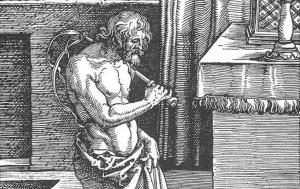
The common Evangelical interpretation of Job is that God is responsible for our sufferings, consciously allowing Satan to persecute us. That same common interpretation, taught in churches all over the world, states that Job was a righteous man who refused to blame God for his loss, and was commended by the Lord for his piety. In the introductory post on the book of Job, I argued that this is the absolute opposite of what the text shows us, and that the wool has been pulled over our eyes, with devastating consequences. Today, I’ll begin to demonstrate this from the text.
What do we know about Job?
- We know first of all that Job was rich – the richest man in all the East, in fact, owning thousands of heads of sheep and cattle, and employing many servants in his vast operation.
- Secondly, we know that Job was not a Hebrew and didn’t have any knowledge of the Lord as revealed through Abraham. He was a man with his own view of God, whose behaviour and ultimately, whose words, demonstrated the nature of those beliefs. For the Christian reader, it is wrong to assume that Job’s ideas about God have anything to do with their own. I don’t have the space to explain that in detail here but will share a link to the full material at the end.
- Thirdly, we know from chapter 1, verses 4-5 that he was terrified of making even the tiniest misstep before God: His sons used to hold feasts in their homes on their birthdays, and they would invite their three sisters to eat and drink with them. When a period of feasting had run its course, Job would make arrangements for them to be purified. Early in the morning he would sacrifice a burnt offering for each of them, thinking, ‘Perhaps my children have sinned and cursed God in their hearts.’ This was Job’s regular custom.
We understand from this that after his children held parties, he made sacrifices for sin that might have been committed to pacify an exacting God. We are not talking about the usual excesses that occur at parties; his concern was that his children might have ‘cursed God in their hearts’. Job had no idea whether or not this had taken place, but he wasn’t taking any chances. This is our first indicator of Job’s view of the Lord, which was one of utter terror.
With this understanding, we can begin to look at the words of Job. Towards the end of chapter one, we read of Job’s first set of troubles – the slaughter of his servants, the fiery consumption of his livestock, the theft of his camels, and the tragic death of his children. Job’s response was as follows:
‘At this, Job got up and tore his robe and shaved his head. Then he fell to the ground in worship and said:
‘Naked I came from my mother’s womb,
and naked I shall depart.
The Lord gave and the Lord has taken away;
may the name of the Lord be praised.’
In all this, Job did not sin by charging God with wrongdoing.’
The robe-tearing and head-shaving were outward shows of grief – an expected cultural display, common in the Middle East – but his first words were not of his loss, but in defence of the Lord, who he believed to have done this to him. Job was so conscious of behaving perfectly that his first priority was to avoid charging God with wrongdoing, for fear that he would be struck down. Spoiler alert – by the end of the book, Job is neck deep in exactly this. Throughout chapters 10-31, Job nakedly accuses God of wrongdoing.
Job has lost his children, but his first concern is to say the right thing. He did not know that the Lord is with us in grief and pain.
Chapter 2 – Job holds his tongue
Job is beset by physical afflictions such as painful sores, erupting all over his body. He hunkers down in the ashes and despairs. At this stage, his wife criticises him (verse 9):
‘Are you still maintaining your integrity? Curse God and die!’’
I don’t know about you, but my other half knows me inside out, and I’m inclined to defer to a wife’s understanding of her husband. Job believes that to curse God is to die, but as we see from later chapters, he is also convinced that he has done no wrong and doesn’t deserve what’s happening to him. He is tongue-tied, fearful of sinning against God but convinced of his own righteousness, as we will see in later chapters of the book. Job was frightened of responding honestly because God would punish him if he did. This then, was his response to his wife in verse 10:
‘He replied, ‘You are talking like a foolish woman. Shall we accept good from God, and not trouble?’
In all this, Job did not sin in what he said.’
At this early stage, Job is still watching his tongue, and though the Bible makes it clear that he did not sin ‘in what he said’, it doesn’t comment on what was going on in his heart. Nor does it comment on the truth of his words – simply that he does not accuse God.
Chapter 3 – Job’s view of God is exposed
Job speaks, lamenting his suffering and wishing he was dead. He is in deep personal anguish – not just the trouble of the body, but the anguish of the mind. Life no longer makes sense to him, and he wishes he was never born. Much of the chapter is devoted to lamentation, but verse 25 shines a revealing light on Job’s inner world:
What I feared has come upon me;
what I dreaded has happened to me.
If we remember Job’s obsessive sacrifices, what sense can we make from this? Job had lived in fear of disaster, of punishment for sin. He never knew or trusted the goodness of God. His spirituality was based on two key pillars – his own goodness and terror of the Lord. If he mis-stepped in the first he’d fall foul of a legalistic, vengeful God.
This glimpse into Job’s true beliefs is the first rumble of a thunderous avalanche, which takes up the majority of the rest of the book. Job’s heart is increasingly exposed as he assaults and accuses God, naming him his enemy, an unjust judge, the destroyer of hope, his opponent, and much, much more, while fiercely defending his own blamelessness and innocence. The text is so explicit, we can only conclude that Job is a self-righteous man who believes the blessing of God is inherited through perfect behaviour. He stands on his own perfection and accuses God of being fundamentally unjust, blaspheming with every breath.
The continuing story
We’ve got this so badly wrong, teaching the very opposite of the true message of Job. As a result, I believe many of God’s children are in terrible bondage, unable to trust their God on a subconscious level – if he did it to Job, why wouldn’t he do it to you? If, we see tragedy as an expression of the will of God, we have zero chance of drawing comfort from him, as the most innocent and instinctive part of us will feel profoundly unsafe. And so it should. Our God is not the author of suffering, and we, his children, really ought to know that, but we’ve been deceived by terrible teaching on the book of Job, and many millions of Evangelical believers are confused about God’s very nature.
I plan to post a comprehensive series on the book of Job over the next few months, taking it several chapters at a time, but will intersperse these with posts on other topics for the sake of variety. For readers who want to sink their teeth into this straight away, I’ve written a book called Job: A Story of Salvation that examines the text chapter by chapter (under a pen name, James Bewley). For UK readers, Job: A Story of Salvation can be found here. I urge anyone who feels stuck in the mire of heavy, Evangelical dogma to read this book – it will give you the tools to break off your shackles!
Progressive Christian
Re-thinking Christian Concepts
freedom from Evangelical dogma
god is not the author of suffering
Previous Post
January 14, 2024
The Book of Job – A Rod to Beat Ourselves Up With
Next Post

February 3, 2024 Being Kind to Our Younger Selves
Recent Comments
"As I see it, the values espoused by self-described Christian nationalists (which really requires the ..."
The Rise of Cultural Christianity
"Most people when considering cultural Christianity view it merely as left-wing. Primarily because "cultural Christians" ..."
The Rise of Cultural Christianity
"A Good Follower of "The Way" of Yahushua , and a Good Person should go ..."
Is It More Important To Be ..."
"Dear Duncan — This is my conclusion about the Christianity of the Trump administration. Trump ..."
When Politics and Values Clash
Browse Our Archives
Select a Category A time for war and Sheol Authentic Faith Being in Christ Christian marriage Christian Mysticism Christian Nationalism Christian Parenting Christianity and politics Church and State De/reconstruction Discipleship Divine Healing Divine judgement Don't throw the baby out with the bathwater Effective Prayer Embracing the LGBTQ+ Community Embracing the LGBTQIA+ community End-Times Fellowship with his sufferings Gehenna Glorifying God Hades Healthy Debate Heaven and Earth Hell Honouring Christian Women I still believe inter-faith dialogue Interpreting Scripture Keep the faith Knowing the peace of God Living in Abundance Loving Each Other Loving God Loving Ourselves Mental Health Mental Health and Faith Old and New Covenants Practice Peace Prophecy Prophesy Re-thinking Christian Concepts Resist the Devil Revival Salvation Seeking God Sex and love sin and sinfulness Sound theology Spiritual Authority Spiritual discipline Spiritual effectiveness Spiritual Gifts Spiritual growth Spiritual Mentorship The Christmas story The Cross of Christ The divine feminine The Fear of the Lord The Holy Spirit The importance of kindness The importance of theology The MAGA Cult The Ministry of Jesus The risen Christ The service of Jesus the sin of judgement The spirit-filled life The Virgin Birth True worship Uncategorized Understanding God Understanding Old Testament prophecy Understanding Self-Worth Understanding the Bible Union with God War and Peace
Select a Month September 2026 August 2026 September 2025 March 2025 February 2025 January 2025 December 2024 November 2024 October 2024 September 2024 August 2024 July 2024 June 2024 May 2024 April 2024 March 2024 February 2024 January 2024 December 2023 November 2023 October 2023 September 2023 August 2023 July 2023 June 2023 May 2023 April 2023 March 2023 February 2023 January 2023 December 2022 November 2022 October 2022 September 2022 August 2022 July 2022 June 2022 May 2022 April 2022 March 2022 February 2022 January 2022 December 2021 November 2021 October 2021 September 2021 August 2021 July 2021
TAKE THE
Religious Wisdom Quiz
What body of water did Peter walk on at Jesus' invitation?
Select your answer to see how you score.
Mediterranean Sea Sea of Galilee Red Sea Dead Sea
Related posts from Duncan Edward Pile
What is the Nature of Divine Judgement?


Don’t Throw the Baby Out with the Bathwater
TRENDING AT PATHEOS Progressive Christian

What Being a Modern-Day Apostle Means to Me
In my last column, I discussed the ins and outs of modern-day...

Did Ancient China Once Worship the God of...
Across human history, a common thread weaves through the origins of the...

Love Your Neighbor – Including Earth-Kin: Lev. 19,...
God’s command to love your neighbor means acting in an ethical and...

Lead a Church Study of “Jesus and Lao...
Guest writer Jack Thomas (The Irreverent Reverend) reflects on leading his church...

Pastoral Wisdom for Responding to Sermon Pushback
Getting sermon pushback on your social justice sermon? Learn practical, Proverbs-based strategies...

Principles for Understanding the Apostolic Ministry Today
Whenever people discover that my formal ministry title is "apostle," as in...
view all Progressive Christian blogs
What Are Your Thoughts?leave a comment
Ad-Free & Subscriber Log-In Subscription Support
- About Us
- 2026 Calendar
- Videos
- Podcasts
- Library of World Religions
- Faith In Media Tracker
- Advertise With Us
- Write for Us
- Privacy Policy
- Terms of Service
- Do Not Sell My Data
- Contact Us
- Radiant Digital
- Manage Newsletter Subscriptions
- Unsubscribe From Notifications
- Sitemap
Copyright 2008-2026, Patheos. All rights reserved.
Subscription Support Ad-Free & Subscriber Log-In
Follow Patheos