
BuddhistCatholicContemplativeEvangelicalGeneral ChristianHinduJewishLatter-day SaintMuslimNew VisionsProgressive Christian
Beliefs
- Buddhist
- Catholic
- Contemplative
- Evangelical
- General Christian
- Hindu
- Jewish
- Latter-day Saint
- More Voices
- Muslim
- New Visions
- Pagan
- Progressive Christian
Topics
- Religion News
- Food and Religion
- Sports and Religion
- Religious Art
- Religious Music and Entertainment
- Religious Events
- History and Religion
- Style and Religion
- Politics and Religion
- Women in Religion
- Recreation Outdoors and Religion
- Business Finance and Religion
- Careers Workplace and Religion
- Education and Religion
- Family Parenting and Religion
- Health Fitness and Religion
- Home and Religion
- Relationships and Religion
- Technology and Religion
- Travel and Religion
Columnists
- Buddhist Columnists
- Business Finance and Religion Columnists
- Careers Workplace and Religion Columnists
- Catholic Columnists
- Contemplative Columnists
- Education and Religion Columnists
- Evangelists Columnists
- Family Parenting and Religion Columnists
- General Christian Columnists
- Health Fitness and Religion Columnists
- Hindu Columnists
- History and Religion Columnists
- Home and Religion Columnists
- Jewish Columnists
- More Voices Columnists
- Latter Day Columnists
- Muslim Columnists
- New Visions Columnists
- Nonreligious Columnists
- Pagan Columnists
- Politics and Religion Columnists
- Progressive Columnists
- Recreation Outdoors and Religion Columnists
- Relationships and Religion Columnists
- Religion News Columnists
- Religious Art Columnists
- Religious Events Columnists
- Religious Music and Entertainment Columnists
- Sports and Religion Columnists
- Style and Religion Columnists
- Technology and Religion Columnists
- Travel and Religion Columnists
- Women in Religion Columnists
Resource Library
- 2026 Calendar
- Library of World Religions
- The 100 Most Holy Places on Earth
- Patheos Answers
- Podcasts
- Videos
- Faith Leaders Database
- Anglican Episcopalian
- Bahai
- Baptist
- Buddhism
- Christianity
- Confucianism
- Eastern Orthodoxy
- Hinduism
- Holiness and Pentecostal
- ISKCON
- Islam
- Judaism
- Lutheran
- Methodist
- The Church of Jesus Christ of Latter-day Saints
- New Age
- Paganism
- Presbytarian and Reformed
- Protestantism
- Religion Behind the Scenes
- Roman Catholic
- Scientology
- Shia Islam
- Sikhism
- Sufism
- Sunni Islam
- Taoism
- Zen
- See all religions
Research Tools
 Ad-Free & Subscriber Log-In Subscription Support
Ad-Free & Subscriber Log-In Subscription Support
Follow Patheos 

- Trending:
- Forgiveness
- |
- Marriage
- |
- Consciousness
- |
- Death Penalty
- |
- Election
- |
- Halloween

- Home
- Progressive Christian
- Religious Music and Entertainment
- The real problem with contemporary worship
The real problem with contemporary worship
Last updated on: January 30, 2023 at 5:19 pm by Duncan Edward Pile
The real problem with contemporary worship 2023-01-30T17:19:52+00:00 Duncan Edward Pile
Patheos Explore the world's faith through different perspectives on religion and spirituality! Patheos has the views of the prevalent religions and spiritualities of the world.

In my last blog, titled The Importance of Emotion In Worship, I challenged the slew of current articles here on Patheos criticising contemporary worship, which judge such worship as manipulative, led by celebrities, and carnal. Interestingly, some of those pieces have been written by ex-worship leaders who after years of pretending, admit they were forcing themselves to perform while feeling little or no connection with God – I don’t say this to point the finger at any individual; if a church culture is carnal in this way, it will affect everyone in it. Perhaps those whose experience of worship has been forced or false are assuming that this is also true for others, but that would be a mistake.
I can only speak from personal experience, but times of corporate worship are one of my deepest delights, whether leading or as part of the congregation. I love it when the Spirit of God moves a congregation or small group in the same direction, inspiring ideas that uplift us in a way that is perfectly unified. It doesn’t matter to me whether the person/people leading the worship are great musicians, but whatever the size and skill of the band, my heart is wide open and carries no fear of manipulation. If I end up in a forceful worship environment, it doesn’t draw me in; I sit down and connect with God privately instead.
A respondent to my last article suggested that the nature of modern ‘rock music’ is part of the problem because it evokes/manufactures emotion, and that such music doesn’t have a place in worship. I disagree. All music evokes emotion, from soft chimes used as a background to meditation to religious chorales written by composers such as Bach. Music is something so innate in human cultures it can only be seen as a universal reality and joy, with a myriad of different expressions. Play music to a baby and they might smile or move instinctively. They may even dance. I’ve often thought that the expressions of happiness that come naturally to us as children should not be lost to us as adults, but life can beat the freedom right out of us if we’re not careful.
Such arguments (about the nature of music and whether or not certain genres are a valid vehicle for praise) are surely based on fear – the fear of emotion itself, as if it is somehow unholy. Ultimately this is fear and distrust of oneself, as if we are not able to handle strong emotion in a way that honours God.
Can it be right that in the presence of the Almighty, awash with his love, we should feel nothing? That we should process it cerebrally rather than respond from the heart? The reality of human existence shouldn’t be suppressed in church. Emotions cannot be banished from our faith or we risk becoming less than we actually are. I suspect this suppression of our real and honest selves stems from self-hatred – failure to accept oneself. Instead of allowing God to touch us in ways that might result in a catharsis, some choose to button up tight and close the door on feeling. Again, this is fear at work, rather than faith.
If the problem can’t be the music and isn’t emotion itself, is there an issue at all? I think there is, though it has nothing to do with contemporary worship specifically. The real issue is authenticity or more to the point, the lack of it, creating cultures of forcing/pretending in ministry.
‘Come on, Church! Give him a sacrifice of praise!’
We’ve all heard that a thousand times, right? I’ve always been uncomfortable with it and refused to go along. Why should I fake what naturally flows? The only reason to create a facsimile of a connection with God is to mask the absence of the real deal. Manufactured spiritual intimacy can never minister to the soul – the flesh cannot give birth to the spirit.
I used to lead worship as part of a missionary community, and have been privileged to experience unnumbered encounters with God as he touched people’s lives in wonderful ways. Only once did I try to force it:
I’d been asked to take a ministry team to a church in Taiwan and lead worship on the Saturday night, but when we reached the church, I could feel that something was wrong. For months, I’d been soaking in God’s presence, and every time of worship had been blessed – not because of my effort, but because the Lord is always willing to flow through a ready vessel. This is the nature of the Spirit-filled life; nothing we offer is our own, and yet we become a conduit for the presence and power of God time and again, walking hand in hand with our Saviour and being led by the Holy Spirit.
And so, when I stepped up to lead the worship and began to sing, feeling nothing of the tangible presence of God, I felt like the worst fake. Being a musician does not qualify a person to lead worship; the only thing that matters is a worshipful heart. A worship leader who generally experiences little or nothing of the presence of God, who is forcing and faking emotion as a performance, is profoundly damaging themselves and the congregation. It is a horrid form of gaslighting, pretending something entirely of the flesh is actually a divine encounter.
As the worship time continued, I felt awful. I was trying so hard to release something of God, but in the end it was just a performance. After the service, I swiftly left the room and went somewhere on my own, feeling nauseous. I am an authentic person, and pretence just doesn’t wear well at all, so I swore that day to never fake worship again. If I felt nothing, if the whisper of God couldn’t be heard, if I could sense nothing of the Holy Spirit’s leading, I would simply not lead. Thankfully, that has never happened in the 25 years since, but I meant what I said. If that circumstance arises another time, I will assume God has something else in mind and seek him to reveal it, asking others to do the same.
The inauthenticity of an empty performance was so profoundly agonising to me, I find it astonishing when ex-worship leaders admit they were faking it week after week. It is no surprise the experience was painful and they are now burned out, looking for other ways to worship that don’t remind them of their past, inauthentic behaviour.
Emotion itself cannot be the issue – any connection with God should be emotional. Gratitude, joy, peace, longing, love, adoration, reverence, and a myriad of other common responses to the presence of God are innately emotional. Spiritual, yes, but emotional too. They are matters of the heart. To worship God without feeling any of this is not possible – it’s not worship, it’s just singing. Any form of ‘worship’ that deliberately disengages the emotions is unhealthy and inhuman. It’s true that we all worship differently, but every single unique expression of authentic worship will be emotional, however a person chooses to express it.
The real problem, I believe, is lack of spiritual authenticity, stemming from a lack of relationship with the Holy Spirit. This is the true drought affecting the Church, and I remain convinced we need another revival. Yes, we need to abandon manipulative and forceful (fleshly/carnal) worship, but in doing so let’s not attack worship itself, addressing form over substance. A godly response would be to acknowledge a lack of authentic connection with the Holy Spirit, and ask him to lead us into something deeper and more satisfying, drawing us into fellowship with Jesus.
Consider how people reacted to Jesus during his time on Earth – John the Baptist in the womb, Simeon and Anna at the temple, Zacchaeus, the woman who poured oil on his feet and wept with gratitude, Mary the sister of Martha, the disciples on the road to Emmaus, Doubting Thomas after meeting the resurrected Lord, and pretty much anyone else whose response to Jesus was one of faith, were all overflowing with deep emotion. Are we to sit coldly and quietly, criticising those whose hearts are open? Is there a right and wrong way to worship, and if so, are we returning to law? I warn all readers – we are going in the wrong direction with this. We ought to be seeking a closer walk with God, and that includes our emotional responses.
When was the last time God spoke to you in a way you could detect (not through interpreting ‘signs – we are not under the Old Covenant!)?
When did you last tangibly feel his presence?
When did a verse speak to you so profoundly you understood it in a completely new way?
When did you last use a charismatic gift (manifestation of grace) of the Spirit – something we are all called to do?
When did you last feel truly close to God?
If most or all these things sound remote or rare, I have some truly good news for you. You can know and experience so much more, on a daily basis!
I grew up in a Christian home, and attended a conservative Evangelical church for my entire childhood. The faith I lived out was dull, repetitive, and heavy, and I was warned away from those who used the gifts of the Spirit or claimed to actually feel the presence of God. At the age of 19 I decided enough was enough and laid a challenge before the Lord, stating that I would follow him with everything I had if he would only reveal himself to me in ways that were tangible. I wanted to feel his presence every day, and draw deeply on his love. It took a few months for the change to begin, and then several years to deepen, but I got what I asked for and more and have never looked back.
I know what it’s like to live with the Holy Spirit at arm’s length, and I know what it’s like to live with him closer than my skin, day by day. The two experiences of the life of faith couldn’t be more different.
We all have a choice: tap into what God wants us to know/feel or keep him at a safe distance, where we won’t be troubled by emotion or divine encounters that change us. Worship has never been the problem, whether contemporary or otherwise. It’s all about authenticity, and a deep, lasting connection with the Holy Spirit.
If you want to explore this topic in more detail, I’ve written a short book under a pseudonym (to avoid cross-pollinating the readership with those who read my fictional novels) called How to Know God, which tells my own story and lays a foundation of what I believe are the most important principles of a joyful life, walking hand in hand with the Lord.
Progressive Christian
Religious Music and Entertainment
True worship. emotions in worship
Previous Post

January 14, 2023
The Importance of Emotion in Worship
Next Post
February 7, 2023 A Racist Element in the Contemporary Worship Debate?
Recent Comments
"As I see it, the values espoused by self-described Christian nationalists (which really requires the ..."
The Rise of Cultural Christianity
"Most people when considering cultural Christianity view it merely as left-wing. Primarily because "cultural Christians" ..."
The Rise of Cultural Christianity
"A Good Follower of "The Way" of Yahushua , and a Good Person should go ..."
Is It More Important To Be ..."
"Dear Duncan — This is my conclusion about the Christianity of the Trump administration. Trump ..."
When Politics and Values Clash
Browse Our Archives
Select a Category A time for war and Sheol Authentic Faith Being in Christ Christian marriage Christian Mysticism Christian Nationalism Christian Parenting Christianity and politics Church and State De/reconstruction Discipleship Divine Healing Divine judgement Don't throw the baby out with the bathwater Effective Prayer Embracing the LGBTQ+ Community Embracing the LGBTQIA+ community End-Times Fellowship with his sufferings Gehenna Glorifying God Hades Healthy Debate Heaven and Earth Hell Honouring Christian Women I still believe inter-faith dialogue Interpreting Scripture Keep the faith Knowing the peace of God Living in Abundance Loving Each Other Loving God Loving Ourselves Mental Health Mental Health and Faith Old and New Covenants Practice Peace Prophecy Prophesy Re-thinking Christian Concepts Resist the Devil Revival Salvation Seeking God Sex and love sin and sinfulness Sound theology Spiritual Authority Spiritual discipline Spiritual effectiveness Spiritual Gifts Spiritual growth Spiritual Mentorship The Christmas story The Cross of Christ The divine feminine The Fear of the Lord The Holy Spirit The importance of kindness The importance of theology The MAGA Cult The Ministry of Jesus The risen Christ The service of Jesus the sin of judgement The spirit-filled life The Virgin Birth True worship Uncategorized Understanding God Understanding Old Testament prophecy Understanding Self-Worth Understanding the Bible Union with God War and Peace
Select a Month September 2026 August 2026 September 2025 March 2025 February 2025 January 2025 December 2024 November 2024 October 2024 September 2024 August 2024 July 2024 June 2024 May 2024 April 2024 March 2024 February 2024 January 2024 December 2023 November 2023 October 2023 September 2023 August 2023 July 2023 June 2023 May 2023 April 2023 March 2023 February 2023 January 2023 December 2022 November 2022 October 2022 September 2022 August 2022 July 2022 June 2022 May 2022 April 2022 March 2022 February 2022 January 2022 December 2021 November 2021 October 2021 September 2021 August 2021 July 2021
TAKE THE
Religious Wisdom Quiz
Who did Paul call "my true child in the faith"?
Select your answer to see how you score.
Timothy James Silas Barnabas
Related posts from Duncan Edward Pile

What Does God Get Out of Worship?
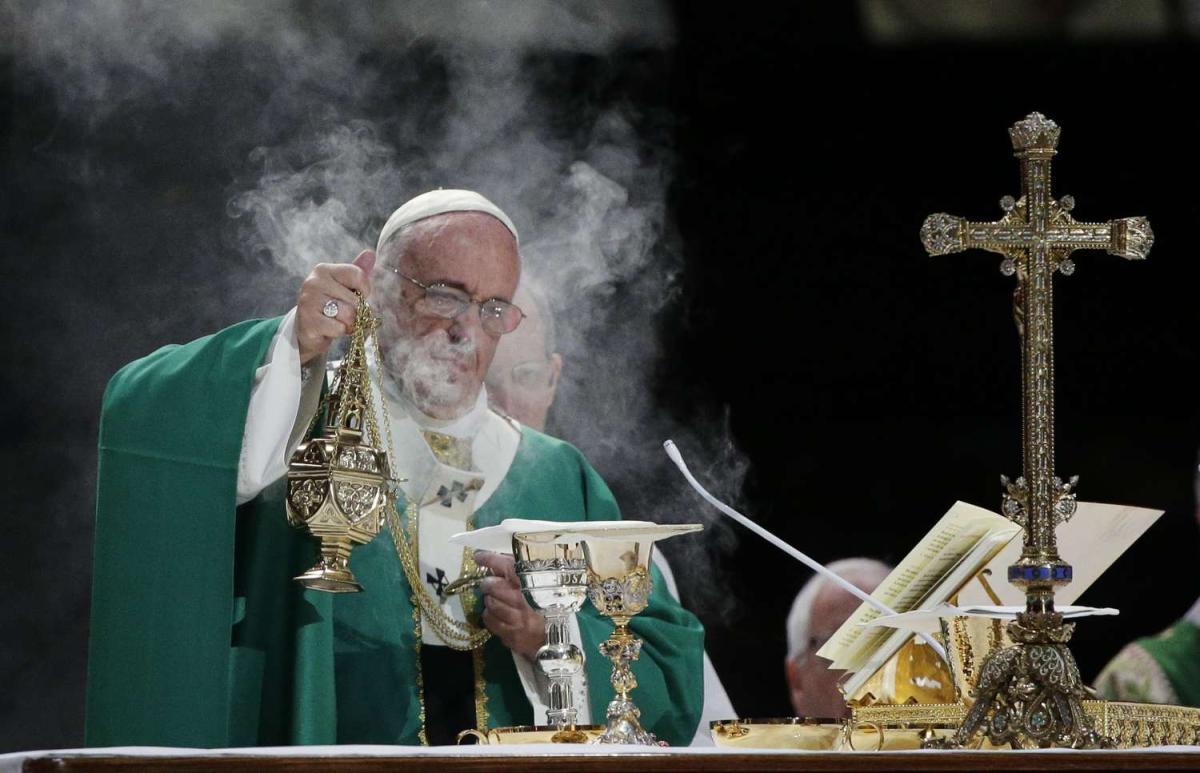
Bells, Smells, and Liturgy - A Backwards Step?


TRENDING AT PATHEOS Progressive Christian

What Being a Modern-Day Apostle Means to Me
In my last column, I discussed the ins and outs of modern-day...

Did Ancient China Once Worship the God of...
Across human history, a common thread weaves through the origins of the...

Love Your Neighbor – Including Earth-Kin: Lev. 19,...
God’s command to love your neighbor means acting in an ethical and...

Lead a Church Study of “Jesus and Lao...
Guest writer Jack Thomas (The Irreverent Reverend) reflects on leading his church...

Pastoral Wisdom for Responding to Sermon Pushback
Getting sermon pushback on your social justice sermon? Learn practical, Proverbs-based strategies...

Principles for Understanding the Apostolic Ministry Today
Whenever people discover that my formal ministry title is "apostle," as in...
view all Progressive Christian blogs
What Are Your Thoughts?leave a comment
Ad-Free & Subscriber Log-In Subscription Support
- About Us
- 2026 Calendar
- Videos
- Podcasts
- Library of World Religions
- Faith In Media Tracker
- Advertise With Us
- Write for Us
- Privacy Policy
- Terms of Service
- Do Not Sell My Data
- Contact Us
- Radiant Digital
- Manage Newsletter Subscriptions
- Unsubscribe From Notifications
- Sitemap
Copyright 2008-2026, Patheos. All rights reserved.
Subscription Support Ad-Free & Subscriber Log-In
Follow Patheos