
BuddhistCatholicContemplativeEvangelicalGeneral ChristianHinduJewishLatter-day SaintMuslimNew VisionsProgressive Christian
Beliefs
- Buddhist
- Catholic
- Contemplative
- Evangelical
- General Christian
- Hindu
- Jewish
- Latter-day Saint
- More Voices
- Muslim
- New Visions
- Pagan
- Progressive Christian
Topics
- Religion News
- Food and Religion
- Sports and Religion
- Religious Art
- Religious Music and Entertainment
- Religious Events
- History and Religion
- Style and Religion
- Politics and Religion
- Women in Religion
- Recreation Outdoors and Religion
- Business Finance and Religion
- Careers Workplace and Religion
- Education and Religion
- Family Parenting and Religion
- Health Fitness and Religion
- Home and Religion
- Relationships and Religion
- Technology and Religion
- Travel and Religion
Columnists
- Buddhist Columnists
- Business Finance and Religion Columnists
- Careers Workplace and Religion Columnists
- Catholic Columnists
- Contemplative Columnists
- Education and Religion Columnists
- Evangelists Columnists
- Family Parenting and Religion Columnists
- General Christian Columnists
- Health Fitness and Religion Columnists
- Hindu Columnists
- History and Religion Columnists
- Home and Religion Columnists
- Jewish Columnists
- More Voices Columnists
- Latter Day Columnists
- Muslim Columnists
- New Visions Columnists
- Nonreligious Columnists
- Pagan Columnists
- Politics and Religion Columnists
- Progressive Columnists
- Recreation Outdoors and Religion Columnists
- Relationships and Religion Columnists
- Religion News Columnists
- Religious Art Columnists
- Religious Events Columnists
- Religious Music and Entertainment Columnists
- Sports and Religion Columnists
- Style and Religion Columnists
- Technology and Religion Columnists
- Travel and Religion Columnists
- Women in Religion Columnists
Resource Library
- 2026 Calendar
- Library of World Religions
- The 100 Most Holy Places on Earth
- Patheos Answers
- Podcasts
- Videos
- Faith Leaders Database
- Anglican Episcopalian
- Bahai
- Baptist
- Buddhism
- Christianity
- Confucianism
- Eastern Orthodoxy
- Hinduism
- Holiness and Pentecostal
- ISKCON
- Islam
- Judaism
- Lutheran
- Methodist
- The Church of Jesus Christ of Latter-day Saints
- New Age
- Paganism
- Presbytarian and Reformed
- Protestantism
- Religion Behind the Scenes
- Roman Catholic
- Scientology
- Shia Islam
- Sikhism
- Sufism
- Sunni Islam
- Taoism
- Zen
- See all religions
Research Tools
 Ad-Free & Subscriber Log-In Subscription Support
Ad-Free & Subscriber Log-In Subscription Support
Follow Patheos 

- Trending:
- Forgiveness
- |
- Marriage
- |
- Consciousness
- |
- Death Penalty
- |
- Election
- |
- Halloween

- Home
- Progressive Christian
- Should the media cover faith?
Should the media cover faith?
Last updated on: October 23, 2022 at 12:59 pm by Duncan Edward Pile
Should the media cover faith? 2022-10-23T12:59:04+01:00 Duncan Edward Pile
Patheos Explore the world's faith through different perspectives on religion and spirituality! Patheos has the views of the prevalent religions and spiritualities of the world.
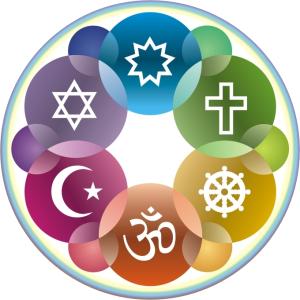
The Global Faith and Media Study by Harris X highlights an important but difficult dilemma. Drawing on nearly 10,000 respondents from 18 countries (across people of faith, ‘spiritual’ people, and those who identify as secular), the study reveals that 63% of people globally say that high quality content on faith and religion is needed in their respective countries. The appetite for religious coverage is growing and yet, across the world, faith, religion, and spirituality are largely ignored by news rooms and producers. The purpose of this article is to understand why that might be, and if the opportunities identified by the study are realistic.
When do we hear about religion in the news? It’s usually when faith has been used as a justification to commit an atrocity. Whether the horrors of Islamic extremist terrorist attacks or religious wars such as the Myanmar (a Buddhist nation) militia’s genocide against the Muslim Rohingya people, these are the occasions when religion tends to drive a story. Religion/faith is generally reported on as a conservative force, and little oxygen is left in the room to discuss the positivity, community, and charity that is the major output of faith and spirituality across the world, whether organised or organic.
Despite the obvious gap, I’m not convinced at this point that a change to news coverage is needed. There are some reasonable concerns raised by journalists about faith-based content:
- Journalists fear getting religious coverage right. It is all too easy to offend.
- Newsrooms need to make money, and religion isn’t seen as a driver for driver for reader engagement.
- Media coverage of religion tends to enforce rather than challenge stereotypes.
- Reporters are generalists who cannot be expected to understand the nuance of dozens of religions and sub-groups within religions.
- In an era when religion has become increasingly politicised, coverage can seem to be a form of bias, depending on how a matter is reported upon.
- In a multi-cultural society, which perspectives do you focus on? Whatever you do, others will feel under-represented.
- Journalists are often performance-monitored on the basis of the number of clicks their articles receive. If reporting on good and loving expressions of faith does not generate much interest, then it’s hard to justify the focus from a career point of view.
The Global Faith and Media Study presents some opportunities arising from the gap between the appetite for quality coverage and the lack of it in the media, including:
- Religious stereotypes could be addressed with the same quality of attention as race or gender stereotypes.
- The appetite for quality content (rather than a pay-per click approach which automatically leads to controversial coverage of hot topics) means there is plenty of room to grow in this field.
- A light could be shone on complex religious issues and their impact on societies.
- Diversity of debate can be enhanced.
- Faith communities can provide the media with spokespeople, especially those with a lived experience of their faith.
Optimistic as this sounds, I struggle to accept the viability of much of it. Who would host or present such topics in a multi-cultural society? If, as suggested, representatives with lived experienced of specific faiths/perspectives are consulted, we could never assume they speak for their entire faith. In Christian circles, for example, the message you’d receive from a Progressive believer would be the opposite of the message a Conservative Evangelical would deliver. I would not feel happy being spoken for by a fire and brimstone Calvinist, for example, preferring to hold instead to faith in the pre-eminence of grace and mercy in the heart of the divine. And it would be tough to choose between a Shia or Sunni Muslim regarding commentary on their faith. Either way could result in the boycotting of media and heightening of tensions.
It seems to me that the only people who could be reasonably expected to cover religion, spirituality, and faith are either those for whom inter-faith dialogue is as or more important than pursuing their own, personal faith. Alternatively, those who identify as secular but have respect for faith and faith communities could successfully discuss religion from an impartial distance. They could draw on experts with the lived experience of faith and faith-based issues, but the reporting would have to be unbiased. I can’t see this working in a country like the USA, where Christianity has been hijacked and highly politicised, in my view. Based on personal experience, most Evangelicals would prefer to listen to the talking heads on channels like Fox News than to hear an atheist host a discussion on faith in which their particular version of Christianity is not the most important (or even the only important) voice.
I am heartened by the optimism of the Global Faith and Media Study, and would like to see all of its opportunities made manifest, but I struggle to understand how these aims can be achieved through any kind of generic coverage. It seems to me that faith is highly personal, and that online communities of interested individuals would have to be there voluntarily, enthusiastic and passionate about faith-related topics and issues. If stories about faith kept popping up on the news, it could be considered an invasion of personal space by those who either don’t practice spirituality at all or who only want to hear about their own particular set of beliefs. It seems to me that faith should have no larger space in generic news media than it ought to have in schools.
I think we need to be careful about an inter-faith agenda in and of itself, because for many that will conflict with a desire to be faithful to their own group, divinity, and set of beliefs. Thus it could be argued that pursuit of the discussion of and understanding of faith is best supported by special interest groups that produce high quality material. These groups can support each other across the globe, and begin to build a truly impactful movement based on faith and respect of others’ beliefs. It simply has to be organic.
I’ll be honest – as a Patheos writer I struggle with this, much of the time. Patheos treat me well, but I disagree with the page-view payment model, because it pushes writers towards high friction topics that generate arguments. If we are serious about pursuing the constructive discussion of religion, faith, and spirituality, then that should start right here, investing in quality, positive output rather than controversy. It would mean a fundamental change to the advertising model and may result in loss of profit, but if I’m honest, that’s where we should be heading if we want to be part of the solution. If we took that approach, and other groups did the same, and if all these groups formed a growing community across the globe, with a real focus on encouraging local expressions of charity, then we might start to move towards what the Global Faith and Media Study is talking about.
Previous Post

September 14, 2022
Building Better Communities
Next Post
November 3, 2022 Break free from self-imposed limitations
Browse Our Archives
Select a Category A time for war and Sheol Authentic Faith Being in Christ Christian marriage Christian Mysticism Christian Nationalism Christian Parenting Christianity and politics Church and State De/reconstruction Discipleship Divine Healing Divine judgement Don't throw the baby out with the bathwater Effective Prayer Embracing the LGBTQ+ Community Embracing the LGBTQIA+ community End-Times Fellowship with his sufferings Gehenna Glorifying God Hades Healthy Debate Heaven and Earth Hell Honouring Christian Women I still believe inter-faith dialogue Interpreting Scripture Keep the faith Knowing the peace of God Living in Abundance Loving Each Other Loving God Loving Ourselves Mental Health Mental Health and Faith Old and New Covenants Practice Peace Prophecy Prophesy Re-thinking Christian Concepts Resist the Devil Revival Salvation Seeking God Sex and love sin and sinfulness Sound theology Spiritual Authority Spiritual discipline Spiritual effectiveness Spiritual Gifts Spiritual growth Spiritual Mentorship The Christmas story The Cross of Christ The divine feminine The Fear of the Lord The Holy Spirit The importance of kindness The importance of theology The MAGA Cult The Ministry of Jesus The risen Christ The service of Jesus the sin of judgement The spirit-filled life The Virgin Birth True worship Uncategorized Understanding God Understanding Old Testament prophecy Understanding Self-Worth Understanding the Bible Union with God War and Peace
Select a Month September 2026 August 2026 September 2025 March 2025 February 2025 January 2025 December 2024 November 2024 October 2024 September 2024 August 2024 July 2024 June 2024 May 2024 April 2024 March 2024 February 2024 January 2024 December 2023 November 2023 October 2023 September 2023 August 2023 July 2023 June 2023 May 2023 April 2023 March 2023 February 2023 January 2023 December 2022 November 2022 October 2022 September 2022 August 2022 July 2022 June 2022 May 2022 April 2022 March 2022 February 2022 January 2022 December 2021 November 2021 October 2021 September 2021 August 2021 July 2021
TAKE THE
Religious Wisdom Quiz
What does the name "Jesus" mean?
Select your answer to see how you score.
God is love Shepherd The Lord saves Prince of peace
Related posts from Duncan Edward Pile
Why are Christians Scared of inclusion?
Authentic Christians and Honest Heretics

How to Spot a Conspiracy Theory

God is Everywhere, and Whirling!
TRENDING AT PATHEOS Progressive Christian

Why Christians Have a Sacred Duty to Vote:...
The Bible offers strong support for the sacred duty to vote. Here...

What Being a Modern-Day Apostle Means to Me
In my last column, I discussed the ins and outs of modern-day...

Did Ancient China Once Worship the God of...
Across human history, a common thread weaves through the origins of the...

Love Your Neighbor – Including Earth-Kin: Lev. 19,...
God’s command to love your neighbor means acting in an ethical and...

Lead a Church Study of “Jesus and Lao...
Guest writer Jack Thomas (The Irreverent Reverend) reflects on leading his church...

Principles for Understanding the Apostolic Ministry Today
Whenever people discover that my formal ministry title is "apostle," as in...
view all Progressive Christian blogs
Ad-Free & Subscriber Log-In Subscription Support
- About Us
- 2026 Calendar
- Videos
- Podcasts
- Library of World Religions
- Faith In Media Tracker
- Advertise With Us
- Write for Us
- Privacy Policy
- Terms of Service
- Do Not Sell My Data
- Contact Us
- Radiant Digital
- Manage Newsletter Subscriptions
- Unsubscribe From Notifications
- Sitemap
Copyright 2008-2026, Patheos. All rights reserved.
Subscription Support Ad-Free & Subscriber Log-In
Follow Patheos