
BuddhistCatholicContemplativeEvangelicalGeneral ChristianHinduJewishLatter-day SaintMuslimNew VisionsProgressive Christian
Beliefs
- Buddhist
- Catholic
- Contemplative
- Evangelical
- General Christian
- Hindu
- Jewish
- Latter-day Saint
- More Voices
- Muslim
- New Visions
- Pagan
- Progressive Christian
Topics
- Religion News
- Food and Religion
- Sports and Religion
- Religious Art
- Religious Music and Entertainment
- Religious Events
- History and Religion
- Style and Religion
- Politics and Religion
- Women in Religion
- Recreation Outdoors and Religion
- Business Finance and Religion
- Careers Workplace and Religion
- Education and Religion
- Family Parenting and Religion
- Health Fitness and Religion
- Home and Religion
- Relationships and Religion
- Technology and Religion
- Travel and Religion
Columnists
- Buddhist Columnists
- Business Finance and Religion Columnists
- Careers Workplace and Religion Columnists
- Catholic Columnists
- Contemplative Columnists
- Education and Religion Columnists
- Evangelists Columnists
- Family Parenting and Religion Columnists
- General Christian Columnists
- Health Fitness and Religion Columnists
- Hindu Columnists
- History and Religion Columnists
- Home and Religion Columnists
- Jewish Columnists
- More Voices Columnists
- Latter Day Columnists
- Muslim Columnists
- New Visions Columnists
- Nonreligious Columnists
- Pagan Columnists
- Politics and Religion Columnists
- Progressive Columnists
- Recreation Outdoors and Religion Columnists
- Relationships and Religion Columnists
- Religion News Columnists
- Religious Art Columnists
- Religious Events Columnists
- Religious Music and Entertainment Columnists
- Sports and Religion Columnists
- Style and Religion Columnists
- Technology and Religion Columnists
- Travel and Religion Columnists
- Women in Religion Columnists
Resource Library
- 2026 Calendar
- Library of World Religions
- The 100 Most Holy Places on Earth
- Patheos Answers
- Podcasts
- Videos
- Faith Leaders Database
- Anglican Episcopalian
- Bahai
- Baptist
- Buddhism
- Christianity
- Confucianism
- Eastern Orthodoxy
- Hinduism
- Holiness and Pentecostal
- ISKCON
- Islam
- Judaism
- Lutheran
- Methodist
- The Church of Jesus Christ of Latter-day Saints
- New Age
- Paganism
- Presbytarian and Reformed
- Protestantism
- Religion Behind the Scenes
- Roman Catholic
- Scientology
- Shia Islam
- Sikhism
- Sufism
- Sunni Islam
- Taoism
- Zen
- See all religions
Research Tools
 Ad-Free & Subscriber Log-In Subscription Support
Ad-Free & Subscriber Log-In Subscription Support
Follow Patheos 

- Trending:
- Forgiveness
- |
- Marriage
- |
- Consciousness
- |
- Death Penalty
- |
- Election
- |
- Halloween

- Home
- Progressive Christian
- The Connectedness of All Things
The Connectedness of All Things
Last updated on: January 23, 2022 at 9:30 pm by Duncan Edward Pile
The Connectedness of All Things 2022-01-23T21:30:30+00:00 Duncan Edward Pile
Patheos Explore the world's faith through different perspectives on religion and spirituality! Patheos has the views of the prevalent religions and spiritualities of the world.
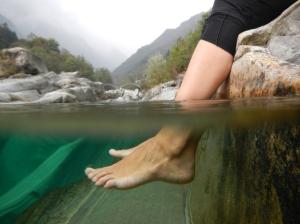
Have you ever noticed that Christianity can sometimes feel like a bit of an indoor religion? Rows of seats in custom-built auditoriums, platforms and baptistry tanks, and cups of tea in comfortable living rooms? Years ago, a close friend of mine got married in a forest, and I can still remember the awkwardness of the ceremony, which had not been altered in any way to match the venue. In the acoustics of the woodland, the guitar sounded tinny, the singing dampened. The speaker delivered his message just as he would in church, sticking firmly to the usual rhetoric and rhythm, but his words seemed somehow out of place. It all felt rather unnatural to me – like we’d missed the point.
As a young man, I used to live and work on a ship. One day, I was up on a high, white-painted deck looking out over cobalt blue waters. The entire scene comprised of those two colours – white and blue, from the clouds to the ship to the water – and I was stilled by the beauty around me, dazzled by a great wash of light. My peace was disturbed by a spasm of confusion – how did this experience mesh with the more intense moments I knew when praying indoors, with my eyes closed? They felt like different joys, and I didn’t know how to reconcile that.
These days I slide from appreciation of nature into spiritual intimacy with ease but back then, my indoor religion, which carried out its sacraments in carpeted chambers and amplified its tenets from raised platforms, framed by highly polished musical performances, was yet to learn to breathe. It was scrunched up, intense, inward. It was of the mind, not of the body.
The Biblical narrative ties humankind very closely to the Earth. In the Genesis account, nature is said to have ‘fallen’, mirroring humankind’s great plummet into judgement and harm. In Romans, Paul speaks of that close bond, and how the ultimate liberation of human beings will result in the ultimate liberation of creation. Romans 8: 19-23,
‘For the creation waits in eager expectation for the children of God to be revealed. For the creation was subjected to frustration, not by its own choice, but by the will of the one who subjected it, in hope that the creation itself will be liberated from its bondage to decay and brought into the freedom and glory of the children of God.
We know that the whole creation has been groaning as in the pains of childbirth right up to the present time. Not only so, but we ourselves, who have the firstfruits of the Spirit, groan inwardly as we wait eagerly for our adoption to sonship, the redemption of our bodies.’
We are bound to the Earth, and the Earth, to us. For me, the practice of faith is enhanced through connection to nature as much as through prayer. In fact, the two go together rather well, but it is not something often emphasised in church. Sure, we sing ‘How Great Thou Art’, thinking of babbling brooks and lofty mountain grandeur, and like many people (whether believers or not), we might enjoy a walk in nature, but that is only the appetiser when it comes to a deep connection with the Earth. To really understand a matter, we need to prioritise it, and turn it into daily practice.
For me, our connection to each other and to all things is best grasped through meditation – relaxation exercises, the stilling of the mind, and becoming aware of connectedness to our surroundings. I do this at the bottom of my garden, where a canal flows by, and as I ease into a state of connectedness, I feel like the butterflies, birds, insects and lilies are all part of me, and I of them. We are made of the very same essence – the creative dream of God. There is a profound moment of humility which only comes about as we grasp our place in the whole. We are not important; we are part of something that is profoundly important to God.
God didn’t merely create and then enjoy the world from a distance – he is energetically involved in nature’s every movement. Psalm 104: 2-3,
‘The Lord wraps himself in light as with a garment;
he stretches out the heavens like a tent
and lays the beams of his upper chambers on their waters.
He makes the clouds his chariot
and rides on the wings of the wind.’
I recommend reading the whole psalm, to understand the Lord’s delight in the movement and energy of nature. He is a natural God, maker and lover of our vibrant, physical world.
I feel there is much more room for physical groundedness in Christian practice. When I look at the life of Jesus, I don’t see a man attending a calendar of meetings; I see a person who went into nature to pray each day, whether up a mountain, by a lake, or in the wilderness. I see a person whose faith expressed itself through interaction on the streets and in public, not polite conversations in comfortable lounges, discussing theology over tea and snacks. I see rugged, physical humanity, powerful emotion, and a worshipful heart.
We are connected to nature and to each other, but the modern world tends towards isolation, especially for city dwellers. It is entirely possible to live our lives with little or no human interaction – work from home, order food in, immerse ourselves in escapist gaming or television. We are not meant to live this way, or at least isolation and distraction should not be the defining features of our lives, but human beings are adaptable and can tolerate varying degrees of misery. Much like the frog in the pot of slowly heating water, we put up with that which will eventually kill us. More than that; we wrap ourselves in it, mire our feet deep in sinking sand, taking comfort from the comfortless.
How do we open the windows and let in the light?
- First of all, I recommend a practice of meditation. Not cerebral mediation, focussing on a concept, but meditation that stills us, empties the mind, brings us into communion with our own bodies and with nature. There are plenty of free online tools to help with this.
- Get involved in a community of people, whether it be the fishing club, young farmers, a choir, a sports club, a church, a social group etc. Build connections, tear down the walls of isolation.
- Use your body in worship. Even if it’s not your habit, perhaps try lifting your hands, or expressing yourself in some way through movement. You don’t need to don a leotard or prance about with a ribbon; just something natural to you. Standing stiff and still is not that natural really, is it?
- Become comfortable being physical with other people. Learn to draw and give comfort from touch. Hugs are good (bearing Covid considerations in mind at this time).
- Look after your body. Your body is not just the seat of your mind, it is the vehicle that carries you through life, and in and of itself can be a delight to dwell in, if you know health. Eat well, getting nutrients from a balanced diet, and exercise daily. If health is a struggle, just commit to a daily walk, even if it’s around the streets where you live. Moving around releases endorphins and dopamine, which deliver feelings of happiness and satisfaction. Personally, I have some of my best ideas when walking.
- Consider practices like yoga, which connect spirituality to physical movement. I know lots of people in the Church are frightened of Yoga, but the vast majority of Yoga classes do not involve genuine devotion to other deities or religious practices. A Buddha in the corner is no big deal if you don’t want it to be, and there are plenty of Yoga classes out there that focus purely on being in the moment. Pilates has no real association with other religious practices, so if you’re nervous about Yoga, that might be a better way to go. The honest truth is, the East has been much better at this side of life than the West since time immemorial, and if we exercise a little humility, there is much we can learn to enhance our lives.
- Recycle, and think about your carbon footprint. If the Lord delights in the Earth, if nature carries his fingerprints and expresses his energy, and if we called to be stewards of all this beauty, how can we treat it carelessly? That means taking climate change seriously and doing our part. It means thinking about our part in encouraging sustainable farming and making responsible purchases.
- Get out into nature on a regular basis. It will minister to your soul.
Our disconnection from nature is a great harm. Our disconnection from each other is a travesty. When we try to understand the agenda of dark spiritual forces, look no further than enforced isolationism. The Enemy would have us live isolated lives, subscribe to ‘them and us’ thinking, embrace division, remain sedentary, stay glued to glowing screens, and strain our bodies through the chemical toxicity of ill-health. The Enemy would have us live small, lonely, isolated, unhealthy, contactless lives, but Jesus would have us live life to the full.
Life can be wonderful. We are called to so much more than this. I pray the Lord will show each reader a single step to take. One step – that’s it all takes to loosen the chains of entropy and begin a journey into happiness and satisfaction.
If you found this helpful, why not subscribe to my newsletter (top right of the screen), and share on social media?
Previous Post

January 18, 2022
The Mythology of Cancel Culture
Next Post
January 25, 2022 Why I’m (Almost) a Universalist
Browse Our Archives
Select a Category A time for war and Sheol Authentic Faith Being in Christ Christian marriage Christian Mysticism Christian Nationalism Christian Parenting Christianity and politics Church and State De/reconstruction Discipleship Divine Healing Divine judgement Don't throw the baby out with the bathwater Effective Prayer Embracing the LGBTQ+ Community Embracing the LGBTQIA+ community End-Times Fellowship with his sufferings Gehenna Glorifying God Hades Healthy Debate Heaven and Earth Hell Honouring Christian Women I still believe inter-faith dialogue Interpreting Scripture Keep the faith Knowing the peace of God Living in Abundance Loving Each Other Loving God Loving Ourselves Mental Health Mental Health and Faith Old and New Covenants Practice Peace Prophecy Prophesy Re-thinking Christian Concepts Resist the Devil Revival Salvation Seeking God Sex and love sin and sinfulness Sound theology Spiritual Authority Spiritual discipline Spiritual effectiveness Spiritual Gifts Spiritual growth Spiritual Mentorship The Christmas story The Cross of Christ The divine feminine The Fear of the Lord The Holy Spirit The importance of kindness The importance of theology The MAGA Cult The Ministry of Jesus The risen Christ The service of Jesus the sin of judgement The spirit-filled life The Virgin Birth True worship Uncategorized Understanding God Understanding Old Testament prophecy Understanding Self-Worth Understanding the Bible Union with God War and Peace
Select a Month September 2026 August 2026 September 2025 March 2025 February 2025 January 2025 December 2024 November 2024 October 2024 September 2024 August 2024 July 2024 June 2024 May 2024 April 2024 March 2024 February 2024 January 2024 December 2023 November 2023 October 2023 September 2023 August 2023 July 2023 June 2023 May 2023 April 2023 March 2023 February 2023 January 2023 December 2022 November 2022 October 2022 September 2022 August 2022 July 2022 June 2022 May 2022 April 2022 March 2022 February 2022 January 2022 December 2021 November 2021 October 2021 September 2021 August 2021 July 2021
TAKE THE
Religious Wisdom Quiz
According to Galatians 5:22-23, what are these called: love, joy, peace, patience, kindness, goodness, faithfulness, gentleness, self-control?
Select your answer to see how you score.
The Beatitudes The Gifts of the Spirit The Fruit of the Spirit The Ten Commandments
Related posts from Duncan Edward Pile

What Does God Get Out of Worship?
Difficult Conversations Are Part of Healing

TRENDING AT PATHEOS Progressive Christian

What Being a Modern-Day Apostle Means to Me
In my last column, I discussed the ins and outs of modern-day...

Did Ancient China Once Worship the God of...
Across human history, a common thread weaves through the origins of the...

Love Your Neighbor – Including Earth-Kin: Lev. 19,...
God’s command to love your neighbor means acting in an ethical and...

Lead a Church Study of “Jesus and Lao...
Guest writer Jack Thomas (The Irreverent Reverend) reflects on leading his church...

Pastoral Wisdom for Responding to Sermon Pushback
Getting sermon pushback on your social justice sermon? Learn practical, Proverbs-based strategies...

Principles for Understanding the Apostolic Ministry Today
Whenever people discover that my formal ministry title is "apostle," as in...
view all Progressive Christian blogs
Ad-Free & Subscriber Log-In Subscription Support
- About Us
- 2026 Calendar
- Videos
- Podcasts
- Library of World Religions
- Faith In Media Tracker
- Advertise With Us
- Write for Us
- Privacy Policy
- Terms of Service
- Do Not Sell My Data
- Contact Us
- Radiant Digital
- Manage Newsletter Subscriptions
- Unsubscribe From Notifications
- Sitemap
Copyright 2008-2026, Patheos. All rights reserved.
Subscription Support Ad-Free & Subscriber Log-In
Follow Patheos