
BuddhistCatholicContemplativeEvangelicalGeneral ChristianHinduJewishLatter-day SaintMuslimNew VisionsProgressive Christian
Beliefs
- Buddhist
- Catholic
- Contemplative
- Evangelical
- General Christian
- Hindu
- Jewish
- Latter-day Saint
- More Voices
- Muslim
- New Visions
- Pagan
- Progressive Christian
Topics
- Religion News
- Food and Religion
- Sports and Religion
- Religious Art
- Religious Music and Entertainment
- Religious Events
- History and Religion
- Style and Religion
- Politics and Religion
- Women in Religion
- Recreation Outdoors and Religion
- Business Finance and Religion
- Careers Workplace and Religion
- Education and Religion
- Family Parenting and Religion
- Health Fitness and Religion
- Home and Religion
- Relationships and Religion
- Technology and Religion
- Travel and Religion
Columnists
- Buddhist Columnists
- Business Finance and Religion Columnists
- Careers Workplace and Religion Columnists
- Catholic Columnists
- Contemplative Columnists
- Education and Religion Columnists
- Evangelists Columnists
- Family Parenting and Religion Columnists
- General Christian Columnists
- Health Fitness and Religion Columnists
- Hindu Columnists
- History and Religion Columnists
- Home and Religion Columnists
- Jewish Columnists
- More Voices Columnists
- Latter Day Columnists
- Muslim Columnists
- New Visions Columnists
- Nonreligious Columnists
- Pagan Columnists
- Politics and Religion Columnists
- Progressive Columnists
- Recreation Outdoors and Religion Columnists
- Relationships and Religion Columnists
- Religion News Columnists
- Religious Art Columnists
- Religious Events Columnists
- Religious Music and Entertainment Columnists
- Sports and Religion Columnists
- Style and Religion Columnists
- Technology and Religion Columnists
- Travel and Religion Columnists
- Women in Religion Columnists
Resource Library
- 2026 Calendar
- Library of World Religions
- The 100 Most Holy Places on Earth
- Patheos Answers
- Podcasts
- Videos
- Faith Leaders Database
- Anglican Episcopalian
- Bahai
- Baptist
- Buddhism
- Christianity
- Confucianism
- Eastern Orthodoxy
- Hinduism
- Holiness and Pentecostal
- ISKCON
- Islam
- Judaism
- Lutheran
- Methodist
- The Church of Jesus Christ of Latter-day Saints
- New Age
- Paganism
- Presbytarian and Reformed
- Protestantism
- Religion Behind the Scenes
- Roman Catholic
- Scientology
- Shia Islam
- Sikhism
- Sufism
- Sunni Islam
- Taoism
- Zen
- See all religions
Research Tools
 Ad-Free & Subscriber Log-In Subscription Support
Ad-Free & Subscriber Log-In Subscription Support
Follow Patheos 

- Trending:
- Forgiveness
- |
- Marriage
- |
- Consciousness
- |
- Death Penalty
- |
- Election
- |
- Halloween

- Home
- Progressive Christian
- The Prayer God Can’t Answer
The Prayer God Can’t Answer
Last updated on: November 24, 2021 at 1:47 pm by Duncan Edward Pile
The Prayer God Can’t Answer 2021-11-24T13:47:02+00:00 Duncan Edward Pile
Patheos Explore the world's faith through different perspectives on religion and spirituality! Patheos has the views of the prevalent religions and spiritualities of the world.
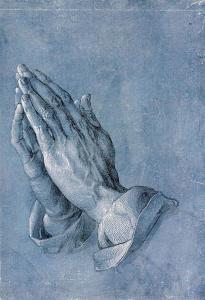
In the church of my upbringing, it was commonly understood that if we prayed for something, the outcome would be God’s will, whether the specific request is answered or not. In particular, this was the approach when praying for the sick. James 5:14-15,
‘Is anyone among you sick? Let him call for the elders of the church, and let them pray over him, anointing him with oil in the name of the Lord. And the prayer of faith will save the sick, and the Lord will raise him up.’
The elders of my church attempted to follow this to the letter, but somehow missed seeing the clearly expected outcome – ’the prayer of faith will save the sick, and the Lord will raise him up.’ In verses 17-18, James continues to assert the miraculous power of prayers, offered in faith:
‘Elijah was a man with a nature like ours, and he prayed earnestly that it would not rain; and it did not rain on the land for three years and six months. And he prayed again, and the heaven gave rain, and the earth produced its fruit.’
Clearly, James believed that prayers offered in faith would result in the physical, miraculous intervention of God. When we look at the life of Jesus, and the amount of time and energy he devoted to healing the sick, which was an expression of his deep compassion for the suffering, it is easy to see that James was closer to the truth than we are today.
The prevalent belief taught in my church, however, was that once prayer had been offered, the outcome must necessarily be God’s will, whether the person was healed or not. There is an unfortunate tendency in Evangelicalism to show disinterest in what the Bible actually says, and even actively campaign against it with disempowering traditions. For anyone who has associations with the Evangelical movement, this is a considerable irony.
It’s important for me to be clear that none of the above is intended to criticise. We can only do the best with what we know, and I can recall the sincerity and care of those who influenced my faith, in the early part of my life. I received much that was good from them, and have no desire to dishonour, but for the purposes of clarity I can’t avoid the observation.
For me, the conclusion is obvious – in the early church, the lived experience of the Christian faith was far greater than it is today. There is much we have lost, and must seek to restore. It is inconceivable that the church I grew up in, where spiritual gifts were not practiced or encouraged, would suddenly find themselves in the flow of the miraculous.
On the very odd occasion, some kind of healing might have occurred, but it was far from the norm. Rather than reconcile themselves to scripture, the people of my church departed from it, finding ways to justify the gap between what the Bible states and their own experience. The Kingdom of God has never been advanced this way.
For me, churches that lack experience of the miraculous are missing out on the compassionate intervention of God, and the express will of God in scripture. Rather than justify our lack, we ought to get on our knees and seek breakthrough. Jesus relied on miracles to confirm his words, and we are not higher than he.
In my opinion, powerless prayers have been rendered as such by the long, slow erosion of faith among God’s people, and that erosion has been made possible by the embracing of false traditions. For example, the kind of prayers I heard in my youth tended to close with ‘not my will but yours, be done’. This was not stated in faith, in expectation of an outcome, but more as a catch-all – ‘please ignore everything I just asked for, if it doesn’t suit you.’
Some would argue this is basic humility, acknowledging that God knows better than we do, but I disagree. First of all, that has nothing to do with humility, as covered in a previous post. Secondly, this is not the model of discipleship we are to follow, where we are completely unaware of the will of God, and our prayers are at best, guesswork. We are called to walk ever more closely with God, and increasingly understand his will. Romans 12:1-2,
‘Therefore, I urge you, brothers and sisters, in view of God’s mercy, to offer your bodies as a living sacrifice, holy and pleasing to God – this is your true and proper worship. Do not conform to the pattern of this world, but be transformed by the renewing of your mind. Then you will be able to test and approve what God’s will is – his good, pleasing and perfect will.’
As we yield to God’s mercy, and walk closely with him, our ideas are changed. We jettison old ways of thinking, as healthier, more life-giving inspiration arises in his company, and as our minds are renewed, we become more attuned to him and to his will. Only then, in our closeness with God, where his good, pleasing and perfect will is known, can we pray effectively.
These days, I try only to pray as the Spirit leads. As a result, prayers are rarely unanswered, as I already feel the desire of God during prayer. He has chosen to partner with us in this; we are his hands and feet in the world, and he works through us, as he did through Elijah.
We learn to discern the will of God, as we grasp the loving the nature of God. I am not confused, when praying for another person. I know that God loves them, wants them to be free, and will do everything he can to heal, restore, and bless them. If there is a blocker, it lies in our understanding of God’s nature.
Prayers that finish with ‘thy will be done’, are typically expressions of uncertainty, as well as providing a get-out clause, when the prayer is unanswered. Faith need never be challenged, if any and every outcome must be the will of God. This is yet another example of Christian fatalism, aided and abetted by Calvinism. The idea that God is in control, without our involvement or engagement in faith, robs us of the outworking of grace.
‘Hold on!’ someone might cry. ‘Jesus taught us to pray ‘thy will be done’, in the Lord’s prayer!’ He did, but he also demonstrated the use of such a prayer, in Gethsemane. Luke 22:41-44,
‘He withdrew about a stone’s throw beyond them, knelt down and prayed, ‘Father, if you are willing, take this cup from me; yet not my will, but yours be done.’ An angel from heaven appeared to him and strengthened him. And being in anguish, he prayed more earnestly, and his sweat was like drops of blood falling to the ground.’
So anguished was Jesus, as he sought to escape the cross, that his sweat fell to the ground like drops of blood. He knew the will of God, but was terrified of what lay before him. Matthew’s account of the same event reveals more of Jesus’ mindset, in that awful moment. Luke 22:38-39,
‘‘My soul is overwhelmed with sorrow to the point of death. Stay here and keep watch with me.’ Going a little farther, he fell with his face to the ground and prayed, ‘My Father, if it is possible, may this cup be taken from me. Yet not as I will, but as you will.’
Overwhelmed to the point of death, sweating drops like blood, anguished, with his face to the ground, desperate and afraid. That God would expose himself to such terrible emotions is profoundly humbling, to me, but I stray from the point: when Jesus prayed for the Father’s will to be done, he knew exactly what that was. His words do not convey doubt about God’s intentions; he was yielding to an absolute certainty.
This prayer, then – thy will be done – is an expression of faith and surrender, rather than doubt. We pray like this when we know what God’s will is, and our prayer of faith brings the intentions of God to pass.
If someone asks me to pray for them, I bend the knee before the Holy Spirit, try to follow his leading, and pray in power. When I get it right, those prayers echo the divine will, are redolent with compassion, and are uttered in the authority of the Holy Spirit. To be clear, this is not a boast. Every believer I know who walks closely with God will have a comparable experience, because God has no favourites, unless we are all his favourites. Spirit-led prayer is like getting caught up in the flow of a vast, powerful torrent, and surrendering to its energy.
Such prayers are powerful and effective, just as Elijah’s were, and the outcome is brought about by the prayer of faith, as God partners with his people for the good of humankind.
God cannot answer measly, mealy-mouthed, prayers, because they are not offered in faith. James 1:6-8,
‘But when you ask, you must believe and not doubt, because the one who doubts is like a wave of the sea, blown and tossed by the wind. That person should not expect to receive anything from the Lord. Such a person is double-minded and unstable in all they do.’
Let us purpose, then, to walk more closely with God, and to engage more fulsomely in the process of the renewing of the mind, which enables us to know in increasing measure, what the good, pleasing and perfect will of God is. As we connect with that will, let’s pray in the power of the Holy Spirit, and see God move as he desires to in our lives, and the lives of those around us.
Re-thinking Christian Concepts
Previous Post

November 19, 2021
The Problem is Calvinism – Why This Matters
Next Post
November 25, 2021 For the Avoidance of Dishonour
Browse Our Archives
Select a Category A time for war and Sheol Authentic Faith Being in Christ Christian marriage Christian Mysticism Christian Nationalism Christian Parenting Christianity and politics Church and State De/reconstruction Discipleship Divine Healing Divine judgement Don't throw the baby out with the bathwater Effective Prayer Embracing the LGBTQ+ Community Embracing the LGBTQIA+ community End-Times Fellowship with his sufferings Gehenna Glorifying God Hades Healthy Debate Heaven and Earth Hell Honouring Christian Women I still believe inter-faith dialogue Interpreting Scripture Keep the faith Knowing the peace of God Living in Abundance Loving Each Other Loving God Loving Ourselves Mental Health Mental Health and Faith Old and New Covenants Practice Peace Prophecy Prophesy Re-thinking Christian Concepts Resist the Devil Revival Salvation Seeking God Sex and love sin and sinfulness Sound theology Spiritual Authority Spiritual discipline Spiritual effectiveness Spiritual Gifts Spiritual growth Spiritual Mentorship The Christmas story The Cross of Christ The divine feminine The Fear of the Lord The Holy Spirit The importance of kindness The importance of theology The MAGA Cult The Ministry of Jesus The risen Christ The service of Jesus the sin of judgement The spirit-filled life The Virgin Birth True worship Uncategorized Understanding God Understanding Old Testament prophecy Understanding Self-Worth Understanding the Bible Union with God War and Peace
Select a Month September 2026 August 2026 September 2025 March 2025 February 2025 January 2025 December 2024 November 2024 October 2024 September 2024 August 2024 July 2024 June 2024 May 2024 April 2024 March 2024 February 2024 January 2024 December 2023 November 2023 October 2023 September 2023 August 2023 July 2023 June 2023 May 2023 April 2023 March 2023 February 2023 January 2023 December 2022 November 2022 October 2022 September 2022 August 2022 July 2022 June 2022 May 2022 April 2022 March 2022 February 2022 January 2022 December 2021 November 2021 October 2021 September 2021 August 2021 July 2021
TAKE THE
Religious Wisdom Quiz
How many people were saved from Sodom?
Select your answer to see how you score.
6 4 5 3
Related posts from Duncan Edward Pile


What Does God Get Out of Worship?

Separation From God is an Illusion
TRENDING AT PATHEOS Progressive Christian

What Being a Modern-Day Apostle Means to Me
In my last column, I discussed the ins and outs of modern-day...

Did Ancient China Once Worship the God of...
Across human history, a common thread weaves through the origins of the...

Love Your Neighbor – Including Earth-Kin: Lev. 19,...
God’s command to love your neighbor means acting in an ethical and...

Lead a Church Study of “Jesus and Lao...
Guest writer Jack Thomas (The Irreverent Reverend) reflects on leading his church...

Pastoral Wisdom for Responding to Sermon Pushback
Getting sermon pushback on your social justice sermon? Learn practical, Proverbs-based strategies...

Principles for Understanding the Apostolic Ministry Today
Whenever people discover that my formal ministry title is "apostle," as in...
view all Progressive Christian blogs
Ad-Free & Subscriber Log-In Subscription Support
- About Us
- 2026 Calendar
- Videos
- Podcasts
- Library of World Religions
- Faith In Media Tracker
- Advertise With Us
- Write for Us
- Privacy Policy
- Terms of Service
- Do Not Sell My Data
- Contact Us
- Radiant Digital
- Manage Newsletter Subscriptions
- Unsubscribe From Notifications
- Sitemap
Copyright 2008-2026, Patheos. All rights reserved.
Subscription Support Ad-Free & Subscriber Log-In
Follow Patheos