
BuddhistCatholicContemplativeEvangelicalGeneral ChristianHinduJewishLatter-day SaintMuslimNew VisionsProgressive Christian
Beliefs
- Buddhist
- Catholic
- Contemplative
- Evangelical
- General Christian
- Hindu
- Jewish
- Latter-day Saint
- More Voices
- Muslim
- New Visions
- Pagan
- Progressive Christian
Topics
- Religion News
- Food and Religion
- Sports and Religion
- Religious Art
- Religious Music and Entertainment
- Religious Events
- History and Religion
- Style and Religion
- Politics and Religion
- Women in Religion
- Recreation Outdoors and Religion
- Business Finance and Religion
- Careers Workplace and Religion
- Education and Religion
- Family Parenting and Religion
- Health Fitness and Religion
- Home and Religion
- Relationships and Religion
- Technology and Religion
- Travel and Religion
Columnists
- Buddhist Columnists
- Business Finance and Religion Columnists
- Careers Workplace and Religion Columnists
- Catholic Columnists
- Contemplative Columnists
- Education and Religion Columnists
- Evangelists Columnists
- Family Parenting and Religion Columnists
- General Christian Columnists
- Health Fitness and Religion Columnists
- Hindu Columnists
- History and Religion Columnists
- Home and Religion Columnists
- Jewish Columnists
- More Voices Columnists
- Latter Day Columnists
- Muslim Columnists
- New Visions Columnists
- Nonreligious Columnists
- Pagan Columnists
- Politics and Religion Columnists
- Progressive Columnists
- Recreation Outdoors and Religion Columnists
- Relationships and Religion Columnists
- Religion News Columnists
- Religious Art Columnists
- Religious Events Columnists
- Religious Music and Entertainment Columnists
- Sports and Religion Columnists
- Style and Religion Columnists
- Technology and Religion Columnists
- Travel and Religion Columnists
- Women in Religion Columnists
Resource Library
- 2026 Calendar
- Library of World Religions
- The 100 Most Holy Places on Earth
- Patheos Answers
- Podcasts
- Videos
- Faith Leaders Database
- Anglican Episcopalian
- Bahai
- Baptist
- Buddhism
- Christianity
- Confucianism
- Eastern Orthodoxy
- Hinduism
- Holiness and Pentecostal
- ISKCON
- Islam
- Judaism
- Lutheran
- Methodist
- The Church of Jesus Christ of Latter-day Saints
- New Age
- Paganism
- Presbytarian and Reformed
- Protestantism
- Religion Behind the Scenes
- Roman Catholic
- Scientology
- Shia Islam
- Sikhism
- Sufism
- Sunni Islam
- Taoism
- Zen
- See all religions
Research Tools
 Ad-Free & Subscriber Log-In Subscription Support
Ad-Free & Subscriber Log-In Subscription Support
Follow Patheos 

- Trending:
- Forgiveness
- |
- Marriage
- |
- Consciousness
- |
- Death Penalty
- |
- Election
- |
- Halloween

- Home
- Progressive Christian
- Shame Is Not Guilt
Shame Is Not Guilt
Last updated on: July 10, 2021 at 4:36 pm by Duncan Edward Pile
Shame Is Not Guilt 2021-07-10T16:36:16+01:00 Duncan Edward Pile
Patheos Explore the world's faith through different perspectives on religion and spirituality! Patheos has the views of the prevalent religions and spiritualities of the world.

In the library of popular worship songs, guilt and shame are often referred to in the same breath – ‘you took my guilt and shame’ – but herein lies a trap, as the Bible does not treat them as interchangeable concepts. The Bible is an Eastern book, and its concept of shame is an Eastern concept. In Biblical terms, shame is closer to embarrassment, to losing face, than it is to guilt.
Shame is fundamentally harmful, and in this, secular agencies, thinkers and counsellors can be way ahead of the Church. If science is the exploration of verifiable truth, it must ultimately be a ladder to God, and this includes the science of psychology. It’s important to draw from modern wisdom, just as we draw from medical advancements, but the understanding we need has already been spelled out in the Bible.
Luke 1, 24-25 (NIV): ‘After this his wife Elizabeth became pregnant…25 ‘The Lord has done this for me,’ she said. ‘In these days he has shown his favour and taken away my disgrace among the people.’’
Barrenness was considered a great personal embarrassment in ancient Jewish culture. A woman’s inability to bear children was a source of shame, as seen in Isaiah 54 (NIV).
‘Sing, barren woman,
you who never bore a child…
Do not be afraid; you will not be put to shame.
Do not fear disgrace; you will not be humiliated.
You will forget the shame of your youth…’
Shame involves turning on ourselves, and when we associate that with reverence for God – needing to feel bad in order to then feel forgiven – we tie a high view of God to a low view of ourselves, creating significant cognitive dissonance. The good news, as I understand it, is that when we talk about biblical shame, we are not talking about guilt. We are talking about embarrassment, exposure and humiliation. Certainly, this seems to be Paul’s understanding. In 2 Cor 7,14, he wrote of Titus’ visit:
NIV: ‘I had boasted to him about you, and you have not embarrassed me.’
NKJV: ‘For if in anything I have boasted to him about you, I am not ashamed.’
Shame and embarrassment are interchangeable concepts, which seems to be exactly what Paul is saying – “I spoke well of you, and you’ve not made a fool out of me (paraphrase, my own).”
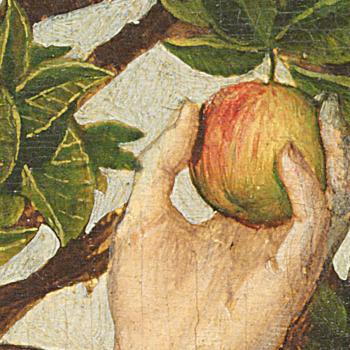
My view is that shame, which by necessity involves turning on ourselves, is an inherent and fundamental aspect of human brokenness, and the first consequence of the fall. Whether we read the creation story in Genesis as a literal account or a ‘big story’, relaying the key truths of creation and the relationship between God and humankind, the message about shame is the same – we did this to ourselves.
Gen 2, 25 (NIV): Adam and his wife were both naked, and they felt no shame.
Gen 3, 10 (NIV): He answered, ‘I heard you in the garden, and I was afraid because I was naked; so I hid.’
God didn’t ask Adam and Eve to hide, or to feel anything but self-acceptance about their naked bodies. It was their self-judgement that separated them from God. When we embraced judgement we lost innocence, along with the easy connection between creator and creation. Only God can judge, and in elevating ourselves to that level, we embraced shame. Human-kind turned upon itself.
Shame also discriminates. It exposes, humiliates and belittles those who are suffering in ways they are not responsible for. In Zephaniah 3, 19 (NIV), we see its impact on those with disabilities (the lame):
‘At that time I will deal
with all who oppressed you.
I will rescue the lame;
I will gather the exiles.
I will give them praise and honour
in every land where they have suffered shame.’
Throughout history, the disabled have been exposed, humiliated, mistreated and isolated because of their conditions, and society’s lack of willingness to include them. This verse spells out God’s desire to liberate the disabled from shame, receiving praise and honour instead.
Shame discriminates against those with a low social position. Consider the old caste system in India, which the Hindu authorities have been working to make more compassionate since 1949. Under the old order, a person was born into one of several castes, and were unable to move from that caste for the duration of their lives. If a person were born Untouchable, or Dalit as they are now called – the lowest of all castes – they had to live in poverty beyond the walls of any settlement, segregated from others and considered unclean. Forbidden from entering temples and schools, and barred from drinking water from certain wells, their very touch was considered a pollutant.
Biblical shame is not so different. Consider the woman with internal bleeding in Mark 5. Her condition made her an outcast, and because of strict hygiene laws she was forbidden from physical contact with others. By pressing through the crowd and touching Jesus she risked being stoned to death, but when she touched him, the source of her shame was relieved, and that is rather the point. Jesus came to free us from shame, among other things; not to encourage us to feel it.
As with every other matter of faith, Jesus is our perfect example, and we can learn from how he responded to shame. In Luke 18, 32 (NKJV), Jesus prophesied of the shame he would know on the cross:
‘For He will be delivered to the Gentiles and will be mocked and insulted and spit upon.’
Hundreds of years before this came to pass, Isaiah wrote of the shame of the coming saviour in Isaiah 53, 3 (NKJV):
‘He is despised and rejected by men,
A Man of sorrows and acquainted with grief.
And we hid, as it were, our faces from Him;
He was despised, and we did not esteem Him.’
In Hebrews 12:2 (NKJV), we see how Jesus responded to that shame:
‘…looking unto Jesus, the author and finisher of our faith, who for the joy that was set before Him endured the cross, despising the shame, and has sat down at the right hand of the throne of God.’
He despised the shame – the humiliation, the exposure, the mockery of Almighty God, reviled and ridiculed by his own creation. There are many who reject the Christian faith because they can’t get their head around this – that God would choose to suffer at the hands of those whose lungs he had filled with the breath of life, but this despising of shame is what makes the Christian message unique. Jesus was willing to go through that, along with the extraordinary agonies of the cross, to draw us to himself.
He chose the joy set before him (the salvation of humanity) and considered shame beneath contempt. Perhaps then, this could be our attitude too. When tempted to turn on ourselves, or to examine every reason we might be rejected, or to measure ourselves against others, we can rise above it, looking to Jesus. When we see others, exposed, belittled and humiliated, we can be part of God’s answer for them. We can stand side by side with Jesus, and despise the shame.
Re-thinking Christian Concepts
Previous Post

September 21, 2026
How 'Cultural Christianity' Weaponizes Faith for Politics
Next Post

July 10, 2021 A Glimpse of Grace
Browse Our Archives
Select a Category A time for war and Sheol Authentic Faith Being in Christ Christian marriage Christian Mysticism Christian Nationalism Christian Parenting Christianity and politics Church and State De/reconstruction Discipleship Divine Healing Divine judgement Don't throw the baby out with the bathwater Effective Prayer Embracing the LGBTQ+ Community Embracing the LGBTQIA+ community End-Times Fellowship with his sufferings Gehenna Glorifying God Hades Healthy Debate Heaven and Earth Hell Honouring Christian Women I still believe inter-faith dialogue Interpreting Scripture Keep the faith Knowing the peace of God Living in Abundance Loving Each Other Loving God Loving Ourselves Mental Health Mental Health and Faith Old and New Covenants Practice Peace Prophecy Prophesy Re-thinking Christian Concepts Resist the Devil Revival Salvation Seeking God Sex and love sin and sinfulness Sound theology Spiritual Authority Spiritual discipline Spiritual effectiveness Spiritual Gifts Spiritual growth Spiritual Mentorship The Christmas story The Cross of Christ The divine feminine The Fear of the Lord The Holy Spirit The importance of kindness The importance of theology The MAGA Cult The Ministry of Jesus The risen Christ The service of Jesus the sin of judgement The spirit-filled life The Virgin Birth True worship Uncategorized Understanding God Understanding Old Testament prophecy Understanding Self-Worth Understanding the Bible Union with God War and Peace
Select a Month September 2026 August 2026 September 2025 March 2025 February 2025 January 2025 December 2024 November 2024 October 2024 September 2024 August 2024 July 2024 June 2024 May 2024 April 2024 March 2024 February 2024 January 2024 December 2023 November 2023 October 2023 September 2023 August 2023 July 2023 June 2023 May 2023 April 2023 March 2023 February 2023 January 2023 December 2022 November 2022 October 2022 September 2022 August 2022 July 2022 June 2022 May 2022 April 2022 March 2022 February 2022 January 2022 December 2021 November 2021 October 2021 September 2021 August 2021 July 2021
TAKE THE
Religious Wisdom Quiz
What does "Genesis" mean?
Select your answer to see how you score.
Wisdom Law Poetry Origin or Beginning
Related posts from Duncan Edward Pile


What Does God Get Out of Worship?

Difficult Conversations Are Part of Healing
TRENDING AT PATHEOS Progressive Christian

What Being a Modern-Day Apostle Means to Me
In my last column, I discussed the ins and outs of modern-day...

Did Ancient China Once Worship the God of...
Across human history, a common thread weaves through the origins of the...

Love Your Neighbor – Including Earth-Kin: Lev. 19,...
God’s command to love your neighbor means acting in an ethical and...

Lead a Church Study of “Jesus and Lao...
Guest writer Jack Thomas (The Irreverent Reverend) reflects on leading his church...

Pastoral Wisdom for Responding to Sermon Pushback
Getting sermon pushback on your social justice sermon? Learn practical, Proverbs-based strategies...

Principles for Understanding the Apostolic Ministry Today
Whenever people discover that my formal ministry title is "apostle," as in...
view all Progressive Christian blogs
Ad-Free & Subscriber Log-In Subscription Support
- About Us
- 2026 Calendar
- Videos
- Podcasts
- Library of World Religions
- Faith In Media Tracker
- Advertise With Us
- Write for Us
- Privacy Policy
- Terms of Service
- Do Not Sell My Data
- Contact Us
- Radiant Digital
- Manage Newsletter Subscriptions
- Unsubscribe From Notifications
- Sitemap
Copyright 2008-2026, Patheos. All rights reserved.
Subscription Support Ad-Free & Subscriber Log-In
Follow Patheos