
BuddhistCatholicContemplativeEvangelicalGeneral ChristianHinduJewishLatter-day SaintMuslimNew VisionsProgressive Christian
Beliefs
- Buddhist
- Catholic
- Contemplative
- Evangelical
- General Christian
- Hindu
- Jewish
- Latter-day Saint
- More Voices
- Muslim
- New Visions
- Pagan
- Progressive Christian
Topics
- Religion News
- Food and Religion
- Sports and Religion
- Religious Art
- Religious Music and Entertainment
- Religious Events
- History and Religion
- Style and Religion
- Politics and Religion
- Women in Religion
- Recreation Outdoors and Religion
- Business Finance and Religion
- Careers Workplace and Religion
- Education and Religion
- Family Parenting and Religion
- Health Fitness and Religion
- Home and Religion
- Relationships and Religion
- Technology and Religion
- Travel and Religion
Columnists
- Buddhist Columnists
- Business Finance and Religion Columnists
- Careers Workplace and Religion Columnists
- Catholic Columnists
- Contemplative Columnists
- Education and Religion Columnists
- Evangelists Columnists
- Family Parenting and Religion Columnists
- General Christian Columnists
- Health Fitness and Religion Columnists
- Hindu Columnists
- History and Religion Columnists
- Home and Religion Columnists
- Jewish Columnists
- More Voices Columnists
- Latter Day Columnists
- Muslim Columnists
- New Visions Columnists
- Nonreligious Columnists
- Pagan Columnists
- Politics and Religion Columnists
- Progressive Columnists
- Recreation Outdoors and Religion Columnists
- Relationships and Religion Columnists
- Religion News Columnists
- Religious Art Columnists
- Religious Events Columnists
- Religious Music and Entertainment Columnists
- Sports and Religion Columnists
- Style and Religion Columnists
- Technology and Religion Columnists
- Travel and Religion Columnists
- Women in Religion Columnists
Resource Library
- 2026 Calendar
- Library of World Religions
- The 100 Most Holy Places on Earth
- Patheos Answers
- Podcasts
- Videos
- Faith Leaders Database
- Anglican Episcopalian
- Bahai
- Baptist
- Buddhism
- Christianity
- Confucianism
- Eastern Orthodoxy
- Hinduism
- Holiness and Pentecostal
- ISKCON
- Islam
- Judaism
- Lutheran
- Methodist
- The Church of Jesus Christ of Latter-day Saints
- New Age
- Paganism
- Presbytarian and Reformed
- Protestantism
- Religion Behind the Scenes
- Roman Catholic
- Scientology
- Shia Islam
- Sikhism
- Sufism
- Sunni Islam
- Taoism
- Zen
- See all religions
Research Tools
 Ad-Free & Subscriber Log-In Subscription Support
Ad-Free & Subscriber Log-In Subscription Support
Follow Patheos 

- Trending:
- Forgiveness
- |
- Marriage
- |
- Consciousness
- |
- Death Penalty
- |
- Election
- |
- Halloween

- Home
- General Christian
- History and Religion
- The Lord’s Prayer: Our Father
The Lord’s Prayer: Our Father
Last updated on: December 26, 2023 at 1:47 pm by Kathleen Mulhern
The Lord’s Prayer: Our Father 2023-12-26T13:47:33-07:00 Kathleen Mulhern
Patheos Explore the world's faith through different perspectives on religion and spirituality! Patheos has the views of the prevalent religions and spiritualities of the world.
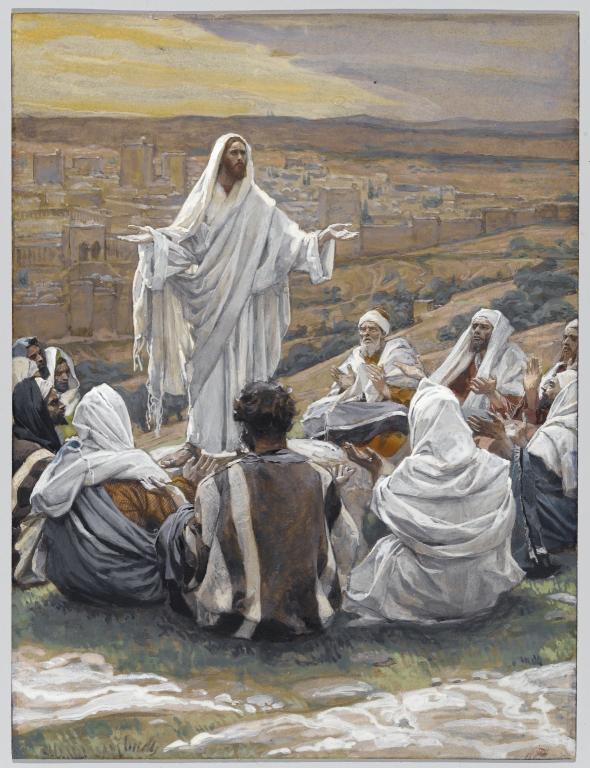
Ludolph now moves into the specific petitions of the Lord’s Prayer. The “address” causes him to reflect deeply on the mysteries of that introductory phrase. Whom are we addressing when we call on “Our Father in heaven”?
He focuses on three components in that opening petition:
1) Father, “whose children we are by faith.” This, Ludolph insists, is not the generic Fatherhood of God that everyone can claim by virtue of creation. Rather, this is the Fatherhood that is ours who are his children by adoption. It is the Fatherhood that kindles our Abba cries of longing. Interestingly, Ludolph also insists that “The title Father here should be understood to refer to the entire Trinity, Father, Son, and Holy Spirit.” It is a prayer addressed to God our Father, rather than to God the Father.
2) Our, for “he has been given to us in love.” What a blessed revelation! We call God “ours,” not because we possess him, but because he has given himself to us. Because of Jesus, the Son of God, our Brother and Savior, we are invited into the Father-Child relationship that he enjoys, and “our” becomes one of the most majestic words in scripture.
The word “our” also empowers our love, for we do not pray to “my Father,” but to “Our Father.” Here Ludolph cites Chrysostom:
Here did not say my Father*, but* our Father*, so we should pray for the needs of the whole body, and everywhere prayers are to be offered not only for ourselves, but for our neighbors. This destroys enmity, checks pride, drives away envy; it brings in charity, the mother of all good things, utterly abolishes all distinction of persons, showing that the king and pauper enjoy equality of honor. We are all united in the great and necessary things pertaining to eternal life. God has conferred on us all the same identical nobility, when he allowed everyone to address him as Father.*
3) In heaven, which means “in your hidden majesty*.*” Ludolph, along with his two favorite commentators, Augustine and Chrysostom, teach us that “heaven” is the temple of God and the temple of God is in the saints. Thus, their major argument is that God’s presence—“everywhere and in every place … everywhere in his essence, his presence, and his power”—is intensely concentrated in “the saints and the just.” Ludolph is suggesting that the body of Christ—both those who live and those who have died—is the presence of God, heaven.
This raises a particular problem for Protestants. Ludolph is articulating a deeply Catholic and ancient confidence in the communion of saints that permeates our earthly reality. We Protestants usually believe that those who have died in the Lord have gone on to heavenly glory and have very little awareness of what goes on here on earth. Perhaps some may believe that they are part of that “great cloud of witnesses” (Heb 12.2), but if so, they are way up in the nosebleed part of the stands and most assuredly not accessible to us in any way. Ludolph, however, seems to see a seamless community of the living and the dead in Christ as we pray together to “Our Father in heaven.”
Note: For a brief introduction to Ludolph of Saxony, a medieval “best-selling author,” read this.
Image by James Tissot, c. 1886
History and Religion
Previous Post

August 17, 2023
What Is the Prayer of Salvation?
Next Post

December 31, 2023 From Blue Christmases to Blue New Years
Browse Our Archives
Select a Category Advent Ascetical Theology Book Reviews Children and Parenting Easter Epiphany Friends of God Lent Life in the Spirit Ludolph Pascalian Spirituality: a series Politics Prayers Six Neo-Christian Myths Spiritual Formation Tales from My Father Trinitarian Spirituality: a series Uncategorized
Select a Month October 2026 July 2024 June 2024 December 2023 August 2023 July 2023 June 2023 January 2023 October 2022 September 2022 August 2022 July 2022 April 2022 November 2021 October 2021 September 2021 August 2021 July 2021 June 2020 January 2020 December 2019 November 2019 October 2019 September 2019 June 2019 May 2019 April 2019 October 2018 August 2018 July 2018 June 2018 May 2018 April 2018 March 2018 February 2018 May 2017 April 2017 March 2017 February 2017 November 2016 June 2016 April 2016 February 2016 January 2016 December 2015 November 2015 October 2015 September 2015 August 2015 March 2015 October 2014 September 2014 August 2014 April 2014 March 2014 February 2014 September 2013 August 2013 July 2013 June 2013 May 2013 April 2013 March 2013 February 2013 January 2013 December 2012 November 2012 October 2012 September 2012 August 2012 July 2012 June 2012 May 2012 April 2012 March 2012 February 2012 October 2011 August 2011 July 2011 February 2011 October 2010 September 2010 July 2010 May 2010 April 2010 March 2010 February 2010 January 2010 November 2009 September 2009 August 2009 July 2009 June 2009
TAKE THE
Religious Wisdom Quiz
In what parable does a father run to greet his lost son?
Select your answer to see how you score.
The Two Sons The Lost Sheep The Rich Man and Lazarus The Prodigal Son
Related posts from Dry Bones

Come On, God, This Isn’t Working

What Is the Prayer of Salvation?
Generosity, from the Inside Out
TRENDING AT PATHEOS General Christian

Seventy and Five Years Old: God Still Starts...
There is a small detail tucked into Genesis 12 that I skipped...

A Biblical Vision of Success in Christian Life...
The Concern and Quest Recent trends and tendencies I note around me...

Indigenous Peoples’ Day and the Church
Indigenous' Peoples Day or Columbus Day? Depending on where you live...

When Spiritual Growth Looks Like Losing Ground
Four Passive Spiritual Disciplines: An Introduction When I was a college freshman,...

Faith and Finding Your Current Season
“To everything there is a season,” Ecclesiastes tells us, “and a time...

Did Jesus Fear God's Wrath in Gethsemane?
That Time Jesus Was Terrified Before we begin, let me say at...
view all General Christian blogs
Ad-Free & Subscriber Log-In Subscription Support
- About Us
- 2026 Calendar
- Videos
- Podcasts
- Library of World Religions
- Faith In Media Tracker
- Advertise With Us
- Write for Us
- Privacy Policy
- Terms of Service
- Do Not Sell My Data
- Contact Us
- Radiant Digital
- Manage Newsletter Subscriptions
- Unsubscribe From Notifications
- Sitemap
Copyright 2008-2026, Patheos. All rights reserved.
Subscription Support Ad-Free & Subscriber Log-In
Follow Patheos