
BuddhistCatholicContemplativeEvangelicalGeneral ChristianHinduJewishLatter-day SaintMuslimNew VisionsProgressive Christian
Beliefs
- Buddhist
- Catholic
- Contemplative
- Evangelical
- General Christian
- Hindu
- Jewish
- Latter-day Saint
- More Voices
- Muslim
- New Visions
- Pagan
- Progressive Christian
Topics
- Religion News
- Food and Religion
- Sports and Religion
- Religious Art
- Religious Music and Entertainment
- Religious Events
- History and Religion
- Style and Religion
- Politics and Religion
- Women in Religion
- Recreation Outdoors and Religion
- Business Finance and Religion
- Careers Workplace and Religion
- Education and Religion
- Family Parenting and Religion
- Health Fitness and Religion
- Home and Religion
- Relationships and Religion
- Technology and Religion
- Travel and Religion
Columnists
- Buddhist Columnists
- Business Finance and Religion Columnists
- Careers Workplace and Religion Columnists
- Catholic Columnists
- Contemplative Columnists
- Education and Religion Columnists
- Evangelists Columnists
- Family Parenting and Religion Columnists
- General Christian Columnists
- Health Fitness and Religion Columnists
- Hindu Columnists
- History and Religion Columnists
- Home and Religion Columnists
- Jewish Columnists
- More Voices Columnists
- Latter Day Columnists
- Muslim Columnists
- New Visions Columnists
- Nonreligious Columnists
- Pagan Columnists
- Politics and Religion Columnists
- Progressive Columnists
- Recreation Outdoors and Religion Columnists
- Relationships and Religion Columnists
- Religion News Columnists
- Religious Art Columnists
- Religious Events Columnists
- Religious Music and Entertainment Columnists
- Sports and Religion Columnists
- Style and Religion Columnists
- Technology and Religion Columnists
- Travel and Religion Columnists
- Women in Religion Columnists
Resource Library
- 2026 Calendar
- Library of World Religions
- The 100 Most Holy Places on Earth
- Patheos Answers
- Podcasts
- Videos
- Faith Leaders Database
- Anglican Episcopalian
- Bahai
- Baptist
- Buddhism
- Christianity
- Confucianism
- Eastern Orthodoxy
- Hinduism
- Holiness and Pentecostal
- ISKCON
- Islam
- Judaism
- Lutheran
- Methodist
- The Church of Jesus Christ of Latter-day Saints
- New Age
- Paganism
- Presbytarian and Reformed
- Protestantism
- Religion Behind the Scenes
- Roman Catholic
- Scientology
- Shia Islam
- Sikhism
- Sufism
- Sunni Islam
- Taoism
- Zen
- See all religions
Research Tools
 Ad-Free & Subscriber Log-In Subscription Support
Ad-Free & Subscriber Log-In Subscription Support
Follow Patheos 

- Trending:
- Forgiveness
- |
- Marriage
- |
- Consciousness
- |
- Death Penalty
- |
- Election
- |
- Halloween

- Home
- General Christian
- Relationships and Religion
- From Virtue Signaling to Virtue
From Virtue Signaling to Virtue
Last updated on: June 20, 2023 at 10:00 am by Kathleen Mulhern
From Virtue Signaling to Virtue 2023-06-10T14:00:05-06:00 Kathleen Mulhern
Patheos Explore the world's faith through different perspectives on religion and spirituality! Patheos has the views of the prevalent religions and spiritualities of the world.

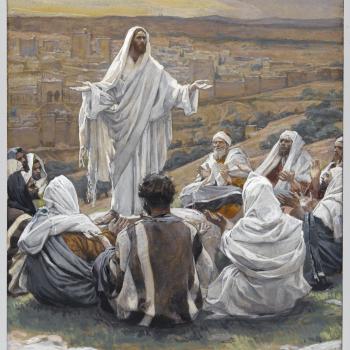
Ludolph’s commentary* on the Sermon on the Mount moves into touchy ground when he begins to talk about Christ’s plan to fulfill the law, and his warning that his disciples, too, must demonstrate true righteousness. “Sound doctrine,” he writes, “without virtuous living is not sufficient for salvation.”
I know we all say that sound doctrine is not enough, but we certainly don’t act like it. Both the “right” and the “left” say they have right doctrine (right belief systems, right convictions, right knowledge, right science, right spirituality, right conduct) and therefore they’re righteous, no matter how nasty they act. In truth, we actually justify nastiness on the basis of our “right doctrine,” whatever that may be.
Take the Commandment “do not murder.” We don’t do that, right? But have we eliminated the murder from our hearts? “To be perfect we must go farther,” Ludolph insists. We must dig around in the muck of our souls and uncover those impulses of anger, indignation, insults, and contempt. “Virtuous living,” then, doesn’t simply mean poster-virtues on our front lawns; it means touching those sore places within where we disagree so profoundly with the others that we actually detest them. The Command does not require that we come to agreement; it does not require that we embrace the choices or decisions that the other makes; it does not require that we condone what we believe to be systemic or personal injustice. It does require, however, that we disagree, reject arguments, combat perceived evils without rage.
Christ, that wise farmer, and the Gospel laid the ax to the root by forbidding anger, so that the cause of sin could be taken out of our hearts; it is anger that leads eventually to murder. … Wrath is the gateway of all the vices. … Jerome defines anger as any evil emotion that leads us to harm another.
Really, though, come on. There are just some things in this world that make me very, very angry. And really, I feel very, very righteous about that anger. How can we care deeply about the victims of evil in this world while not getting ferociously angry at the perpetrators? What does virtuous living look like in the midst of this hot mess we live in? Well, first we have to go back to Jesus’ first principle: what we think/believe/”know” is not enough. It is not enough to “know” that those folk who are doing those things are doing evil. It is not enough to “be right.” Somehow “rightness” has to look like Jesus, not like Apollo or Ares fighting in Troy. If we are “right,” and we have bubbling murder in our hearts, we are wrong.
In Glittering Vices, Rebecca DeYoung explores this conundrum. She explores the biblical account of Jesus’ cleansing the temple, and his righteous anger. She uses Thomas Aquinas’ reflections to show the difference between that righteous anger and our own. First, his anger was well-ordered, with a clear purpose and message; it had a message and a mission, none of which got out of control. Second, it was not self-serving, and gave him no advantages. Jesus’ anger was not defensive or self-protecting; rather, it was entirely about the authority of God. Third, it was regulated by a spirit of mourning over the blindness and brokenness of those who were perpetrating the evil.
DeYoung writes,
When anger becomes wrath, the goods it defends are my agenda (thwarted by your foolishness, thoughtlessness, or alternative plans), my control (undermined by your interference, or God’s), my dignity (cut by your offensive comment, neglect, or contemptuous tone), my cherished reputation (besmirched by your derisive slander or truthful expose), or my high expectations (disappointed by your mistakes, my own failures, or inconvenient realities).
She also urges us, in our impassioned righteous anger, to cultivate compassion and patience. Anger that moves into violence (whether physical or verbal) is anger that has lost sight of God’s sovereignty, his presence, and his loving heart. “Our impatience reveals a failure to trust God to make all things new, albeit in his sometimes unsearchable, upside-down ways.”
If annoyances can lead to war, then most definitely Jesus’ counsel about peacemakers is related to this business of anger.
Note: For a brief introduction to Ludolph, read this.
Relationships and Religion
Previous Post

June 9, 2023
The Sermon for the Summer: Beatitudes
Next Post

June 27, 2023 The Author of Purity
Recent Comments
"It's too bad evangelicals dont have the same aversion for the Sinner's Prayer."
What Is the Prayer of Salvation?
"There is language that is clearly poetic symbolic in nature, and there is language that ..."
Jesus (and Only Jesus) Is the ..."
"This was a fantastic read! Thanks!"
The Sermon for the Summer: Beatitudes
"I'm glad that I have found and read this. This blog is practical. As for ..."
Unmoored Christianity: 12 “Anchor” Questions
Browse Our Archives
Select a Category Advent Ascetical Theology Book Reviews Children and Parenting Easter Epiphany Friends of God Lent Life in the Spirit Ludolph Pascalian Spirituality: a series Politics Prayers Six Neo-Christian Myths Spiritual Formation Tales from My Father Trinitarian Spirituality: a series Uncategorized
Select a Month October 2026 July 2024 June 2024 December 2023 August 2023 July 2023 June 2023 January 2023 October 2022 September 2022 August 2022 July 2022 April 2022 November 2021 October 2021 September 2021 August 2021 July 2021 June 2020 January 2020 December 2019 November 2019 October 2019 September 2019 June 2019 May 2019 April 2019 October 2018 August 2018 July 2018 June 2018 May 2018 April 2018 March 2018 February 2018 May 2017 April 2017 March 2017 February 2017 November 2016 June 2016 April 2016 February 2016 January 2016 December 2015 November 2015 October 2015 September 2015 August 2015 March 2015 October 2014 September 2014 August 2014 April 2014 March 2014 February 2014 September 2013 August 2013 July 2013 June 2013 May 2013 April 2013 March 2013 February 2013 January 2013 December 2012 November 2012 October 2012 September 2012 August 2012 July 2012 June 2012 May 2012 April 2012 March 2012 February 2012 October 2011 August 2011 July 2011 February 2011 October 2010 September 2010 July 2010 May 2010 April 2010 March 2010 February 2010 January 2010 November 2009 September 2009 August 2009 July 2009 June 2009
TAKE THE
Religious Wisdom Quiz
What city was known as the City of David?
Select your answer to see how you score.
Jerusalem Bethlehem Nazareth Jericho
Related posts from Dry Bones

What Is the Prayer of Salvation?


Generosity, from the Inside Out
TRENDING AT PATHEOS General Christian

Seventy and Five Years Old: God Still Starts...
There is a small detail tucked into Genesis 12 that I skipped...

A Biblical Vision of Success in Christian Life...
The Concern and Quest Recent trends and tendencies I note around me...

Indigenous Peoples’ Day and the Church
Indigenous' Peoples Day or Columbus Day? Depending on where you live...

When Spiritual Growth Looks Like Losing Ground
Four Passive Spiritual Disciplines: An Introduction When I was a college freshman,...

Faith and Finding Your Current Season
“To everything there is a season,” Ecclesiastes tells us, “and a time...

Did Jesus Fear God's Wrath in Gethsemane?
That Time Jesus Was Terrified Before we begin, let me say at...
view all General Christian blogs
What Are Your Thoughts?leave a comment
Ad-Free & Subscriber Log-In Subscription Support
- About Us
- 2026 Calendar
- Videos
- Podcasts
- Library of World Religions
- Faith In Media Tracker
- Advertise With Us
- Write for Us
- Privacy Policy
- Terms of Service
- Do Not Sell My Data
- Contact Us
- Radiant Digital
- Manage Newsletter Subscriptions
- Unsubscribe From Notifications
- Sitemap
Copyright 2008-2026, Patheos. All rights reserved.
Subscription Support Ad-Free & Subscriber Log-In
Follow Patheos