
BuddhistCatholicContemplativeEvangelicalGeneral ChristianHinduJewishLatter-day SaintMuslimNew VisionsProgressive Christian
Beliefs
- Buddhist
- Catholic
- Contemplative
- Evangelical
- General Christian
- Hindu
- Jewish
- Latter-day Saint
- More Voices
- Muslim
- New Visions
- Pagan
- Progressive Christian
Topics
- Religion News
- Food and Religion
- Sports and Religion
- Religious Art
- Religious Music and Entertainment
- Religious Events
- History and Religion
- Style and Religion
- Politics and Religion
- Women in Religion
- Recreation Outdoors and Religion
- Business Finance and Religion
- Careers Workplace and Religion
- Education and Religion
- Family Parenting and Religion
- Health Fitness and Religion
- Home and Religion
- Relationships and Religion
- Technology and Religion
- Travel and Religion
Columnists
- Buddhist Columnists
- Business Finance and Religion Columnists
- Careers Workplace and Religion Columnists
- Catholic Columnists
- Contemplative Columnists
- Education and Religion Columnists
- Evangelists Columnists
- Family Parenting and Religion Columnists
- General Christian Columnists
- Health Fitness and Religion Columnists
- Hindu Columnists
- History and Religion Columnists
- Home and Religion Columnists
- Jewish Columnists
- More Voices Columnists
- Latter Day Columnists
- Muslim Columnists
- New Visions Columnists
- Nonreligious Columnists
- Pagan Columnists
- Politics and Religion Columnists
- Progressive Columnists
- Recreation Outdoors and Religion Columnists
- Relationships and Religion Columnists
- Religion News Columnists
- Religious Art Columnists
- Religious Events Columnists
- Religious Music and Entertainment Columnists
- Sports and Religion Columnists
- Style and Religion Columnists
- Technology and Religion Columnists
- Travel and Religion Columnists
- Women in Religion Columnists
Resource Library
- 2026 Calendar
- Library of World Religions
- The 100 Most Holy Places on Earth
- Patheos Answers
- Podcasts
- Videos
- Faith Leaders Database
- Anglican Episcopalian
- Bahai
- Baptist
- Buddhism
- Christianity
- Confucianism
- Eastern Orthodoxy
- Hinduism
- Holiness and Pentecostal
- ISKCON
- Islam
- Judaism
- Lutheran
- Methodist
- The Church of Jesus Christ of Latter-day Saints
- New Age
- Paganism
- Presbytarian and Reformed
- Protestantism
- Religion Behind the Scenes
- Roman Catholic
- Scientology
- Shia Islam
- Sikhism
- Sufism
- Sunni Islam
- Taoism
- Zen
- See all religions
Research Tools
 Ad-Free & Subscriber Log-In Subscription Support
Ad-Free & Subscriber Log-In Subscription Support
Follow Patheos 

- Trending:
- Forgiveness
- |
- Marriage
- |
- Consciousness
- |
- Death Penalty
- |
- Election
- |
- Halloween

- Home
- General Christian
- The Lovely, Lovely Thing (Friends of God 6)
The Lovely, Lovely Thing (Friends of God 6)
Last updated on: September 15, 2014 at 7:30 am by K. Mulhern
The Lovely, Lovely Thing (Friends of God 6) 2014-09-13T14:33:42-06:00 K. Mulhern
Patheos Explore the world's faith through different perspectives on religion and spirituality! Patheos has the views of the prevalent religions and spiritualities of the world.
 Some of our Friends of God shine like the sun, and their names are known even to an unbelieving world: Meister Eckhart, Henry Suso, Johannes Tauler, Jan Ruysbroeck. Some lie in forgotten corners of history like so many fallen autumn leaves blown into the shadows. Often, but not always, it’s the women who drift into anonymity. I’m happy to say, though, that that seems to be our problem more than it is one of the Friends of God, because all those famous men who represent the spiritual life in the 14th century had deep and dependent relationships with many female Friends of God.
Here is a banal introductory comment or two: Gender relations can be prickly stuff, but the men-women quandary is not a new problem. It has been around, oh, say since the gates of Eden slammed on Adam’s and Eve’s backsides. It manifests in different ways over time. Today we hear all about the “war against women,” which, in this country, is beyond silly. Visit central Africa, and then we can talk about such a thing. The 14th century had its own versions of gender tensions.
Part of the tension lies in the radical affirmation that the way of Christ granted to women. According to Rodney Stark in The Rise of Christianity, this was one of the most compelling things about the gospel in the early church. Paul’s outrageous statement that in Christ there is neither male nor female described a wholly new community of persons defined primarily not by their human relationships or circumstances but by their relationships to one Center, Jesus Christ. I am a daughter and sister and wife and mother, but none of these things are who I really am. In Christ Jesus, I am a child of God through faith.
This teaching, however, was not toggle-switch effective. It wasn’t a light switch that turned on and banished darknesses. It was, like many of Christ’s teachings, a dimmer switch only slowly bringing light into dark corners. And the 14th century had many dark corners.
Gender relations in 14th-century Europe had their own dynamics, created in part by the wars-plagues-famines trifecta of misery. There just weren’t enough men to go around. The unremitting wars had reduced the male population, and the Church’s call to celibacy took any number of other potential husbands out of the picture. Women’s ability to generate their own income through crafts or trade was severely limited, and consequentially convents and Beguine communities filled with women.
I never would have made it as a 14th-century woman. I’m barely making it as a 21st-century woman. I’ve read about the conditions in a 19th-century convent in northern France—cold cells without heat, thin blankets, limited clothing, poor lighting, bland food—and I’m fairly miserable just thinking about it. What seems to have sustained many of these women is a venture into a unique and fertile combination of mysticism and piety, vision and holiness, ecstasy and virtue. Mysticism without piety can be hysterical, untenable, suspect; piety without mysticism can be harsh, dry, inert. Together, however, they created a sustaining rhythm that mitigated the severe realities of their living situations.
Meet Christina Ebner. When she was twelve years old, she entered Engelthal Convent in Nuremberg, and she lived there for the next sixty-seven years. Cultured, aristocratic, well-connected; ascetic, mystical, literate; prayerful, pious, and spiritually “contagious.” She offers one example of the political diversity among the Friends of God. She was pro-imperial in the conflicts of the day, whereas many of her spiritual peers were pro-papal. This, however, did not impede their spiritual friendship. In this day of increasing extremes, would that we could set aside our political proclivities and convictions for the sake of Christian unity. Imagine: In Christ there is neither Republican nor Democrat, conservative nor liberal…
Meet Margaretha Ebner (no relation to Christina), born c. 1291, and a member of the convent in Medingen. Her story stands out to me because she was, as Rufus Jones describes her, “not a person of much intellectual range…strongly emotional and sentimental, a victim of lifelong illness and plainly enough psychopathic.” Jones admits her “permanent contribution is meager.” And yet… Margaretha was a good friend of another who was a great “contributor” to the Friends of God, Henry of Nördlingen. Henry’s influence was both broad and deep as he served as a confessor, itinerant preacher, and prolific writer. He and Margaretha exchanged a vast correspondence, and these letters pass on to us an extensive vision of their times, their experiences of faith, and their visions. So, how good is it to be a Friend of God and a friend to a Friend of God? Margaretha, whose own stability was shaky and her scholarly prowess dubitable, “contributes” by sharing her life and stories with another, and listening to that other’s life and stories. I love that.
Meet Adelheid Langmann, another of the sisters in the Engelthal convent. Jones points out that her notability is attributed to her writing—Offenbarungen (Revelations)—which gave her a visibility that, he suggests, is unwarranted. Jones points out that history is an odd thing; it gives memory to those who record their thoughts or experiences, no matter how inconsequential those ideas are, yet there are always others whose thoughts and experiences are noteworthy but, unrecorded, are forgotten forever. Adelheid is famous for being notably forgettable. What a perfectly lovely kind of person to include in the community of God’s friends. What a travesty it would be if the Friends of God were a community “where all the women are strong, all the men are good looking, and all the children are above average.”
Lastly, meet Elsbet Stagel of Zurich, who, according to Jones, “had a trained and well-ordered mind, a seasoned and disciplined life.” Another historian once called her “a mirror of all virtues.” She “learned how to swim in the Life of God as an eagle swims in the air.” I want to be Elsbet when I grow up. (Living in Switzerland wouldn’t be bad, either.) Elsbet’s inner life comes to us as a rich account of prayer, the imitation of Jesus, and humble confidence in God, but it’s her storytelling that attracts me.
We have from Elsbet’s hand thirty-one biographies of her sisters, short vignettes of women of faith who are in pursuit of God’s friendship. The stories themselves are disconcerting because of their ugly (to us) accounts of self-torture in the conviction that suffering had value in itself. You’d think that the suffering of the 14th century was adequate to itself, but no, some of these women whipped themselves, some refused to enjoy the beauties of creation, some refused basic comforts like beds or hot food. But while we may feel these are unworthy examples of the spiritual life, we may still recognize Elsbet’s service to them, and to us, in telling their stories. For one of the signs of the Friends of God is that they were friends to one another, and Elsbet’s gift was her willingness to give her friends memory by listening to them and honoring their lives. Go to coffee with a friend, and simply listen to her story; ask him how he is pursuing Christ; be a Friend of God.
I do think some of the peculiarities of the women come down to us more forcefully than those of the men. Undoubtedly Meister Eckhart had his wierdnesses. Who doesn’t? But, gee, if you’re Meister Eckhart, who cares or even notices? If you’re a kooky nun, however, a lack of academic accomplishments might make your oddities more memorable.
The lovely, lovely thing is that God’s friends include the weird and the wonderful, the plain and the powerful, the ordinary and the extraordinary, the balanced and the imbalanced. In Christ we are all nothing but children of God.
Previous Post

August 18, 2014
The Green Isle Community (Friends of God 5)
Next Post
October 31, 2014 How to Be a (Better) Protestant in Five Easy Steps
Browse Our Archives
Select a Category Advent Ascetical Theology Book Reviews Children and Parenting Easter Epiphany Friends of God Lent Life in the Spirit Ludolph Pascalian Spirituality: a series Politics Prayers Six Neo-Christian Myths Spiritual Formation Tales from My Father Trinitarian Spirituality: a series Uncategorized
Select a Month October 2026 July 2024 June 2024 December 2023 August 2023 July 2023 June 2023 January 2023 October 2022 September 2022 August 2022 July 2022 April 2022 November 2021 October 2021 September 2021 August 2021 July 2021 June 2020 January 2020 December 2019 November 2019 October 2019 September 2019 June 2019 May 2019 April 2019 October 2018 August 2018 July 2018 June 2018 May 2018 April 2018 March 2018 February 2018 May 2017 April 2017 March 2017 February 2017 November 2016 June 2016 April 2016 February 2016 January 2016 December 2015 November 2015 October 2015 September 2015 August 2015 March 2015 October 2014 September 2014 August 2014 April 2014 March 2014 February 2014 September 2013 August 2013 July 2013 June 2013 May 2013 April 2013 March 2013 February 2013 January 2013 December 2012 November 2012 October 2012 September 2012 August 2012 July 2012 June 2012 May 2012 April 2012 March 2012 February 2012 October 2011 August 2011 July 2011 February 2011 October 2010 September 2010 July 2010 May 2010 April 2010 March 2010 February 2010 January 2010 November 2009 September 2009 August 2009 July 2009 June 2009
TAKE THE
Religious Wisdom Quiz
In order to please God you need …
Select your answer to see how you score.
To go to the Temple Hope Houses Faith
Related posts from Dry Bones

When Spiritual Growth Looks Like Losing Ground

From Virtue Signaling to Virtue
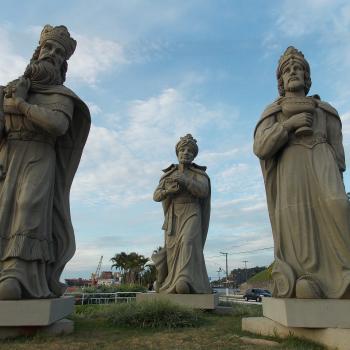
The Three Gifts and Their Meaning: a Ludolph...

The Sermon on the Mount for the New...
TRENDING AT PATHEOS General Christian

Seventy and Five Years Old: God Still Starts...
There is a small detail tucked into Genesis 12 that I skipped...

A Biblical Vision of Success in Christian Life...
The Concern and Quest Recent trends and tendencies I note around me...

Indigenous Peoples’ Day and the Church
Indigenous' Peoples Day or Columbus Day? Depending on where you live...

When Spiritual Growth Looks Like Losing Ground
Four Passive Spiritual Disciplines: An Introduction When I was a college freshman,...

Faith and Finding Your Current Season
“To everything there is a season,” Ecclesiastes tells us, “and a time...

Did Jesus Fear God's Wrath in Gethsemane?
That Time Jesus Was Terrified Before we begin, let me say at...
view all General Christian blogs
Ad-Free & Subscriber Log-In Subscription Support
- About Us
- 2026 Calendar
- Videos
- Podcasts
- Library of World Religions
- Faith In Media Tracker
- Advertise With Us
- Write for Us
- Privacy Policy
- Terms of Service
- Do Not Sell My Data
- Contact Us
- Radiant Digital
- Manage Newsletter Subscriptions
- Unsubscribe From Notifications
- Sitemap
Copyright 2008-2026, Patheos. All rights reserved.
Subscription Support Ad-Free & Subscriber Log-In
Follow Patheos