
BuddhistCatholicContemplativeEvangelicalGeneral ChristianHinduJewishLatter-day SaintMuslimNew VisionsProgressive Christian
Beliefs
- Buddhist
- Catholic
- Contemplative
- Evangelical
- General Christian
- Hindu
- Jewish
- Latter-day Saint
- More Voices
- Muslim
- New Visions
- Pagan
- Progressive Christian
Topics
- Religion News
- Food and Religion
- Sports and Religion
- Religious Art
- Religious Music and Entertainment
- Religious Events
- History and Religion
- Style and Religion
- Politics and Religion
- Women in Religion
- Recreation Outdoors and Religion
- Business Finance and Religion
- Careers Workplace and Religion
- Education and Religion
- Family Parenting and Religion
- Health Fitness and Religion
- Home and Religion
- Relationships and Religion
- Technology and Religion
- Travel and Religion
Columnists
- Buddhist Columnists
- Business Finance and Religion Columnists
- Careers Workplace and Religion Columnists
- Catholic Columnists
- Contemplative Columnists
- Education and Religion Columnists
- Evangelists Columnists
- Family Parenting and Religion Columnists
- General Christian Columnists
- Health Fitness and Religion Columnists
- Hindu Columnists
- History and Religion Columnists
- Home and Religion Columnists
- Jewish Columnists
- More Voices Columnists
- Latter Day Columnists
- Muslim Columnists
- New Visions Columnists
- Nonreligious Columnists
- Pagan Columnists
- Politics and Religion Columnists
- Progressive Columnists
- Recreation Outdoors and Religion Columnists
- Relationships and Religion Columnists
- Religion News Columnists
- Religious Art Columnists
- Religious Events Columnists
- Religious Music and Entertainment Columnists
- Sports and Religion Columnists
- Style and Religion Columnists
- Technology and Religion Columnists
- Travel and Religion Columnists
- Women in Religion Columnists
Resource Library
- 2026 Calendar
- Library of World Religions
- The 100 Most Holy Places on Earth
- Patheos Answers
- Podcasts
- Videos
- Faith Leaders Database
- Anglican Episcopalian
- Bahai
- Baptist
- Buddhism
- Christianity
- Confucianism
- Eastern Orthodoxy
- Hinduism
- Holiness and Pentecostal
- ISKCON
- Islam
- Judaism
- Lutheran
- Methodist
- The Church of Jesus Christ of Latter-day Saints
- New Age
- Paganism
- Presbytarian and Reformed
- Protestantism
- Religion Behind the Scenes
- Roman Catholic
- Scientology
- Shia Islam
- Sikhism
- Sufism
- Sunni Islam
- Taoism
- Zen
- See all religions
Research Tools
 Ad-Free & Subscriber Log-In Subscription Support
Ad-Free & Subscriber Log-In Subscription Support
Follow Patheos 

- Trending:
- Forgiveness
- |
- Marriage
- |
- Consciousness
- |
- Death Penalty
- |
- Election
- |
- Halloween

- Home
- General Christian
- We Are Saved by a Work
We Are Saved by a Work
Last updated on: August 6, 2013 at 7:23 pm by K. Mulhern
We Are Saved by a Work 2013-08-06T19:23:54-06:00 K. Mulhern
Patheos Explore the world's faith through different perspectives on religion and spirituality! Patheos has the views of the prevalent religions and spiritualities of the world.
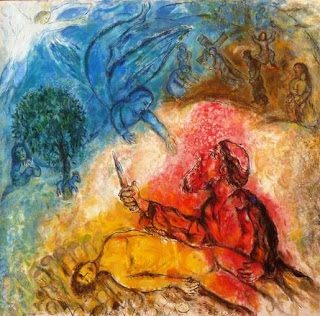 I’ve been pondering a troublesome passage—James’ harangue about works (James 2.18-26). It’s not a passage I particularly like. It’s prickly. You can tell he has someone in mind, some shocking example of an argument when someone shirked a work of kindness or generosity and begged off with, “Well, I have faith. And that’s all that counts.”
The Marthas among us, perhaps, read it with their hands on their hips and say, “Uh-huh. What did I tell you? Hellooo? Get your rear into gear and do something.” The Marys, so quietly pondering the teachings of our Lord, look around in a surprised annoyance as someone taps us on the shoulder and tells us that if we’re not involved in good works, we’re not really Christians at all. “Um, but all we want to do is sit at the Lord’s feet and ponder. And maybe write blogs. Or read a book. Aren’t these enough?”
It’s no wonder that Martin Luther suggested we gently demote this book—like downgrading Pluto from the canon of planets.
As I wrestled with this passage, however, I am struck by James’ use of the story of Abraham, the Model Extraordinaire of being justified by faith, not by works. James knows exactly where to poke, almost as though he’d read Paul’s argument about Abraham in Romans. Here’s how Paul argues it:
For if Abraham was justified by works, he has something to boast about, but not before God. For what does the scripture say? “Abraham believed God, and it was reckoned to him as righteousness.” Now to one who works, wages are not reckoned as a gift but as something due. But to one who without works trust him who justifies the godly, such faith is recognized as righteousness (Romans 4.2-5).
Paul so carefully outlines the ways that Abraham, believing God, was justified by that belief before he did anything to merit justification. The work of believing itself was justifying.
This is echoed in Jesus’ response to the lunch crowd in John 6: “’What must we do to perform the works of God?’ Jesus answered them, ‘This is the work of God, that you believed in him whom he has sent.’”
Yet here, in James, Abraham is justified not when he believes, but when he offers his son Isaac on the altar, that dreadful moment of absolute relinquishment and the decision to let go of the son he loved and, so it seemed, to lose the promises of God.
Was not our ancestor Abraham justified by works when he offered his son Isaac on the altar? You see that faith was active along with his works, and faith was brought to completion by the works.
So what, then, is the work that saves? What is the work that justifies? It can’t really be the attempted sacrifice. If it were, then the Genesis claim (Gen. 15.6), which Paul builds his theology around, would be false. Abraham was justified long before Isaac came along, so the moment of Mount Moriah, the moment when Abraham was prepared to rip his own heart out, was circumstantial—anecdotal even—not substantial.
What then? What is the work that justifies?
And here we might find some common ground between the mystic Paul and the pragmatist James: In Galatians 5, when Paul is again talking about this earnest desire for justification before God, he tells us that “the only thing that counts is faith expressing itself through love.”
And who was Abraham loving on Mount Moriah?
Here we have the synthesis between the gospels, the Pauline arguments, and James. Abraham was indeed justified by a work—believing in God, trusting God—and we see that belief and trust in the ultimate act of love: that moment when Abraham weighed his love for his son (and we know the crazy depths and heights and widths of a love like that) against his love for God; and his love for God—a love without full understanding—won.
Abraham was justified by his love for God. Back before children, in that dark moment of aging despair, Abraham groped for God and believed in the word placed in his hand. He clung to that word, for years, holding it close: an heir…God said…I believe. And that belief was incarnated in Isaac, and Abraham loved Isaac. But a justifying love grew in a different place, a place that was even deeper than the desire for an heir and the love for a boy. In the depths of his heart, that confidence in God’s trustworthiness turned into a passion for God, a love for God that transcended even the word to which he clung.
To believe in God is to love him—as he is, not as we imagine him to be. This is what was tested on Mount Moriah. When God reveals himself in suffering, in violence, in incomprehensible pain—are we still loving him? Or do we only love him as we wish him to be—gentle, generous, and open-handed? On the mountain of sacrifice, Abraham was confronted with his love and he found that he actually loved God even more than his son. His faith was expressed, then, in love. And so he was saved.
Here, a favorite verse, and an unlikely one for someone like me—from the Apocryphal books, and a footnote at that! But still, exquisite and, at this wee resting place, surely inspired:
The fear of the Lord is the beginning of love for him, and faith is the beginning of clinging to him (Sirach 25.12).
Photo Marc Chagall
Previous Post

July 29, 2013
Expiration Date: A Short Story
Next Post

August 15, 2013 Impossibilities
Browse Our Archives
Select a Category Advent Ascetical Theology Book Reviews Children and Parenting Easter Epiphany Friends of God Lent Life in the Spirit Ludolph Pascalian Spirituality: a series Politics Prayers Six Neo-Christian Myths Spiritual Formation Tales from My Father Trinitarian Spirituality: a series Uncategorized
Select a Month October 2026 July 2024 June 2024 December 2023 August 2023 July 2023 June 2023 January 2023 October 2022 September 2022 August 2022 July 2022 April 2022 November 2021 October 2021 September 2021 August 2021 July 2021 June 2020 January 2020 December 2019 November 2019 October 2019 September 2019 June 2019 May 2019 April 2019 October 2018 August 2018 July 2018 June 2018 May 2018 April 2018 March 2018 February 2018 May 2017 April 2017 March 2017 February 2017 November 2016 June 2016 April 2016 February 2016 January 2016 December 2015 November 2015 October 2015 September 2015 August 2015 March 2015 October 2014 September 2014 August 2014 April 2014 March 2014 February 2014 September 2013 August 2013 July 2013 June 2013 May 2013 April 2013 March 2013 February 2013 January 2013 December 2012 November 2012 October 2012 September 2012 August 2012 July 2012 June 2012 May 2012 April 2012 March 2012 February 2012 October 2011 August 2011 July 2011 February 2011 October 2010 September 2010 July 2010 May 2010 April 2010 March 2010 February 2010 January 2010 November 2009 September 2009 August 2009 July 2009 June 2009
TAKE THE
Religious Wisdom Quiz
Who said, "Even the wind and the waves obey him!"?
Select your answer to see how you score.
The Pharisees John the Baptist The Roman governor Jesus' disciples
Related posts from Dry Bones
The Immeasurable Value of Ruins: Three Lessons in...


Jesus (and Only Jesus) Is the Christ
Dear Rev. MacArthur, do you think I am...
TRENDING AT PATHEOS General Christian

Seventy and Five Years Old: God Still Starts...
There is a small detail tucked into Genesis 12 that I skipped...

A Biblical Vision of Success in Christian Life...
The Concern and Quest Recent trends and tendencies I note around me...

Indigenous Peoples’ Day and the Church
Indigenous' Peoples Day or Columbus Day? Depending on where you live...

When Spiritual Growth Looks Like Losing Ground
Four Passive Spiritual Disciplines: An Introduction When I was a college freshman,...

Faith and Finding Your Current Season
“To everything there is a season,” Ecclesiastes tells us, “and a time...

Did Jesus Fear God's Wrath in Gethsemane?
That Time Jesus Was Terrified Before we begin, let me say at...
view all General Christian blogs
Ad-Free & Subscriber Log-In Subscription Support
- About Us
- 2026 Calendar
- Videos
- Podcasts
- Library of World Religions
- Faith In Media Tracker
- Advertise With Us
- Write for Us
- Privacy Policy
- Terms of Service
- Do Not Sell My Data
- Contact Us
- Radiant Digital
- Manage Newsletter Subscriptions
- Unsubscribe From Notifications
- Sitemap
Copyright 2008-2026, Patheos. All rights reserved.
Subscription Support Ad-Free & Subscriber Log-In
Follow Patheos