
BuddhistCatholicContemplativeEvangelicalGeneral ChristianHinduJewishLatter-day SaintMuslimNew VisionsProgressive Christian
Beliefs
- Buddhist
- Catholic
- Contemplative
- Evangelical
- General Christian
- Hindu
- Jewish
- Latter-day Saint
- More Voices
- Muslim
- New Visions
- Pagan
- Progressive Christian
Topics
- Religion News
- Food and Religion
- Sports and Religion
- Religious Art
- Religious Music and Entertainment
- Religious Events
- History and Religion
- Style and Religion
- Politics and Religion
- Women in Religion
- Recreation Outdoors and Religion
- Business Finance and Religion
- Careers Workplace and Religion
- Education and Religion
- Family Parenting and Religion
- Health Fitness and Religion
- Home and Religion
- Relationships and Religion
- Technology and Religion
- Travel and Religion
Columnists
- Buddhist Columnists
- Business Finance and Religion Columnists
- Careers Workplace and Religion Columnists
- Catholic Columnists
- Contemplative Columnists
- Education and Religion Columnists
- Evangelists Columnists
- Family Parenting and Religion Columnists
- General Christian Columnists
- Health Fitness and Religion Columnists
- Hindu Columnists
- History and Religion Columnists
- Home and Religion Columnists
- Jewish Columnists
- More Voices Columnists
- Latter Day Columnists
- Muslim Columnists
- New Visions Columnists
- Nonreligious Columnists
- Pagan Columnists
- Politics and Religion Columnists
- Progressive Columnists
- Recreation Outdoors and Religion Columnists
- Relationships and Religion Columnists
- Religion News Columnists
- Religious Art Columnists
- Religious Events Columnists
- Religious Music and Entertainment Columnists
- Sports and Religion Columnists
- Style and Religion Columnists
- Technology and Religion Columnists
- Travel and Religion Columnists
- Women in Religion Columnists
Resource Library
- 2026 Calendar
- Library of World Religions
- The 100 Most Holy Places on Earth
- Patheos Answers
- Podcasts
- Videos
- Faith Leaders Database
- Anglican Episcopalian
- Bahai
- Baptist
- Buddhism
- Christianity
- Confucianism
- Eastern Orthodoxy
- Hinduism
- Holiness and Pentecostal
- ISKCON
- Islam
- Judaism
- Lutheran
- Methodist
- The Church of Jesus Christ of Latter-day Saints
- New Age
- Paganism
- Presbytarian and Reformed
- Protestantism
- Religion Behind the Scenes
- Roman Catholic
- Scientology
- Shia Islam
- Sikhism
- Sufism
- Sunni Islam
- Taoism
- Zen
- See all religions
Research Tools
 Ad-Free & Subscriber Log-In Subscription Support
Ad-Free & Subscriber Log-In Subscription Support
Follow Patheos 

- Trending:
- Forgiveness
- |
- Marriage
- |
- Consciousness
- |
- Death Penalty
- |
- Election
- |
- Halloween

- Home
- General Christian
- Finding the Way, and Loving the Journey
Finding the Way, and Loving the Journey
Last updated on: July 23, 2013 at 12:57 pm by K. Mulhern
Finding the Way, and Loving the Journey 2013-07-23T12:57:09-06:00 K. Mulhern
Patheos Explore the world's faith through different perspectives on religion and spirituality! Patheos has the views of the prevalent religions and spiritualities of the world.
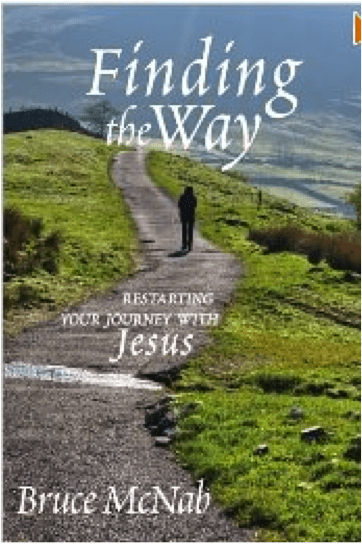 (A Book Review) As someone who has lived in a one-mile radius for thirty years, the idea of life as journey requires some imagination. Yet the journey image, or the notion of life as pilgrimage, has a long and venerable history because it resonates with each of us, no matter the external structure of our lives.
Young, undetermined, and open to endless possibilities? We wonder – where to go, in what direction to aim, what path to take….
Middle of life, poised between youth and age, looking back while looking forward? We wonder – is this the right trajectory? Am I headed in the right direction?
Older, settled, concluding life’s affairs? Still we wonder – when I arrive, where will I be? How will I know it? What is left?
The poet T.S. Eliot reflected deeply on this internal hunger that so imitates movement. At every stage of life, we need to awaken our seeker souls, not because we cannot discern truth, but because we want more intensity, further union, deeper communion.
Old men ought to be explorers
Here and there does not matter
We must be still and still moving
Into another intensity
For a further union, a deeper communion… (T.S. Eliot, “East Coker”)
Yet we of the 21st century have largely exchanged exploration for mobility, discovery for transience, intensity for restlessness. We flit from one tasty adventure—spiritual or otherwise—to another, and still we do not find what we seek. All too often we do not even know what we seek, and we are not able to discern it from afar and move toward it.
So here I am, in the middle way, having had twenty years—
Twenty years largely wasted, the years of l’entre deux guerres—
Trying to learn to use words …
And so each venture
Is a new beginning… (T.S. Eliot, “East Coker”)
This business of a new beginning is the topic of Bruce McNab’s new book, Finding the Way: Restarting Your Journey with Jesus. Like Eliot who lived l’entre deux guerres (“between the wars”)—suspended in hope—we too are often stranded on “the long road that is the soul’s way home to God,” as McNab puts it, pinioned between discarding a religious past that lacked any vitality and refusing to engage in institutional formality just for the sake of, well, institutional formality.
McNab—Episcopal priest, speaker, author, retreat leader—has listened to generations of seekers who, like Eliot, have lived in the years of “l’entre deux guerres,” the years of in-betweeness, the years of having left something and yet not arrived at something else, the years of spiritual liminality. Because he writes for former Christians, nominal Christians, or those who are ready to renew the search—for “returnees and restarts,” as he puts it, I honestly expected the book to consist of the simplistic “tasters” so often offered to seekers, like little tiny sips of pink Catawba wine in little tiny cups for little tiny appetites.
But no, no, so happily no. Finding the Way is a full-bodied exploration of the heart of Christian faith and practice, right down the center of historic Christianity. McNab writes creatively and compellingly, bringing to the forefront the issues that belong at the forefront, and leaving the rest behind. His style is clear and direct, honestly confronting the various realities that have driven so many away from the Church. He writes for those who may have lost their way spiritually but who hunger deeply for a real relationship with God that gives meaning, purpose, and comfort to their lives.
How refreshing. Christian books are all too often sermons for those who are already hearing sermons, every week in the pew. Who is there to speak to those who have lost their way? To those who have wandered far from Jesus and yet would like to find their way back? To those who have, perhaps, been sitting in those pews but have not yet really started on the Way? Perhaps even to those whose encounters with Christianity have been more hurtful than helpful, whose experiences have been more oppressing and repressing than life-giving? McNab does.
His chapters build naturally, from the first step on the quest through the essentials of the way of Jesus: scripture, experience, worship, prayer, compassion, purpose, community. No Christian life is complete without these components of the fullness of knowing Christ, and McNab offers a rich exploration of each of these ingredients. He draws freely on a wide variety of writers, some I like fiercely (like Michael Casey) and others I most definitely do not like (who will remain unnamed). In every case, McNab gently points the reader to the deep history and community of those who have followed the Way over millennia. He recognizes the many, many, many challenges and obstacles to faith in the 21st-century, yet also insists that it is possible to find the Way, to live the Way, to love the Way.
I particularly liked the delicate balance McNab brings to the tension between the commonalities of Christian faith and practice—the necessary orthodoxy and orthopraxy that ground the true meaning of Christianity—and the wild and rich diversity of Christian faith and practice—the myriad ways and forms and methods and accents of Christianity in lives scattered over a globe and through untold generations.
If we create apparently stable and rooted worlds for ourselves, we still move through time and desire, and the pursuit is never complete. If we embrace chaotic or nomadic exteriors, we are still ever longing for home. McNab’s book is, yes, for restarts and returnees, but which of us are not one of those? I restart every morning and return every night. McNab’s book both launched me anew and drew me in again to the Way I want to walk.
We shall not cease from exploration
And the end of all our exploring
Will be to arrive where we started
And know the place for the first time. (T.S. Eliot, “Little Gidding”)
Previous Post

July 1, 2013
Mean St. Francis
Next Post
July 29, 2013 Expiration Date: A Short Story
Browse Our Archives
Select a Category Advent Ascetical Theology Book Reviews Children and Parenting Easter Epiphany Friends of God Lent Life in the Spirit Ludolph Pascalian Spirituality: a series Politics Prayers Six Neo-Christian Myths Spiritual Formation Tales from My Father Trinitarian Spirituality: a series Uncategorized
Select a Month October 2026 July 2024 June 2024 December 2023 August 2023 July 2023 June 2023 January 2023 October 2022 September 2022 August 2022 July 2022 April 2022 November 2021 October 2021 September 2021 August 2021 July 2021 June 2020 January 2020 December 2019 November 2019 October 2019 September 2019 June 2019 May 2019 April 2019 October 2018 August 2018 July 2018 June 2018 May 2018 April 2018 March 2018 February 2018 May 2017 April 2017 March 2017 February 2017 November 2016 June 2016 April 2016 February 2016 January 2016 December 2015 November 2015 October 2015 September 2015 August 2015 March 2015 October 2014 September 2014 August 2014 April 2014 March 2014 February 2014 September 2013 August 2013 July 2013 June 2013 May 2013 April 2013 March 2013 February 2013 January 2013 December 2012 November 2012 October 2012 September 2012 August 2012 July 2012 June 2012 May 2012 April 2012 March 2012 February 2012 October 2011 August 2011 July 2011 February 2011 October 2010 September 2010 July 2010 May 2010 April 2010 March 2010 February 2010 January 2010 November 2009 September 2009 August 2009 July 2009 June 2009
TAKE THE
Religious Wisdom Quiz
Where does Scripture say, "do not let the sun go down on your anger"?
Select your answer to see how you score.
Luke Proverbs Genesis Ephesians
Related posts from Dry Bones

When Spiritual Growth Looks Like Losing Ground

Come On, God, This Isn’t Working

What Is the Prayer of Salvation?
TRENDING AT PATHEOS General Christian

Seventy and Five Years Old: God Still Starts...
There is a small detail tucked into Genesis 12 that I skipped...

A Biblical Vision of Success in Christian Life...
The Concern and Quest Recent trends and tendencies I note around me...

Indigenous Peoples’ Day and the Church
Indigenous' Peoples Day or Columbus Day? Depending on where you live...

When Spiritual Growth Looks Like Losing Ground
Four Passive Spiritual Disciplines: An Introduction When I was a college freshman,...

Faith and Finding Your Current Season
“To everything there is a season,” Ecclesiastes tells us, “and a time...

Did Jesus Fear God's Wrath in Gethsemane?
That Time Jesus Was Terrified Before we begin, let me say at...
view all General Christian blogs
Ad-Free & Subscriber Log-In Subscription Support
- About Us
- 2026 Calendar
- Videos
- Podcasts
- Library of World Religions
- Faith In Media Tracker
- Advertise With Us
- Write for Us
- Privacy Policy
- Terms of Service
- Do Not Sell My Data
- Contact Us
- Radiant Digital
- Manage Newsletter Subscriptions
- Unsubscribe From Notifications
- Sitemap
Copyright 2008-2026, Patheos. All rights reserved.
Subscription Support Ad-Free & Subscriber Log-In
Follow Patheos