
BuddhistCatholicContemplativeEvangelicalGeneral ChristianHinduJewishLatter-day SaintMuslimNew VisionsProgressive Christian
Beliefs
- Buddhist
- Catholic
- Contemplative
- Evangelical
- General Christian
- Hindu
- Jewish
- Latter-day Saint
- More Voices
- Muslim
- New Visions
- Pagan
- Progressive Christian
Topics
- Religion News
- Food and Religion
- Sports and Religion
- Religious Art
- Religious Music and Entertainment
- Religious Events
- History and Religion
- Style and Religion
- Politics and Religion
- Women in Religion
- Recreation Outdoors and Religion
- Business Finance and Religion
- Careers Workplace and Religion
- Education and Religion
- Family Parenting and Religion
- Health Fitness and Religion
- Home and Religion
- Relationships and Religion
- Technology and Religion
- Travel and Religion
Columnists
- Buddhist Columnists
- Business Finance and Religion Columnists
- Careers Workplace and Religion Columnists
- Catholic Columnists
- Contemplative Columnists
- Education and Religion Columnists
- Evangelists Columnists
- Family Parenting and Religion Columnists
- General Christian Columnists
- Health Fitness and Religion Columnists
- Hindu Columnists
- History and Religion Columnists
- Home and Religion Columnists
- Jewish Columnists
- More Voices Columnists
- Latter Day Columnists
- Muslim Columnists
- New Visions Columnists
- Nonreligious Columnists
- Pagan Columnists
- Politics and Religion Columnists
- Progressive Columnists
- Recreation Outdoors and Religion Columnists
- Relationships and Religion Columnists
- Religion News Columnists
- Religious Art Columnists
- Religious Events Columnists
- Religious Music and Entertainment Columnists
- Sports and Religion Columnists
- Style and Religion Columnists
- Technology and Religion Columnists
- Travel and Religion Columnists
- Women in Religion Columnists
Resource Library
- 2026 Calendar
- Library of World Religions
- The 100 Most Holy Places on Earth
- Patheos Answers
- Podcasts
- Videos
- Faith Leaders Database
- Anglican Episcopalian
- Bahai
- Baptist
- Buddhism
- Christianity
- Confucianism
- Eastern Orthodoxy
- Hinduism
- Holiness and Pentecostal
- ISKCON
- Islam
- Judaism
- Lutheran
- Methodist
- The Church of Jesus Christ of Latter-day Saints
- New Age
- Paganism
- Presbytarian and Reformed
- Protestantism
- Religion Behind the Scenes
- Roman Catholic
- Scientology
- Shia Islam
- Sikhism
- Sufism
- Sunni Islam
- Taoism
- Zen
- See all religions
Research Tools
 Ad-Free & Subscriber Log-In Subscription Support
Ad-Free & Subscriber Log-In Subscription Support
Follow Patheos 

- Trending:
- Forgiveness
- |
- Marriage
- |
- Consciousness
- |
- Death Penalty
- |
- Election
- |
- Halloween

- Home
- General Christian
- Making Room for the In-Laws
Making Room for the In-Laws
Last updated on: April 9, 2013 at 4:42 pm by K. Mulhern
Making Room for the In-Laws 2013-04-09T16:42:20-06:00 K. Mulhern
Patheos Explore the world's faith through different perspectives on religion and spirituality! Patheos has the views of the prevalent religions and spiritualities of the world.
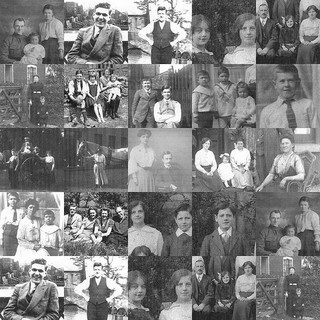 Marriage is the ultimate melting pot. Unless you’re one of those whose families knew each other well prior to their children marrying, if you’re married, you have probably had an experience something like mine.
He was an Episcopalian; I was an Evangelical Free Churcher. He was from California; I was from Colorado. He was a junior lifeguard; I think water belongs in the shower. He went to a large secular university; I went to a small Christian college. His family had a grand and formal dinner on Christmas Eve (and if you were with his grandfather, you then sat in the living room and listened to old Russian music, without commentary or chit-chat, in your fancy clothes); ours had a big dinner on Christmas Day, in jeans and sweatshirts. He grew up on the beach; I grew up in the library. He was a three-sport athlete; I won third place in the 6th grade Field Day Shoe Kick.
Hard to believe sometimes.
You get married, and soon discover that life and love can accommodate a wide variety of rhythms and preferences, traditions and peculiarities; that the methods to our individual madnesses will ultimately make sense and even become quite compelling; that it’s okay to let go, embrace the other, and still remain yourself.
I’m a creature of the regular, and I easily settle into daily and weekly rhythms: tea in the morning, prayers, gym, office, grocery store, family conversations in the kitchen, a book before bed. I like predictability and patterns that, like the chorus to a hymn, echo familiar themes. This tendency seeps into my spiritual perspective in both good and bad ways: good when I can draw near to God in quiet cadences that beat with my own heart; bad when I begin to think God’s cadences are just like mine. It’s good because it makes it possible for my interior world to focus on curiosities and questions without being distracted by the juggling acts of “newness,” but it’s bad because it can also make that element of strange into an element of suspicion.
All this is true of communities as well: families have peculiar traditions, neighborhoods have distinct personalities, small towns have their own idiosyncrasies, states have local patterns of behavior, nations have global personas. We become comfortable with ourselves, and “inside” our world we arrange the furniture to suit ourselves, while the “outside” world can feel oddly assembled.
I remember passing an Episcopal Church near my home many times as a kid. Weird place, that. What kind of voodoo did they do in there anyway? Smells and bells, robes and candles. Who knows what they believed. I went to a “real” church that preached the “real” gospel and read from the “real” Bible and worshiped the “real” Jesus. There were a few other “real” churches in town, but not many.
“Those people who go to that church down the street, the one with United in the name (why is it that “United” implies something quite nefarious to some?), ‘do church’ oddly. Their sermons are too short or too long, their band too loud, they still have a robed choir (seriously?); they don’t use the Lord’s Prayer in the morning service, they recite a Creed (clearly a sign of nominal belief), they kneel, they don’t kneel, they have Communion every week, they cross themselves; they have funny looking tapestries in their worship hall, they meet in a school, their bulletins are full of prayers, they all carry coffee into the worship service, they use candles, everyone carries Bibles (what for?), their Bibles have too many books; the adults go to Sunday school—what’s up with that?; people in church raise their hands; their pastor prays a long, long, long prayer, but no one else ever prays… I wonder: are they genuine Christians?”
In the last three weeks, I have attended a Palm Sunday service at an Episcopal Church, a Good Friday service at a Korean Christian Missionary Alliance Church, an Easter Vigil at an Anglican Church, and a Confirmation service at a Lutheran Church (Missouri Synod). I loved the Eucharistic liturgy at the Episcopal Church; the Christian Missionary Alliance pastor can really preach; the Anglicans had art and music to break the soul; the Lutherans blew me away with their community.
I fret sometimes about the insularity of Christian communities; we become comfortable with our dialect, our way of doing things, our shibboleths, our postures. Inside this community—safety, surety, commonality. Outside this community—suspicion, uncertainty, insecurity. And we place our faith not in the Jesus sent by God to call us as his own, but in the personal Jesus of our own making…who looks a lot like us. Our God is indeed too small.
When I work with students in the vast sweep of Church history, with its historically contextualized patterns and concerns, I often get the question, “But where were the Christians then?” These students are looking for themselves. Where were the Evangelicals in 9th-century Germanic states? Where were the Roman Catholics in the 3rd-century Egypt? Where were the Presbyterians in 12th-century England? Where were the Baptists in 6th-century Constantinople? A great deal of the semester is spent coming to grips with the idea that “those people” are family, that we share one Lord, one faith, one baptism. Through Christ, those odd believers from 800 years ago and the even odder ones down the street are my in-laws, and I am theirs.
And eventually we discover that Christian life and love can accommodate a wide variety of rhythms and preferences, traditions and peculiarities; that the methods to our individual madnesses will ultimately make sense and even become quite compelling; that it’s okay to let go, embrace the other, and still remain yourself.
Photo courtesy Jaxpix50, Flickr C.C.
Previous Post

April 2, 2013
Easter: Tripping Over Joy
Next Post
April 16, 2013 Becoming Neo-Pascalian: The First Step of Make-Believe Faith
Browse Our Archives
Select a Category Advent Ascetical Theology Book Reviews Children and Parenting Easter Epiphany Friends of God Lent Life in the Spirit Ludolph Pascalian Spirituality: a series Politics Prayers Six Neo-Christian Myths Spiritual Formation Tales from My Father Trinitarian Spirituality: a series Uncategorized
Select a Month October 2026 July 2024 June 2024 December 2023 August 2023 July 2023 June 2023 January 2023 October 2022 September 2022 August 2022 July 2022 April 2022 November 2021 October 2021 September 2021 August 2021 July 2021 June 2020 January 2020 December 2019 November 2019 October 2019 September 2019 June 2019 May 2019 April 2019 October 2018 August 2018 July 2018 June 2018 May 2018 April 2018 March 2018 February 2018 May 2017 April 2017 March 2017 February 2017 November 2016 June 2016 April 2016 February 2016 January 2016 December 2015 November 2015 October 2015 September 2015 August 2015 March 2015 October 2014 September 2014 August 2014 April 2014 March 2014 February 2014 September 2013 August 2013 July 2013 June 2013 May 2013 April 2013 March 2013 February 2013 January 2013 December 2012 November 2012 October 2012 September 2012 August 2012 July 2012 June 2012 May 2012 April 2012 March 2012 February 2012 October 2011 August 2011 July 2011 February 2011 October 2010 September 2010 July 2010 May 2010 April 2010 March 2010 February 2010 January 2010 November 2009 September 2009 August 2009 July 2009 June 2009
TAKE THE
Religious Wisdom Quiz
Who conquered Jerusalem and made it his capital?
Select your answer to see how you score.
Hezekiah David Saul Solomon
Related posts from Dry Bones

From Virtue Signaling to Virtue
The Three Gifts and Their Meaning: a Ludolph...

The Sermon on the Mount for the New...

Coming to Jesus: Lessons from Ludolph
TRENDING AT PATHEOS General Christian

Seventy and Five Years Old: God Still Starts...
There is a small detail tucked into Genesis 12 that I skipped...

A Biblical Vision of Success in Christian Life...
The Concern and Quest Recent trends and tendencies I note around me...

Indigenous Peoples’ Day and the Church
Indigenous' Peoples Day or Columbus Day? Depending on where you live...

When Spiritual Growth Looks Like Losing Ground
Four Passive Spiritual Disciplines: An Introduction When I was a college freshman,...

Faith and Finding Your Current Season
“To everything there is a season,” Ecclesiastes tells us, “and a time...

Did Jesus Fear God's Wrath in Gethsemane?
That Time Jesus Was Terrified Before we begin, let me say at...
view all General Christian blogs
Ad-Free & Subscriber Log-In Subscription Support
- About Us
- 2026 Calendar
- Videos
- Podcasts
- Library of World Religions
- Faith In Media Tracker
- Advertise With Us
- Write for Us
- Privacy Policy
- Terms of Service
- Do Not Sell My Data
- Contact Us
- Radiant Digital
- Manage Newsletter Subscriptions
- Unsubscribe From Notifications
- Sitemap
Copyright 2008-2026, Patheos. All rights reserved.
Subscription Support Ad-Free & Subscriber Log-In
Follow Patheos