
BuddhistCatholicContemplativeEvangelicalGeneral ChristianHinduJewishLatter-day SaintMuslimNew VisionsProgressive Christian
Beliefs
- Buddhist
- Catholic
- Contemplative
- Evangelical
- General Christian
- Hindu
- Jewish
- Latter-day Saint
- More Voices
- Muslim
- New Visions
- Pagan
- Progressive Christian
Topics
- Religion News
- Food and Religion
- Sports and Religion
- Religious Art
- Religious Music and Entertainment
- Religious Events
- History and Religion
- Style and Religion
- Politics and Religion
- Women in Religion
- Recreation Outdoors and Religion
- Business Finance and Religion
- Careers Workplace and Religion
- Education and Religion
- Family Parenting and Religion
- Health Fitness and Religion
- Home and Religion
- Relationships and Religion
- Technology and Religion
- Travel and Religion
Columnists
- Buddhist Columnists
- Business Finance and Religion Columnists
- Careers Workplace and Religion Columnists
- Catholic Columnists
- Contemplative Columnists
- Education and Religion Columnists
- Evangelists Columnists
- Family Parenting and Religion Columnists
- General Christian Columnists
- Health Fitness and Religion Columnists
- Hindu Columnists
- History and Religion Columnists
- Home and Religion Columnists
- Jewish Columnists
- More Voices Columnists
- Latter Day Columnists
- Muslim Columnists
- New Visions Columnists
- Nonreligious Columnists
- Pagan Columnists
- Politics and Religion Columnists
- Progressive Columnists
- Recreation Outdoors and Religion Columnists
- Relationships and Religion Columnists
- Religion News Columnists
- Religious Art Columnists
- Religious Events Columnists
- Religious Music and Entertainment Columnists
- Sports and Religion Columnists
- Style and Religion Columnists
- Technology and Religion Columnists
- Travel and Religion Columnists
- Women in Religion Columnists
Resource Library
- 2026 Calendar
- Library of World Religions
- The 100 Most Holy Places on Earth
- Patheos Answers
- Podcasts
- Videos
- Faith Leaders Database
- Anglican Episcopalian
- Bahai
- Baptist
- Buddhism
- Christianity
- Confucianism
- Eastern Orthodoxy
- Hinduism
- Holiness and Pentecostal
- ISKCON
- Islam
- Judaism
- Lutheran
- Methodist
- The Church of Jesus Christ of Latter-day Saints
- New Age
- Paganism
- Presbytarian and Reformed
- Protestantism
- Religion Behind the Scenes
- Roman Catholic
- Scientology
- Shia Islam
- Sikhism
- Sufism
- Sunni Islam
- Taoism
- Zen
- See all religions
Research Tools
 Ad-Free & Subscriber Log-In Subscription Support
Ad-Free & Subscriber Log-In Subscription Support
Follow Patheos 

- Trending:
- Forgiveness
- |
- Marriage
- |
- Consciousness
- |
- Death Penalty
- |
- Election
- |
- Halloween

- Home
- General Christian
- My Mother’s Morals
My Mother’s Morals
Last updated on: March 3, 2013 at 6:52 pm by K. Mulhern
My Mother’s Morals 2013-03-03T18:52:50-07:00 K. Mulhern
Patheos Explore the world's faith through different perspectives on religion and spirituality! Patheos has the views of the prevalent religions and spiritualities of the world.
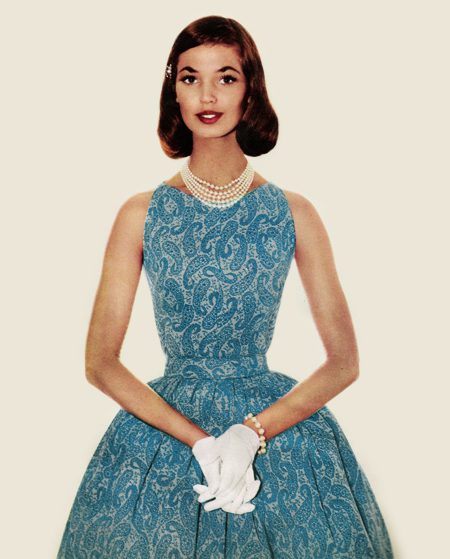 I’ve been thinking a lot about my mom these days anyway, since it has been nearly thirty-three years to the day since I last saw her. And then I read this article: “Not Your Mother’s Morals”: A Review.
And let me say up front, this post is no reflection on Jonathan Fitzgerald, his mother’s morals, his position on his mother’s morals, or his thoughts about your mother’s morals. This is not a comment about his book, which I have not read. This is simply a visceral reaction to the review, and the reviewer’s argument about the meaning of the book for Christian life today. By all means, buy the book. I’m sure it will be good.
One reason I really should not be responding in any way, shape, or form is the subtitle of his book—How the New Sincerity Is Changing Pop Culture for the Better. The Lord knows, my children know, my colleagues know, and you probably know that I can barely spell pop culture. My ignorance about the latest television shows, novels, music trends, and most movies is a deep, deep abyss. From what I do know about it, I’m rather glad to hear it’s changing for the better. I know just enough about such things to know that if it’s a Tarantino movie, I don’t want to see it; and if it involves a Korean music artist fake-riding a horse, I’m a dolt; and if it’s not a ten-year-old rerun of “Everybody Loves Raymond,” I probably haven’t seen it. This is not bragging; this is confessing, with some measure of embarrassment, because I truly believe the Lord is interested and involved in pop culture and what it does to and for people. I simply don’t have it in me. Call me a pop-culture philistine, but I’m a sincere philistine.
So back to my mother. And her morals.
My mother was most certainly a product of her own culture, one that most of you would call fundamentalist. If I tell you she went to Bob Jones Academy, boarding there through her high school years, that will tell you something. She had all the “baggage” associated with a lot of fundamentalism: a narrow moral code (forget things like premarital sex or alcohol or dancing or smoking, and move on to really wicked things—no movies, no fingernail polish, no playing cards, no bowling); a normalized Dispensationalist outlook; a genteel white poverty borne within a restricted community of the like-minded. The most radical thing she did as a young person was marry my dad, who was a Wheaton guy.
But my mother was the embodiment of sincerity. She was joyfully, consistently, and freely what she was—centered in patterns of old-school traditionalism, yet happily stretching the boundaries as life so required.
The reviewer writes: “The perfect example of the New Sincerity at work is the hugely popular band Mumford & Sons. As Fitzgerald talks about in his Patrol piece, “Mumford and Sons Reviewers: You’re Doing it Wrong”, they have strong spiritual themes on the album, but unlike sanitized bands of Christian Contemporary music of the past, they don’t stuff their lyrics with a certain number of “Jesus’” and they don’t shy away from questions, feelings of despair, or even a few couple of F-words.”
Shall we assume, then, that those whose music is “sanitized” by being F-word-free are less sincere? Less authentic? Less free? Are we freed by displaying our angst and our doubts? Is sincerity tied to lack of restraint? Is sincerity really all about me?
While I realize, I really do, that many who grew up in fundamentalist or severely conservative homes found their lives tightly controlled to the point they couldn’t even breathe a human breath, this is a stereotype; and yes, stereotypes become stereotypes because they have a track record for being accurate. However, the message here is that those who have a morality that includes unsalted language, a personal reserve about airing deeper issues of fear and despair in public, and a deep reluctance to coddle the coarser aspects of their personalities are hopelessly stuck in mental cages, where they pace their 10-foot-by-10-foot worldviews and snarl at the free people who pass them in the streets, glibly and liberally airing their darker passions and publically exploring the limits of their moral choices.
The reviewer writes: “Today in society we are bringing these two worlds together because after years of singing Jesus-is-my-boyfriend worship tunes and putting on our Good Church Goer personas every Sunday, we long to be in a world where the spiritual is not allergic to the messiness of humanity, but embraces it and is a part of it.”
My mother would never, never have sung a Jesus-is-my-boyfriend song—she couldn’t even really bring herself to sing “Jesus, Lover of My Soul” because of its, well, lover-language. Lurid connotations, you know. But my, oh my, she had the Good Church Goer persona down to a science. She was, after all, the pastor’s wife, and from all reports, there were few better. But this is really who she was. Head to toe, inside and out; she wasn’t “stuffing” her true self so that she could people-please. This was her true self. And her true self fully embraced the messiness of humanity with kindness, with decorum, with quiet Christian gentleness, and with an iron core of self-discipline. Aching inside from some personal grief or frustration, she could go to church on Sunday morning, put on a gracious smile, greet people warmly and cheerfully, and yet not at all be depressed, repressed, or suppressed. This, in the Old Sincerity, is called self-denial, which used to be a virtue and a strength.
The reviewer writes: “When you [let] people create the art their souls ache for, their humanity and hearts emerge, which are messy. This is why the New Sincerity is making some people uncomfortable; because it’s making us come to terms with all sides of ourselves, including some of the scarier ones like doubt, anguish, and a loss of answers.”
My mother knew all about doubt, anguish, and the absence of answers. She knew grief and discord, anxiety and frustration, pain and fear. She had hang-ups, faults, personal indulgences, and secret disappointments—I’m not writing a hagiography here. But she shied away from nothing that the Lord gave her, including her own suffering and death. She simply did not need to broadcast her internal experiences in order to cope with them. Her generally conservative hermeneutic of scripture, culture, life, and love was not a false self, a deluded self, a June-Cleaver-cut-out self, but a thoroughly authentic and rich pursuit of quiet, disciplined godliness.
After all, sincerity is not really the point. Lots of sincerely nasty and naughty people are out there who have crafted a morality, picking and choosing moral values that suit their internal compass just fine. (Of course, the ancient Christian message about the unreliability of our internal compasses does tend to make us uncomfortable.) The question is, for New Sincerity or Old, what fruit does it bear? What is the point of morality, yours or your mother’s? My mother’s morality gave birth to boundless energy for church life, a ferocious work ethic, a spirit of generosity and hospitality, and, well, a laugh that could bring down the house. Tradition merely created the scaffolding upon which she built a life characterized by the g-word (gentleness), the h-word (hopefulness), and the f-word (faithfulness).
Here’s to Our Mothers’ Morality.
Update: Yes, this post has now exposed me to my children’s commentary on their mother’s morals. I doubt I will fare as well as my mother did. But then, I’m not finished yet. I can still, and always, pray for the grace of true repentance and the Holy Spirit to amend my life. I’m sure my kids would like that.
Previous Post

February 27, 2013
(One of) My History Hang-ups
Next Post
March 12, 2013 Becoming Neo-Pascalian: The Third Order
Browse Our Archives
Select a Category Advent Ascetical Theology Book Reviews Children and Parenting Easter Epiphany Friends of God Lent Life in the Spirit Ludolph Pascalian Spirituality: a series Politics Prayers Six Neo-Christian Myths Spiritual Formation Tales from My Father Trinitarian Spirituality: a series Uncategorized
Select a Month October 2026 July 2024 June 2024 December 2023 August 2023 July 2023 June 2023 January 2023 October 2022 September 2022 August 2022 July 2022 April 2022 November 2021 October 2021 September 2021 August 2021 July 2021 June 2020 January 2020 December 2019 November 2019 October 2019 September 2019 June 2019 May 2019 April 2019 October 2018 August 2018 July 2018 June 2018 May 2018 April 2018 March 2018 February 2018 May 2017 April 2017 March 2017 February 2017 November 2016 June 2016 April 2016 February 2016 January 2016 December 2015 November 2015 October 2015 September 2015 August 2015 March 2015 October 2014 September 2014 August 2014 April 2014 March 2014 February 2014 September 2013 August 2013 July 2013 June 2013 May 2013 April 2013 March 2013 February 2013 January 2013 December 2012 November 2012 October 2012 September 2012 August 2012 July 2012 June 2012 May 2012 April 2012 March 2012 February 2012 October 2011 August 2011 July 2011 February 2011 October 2010 September 2010 July 2010 May 2010 April 2010 March 2010 February 2010 January 2010 November 2009 September 2009 August 2009 July 2009 June 2009
TAKE THE
Religious Wisdom Quiz
What Christian group is known for having monks who follow the Rule of St. Benedict?
Select your answer to see how you score.
Pentecostals Catholics Baptists Lutherans
Related posts from Dry Bones


The Sermon on the Mount for the New...

Johannes Vermeer and His Allegory of Faith: a...

TRENDING AT PATHEOS General Christian

Seventy and Five Years Old: God Still Starts...
There is a small detail tucked into Genesis 12 that I skipped...

A Biblical Vision of Success in Christian Life...
The Concern and Quest Recent trends and tendencies I note around me...

Indigenous Peoples’ Day and the Church
Indigenous' Peoples Day or Columbus Day? Depending on where you live...

When Spiritual Growth Looks Like Losing Ground
Four Passive Spiritual Disciplines: An Introduction When I was a college freshman,...

Faith and Finding Your Current Season
“To everything there is a season,” Ecclesiastes tells us, “and a time...

Did Jesus Fear God's Wrath in Gethsemane?
That Time Jesus Was Terrified Before we begin, let me say at...
view all General Christian blogs
Ad-Free & Subscriber Log-In Subscription Support
- About Us
- 2026 Calendar
- Videos
- Podcasts
- Library of World Religions
- Faith In Media Tracker
- Advertise With Us
- Write for Us
- Privacy Policy
- Terms of Service
- Do Not Sell My Data
- Contact Us
- Radiant Digital
- Manage Newsletter Subscriptions
- Unsubscribe From Notifications
- Sitemap
Copyright 2008-2026, Patheos. All rights reserved.
Subscription Support Ad-Free & Subscriber Log-In
Follow Patheos