
BuddhistCatholicContemplativeEvangelicalGeneral ChristianHinduJewishLatter-day SaintMuslimNew VisionsProgressive Christian
Beliefs
- Buddhist
- Catholic
- Contemplative
- Evangelical
- General Christian
- Hindu
- Jewish
- Latter-day Saint
- More Voices
- Muslim
- New Visions
- Pagan
- Progressive Christian
Topics
- Religion News
- Food and Religion
- Sports and Religion
- Religious Art
- Religious Music and Entertainment
- Religious Events
- History and Religion
- Style and Religion
- Politics and Religion
- Women in Religion
- Recreation Outdoors and Religion
- Business Finance and Religion
- Careers Workplace and Religion
- Education and Religion
- Family Parenting and Religion
- Health Fitness and Religion
- Home and Religion
- Relationships and Religion
- Technology and Religion
- Travel and Religion
Columnists
- Buddhist Columnists
- Business Finance and Religion Columnists
- Careers Workplace and Religion Columnists
- Catholic Columnists
- Contemplative Columnists
- Education and Religion Columnists
- Evangelists Columnists
- Family Parenting and Religion Columnists
- General Christian Columnists
- Health Fitness and Religion Columnists
- Hindu Columnists
- History and Religion Columnists
- Home and Religion Columnists
- Jewish Columnists
- More Voices Columnists
- Latter Day Columnists
- Muslim Columnists
- New Visions Columnists
- Nonreligious Columnists
- Pagan Columnists
- Politics and Religion Columnists
- Progressive Columnists
- Recreation Outdoors and Religion Columnists
- Relationships and Religion Columnists
- Religion News Columnists
- Religious Art Columnists
- Religious Events Columnists
- Religious Music and Entertainment Columnists
- Sports and Religion Columnists
- Style and Religion Columnists
- Technology and Religion Columnists
- Travel and Religion Columnists
- Women in Religion Columnists
Resource Library
- 2026 Calendar
- Library of World Religions
- The 100 Most Holy Places on Earth
- Patheos Answers
- Podcasts
- Videos
- Faith Leaders Database
- Anglican Episcopalian
- Bahai
- Baptist
- Buddhism
- Christianity
- Confucianism
- Eastern Orthodoxy
- Hinduism
- Holiness and Pentecostal
- ISKCON
- Islam
- Judaism
- Lutheran
- Methodist
- The Church of Jesus Christ of Latter-day Saints
- New Age
- Paganism
- Presbytarian and Reformed
- Protestantism
- Religion Behind the Scenes
- Roman Catholic
- Scientology
- Shia Islam
- Sikhism
- Sufism
- Sunni Islam
- Taoism
- Zen
- See all religions
Research Tools
 Ad-Free & Subscriber Log-In Subscription Support
Ad-Free & Subscriber Log-In Subscription Support
Follow Patheos 

- Trending:
- Forgiveness
- |
- Marriage
- |
- Consciousness
- |
- Death Penalty
- |
- Election
- |
- Halloween

- Home
- General Christian
- (One of) My History Hang-ups
(One of) My History Hang-ups
Last updated on: February 27, 2013 at 9:17 pm by K. Mulhern
(One of) My History Hang-ups 2013-02-27T21:17:09-07:00 K. Mulhern
Patheos Explore the world's faith through different perspectives on religion and spirituality! Patheos has the views of the prevalent religions and spiritualities of the world.
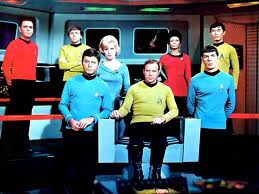 Any Star Trek fans out there? The Original Series? Do you remember the episode called “The City on the Edge of Forever”? No? Okay, here’s a short story, a blend of science fiction, mid-sixties silliness, and historical play:
Dr. McCoy has passed through the Guardian of Forever, a portal into time and space that could take you anywhere. Captain Kirk and Spock need to rescue him and undo the historical damage he has done—something McCoy did has altered the past and thus threatened the entire timeline of human history. Kirk and Spock pursue McCoy through the portal, finding themselves in 1930s America, mid-Depression. There they meet Edith Keeler (played by a youthful looking…really…Joan Collins), who runs a mission in downtown New York.
Edith is lovely and gentle and passionate, and, of course, becomes smitten with Kirk. (All women [and other females that resemble humans but are another species], go gaga over Kirk. Always.] Kirk is also tumbling deep into the love portal, when suddenly Spock finds out what McCoy has done: McCoy had prevented a traffic accident in which Edith was “supposed to have been killed.” Instead she lived and initiated a pacifist movement that pressured the American government so powerfully that it delayed its entrance into World War Two, which in turn gave the Nazi regime time to develop the atomic bomb and thus win the war. (Yes, that would certainly have changed human history.) The episode concludes as Spock and Kirk reunite with McCoy and mournfully hold back from saving Edith as a truck runs her over. She had to die, and then the course of history is repaired.
[Now it would be interesting to go off on a tangent here and think about the meaning of a story like this in 1967 when it first aired. Sonny and Cher are crazy popular; Peggy Fleming is skating her way to glory, Wilt Chamberlain is a BB court phenom; Evel Knievel is trying on white spangly outfits; the Middle East erupts in the Six-Day War; civil rights protests and riots pepper America; Thurgood Marshall is confirmed by the Senate as the first black Supreme Court Justice; the Vietnam War is escalating with the planning of the Tet Offensive. What would it mean to play with the idea of changing history? What was Star Trek really doing?]
Everyone likes to play the “change history” game sometimes. We do it when we grieve—if only… We do it when we regret—shoot dang, what was I thinking? We do it when we look back nationally, culturally, politically—if we had known then… We fantasize about being smarter or wiser and therefore making better choices—better college majors, better career choices, better health decisions, better relationships, better whatever. Some people are caught in worm hole time warps in their own minds.
But Star Trek is just a diversion, a visible and simplistic icon of my “issue” with studying history. Tonight it’s triggered by this fairly innocuous and relatively common summarizing statement from a book I’m reading:
On September 8, 1380, a rebellious Russian army commanded by grand prince Dimitri II of Moscow met and defeated a large Mongol force at a meadow called Kulikovo on the upper Don, about two hundred miles south of Moscow. The battle was long and bloody, with terrible losses on both sides. (Sailing from Byzantium, p. 252)
What is it about that paragraph that is so troubling to me?
It’s those “terrible losses on both sides.” Unnamed, unknown, forgotten, irrelevant. Passed over in a few words in a book about important people, cultures, writings, battles. Sheesh, it was over 600 years ago. I’m mourning combat deaths from a Mongol-Russian battle a half a millennium ago?
Not mourning. Just wondering… about the weight of a life lived anonymously… about the little tweaky changes in history by one person’s smallest choices … about the value of an unnamed, twenty-something, Mongol man who might have gone on to do something momentous but instead was speared in the gut by a Russian—did he change history by conveniently dying?
Remember Otzi the Iceman, found in 1991 in Europe? This frozen mummy was of a man who had lived in 3300 B.C., died alone, and was quickly covered by ice. Lost, forgotten, unnamed. More than fifty-three hundred years ago. Did he have a family? Was he mourned? Did he matter?
Just wondering… about the worth of a soul … about the forgottenness of life … about the meaning of the very few years we live … about the significance of simply being, even for a brief time … do we change the course of history merely by our existence?
To study history is to study the remembered. Names, dates, events; battles, accomplishments, reigns; achievements, victories, relationships; leaders, commanders, thinkers, writers, artists. But what about the unremembered?
Did you know that my great-great-great-grandmother’s name was Belle? No. Of course not. No one living today remembers Belle. No one knows what she was like; what she did or said or felt or chose or believed. Belle matters to me, of course, because obviously if she hadn’t been around, I wouldn’t be around. But in the big picture? the timeline of human history? What does Belle mean?
Previous Post

February 25, 2013
Becoming Neo-Pascalian: Fire
Next Post
March 3, 2013 My Mother's Morals
Browse Our Archives
Select a Category Advent Ascetical Theology Book Reviews Children and Parenting Easter Epiphany Friends of God Lent Life in the Spirit Ludolph Pascalian Spirituality: a series Politics Prayers Six Neo-Christian Myths Spiritual Formation Tales from My Father Trinitarian Spirituality: a series Uncategorized
Select a Month October 2026 July 2024 June 2024 December 2023 August 2023 July 2023 June 2023 January 2023 October 2022 September 2022 August 2022 July 2022 April 2022 November 2021 October 2021 September 2021 August 2021 July 2021 June 2020 January 2020 December 2019 November 2019 October 2019 September 2019 June 2019 May 2019 April 2019 October 2018 August 2018 July 2018 June 2018 May 2018 April 2018 March 2018 February 2018 May 2017 April 2017 March 2017 February 2017 November 2016 June 2016 April 2016 February 2016 January 2016 December 2015 November 2015 October 2015 September 2015 August 2015 March 2015 October 2014 September 2014 August 2014 April 2014 March 2014 February 2014 September 2013 August 2013 July 2013 June 2013 May 2013 April 2013 March 2013 February 2013 January 2013 December 2012 November 2012 October 2012 September 2012 August 2012 July 2012 June 2012 May 2012 April 2012 March 2012 February 2012 October 2011 August 2011 July 2011 February 2011 October 2010 September 2010 July 2010 May 2010 April 2010 March 2010 February 2010 January 2010 November 2009 September 2009 August 2009 July 2009 June 2009
TAKE THE
Religious Wisdom Quiz
Who was Isaac's wife?
Select your answer to see how you score.
Sarah Leah Rachel Rebekah
Related posts from Dry Bones

From Virtue Signaling to Virtue
The Three Gifts and Their Meaning: a Ludolph...

The Sermon on the Mount for the New...
TRENDING AT PATHEOS General Christian

Seventy and Five Years Old: God Still Starts...
There is a small detail tucked into Genesis 12 that I skipped...

A Biblical Vision of Success in Christian Life...
The Concern and Quest Recent trends and tendencies I note around me...

Indigenous Peoples’ Day and the Church
Indigenous' Peoples Day or Columbus Day? Depending on where you live...

When Spiritual Growth Looks Like Losing Ground
Four Passive Spiritual Disciplines: An Introduction When I was a college freshman,...

Faith and Finding Your Current Season
“To everything there is a season,” Ecclesiastes tells us, “and a time...

Did Jesus Fear God's Wrath in Gethsemane?
That Time Jesus Was Terrified Before we begin, let me say at...
view all General Christian blogs
Ad-Free & Subscriber Log-In Subscription Support
- About Us
- 2026 Calendar
- Videos
- Podcasts
- Library of World Religions
- Faith In Media Tracker
- Advertise With Us
- Write for Us
- Privacy Policy
- Terms of Service
- Do Not Sell My Data
- Contact Us
- Radiant Digital
- Manage Newsletter Subscriptions
- Unsubscribe From Notifications
- Sitemap
Copyright 2008-2026, Patheos. All rights reserved.
Subscription Support Ad-Free & Subscriber Log-In
Follow Patheos