
BuddhistCatholicContemplativeEvangelicalGeneral ChristianHinduJewishLatter-day SaintMuslimNew VisionsProgressive Christian
Beliefs
- Buddhist
- Catholic
- Contemplative
- Evangelical
- General Christian
- Hindu
- Jewish
- Latter-day Saint
- More Voices
- Muslim
- New Visions
- Pagan
- Progressive Christian
Topics
- Religion News
- Food and Religion
- Sports and Religion
- Religious Art
- Religious Music and Entertainment
- Religious Events
- History and Religion
- Style and Religion
- Politics and Religion
- Women in Religion
- Recreation Outdoors and Religion
- Business Finance and Religion
- Careers Workplace and Religion
- Education and Religion
- Family Parenting and Religion
- Health Fitness and Religion
- Home and Religion
- Relationships and Religion
- Technology and Religion
- Travel and Religion
Columnists
- Buddhist Columnists
- Business Finance and Religion Columnists
- Careers Workplace and Religion Columnists
- Catholic Columnists
- Contemplative Columnists
- Education and Religion Columnists
- Evangelists Columnists
- Family Parenting and Religion Columnists
- General Christian Columnists
- Health Fitness and Religion Columnists
- Hindu Columnists
- History and Religion Columnists
- Home and Religion Columnists
- Jewish Columnists
- More Voices Columnists
- Latter Day Columnists
- Muslim Columnists
- New Visions Columnists
- Nonreligious Columnists
- Pagan Columnists
- Politics and Religion Columnists
- Progressive Columnists
- Recreation Outdoors and Religion Columnists
- Relationships and Religion Columnists
- Religion News Columnists
- Religious Art Columnists
- Religious Events Columnists
- Religious Music and Entertainment Columnists
- Sports and Religion Columnists
- Style and Religion Columnists
- Technology and Religion Columnists
- Travel and Religion Columnists
- Women in Religion Columnists
Resource Library
- 2026 Calendar
- Library of World Religions
- The 100 Most Holy Places on Earth
- Patheos Answers
- Podcasts
- Videos
- Faith Leaders Database
- Anglican Episcopalian
- Bahai
- Baptist
- Buddhism
- Christianity
- Confucianism
- Eastern Orthodoxy
- Hinduism
- Holiness and Pentecostal
- ISKCON
- Islam
- Judaism
- Lutheran
- Methodist
- The Church of Jesus Christ of Latter-day Saints
- New Age
- Paganism
- Presbytarian and Reformed
- Protestantism
- Religion Behind the Scenes
- Roman Catholic
- Scientology
- Shia Islam
- Sikhism
- Sufism
- Sunni Islam
- Taoism
- Zen
- See all religions
Research Tools
 Ad-Free & Subscriber Log-In Subscription Support
Ad-Free & Subscriber Log-In Subscription Support
Follow Patheos 

- Trending:
- Forgiveness
- |
- Marriage
- |
- Consciousness
- |
- Death Penalty
- |
- Election
- |
- Halloween
 Drishtikone
- Home
- Hindu
- Was Krishna's Gita a Rebellion of his times?
Was Krishna's Gita a Rebellion of his times?
Last updated on: March 4, 2008 at 10:38 pm by Desh Kapoor
Was Krishna's Gita a Rebellion of his times? 2008-03-04T22:38:31-06:00 Desh Kapoor
Patheos Explore the world's faith through different perspectives on religion and spirituality! Patheos has the views of the prevalent religions and spiritualities of the world.
Lord Krishna has been known as the greatest Vedic philosopher of his time, probably of all times. Vedas – four as they are named in modern times – are said to be the scriptural authorities for the Hindus. They represent the eternal knowledge captured in words. These four are:
– Rig Ved
– Yajur Ved
– Sam Ved
– Atharva Ved
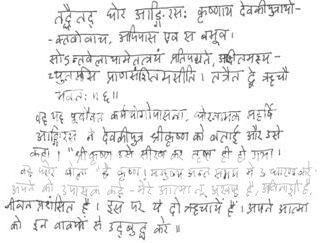 Amazingly, Krishna mentions only the first three in Bhagwad Gita. It was quite strange that he does that repeatedly in Chapters 9 and 10. For someone known to be the greatest Vedic philosopher of all time to cite only three out of four Vedas is strange. I am not sure why this is so, but I intend to find some answer soon.
The tutelage and his later understanding and preaching of the Vedic/Upanishadic (I feel it is more of the Upanishadic message than Vedic) message is very interesting story. He was taught by Maharishi Ghor Angiras (see the shloka). Maharishi Angiras is historically said to be one of the greatest Rishis of his time and was a Sam-Vedi (Sam Ved expert). That is why some say that when Lord Krishna describes his "characteristics", and comes to liken himself to various entities and emotions, the good and the bad – he calls himself "Sam Ved". "Amongst the Vedas, I am Sam Veda" he says (Chapter 10, verse 22). Which was intriguing to me when I first heard that shloka, for logically if he has to liken himself with any Veda, it should have been Rig Veda! Why Sam Veda? The last of the three Vedas he refers to?? But when you see which Vedic School he belonged to, it becomes clear why.
Now, this is where interesting things start happenning. Something about Maharishi Ghor Angiras – he was a royal blood, who had become an ascetic and performed very harsh penance and meditation (Ghor epithet comes from there). He was also supposed to be a cousin of Krishna. Somewhere during that time he renounced all things and became a non-violence proponent and is known as the 22nd Tirthankar in Jainism – Neminath.. There are references to him in Jain scriptures as well as Upanishads (Chhandogyopanishad).
This seems to bring us to the most amazing diversion between Lord Krishna’s teachings and those of his Guru. In verse 25 of Chapter 10, after announcing himself as akin to Sam Veda, Krishna likens himself to Maharishi Bhrigu, and not Maharishi Angiras.
इन्द्रियानार्थान्विमूढात्मा मिथ्याचार:
Was this deliberate?
Well, if this wasn’t enough, read this – for a student of an ascetic (who went on to do harsh penances & meditation after giving up active life), to say that to forcibly give up action and start meditating or perform penance is idiocy and the work of a hypocrite (mithyachaari), is pretty harsh for a Guru’s chosen path!! In fact, while Maharishi Angiras went on to be the high level preacher of non-violence; Krishna, on the other hand, became famous for having given the call for battle to Arjun.
Another thing that is striking about Krishna’s treatise on the Vedic knowledge in Gita is that he repeatedly extols the importance of "understanding the core" of the Vedas as opposed to the knowledge of the Vedas. Specially in Shloka 46 of chapter 2, he makes a very categoric statement for the knowing of Tatva (or the essence) of the Vedas as opposed to the Vedas. Why is that so?
I have often felt when reading the Gita that Krishna was delivering a message that was going against the grain of prevailing wisdom or interpretation of Vedas (at least the three that he lists – probably they were the only ones which were there originally). His message seems like a rebellion to the standing authority of that time, as it were. And if you take the entire scenario into picture:
- – Gita is nothing but a commentary of Vedas and Upanishads.
- – He is giving this knowledge to Arjun, who has had the greatest education that money and pedigree could provide at that time. So to assume he had never read or heard about Upanishads and Vedas is impossible.
- – Arjun seems to be in states ranging from curiousity, disbelief, confusion to lack of basic understanding of Gita’s message. When Krishna delivers it seems that Arjun’s understanding of some of the Vedic treatise was entirely different. So, does Gita represent a radical breakaway from Arjun’s knowledge of the same Vedic/Upanishadic philosophy?
Why is that? It is hard for me to believe that Arjun had not heard of these precepts if he had even done a one time crash course in Upanishads. Was the message of the Vedas and Upanishads twisted by then (and so needed to be re-aligned to its “core”?)?
यावानर्थ उदपाने सर्वत: सम्प्लुतोदके |
तवंसर्वेषु वेदेषु ब्रह्मंणस्य विजानत: ||
In fact in Chapter 2, where Krishna takes pains to explain the importance of understanding the essence of Vedas as opposed to getting the knowledge of Vedas, that chapter is about Sankhya Yoga (the beginnings of duality as an explanation in Vedic times). The philosophy was given by Rishi Kapil. Although this one chapter is totally and namely devoted to Sankhya Yoga, but the commentary on its most important precepts is throughout the entire Gita.
What are then the most important lessons that come out of Gita and why?
- – Balanced and unattached action
- – Predominant importance of Knowledge and understanding of the essence of the core
- – God is everything – the good, the bad, and the neutral
- – It is not just important to be good (or Sattvik) but beyond the good and the bad (गुनातीत)
What does all this point to? Going past attachments. How can that happen? When there is no duality. Duality assumes relationship, and so attachment. When there is only one and there is realization of that ONE as you, and you as IT, any concept of relationship and attachment becomes irrelevant. For such "going-beyond" he does not recommend or suggest escape from attachment – which most Rishis and Maharishis were fond of, but accepting the avenues of attachment and dealing with them with complete equanimity. Nor the love nor any hatred. When the becoming ceases, the being emerges. This simple message, it seems, was too radical at that time. Intriguing!
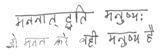
Interestingly, another major lesson emerges: revering Guru and his message without “Manan” is useless. And even a Guru can be debated against. Reverence without introspection is useless in the spiritual journey. That is why the word for human being is मनुष्य (Manushya) – the one who introspects.
Previous Post

March 4, 2008
Another Brilliant Ketchup ad
Next Post
March 4, 2008 Cup of Tea
Browse Our Archives
Select a Category Aarti Achievement and Leadership AfPak Africa Annual and Year-end Asia Audio Australia Behavioural Sciences Bhagwad Gita Bhagwad Gita Blogging Blogs Business Business Intelligence Business Strategy Cannes Careers Chanakya China Conservation Corruption Creative Daily Links Desh Poems Development & Welfare Devotional Audio Devotional Songs Drama Earth Economics Education Entertainment Environment Europe Everyday Quotes Featured Articles Featured Songs Finance Flickr Pictures Food Geo-Political Global Warming Globalization Health & Medicine Hinduism Historic History Humour India Indian Culture Indian music Indian Weddings Israel Issues Legal Link Love Minorities Misc Motivation and Personal Development Movie Lists Movie Reviews Movies Mumbai terror attacks Natural Disasters Nature News Outsourcing Pakistan Parenting Personal Philosophy Poetry Politics Poverty Quotes Recipe Regular Blog Post Relationships Religion Religious/Spiritual Audio Sciences Showcase Slideshow South Asia Special Stories Spiritual Quotes Spirituality Sports Stories Strategy Technology Technology Terrorism Travel Uncategorized US Video Women Women_s Rights Worship Yoga
Select a Month December 2015 November 2015 October 2015 September 2015 August 2015 June 2015 April 2015 March 2015 February 2015 September 2014 August 2014 January 2014 November 2013 October 2013 September 2013 August 2013 July 2013 June 2013 April 2013 March 2013 February 2013 January 2013 December 2012 November 2012 October 2012 September 2012 August 2012 July 2012 June 2012 May 2012 April 2012 March 2012 February 2012 January 2012 December 2011 November 2011 October 2011 September 2011 August 2011 July 2011 June 2011 May 2011 April 2011 March 2011 February 2011 January 2011 December 2010 November 2010 October 2010 September 2010 August 2010 July 2010 June 2010 May 2010 April 2010 March 2010 February 2010 January 2010 December 2009 November 2009 October 2009 September 2009 August 2009 July 2009 June 2009 May 2009 April 2009 March 2009 February 2009 January 2009 December 2008 November 2008 October 2008 September 2008 August 2008 July 2008 June 2008 May 2008 April 2008 March 2008 February 2008 January 2008 December 2007 November 2007 October 2007 September 2007 August 2007 July 2007 June 2007 May 2007 April 2007 March 2007 February 2007 January 2007 December 2006 November 2006 October 2006 September 2006 August 2006 July 2006 June 2006 May 2006 April 2006 March 2006 February 2006 January 2006 December 2005 November 2005 October 2005 September 2005 August 2005
Follow Us!
TAKE THE
Religious Wisdom Quiz
According to Jesus, what defiles a person?
Select your answer to see how you score.
Food eaten Money Clothing What comes out of the heart
Related posts from Drishtikone

How the Historically Intolerant forces are now Preaching...

This Diwali Light a Lamp for Humanity's Future

Karwa Chauth: Why this celebration of love is...

International Yoga Day: Controversies, responses and Why Yoga?
TRENDING AT PATHEOS Hindu

Indian Hindu pilot’s valor in line of duty...
There is a hoary maritime tradition that the captain of the...

Movie on Neem Karoli Baba’s life is a...
Neem Karoli Baba’s life (1900-1973) is associated with miracles he made in...

20 Questions to Ask Before an Interfaith Marriage,...
Four questions every interfaith couple should discuss before marriage: Conversion. Will either...

Avadhānam: The Art of Concentration and Intellectual Mastery
What is Avadhānam? In the summer of 2015, during a three-day Sanskrit...

Jesus in the Dharma: Where Christ Fits in...
Where Does Jesus Fit in Hinduism? That’s a question I get often...

Hormuz: A Shared Hindu and Zoroastrian Heritage
Every evening, somewhere in the world, a newsreader utters the words: "The...
view all Hindu blogs
Ad-Free & Subscriber Log-In Subscription Support
- About Us
- 2026 Calendar
- Videos
- Podcasts
- Library of World Religions
- Faith In Media Tracker
- Advertise With Us
- Write for Us
- Privacy Policy
- Terms of Service
- Do Not Sell My Data
- Contact Us
- Radiant Digital
- Manage Newsletter Subscriptions
- Unsubscribe From Notifications
- Sitemap
Copyright 2008-2026, Patheos. All rights reserved.
Subscription Support Ad-Free & Subscriber Log-In
Follow Patheos