
BuddhistCatholicContemplativeEvangelicalGeneral ChristianHinduJewishLatter-day SaintMuslimNew VisionsProgressive Christian
Beliefs
- Buddhist
- Catholic
- Contemplative
- Evangelical
- General Christian
- Hindu
- Jewish
- Latter-day Saint
- More Voices
- Muslim
- New Visions
- Pagan
- Progressive Christian
Topics
- Religion News
- Food and Religion
- Sports and Religion
- Religious Art
- Religious Music and Entertainment
- Religious Events
- History and Religion
- Style and Religion
- Politics and Religion
- Women in Religion
- Recreation Outdoors and Religion
- Business Finance and Religion
- Careers Workplace and Religion
- Education and Religion
- Family Parenting and Religion
- Health Fitness and Religion
- Home and Religion
- Relationships and Religion
- Technology and Religion
- Travel and Religion
Columnists
- Buddhist Columnists
- Business Finance and Religion Columnists
- Careers Workplace and Religion Columnists
- Catholic Columnists
- Contemplative Columnists
- Education and Religion Columnists
- Evangelists Columnists
- Family Parenting and Religion Columnists
- General Christian Columnists
- Health Fitness and Religion Columnists
- Hindu Columnists
- History and Religion Columnists
- Home and Religion Columnists
- Jewish Columnists
- More Voices Columnists
- Latter Day Columnists
- Muslim Columnists
- New Visions Columnists
- Nonreligious Columnists
- Pagan Columnists
- Politics and Religion Columnists
- Progressive Columnists
- Recreation Outdoors and Religion Columnists
- Relationships and Religion Columnists
- Religion News Columnists
- Religious Art Columnists
- Religious Events Columnists
- Religious Music and Entertainment Columnists
- Sports and Religion Columnists
- Style and Religion Columnists
- Technology and Religion Columnists
- Travel and Religion Columnists
- Women in Religion Columnists
Resource Library
- 2026 Calendar
- Library of World Religions
- The 100 Most Holy Places on Earth
- Patheos Answers
- Podcasts
- Videos
- Faith Leaders Database
- Anglican Episcopalian
- Bahai
- Baptist
- Buddhism
- Christianity
- Confucianism
- Eastern Orthodoxy
- Hinduism
- Holiness and Pentecostal
- ISKCON
- Islam
- Judaism
- Lutheran
- Methodist
- The Church of Jesus Christ of Latter-day Saints
- New Age
- Paganism
- Presbytarian and Reformed
- Protestantism
- Religion Behind the Scenes
- Roman Catholic
- Scientology
- Shia Islam
- Sikhism
- Sufism
- Sunni Islam
- Taoism
- Zen
- See all religions
Research Tools
 Ad-Free & Subscriber Log-In Subscription Support
Follow Patheos 

- Trending:
- Advent
- |
- Forgiveness
- |
- Thanksgiving
- |
- Election
- |
- Seasonal Holidays
- |
- Marriage
 Double, Toil and Resist
- Home
- Pagan
- Dangerous Myths
Dangerous Myths
Last updated on: March 16, 2019 at 6:52 pm by Courtney Weber
Dangerous Myths 2019-03-16T18:52:08-07:00 Courtney Weber
Patheos Explore the world's faith through different perspectives on religion and spirituality! Patheos has the views of the prevalent religions and spiritualities of the world.
It’s that time of year again!
St. Patrick’s Day always brings out the “St. Patrick was a Pagan Killer” memes. I’m sure you’ve heard the story: St. Patrick sparked a “mass conversion” in Ireland, killing all the Pagans if they didn’t convert, then forcing all the Pagans in Europe to become Christians, later sparking the Inquisition, starting CENTURIES of oppression against Pagans, and they were driven underground for a long long long time.

It’s not accurate. And that is a serious problem.
The Church has done a lot of nasty things over the years. I’m not defending it. Exploring its crimes would take another whole blog post, particularly exploring the Church’s role in colonialism, LGBTQ oppression across the globe, the Magdalene laundries, and more. Those are actual things we can prove the Church has done to people across the world. We should be angry about these things.
But many Neo-Pagans believe in a myth of a forced system of conversion across Europe–a myth that has consistently been debunked, yet consistently resurfaces this time of year.

Jason Pitzl wrote an excellent article dispelling the myths, which saves me the time of detailing it all. In short, Christianity was already a force in Ireland long before St. Patrick arrived. Neither St. Patrick or early Irish Christianity were a violent force on Paganism. St. Patrick did not spark a “mass conversion.” He was not responsible for the reduction of Paganism in Europe.
For the most part, Christianity grew slowly across Europe and was composed of the old Pagan rites with new names attached. Norman invasions and codification by the Church in later centuries further removed Pagan practices: a good 1,500 years of gradual change–not a mass, sudden “convert or die” effort. If violent, forced conversions of Pagans did take place in Europe, they were tragic exceptions.
Personally, I don’t believe that the snake was originally meant to represent Irish Paganism. Ireland hasn’t had snakes since the last Ice Age. To me, it sounds more like Irish humor: “What was St. Patrick known for? For driving out the snakes!” perhaps a way of saying, “Who knows what he was known for?”
The moral of the story: There was no Pagan genocide in Europe.
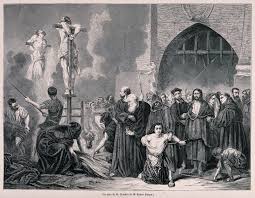
The St. Patrick-Pagan-Killer-Myth often goes hand-in-hand with the Burning Times myth.
The “Burning Times” weren’t an attack on the Paganism we now know, either. Accusations of Witchcraft were less about old Gods and Pagan faith and more about fear of foreigners, mental illness, or disease. In many cases, it was outright anti-Semitism as many of the people burned as Witches were Jewish. Jewish Europeans, not Pagans, experienced the convert-or-die choice. Many did not even have that.
It was a horrible time. It shouldn’t have happened. It should never happen again.
But it was not a Pagan genocide, either.
St. Patrick’s Day also brings up the White Slavery Myth.

Another dangerous myth that surfaces this time of year is that of the “Irish Slavery in the USA” myth: that Irish were enslaved alongside African people, and that in some cases they received worse treatment.
Again, another myth.
The Irish were not enslaved in the United States. Indentured servitude, which brought many Irish to the Americas, was a crappy system, but still a voluntary and a temporary one. Irish Americans experienced discrimination, but were always seen as full persons in the eyes of the law. Enslavement of Africans was neither by choice, nor was it temporary, and African persons were not seen as fully human within the laws of the land. A very, very important distinction.
The myth of white slavery is a particularly dangerous one, long a tool of white supremacy groups looking to discredit social justice movements.
Why does it matter?

Yesterday, 49 people died at the hands of a white supremacist who believed in a white genocide myth, and who decided to kill these people because he believed in that myth. These myths are growing faster and becoming more dangerous and deadly.
Pagans have asked me, “What does Christian persecution of Pagans have to do with the New Zealand shooting?” A lot, actually because they come from a similar source. A myth is dangerous when it points a finger, abdicates responsibility, creates a false narrative, a fake victimhood. It leaves room for someone to feel they should retaliate. The mythical rhetoric of “This is our ancestral legacy and it was taken away by THAT GROUP and must be reclaimed at all costs” is all too similar to the rhetoric that the shooter in New Zealand spouted as he live-streamed the murders. He too believed in a mythical genocide (“a white genocide”).
Ask the questions. Do the research. Read what the scholars have to say before the meme is shared.
Addressing this work begins at home. Remember that the NZ shooter referenced Valhalla. This hits very close to our modern Pagan home.

About Courtney Weber
Courtney Weber is a Witch, author, Tarot adviser, and activist. She is the author of Brigid: History, Mystery, and Magick of the Celtic Goddess and Tarot for One: The Art of Reading for Yourself, and the forthcoming The Morrigan: Celtic Goddess of Magick and Might. She is a co-host of That Witch Life podcast. Courtney produced and designed Tarot of the Boroughs, a modern tarot deck set in New York City. She has been featured in the New York Times, Maxim, Playboy, Huffington Post, Vice, and the Thom Hartmann Show. Visit her online at www.courtneyaweber.com You can read more about the author here.
Previous Post

March 6, 2019
Witchcraft: It's Uncomfortable, Inconvenient, and a Little Gross...
Next Post

March 25, 2019 Using Daffodils in Magick
Browse Our Archives
Select a Category Activism Books Brigid Broom Closet Dealing With Non-Witches Goddess New Moon Paganism Psychics Ritual Solstice Spring Tarot The Morrigan Uncategorized Witch Movies Witchcraft Writing
Select a Month September 2020 August 2020 June 2020 May 2020 April 2020 March 2020 February 2020 January 2020 December 2019 November 2019 October 2019 September 2019 August 2019 July 2019 June 2019 May 2019 April 2019 March 2019 February 2019 January 2019 December 2018 November 2018 October 2018 September 2018 August 2018 June 2018 May 2018
Follow Us!
TAKE THE
Religious Wisdom Quiz
What Roman road was Paul traveling when he encountered Jesus?
Select your answer to see how you score.
Roman Forum Road Corinthian Way Jericho Road Damascus Road
Related posts from Double, Toil and Resist

The Nightmare Before Christmas And Lessons On Cultural...

A Gratitude Practice For The Autumn Equinox Season

5 Reasons to NOT Join A Coven (Or...

What The Forest Says About Our Current Social...
TRENDING AT PATHEOS Pagan

10 years of the Power Sigil & Moving...
Last week while reorganizing my studio space, I found the sketchbook that...

Here comes a rant (and TLDR: if you're a US citizen eligible...

Why are younger seekers drawn to Paganism and...
One of the things I've noticed the most is that I'm far...

When we talk about Greek religion, we often begin with the dodekatheion—the...

I was recently chatting with someone on Instagram. She asked me what...

On July 23, I saw Christopher Nolan's The Odyssey which is Homer’s...
view all Pagan blogs
Ad-Free & Subscriber Log-In Subscription Support
- About Us
- 2026 Calendar
- Videos
- Podcasts
- Library of World Religions
- Faith In Media Tracker
- Advertise With Us
- Write for Us
- Privacy Policy
- Terms of Service
- Do Not Sell My Data
- Contact Us
- Radiant Digital
- Manage Newsletter Subscriptions
- Unsubscribe From Notifications
- Sitemap
Copyright 2008-2026, Patheos. All rights reserved.
Subscription Support Ad-Free & Subscriber Log-In
Follow Patheos