
BuddhistCatholicContemplativeEvangelicalGeneral ChristianHinduJewishLatter-day SaintMuslimNew VisionsProgressive Christian
Beliefs
- Buddhist
- Catholic
- Contemplative
- Evangelical
- General Christian
- Hindu
- Jewish
- Latter-day Saint
- More Voices
- Muslim
- New Visions
- Pagan
- Progressive Christian
Topics
- Religion News
- Food and Religion
- Sports and Religion
- Religious Art
- Religious Music and Entertainment
- Religious Events
- History and Religion
- Style and Religion
- Politics and Religion
- Women in Religion
- Recreation Outdoors and Religion
- Business Finance and Religion
- Careers Workplace and Religion
- Education and Religion
- Family Parenting and Religion
- Health Fitness and Religion
- Home and Religion
- Relationships and Religion
- Technology and Religion
- Travel and Religion
Columnists
- Buddhist Columnists
- Business Finance and Religion Columnists
- Careers Workplace and Religion Columnists
- Catholic Columnists
- Contemplative Columnists
- Education and Religion Columnists
- Evangelists Columnists
- Family Parenting and Religion Columnists
- General Christian Columnists
- Health Fitness and Religion Columnists
- Hindu Columnists
- History and Religion Columnists
- Home and Religion Columnists
- Jewish Columnists
- More Voices Columnists
- Latter Day Columnists
- Muslim Columnists
- New Visions Columnists
- Nonreligious Columnists
- Pagan Columnists
- Politics and Religion Columnists
- Progressive Columnists
- Recreation Outdoors and Religion Columnists
- Relationships and Religion Columnists
- Religion News Columnists
- Religious Art Columnists
- Religious Events Columnists
- Religious Music and Entertainment Columnists
- Sports and Religion Columnists
- Style and Religion Columnists
- Technology and Religion Columnists
- Travel and Religion Columnists
- Women in Religion Columnists
Resource Library
- 2026 Calendar
- Library of World Religions
- The 100 Most Holy Places on Earth
- Patheos Answers
- Podcasts
- Videos
- Faith Leaders Database
- Anglican Episcopalian
- Bahai
- Baptist
- Buddhism
- Christianity
- Confucianism
- Eastern Orthodoxy
- Hinduism
- Holiness and Pentecostal
- ISKCON
- Islam
- Judaism
- Lutheran
- Methodist
- The Church of Jesus Christ of Latter-day Saints
- New Age
- Paganism
- Presbytarian and Reformed
- Protestantism
- Religion Behind the Scenes
- Roman Catholic
- Scientology
- Shia Islam
- Sikhism
- Sufism
- Sunni Islam
- Taoism
- Zen
- See all religions
Research Tools
 Ad-Free & Subscriber Log-In Subscription Support
Ad-Free & Subscriber Log-In Subscription Support
Follow Patheos 

- Trending:
- Forgiveness
- |
- Marriage
- |
- Consciousness
- |
- Death Penalty
- |
- Election
- |
- Halloween
 Doc Hollywood
- Home
- Religious Music & Entertainment
- Does the Arc In Hollywood Bend Towards Justice?
Does the Arc In Hollywood Bend Towards Justice?
Last updated on: February 17, 2016 at 4:46 pm by Craig Detweiler
Does the Arc In Hollywood Bend Towards Justice? 2016-02-17T16:46:20-07:00 Craig Detweiler
Patheos Explore the world's faith through different perspectives on religion and spirituality! Patheos has the views of the prevalent religions and spiritualities of the world.
Editors’ Note: This article is part of the Patheos Public Square. This month we’re asking: Has Hollywood Become Our National Conscience? Read other perspectives here.
While some decry the Academy of Motion Picture Arts and Sciences as an exclusive club deserving an #OscarsSoWhite label, others see it pushing a liberal agenda through every ribbon displayed at the annual Academy Awards. Given the conservative nature of the economic decision-making in Hollywood, the truth resides somewhere in between. Filmmakers may see themselves as political gadflies, while studio execs resist the urge to promote social change if it might restrain box office receipts. When Martin Luther King declared, “The arc of the moral universe is long, but it bends towards justice,” he could also have added the wheels in the studio system grind slowly, but they eventually bend towards justice as well.
Movies have emerged as a civil way to discuss our sublimated national problems. Complex political issues that vex us like race, gay rights, and the environment are often more easily debated as character choices within a film than as entrenched policy positions. Yet, it is tough for films to be truly timely. Television responds to headlines much faster primarily because it has more immediate programming needs. Movies rooted in social dilemmas can take decades to develop and finance. Rather than gauging the Oscars as a measure of our cultural moment, perhaps they are best viewed as windows into evolving eras.

For example, Spotlight turns The Boston Globe’s 2002 stories about sexual abuse and cover up by the Roman Catholic archdiocese into a riveting ensemble drama. The rigorous reporting by The Globe’s “Spotlight” team dug up horrific facts that had been hidden for thirty-four years. That makes the long rode from painful realities to the big screen a fifty-year process. Amongst the production companies which supported Tom McCarthy’s cinematic investigation is Participant Media. Their success at the Oscars and the box office (producing The Help, Lincoln, and Bridge of Spies) has proven that movies can simultaneously enlighten and entertain. The moral failings of religious institutions have made more room for filmmakers to step in as unlikely preachers and teachers.
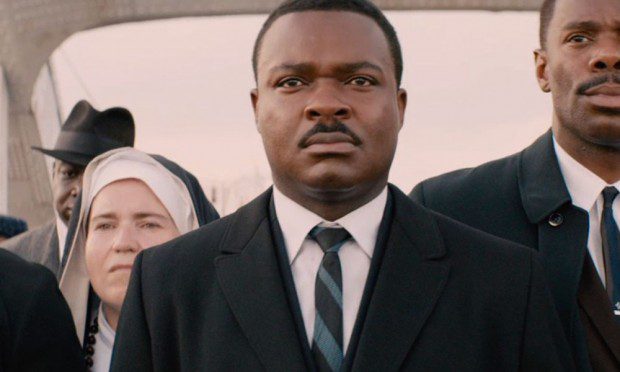
It also took half a century for Hollywood to invest in a dramatic feature about the Reverend Martin Luther King. The snub of the rousing biopic Selma in 2015 launched the hashtag, #OscarsSoWhite. Yet it followed years of studio indifference toward the most celebrated American activist of the 20th century. When it comes to race, Hollywood has always been far more comfortable investing in stories set in the past. 12 Years a Slave, Django Unchained, and The Help allow audiences enough historical distance to decry “those bad racists back then.” Crash won a surprising Best Picture Oscar in 2006, but that was years after the racial discord of the 1992 Los Angeles uprising. Precious was the rare contemporary story to break through to Oscar glory in 2010 (whereas Spike Lee’s incendiary achievements from Do the Right Thing to Chi-Raq were only recognized with a Lifetime Achievement Award this year).
War stories have been produced in a much more timely manner. Headlines emerging from Iraq, Afghanistan, and Pakistan are reflected in the Oscar nods for The Hurt Locker, Zero Dark Thirty, and American Sniper. These films allowed producers to invest in heroic individual stories that arose from within a morally ambiguous war.
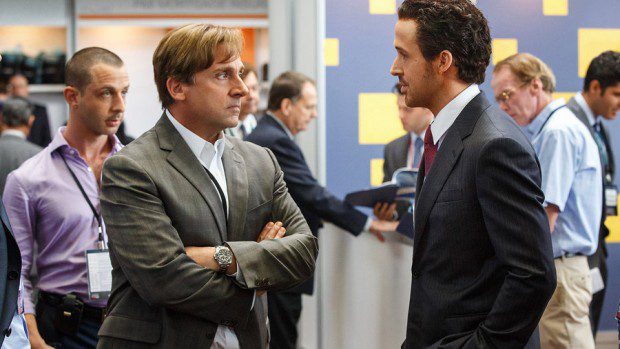
The Big Short also came together in a fairly tight timetable. Michael Lewis’s book on the subprime mortgage crisis was published in 2010. It follows smart, greedy bad guys outsmarting even badder, dumber, greedier guys. Director Adam McKay found creative ways and unlikely performers like Anthony Bourdain and Selena Gomez to explain CDOs (collateralized debt obligations) and credit default swaps. While these concepts may have been new to broad audiences, Charles Ferguson won the 2010 Oscar for Best Documentary covering similar ground in Inside Job. The doc served up the facts in a chilling manner, while The Big Short added some comedy to the bitter economic brew.
While dramas may take years to reach the big screen, documentaries can create timely and galvanizing responses to pressing issues. After Morgan Spurlock submitted his body to a McDonald’s-only diet in Super Size Me (2004), McWraps, Southwest salads, and peeled apple slices followed. Davis Guggenheim turned Al Gore’s lectures on climate change into the Oscar-winning An Inconvenient Truth (2006). The Cove (2009) brought the slaughter of dolphins in Japan to global awareness (and inspired subsequent protest docs like 2013’s Blackfish which put Sea World on the defensive). By investing in An Inconvenient Truth, The Cove, and last year’s Oscar winner, Citizen Four, Participant Media has proven that documentaries can also be remarkably effective ways to bring justice issues into the public square.
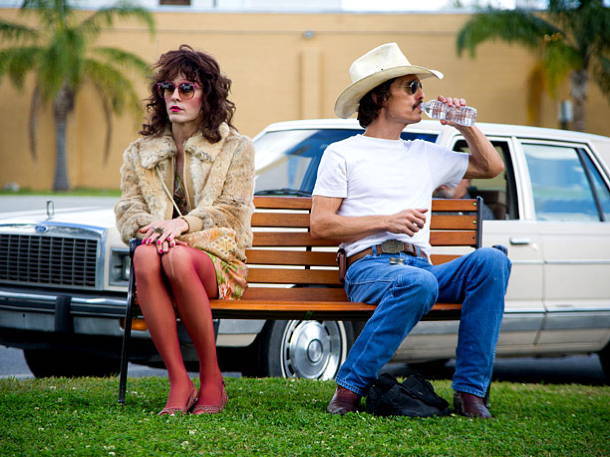
Perhaps the clearest impact of Hollywood’s cinematic lobbying can be seen in our national evolution regarding gay rights. The panic accompanying a diagnosis of AIDS was stemmed by the dignity depicted by Tom Hanks in his Oscar winning role in Philadelphia. In 2005, when Ang Lee won Best Director for Brokeback Mountain and Philip Seymour Hoffman won Best Actor as Capote courtrooms in California were hotly debating same sex marriage licenses. Felicity Huffman was also nominated for best actress for her role as a transgendered woman in Transamerica. A decade later, when Matthew McConaughey and Jared Leto both won acting Oscars for The Dallas Buyers Club, public and court opinions regarding same sex marriage and the transgender community had shifted. The lack of discussion surrounding this year’s nominees, Carol and The Danish Girl, suggests how far American attiudes have evolved.

My choice for the most important and enduring film of Oscars 2016 is Mad Max: Fury Road. Director George Miller turned a non-stop, action packed, post apocalyptic fight for fuel into a consciousness raising tale of environmental disaster and female empowerment. Fury Road juxtaposes Immortan Joe’s exploitation of natural resources with the Vuvalini and the Keeper of the Seeds who are defending biodiversity. Fury Road is a prophetic warning: protect the Green Places lest we become a Wasteland.
Predatory lenders, pederast priests, and dolphin killers have all been shamed on the big screen. Hollywood may not always start the drumbeat for peace and justice, but it eventually champions causes as moviegoers appear open to change. Making movies and transforming social mores both take time.
Previous Post

November 5, 2015
SPOTLIGHT: No More Silent Nights
Next Post
February 17, 2016 RISEN Dares to Dabble in Mystery
Browse Our Archives
Select a Category Books Movies Music Uncategorized Upcoming Videos
Select a Month February 2023 February 2022 March 2021 January 2020 December 2019 December 2018 September 2018 August 2018 October 2017 January 2017 December 2016 October 2016 March 2016 February 2016 November 2015 October 2015 February 2015 January 2015 December 2014 November 2014 October 2014 July 2014 April 2014 February 2014 January 2014 December 2013 November 2013 October 2013 August 2013 July 2013 June 2013 May 2013 April 2013 February 2013 January 2013 December 2012 November 2012 October 2012 September 2012 August 2012 July 2012 June 2012
TAKE THE
Religious Wisdom Quiz
What animals attacked and killed Job's servants, according to the messengers?
Select your answer to see how you score.
Ammonites and Edomites Philistines and Moabites Sabeans and Chaldeans Syrians and Egyptians
Related posts from Doc Hollywood
The Finest Films of 2022: Rise, Roar, and...

Ambiguity, Complexity, and the Finest Films of 2021
BEYOND NOSTALGIA: The Best Music Docs of 2021

Real to Reel: The Best Documentaries of 2020
TRENDING AT PATHEOS Religious Music & Entertainment

"Les Diabolique" and Transgression
Alongside something like Arrival, Vertigo, or Charade, Les Diaboliques is a...

"The Plague Dogs" and Mortality
So, flashback to the late 70s, early 80s. Walt Disney Studios is...

With the recent and highly successful release of Christopher Nolan’s epic film,...

"L'avventura" and Human Weakness
Today's piece is going to be a little different for a few...

I first want to apologize for not posting or writing anything. I'm...

I've engaged in the multi-year project of reading through the Church Fathers,...
view all Religious Music & Entertainment blogs
Ad-Free & Subscriber Log-In Subscription Support
- About Us
- 2026 Calendar
- Videos
- Podcasts
- Library of World Religions
- Faith In Media Tracker
- Advertise With Us
- Write for Us
- Privacy Policy
- Terms of Service
- Do Not Sell My Data
- Contact Us
- Radiant Digital
- Manage Newsletter Subscriptions
- Unsubscribe From Notifications
- Sitemap
Copyright 2008-2026, Patheos. All rights reserved.
Subscription Support Ad-Free & Subscriber Log-In
Follow Patheos