
BuddhistCatholicContemplativeEvangelicalGeneral ChristianHinduJewishLatter-day SaintMuslimNew VisionsProgressive Christian
Beliefs
- Buddhist
- Catholic
- Contemplative
- Evangelical
- General Christian
- Hindu
- Jewish
- Latter-day Saint
- More Voices
- Muslim
- New Visions
- Pagan
- Progressive Christian
Topics
- Religion News
- Food and Religion
- Sports and Religion
- Religious Art
- Religious Music and Entertainment
- Religious Events
- History and Religion
- Style and Religion
- Politics and Religion
- Women in Religion
- Recreation Outdoors and Religion
- Business Finance and Religion
- Careers Workplace and Religion
- Education and Religion
- Family Parenting and Religion
- Health Fitness and Religion
- Home and Religion
- Relationships and Religion
- Technology and Religion
- Travel and Religion
Columnists
- Buddhist Columnists
- Business Finance and Religion Columnists
- Careers Workplace and Religion Columnists
- Catholic Columnists
- Contemplative Columnists
- Education and Religion Columnists
- Evangelists Columnists
- Family Parenting and Religion Columnists
- General Christian Columnists
- Health Fitness and Religion Columnists
- Hindu Columnists
- History and Religion Columnists
- Home and Religion Columnists
- Jewish Columnists
- More Voices Columnists
- Latter Day Columnists
- Muslim Columnists
- New Visions Columnists
- Nonreligious Columnists
- Pagan Columnists
- Politics and Religion Columnists
- Progressive Columnists
- Recreation Outdoors and Religion Columnists
- Relationships and Religion Columnists
- Religion News Columnists
- Religious Art Columnists
- Religious Events Columnists
- Religious Music and Entertainment Columnists
- Sports and Religion Columnists
- Style and Religion Columnists
- Technology and Religion Columnists
- Travel and Religion Columnists
- Women in Religion Columnists
Resource Library
- 2026 Calendar
- Library of World Religions
- The 100 Most Holy Places on Earth
- Patheos Answers
- Podcasts
- Videos
- Faith Leaders Database
- Anglican Episcopalian
- Bahai
- Baptist
- Buddhism
- Christianity
- Confucianism
- Eastern Orthodoxy
- Hinduism
- Holiness and Pentecostal
- ISKCON
- Islam
- Judaism
- Lutheran
- Methodist
- The Church of Jesus Christ of Latter-day Saints
- New Age
- Paganism
- Presbytarian and Reformed
- Protestantism
- Religion Behind the Scenes
- Roman Catholic
- Scientology
- Shia Islam
- Sikhism
- Sufism
- Sunni Islam
- Taoism
- Zen
- See all religions
Research Tools
 Ad-Free & Subscriber Log-In Subscription Support
Ad-Free & Subscriber Log-In Subscription Support
Follow Patheos 

- Trending:
- Forgiveness
- |
- Marriage
- |
- Consciousness
- |
- Death Penalty
- |
- Election
- |
- Halloween
 Doc Hollywood
- Home
- Religious Music & Entertainment
- COMMON BRINGS GLORY TO THE GRAMMYS (AND THE OSCARS): An Interview
COMMON BRINGS GLORY TO THE GRAMMYS (AND THE OSCARS): An Interview
Last updated on: February 10, 2015 at 8:26 pm by Craig Detweiler
COMMON BRINGS GLORY TO THE GRAMMYS (AND THE OSCARS): An Interview 2015-02-10T20:26:13-07:00 Craig Detweiler
Patheos Explore the world's faith through different perspectives on religion and spirituality! Patheos has the views of the prevalent religions and spiritualities of the world.
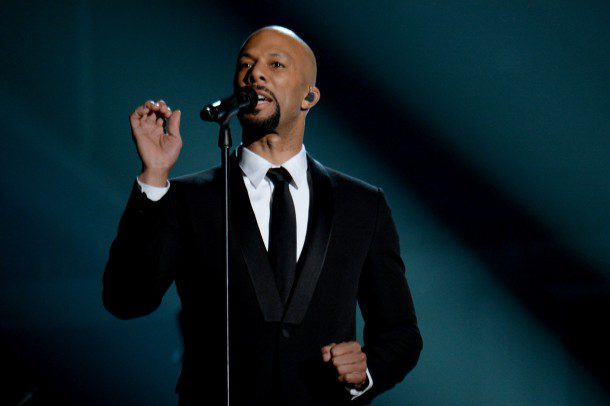
What 2015 Grammy moment moved you? Kanye West’s cut in on Beck’s acceptance speech for “Album of the Year” garnered most of the headlines. How sad to a stunt overshadow Annie Lennox’s rousing rendition of “I Put a Spell On You” with Hozier. Pharrell reimagined his sunny single, “Happy,” into an intriguing protest echoing the “Hands up/Don’t shoot” posture that accompanied events in Ferguson, Missouri. Prince slipped in the best one-liner of the night, “Albums still matter. Just like books and black lives.” Beyonce honored the memory of Michael Brown and Eric Garner in her angelic rendition of “Take My Hand, Precious, Lord.” The African American male choir accompanying her underlined the loss.
The most inspiring Grammy performance didn’t even get recorded on my DVR. Common and John Legend closed the show after the allotted time slot with a rousing rendition of their Oscar nominated theme from Selma, “Glory.” (You can see their rousing performance here.) Common’s lyrics connects the dots between Rosa Parks and Ferguson in compelling ways. I had the opportunity to interview Common and ask him about Selma and “Glory.”
How was your experience working on the film Selma?
“This for me has been the most inspiring and fulfilling film that I ever got to be a part of. In fact, this is definitely one of my most fulfilling experiences in life. As a creator and actor this is something that I’m marking down and saying, “Thank You.”
How did you prepare for your role as pastor James Bevel?
“I read about James Bevel—where he came from and who he was and was blessed to talk to some people who were part of the SCLC. They all talked about James Bevel as this brilliant, crazy dude. This radical who wore overalls because he was a man of the people. I really connected with him and just the whole plight of standing up for what you believe in and being willing to die for what you believe in.
Ambassador Andrew Young told us that one of their key things was, “How they What are you willing to die for? Live for that.” That’s how courageous those men and women were. Not only am I using that in this scene to express this character, this is going to help me in life. I can fall back on certain things I need to value: purpose in life. These were just everyday people who lived with purpose—from teachers to sanitation workers—willing to stand up for their community.”
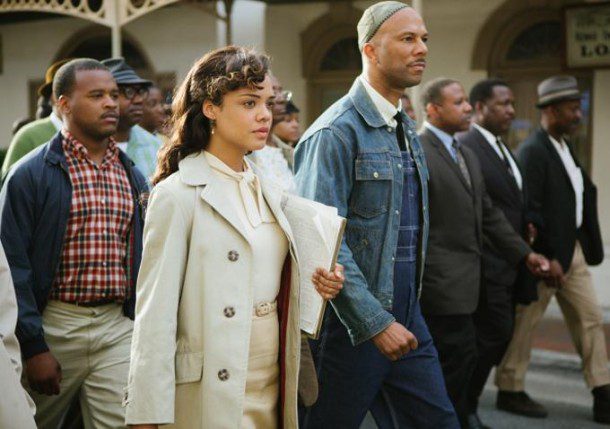
What did you learn from making the movie?
“I’m always was asked what type of character would I love to play, and I always said a pastor. I wanted to play a more conflicted pastor. James Bevel wasn’t perfect. Dr. Martin Luther King and Ralph Abernathy weren’t perfect. That’s what I loved about getting to experience this film. You got to see the human beings. When you see a human being that becomes as great as Dr. Martin Luther King, you know you can do it, too.”
“The spirituality in my music, the experiences that I went through as a person – they, all that prepared me to be able to play a pastor, because, you know, my foundation is God and my spirituality. But I also know that I’m human. You know, I make flesh mistakes just like the best of us. I mean that’s really what prepared me more than anything.
My heart is in helping out the community. I am a black man who is proud to be black and I want to help the black community, but I love all mankind. That’s basically who Dr. King and the SCLC were.”
How did the opportunity to write the Oscar nominated closing song, “Glory,” come about?
I got the role, we filmed the movie, I had the experience, and got to know what this whole story of Selma was about. Director Ava DuVernay and I were talking and she said, “I’m open to you doing a song.” I had this moment when I was sitting at home. I thought about John Legend. He captures a certain spirituality and soul that you want to hear in that voice. Ava picked people that really cared about this project. To ask John Legend, I knew he would really care about this project. He does his own work in the community with schools and education. So I just gave him a call. We talked about the film and I gave him three titles, and “Glory” was the last one of the titles I gave him.
John was in London. He had one day off. And he sent this recording of him on the piano and it just sounded like he was in church. It made me know that this song had the intimacy as well as the majesty. So I thought about what can I do to motivate people to want a better world, that showed the heart and spirit of what Dr. King and all the people of Selma really represented and also acknowledged some of these things still going on now. I wanted a song that empowered people to say we fought to get here. So let’s keep going, we can win this fight. The majestic element came in even more when we got the orchestra with Patrick Warren organizing the strings.
I played it for my mother and she said, “Send me that song.” She said it brought a tears to her eyes so I knew it was in the right place. When I was writing it I was with my daughter, who is seventeen. So I thought I was hitting all levels. This film (and song) can effect the youth to the elder and everyone in between. Ultimately, I am so proud to be part of art that can really inspire people to do better and that’s what I believe Selma is about.”
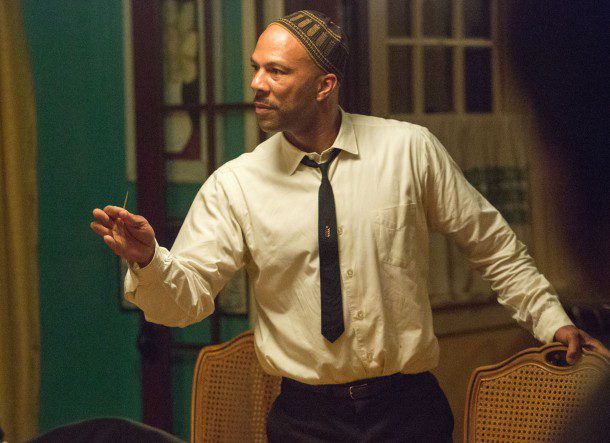
What do you hope audiences take away from the film and the song?
“I hope that young people can say, “You know what? I can do something to change the world ‘cause I looked at Dr. King and saw him worried about how to get to the next step, I saw him speaking to the multitudes and inspiring them, I’ve seen the strengths and some of the challenges for Dr. King, and all these people at Selma, and I have some of those same strengths, and I have some of those same challenges, and I can actually do something – do my part to improve the world. ‘Cause, for me, when I see people of my likeness or somebody I feel like that I’m connected to doing something great, I’m like ‘Ah, I can do it…I can do it.’ It gives me some hope and vision to – so I’m hoping that young people can see that and say ‘I can do something to improve the world’ and appreciate and know that there’s been people before them that created this environment so that they can go higher. Yeah, that’s what I want.”
Previous Post

January 7, 2015
SELMA: The Fierce Urgency of Now
Next Post
February 16, 2015 Oscars 2015: Boyhood, Birdman or Budapest For Best Picture?
Browse Our Archives
Select a Category Books Movies Music Uncategorized Upcoming Videos
Select a Month February 2023 February 2022 March 2021 January 2020 December 2019 December 2018 September 2018 August 2018 October 2017 January 2017 December 2016 October 2016 March 2016 February 2016 November 2015 October 2015 February 2015 January 2015 December 2014 November 2014 October 2014 July 2014 April 2014 February 2014 January 2014 December 2013 November 2013 October 2013 August 2013 July 2013 June 2013 May 2013 April 2013 February 2013 January 2013 December 2012 November 2012 October 2012 September 2012 August 2012 July 2012 June 2012
TAKE THE
Religious Wisdom Quiz
How many children did Job lose in the disasters at the beginning of the book?
Select your answer to see how you score.
Twelve Ten Seven Five
Related posts from Doc Hollywood
The Finest Films of 2022: Rise, Roar, and...

Ambiguity, Complexity, and the Finest Films of 2021
BEYOND NOSTALGIA: The Best Music Docs of 2021

Real to Reel: The Best Documentaries of 2020
TRENDING AT PATHEOS Religious Music & Entertainment

"Les Diabolique" and Transgression
Alongside something like Arrival, Vertigo, or Charade, Les Diaboliques is a...

"The Plague Dogs" and Mortality
So, flashback to the late 70s, early 80s. Walt Disney Studios is...

With the recent and highly successful release of Christopher Nolan’s epic film,...

"L'avventura" and Human Weakness
Today's piece is going to be a little different for a few...

I first want to apologize for not posting or writing anything. I'm...

I've engaged in the multi-year project of reading through the Church Fathers,...
view all Religious Music & Entertainment blogs
Ad-Free & Subscriber Log-In Subscription Support
- About Us
- 2026 Calendar
- Videos
- Podcasts
- Library of World Religions
- Faith In Media Tracker
- Advertise With Us
- Write for Us
- Privacy Policy
- Terms of Service
- Do Not Sell My Data
- Contact Us
- Radiant Digital
- Manage Newsletter Subscriptions
- Unsubscribe From Notifications
- Sitemap
Copyright 2008-2026, Patheos. All rights reserved.
Subscription Support Ad-Free & Subscriber Log-In
Follow Patheos