
BuddhistCatholicContemplativeEvangelicalGeneral ChristianHinduJewishLatter-day SaintMuslimNew VisionsProgressive Christian
Beliefs
- Buddhist
- Catholic
- Contemplative
- Evangelical
- General Christian
- Hindu
- Jewish
- Latter-day Saint
- More Voices
- Muslim
- New Visions
- Pagan
- Progressive Christian
Topics
- Religion News
- Food and Religion
- Sports and Religion
- Religious Art
- Religious Music and Entertainment
- Religious Events
- History and Religion
- Style and Religion
- Politics and Religion
- Women in Religion
- Recreation Outdoors and Religion
- Business Finance and Religion
- Careers Workplace and Religion
- Education and Religion
- Family Parenting and Religion
- Health Fitness and Religion
- Home and Religion
- Relationships and Religion
- Technology and Religion
- Travel and Religion
Columnists
- Buddhist Columnists
- Business Finance and Religion Columnists
- Careers Workplace and Religion Columnists
- Catholic Columnists
- Contemplative Columnists
- Education and Religion Columnists
- Evangelists Columnists
- Family Parenting and Religion Columnists
- General Christian Columnists
- Health Fitness and Religion Columnists
- Hindu Columnists
- History and Religion Columnists
- Home and Religion Columnists
- Jewish Columnists
- More Voices Columnists
- Latter Day Columnists
- Muslim Columnists
- New Visions Columnists
- Nonreligious Columnists
- Pagan Columnists
- Politics and Religion Columnists
- Progressive Columnists
- Recreation Outdoors and Religion Columnists
- Relationships and Religion Columnists
- Religion News Columnists
- Religious Art Columnists
- Religious Events Columnists
- Religious Music and Entertainment Columnists
- Sports and Religion Columnists
- Style and Religion Columnists
- Technology and Religion Columnists
- Travel and Religion Columnists
- Women in Religion Columnists
Resource Library
- 2026 Calendar
- Library of World Religions
- The 100 Most Holy Places on Earth
- Patheos Answers
- Podcasts
- Videos
- Faith Leaders Database
- Anglican Episcopalian
- Bahai
- Baptist
- Buddhism
- Christianity
- Confucianism
- Eastern Orthodoxy
- Hinduism
- Holiness and Pentecostal
- ISKCON
- Islam
- Judaism
- Lutheran
- Methodist
- The Church of Jesus Christ of Latter-day Saints
- New Age
- Paganism
- Presbytarian and Reformed
- Protestantism
- Religion Behind the Scenes
- Roman Catholic
- Scientology
- Shia Islam
- Sikhism
- Sufism
- Sunni Islam
- Taoism
- Zen
- See all religions
Research Tools
 Ad-Free & Subscriber Log-In Subscription Support
Ad-Free & Subscriber Log-In Subscription Support
Follow Patheos 

- Trending:
- Forgiveness
- |
- Marriage
- |
- Consciousness
- |
- Death Penalty
- |
- Election
- |
- Halloween
 Doc Hollywood
- Home
- Religious Music & Entertainment
- Jesus in the Movies: A Complicated History
Jesus in the Movies: A Complicated History
Last updated on: April 14, 2014 at 2:31 am by Craig Detweiler
Jesus in the Movies: A Complicated History 2014-04-14T02:31:34-06:00 Craig Detweiler
Patheos Explore the world's faith through different perspectives on religion and spirituality! Patheos has the views of the prevalent religions and spiritualities of the world.
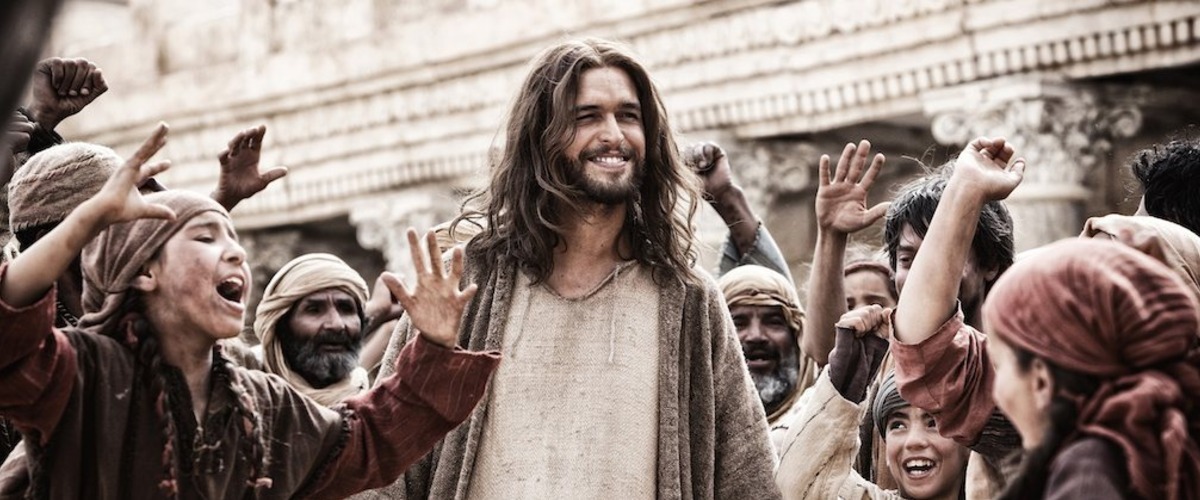
After Son of God, Noah, and God’s Not Dead demonstrated strong box office appeal, the media has dubbed 2014 as “The Year of the Biblical Epic.” Stories in the Los Angeles Times, Fox News, NPR, The Daily Beast, U.S. News and World Report and The Telegraph have chronicled this ‘flood’ of faith fueled films. Another religiously themed movie opens this week: Randall Wallace’s stirring adaptation of the bestseller, Heaven is For Real. Later this year, Christian Bale will take on the mantle of Moses in Ridley Scott’s retelling of Exodus. As I recently said on PBS’s Religion & Ethics’ News Weekly, when the movies “go big,” they often go biblical.
As we head into Holy Week, I thought it appropriate to survey the checkered history of the biblical epic, especially the oft told story of the life of Christ. Forget James Bond or Spiderman: the Son of Man has been the focus of far more cinematic adaptations and remakes (with very mixed results!). From Pathe’s depiction of The Life and Passion of Jesus Christ (1902) to Mel Gibson’s The Passion of the Christ (2004), filmmakers’ attempts to encapsulate the life of Christ have inspired Christians while also raising concerns about anti-Semitism. Too many depictions of the Last Supper have failed to remind viewers that Jesus was first and foremost, a Jew, observing Passover. Artistic choices and interpretations often reflect the spirit of the age. Perhaps by looking across cinematic history, we can transcend some of our own cultural blinders and come to a deeper understanding of what Jesus meant and means.
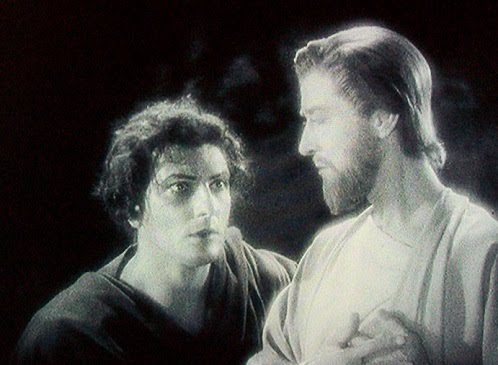
The grandest silent “Jesus film” is Cecil B. DeMille’s King of Kings (1927). H.B. Warner portrays Jesus with strength and confidence, but DeMille takes liberties with the biblical narrative, creating a love triangle between Mary, Judas and Jesus. He blends sex and spirituality, as a scantily clad Mary Magdalene dances across the screen. The eerie special effects of King of Kings have held up over time as when seven deadly sins exit Mary’s body.

Jesus became an almost otherworldly figure in the fifties, depicted with such reverence that only the back of his head could be revealed in The Robe (1953) and Ben-Hur (1959). These widescreen epics attracted massive box office, reaching their apotheosis in King of Kings (1961) and The Greatest Story Ever Told (1966). The sincerity in such movies can be stifling as Hollywood stars make distracting cameos. John Wayne’s appearance as the Roman soldier stationed at the foot of the Christ nearly killed the biblical epic.
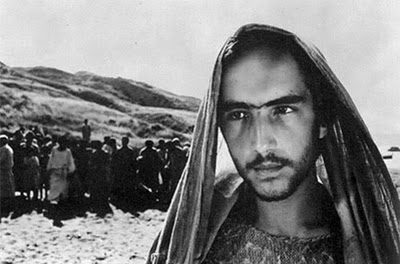
As theology wrestled with “The death of God” movement, so filmmakers began their quest for the historical Jesus. Pier Paulo Pasolini’s The Gospel According to St. Matthew (1966) is widely regarded as the most authentic and moving life of Christ on film. By casting non-professional actors from a remote Italian village, Pasolini brought grit to the gospels often lacking in more extravagant features. In St. Matthew, Jesus is a man of the people, serving the poor, challenging the authorities. As a gay man with Marxist leanings, Pasolini highlighted Jesus’ solidarity with those outside the corridors of power. How does one seemingly beyond church borders create such a compelling portrait of Christ? Perhaps artistic distance creates a fresh perspective.

The foment arising in the 1960s resulted in vibrant re-imaginations of the life of Christ. From Broadway musicals came Jesus Christ Superstar (1973) and Godspell (1973). Both use rock music to place Jesus’ loyalties with hippies and flower children. While Jesus Christ Superstar retains a Middle Eastern setting, Godspell brings the Bible to New York City. Jesus becomes a holy fool, a clown, sporting a Superman logo and suspenders. These groovy time capsules made Christianity relevant in a turbulent era.
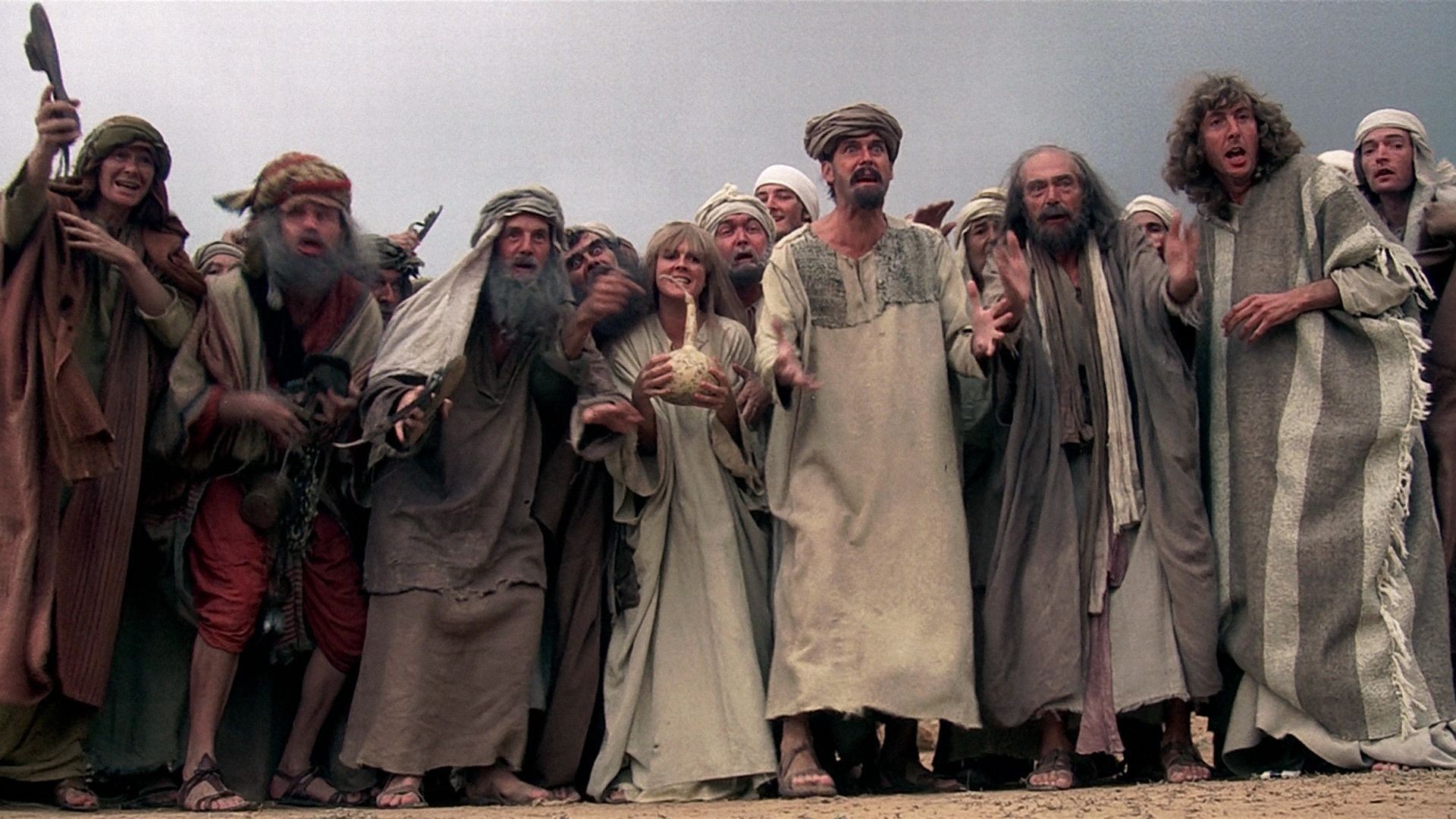
The ‘demythologizing’ of the Bible occurring in academic circles led to several cinematic controversies. Christians protested the release of Monty Python’s Life of Brian (1979) and Martin Scorsese’s The Last Temptation of Christ (1988). Both films generated more headlines than ticket sales. As a comedic satire, The Life of Brian demonstrated how cults are born out of disinformation. The film respected Jesus but mocked how crowds clamor for miracles and form faction around thin premises. Many Christians failed to find the humor in the wacky chorus that accompanied the crucifixion: “Always Look on the Bright Side of Life.”

The charges of blasphemy reached a fever pitch with The Last Temptation of Christ. While director Martin Scorsese described the film as an act of devotion, outspoken Christian leaders denounced it as an abomination. Audiences failed to distinguish between the Gospel accounts of Jesus and the film’s source material: a novel by Nikos Kazantzakis. Scorsese depicts Jesus’ temptation to eschew the cross for a life of domestic bliss as a dream. The courageous faith affirmed at the conclusion of the film was lost amidst the double-minded portrait of Jesus that preceded it.

Jesus of Montreal (1989) offers a brilliant commentary on the domestication of Jesus. It places the passion narrative within a Canadian theatre troupe. A dwindling church eager to attract a crowd at Easter commissions a desperate actor to update the Passion play. The church authorities in Montreal are too busy putting on a show to notice the shocking parallels to the crucifixion unfolding in their midst.
The bloody Jesus depicted in Mel Gibson’s The Passion of the Christ (2004) generated so much press. Gibson responded to the charges of anti-Semitism with defiance, creating huge anticipation for his privately financed act of devotion. With a script in Aramaic, The Passion did not court mass audiences. Yet, this small movie, shot in the same village as The Gospel According to St. Matthew, became an international sensation. Love it or hate it, the public rushed to see it. Mel Gibson made the crucifixion front-page news. Only in years to come, after the passion around the movie subsides, will we be able to judge whether it is a parade of horrors or a work of profound beauty (or a bit of both!).
Few filmmakers dared to combine Christ and cinema since then. Two films released in 2006 cast Jesus as a black man. The Colors of the Cross connected Jesus’ persecution to the struggles of people of color. Son of Man places Jesus in a contemporary South African context. Mark Burnett and Roma Downey are to be commended for daring to bring Jesus back to the big screen, especially under the bold title, Son of God. Almost every attempt to adapt the life of Christ to the big screen has faced some resistance. Yet, we can be confident that the radical and sacrificial life of Christ will continue to inspire the next generation of storytellers (and audiences!).
So which Jesus film do you find most compelling?
Previous Post

February 20, 2014
The Haunting Reality Beyond Captain Phillips
Next Post

July 31, 2014 Calvary and the Cost of Following God
Browse Our Archives
Select a Category Books Movies Music Uncategorized Upcoming Videos
Select a Month February 2023 February 2022 March 2021 January 2020 December 2019 December 2018 September 2018 August 2018 October 2017 January 2017 December 2016 October 2016 March 2016 February 2016 November 2015 October 2015 February 2015 January 2015 December 2014 November 2014 October 2014 July 2014 April 2014 February 2014 January 2014 December 2013 November 2013 October 2013 August 2013 July 2013 June 2013 May 2013 April 2013 February 2013 January 2013 December 2012 November 2012 October 2012 September 2012 August 2012 July 2012 June 2012
TAKE THE
Religious Wisdom Quiz
What book comes after Proverbs?
Select your answer to see how you score.
Isaiah Ecclesiastes Psalms Daniel
Related posts from Doc Hollywood
The Finest Films of 2022: Rise, Roar, and...

Ambiguity, Complexity, and the Finest Films of 2021
BEYOND NOSTALGIA: The Best Music Docs of 2021

Real to Reel: The Best Documentaries of 2020
TRENDING AT PATHEOS Religious Music & Entertainment

"Les Diabolique" and Transgression
Alongside something like Arrival, Vertigo, or Charade, Les Diaboliques is a...

"The Plague Dogs" and Mortality
So, flashback to the late 70s, early 80s. Walt Disney Studios is...

With the recent and highly successful release of Christopher Nolan’s epic film,...

"L'avventura" and Human Weakness
Today's piece is going to be a little different for a few...

I first want to apologize for not posting or writing anything. I'm...

I've engaged in the multi-year project of reading through the Church Fathers,...
view all Religious Music & Entertainment blogs
Ad-Free & Subscriber Log-In Subscription Support
- About Us
- 2026 Calendar
- Videos
- Podcasts
- Library of World Religions
- Faith In Media Tracker
- Advertise With Us
- Write for Us
- Privacy Policy
- Terms of Service
- Do Not Sell My Data
- Contact Us
- Radiant Digital
- Manage Newsletter Subscriptions
- Unsubscribe From Notifications
- Sitemap
Copyright 2008-2026, Patheos. All rights reserved.
Subscription Support Ad-Free & Subscriber Log-In
Follow Patheos