
BuddhistCatholicContemplativeEvangelicalGeneral ChristianHinduJewishLatter-day SaintMuslimNew VisionsProgressive Christian
Beliefs
- Buddhist
- Catholic
- Contemplative
- Evangelical
- General Christian
- Hindu
- Jewish
- Latter-day Saint
- More Voices
- Muslim
- New Visions
- Pagan
- Progressive Christian
Topics
- Religion News
- Food and Religion
- Sports and Religion
- Religious Art
- Religious Music and Entertainment
- Religious Events
- History and Religion
- Style and Religion
- Politics and Religion
- Women in Religion
- Recreation Outdoors and Religion
- Business Finance and Religion
- Careers Workplace and Religion
- Education and Religion
- Family Parenting and Religion
- Health Fitness and Religion
- Home and Religion
- Relationships and Religion
- Technology and Religion
- Travel and Religion
Columnists
- Buddhist Columnists
- Business Finance and Religion Columnists
- Careers Workplace and Religion Columnists
- Catholic Columnists
- Contemplative Columnists
- Education and Religion Columnists
- Evangelists Columnists
- Family Parenting and Religion Columnists
- General Christian Columnists
- Health Fitness and Religion Columnists
- Hindu Columnists
- History and Religion Columnists
- Home and Religion Columnists
- Jewish Columnists
- More Voices Columnists
- Latter Day Columnists
- Muslim Columnists
- New Visions Columnists
- Nonreligious Columnists
- Pagan Columnists
- Politics and Religion Columnists
- Progressive Columnists
- Recreation Outdoors and Religion Columnists
- Relationships and Religion Columnists
- Religion News Columnists
- Religious Art Columnists
- Religious Events Columnists
- Religious Music and Entertainment Columnists
- Sports and Religion Columnists
- Style and Religion Columnists
- Technology and Religion Columnists
- Travel and Religion Columnists
- Women in Religion Columnists
Resource Library
- 2026 Calendar
- Library of World Religions
- The 100 Most Holy Places on Earth
- Patheos Answers
- Podcasts
- Videos
- Faith Leaders Database
- Anglican Episcopalian
- Bahai
- Baptist
- Buddhism
- Christianity
- Confucianism
- Eastern Orthodoxy
- Hinduism
- Holiness and Pentecostal
- ISKCON
- Islam
- Judaism
- Lutheran
- Methodist
- The Church of Jesus Christ of Latter-day Saints
- New Age
- Paganism
- Presbytarian and Reformed
- Protestantism
- Religion Behind the Scenes
- Roman Catholic
- Scientology
- Shia Islam
- Sikhism
- Sufism
- Sunni Islam
- Taoism
- Zen
- See all religions
Research Tools
 Ad-Free & Subscriber Log-In Subscription Support
Ad-Free & Subscriber Log-In Subscription Support
Follow Patheos 

- Trending:
- Forgiveness
- |
- Marriage
- |
- Consciousness
- |
- Death Penalty
- |
- Election
- |
- Halloween
 Doc Hollywood
- Home
- Religious Music & Entertainment
- MANDELA: LONG WALK TO FREEDOM as CINEMATIC EULOGY
MANDELA: LONG WALK TO FREEDOM as CINEMATIC EULOGY
Last updated on: December 10, 2013 at 10:59 am by Craig Detweiler
MANDELA: LONG WALK TO FREEDOM as CINEMATIC EULOGY 2013-12-10T10:59:09-07:00 Craig Detweiler
Patheos Explore the world's faith through different perspectives on religion and spirituality! Patheos has the views of the prevalent religions and spiritualities of the world.
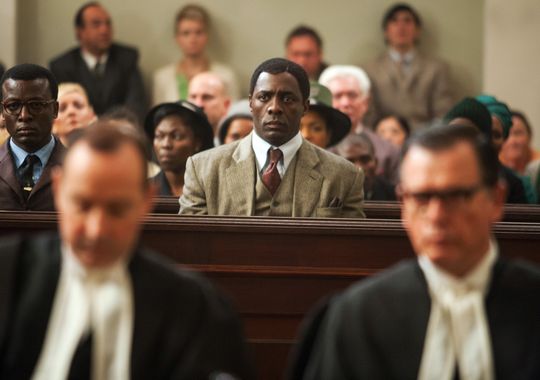
I hosted a screening of Mandela: Long Walk to Freedom just two nights before Nelson Mandela died. The legacy of Mandiba was already in the forefront of my mind before the news of his passing. It will be tough to ever separate the movie (and its Christmas release) from the timing of his death. Audience interest in Idris Elba as Mandela will widen following his funeral in South Africa. The resulting box office and Oscar boost for the Weinstein Company will be considerable. Mandela: Long Walk to Freedom arrives at a teachable moment, serving as a timely cinematic eulogy for an extraordinary life. Mandela’s courage is placed alongside his indiscretions, celebrating his humanity rather than just hagiography.
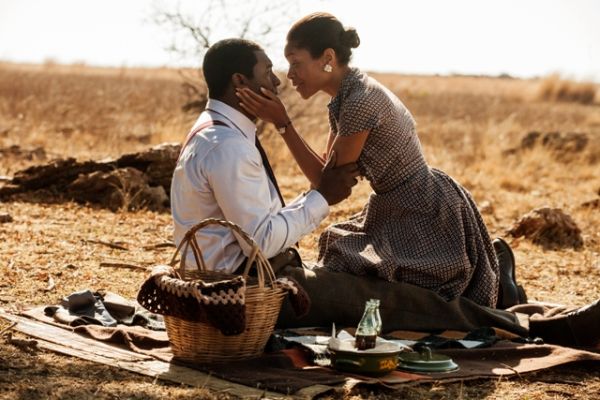
The danger in every biopic aspiring to definitive status is that it will skim the surface, hitting only the highlights. While the facts may be rendered factually and chronologically, the picture may fail to convey the inner life behind the headlines. Mandela: Long Walk to Freedom does race through the early years of a remote village upbringing through his rapid rise as a young lawyer in Johannesburg. We see events without necessarily understanding their importance. Only as the action slows down, with Mandela in prison, do we start to appreciate the depth of his character. As he changes, our engagement rises. We see how essential the struggle becomes. As Mandela grasps his purpose, we grow in our understanding as well.
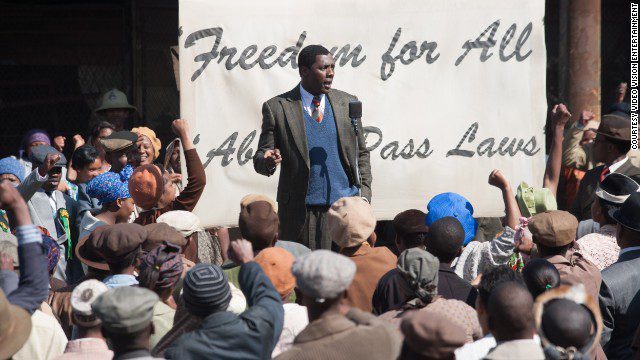
The filmmakers’ attention to detail, recreating the apartheid era in South Africa, is uniformly excellent. While Idris Elba may not resemble Mandela, he captures the intensity that fuels Madiba’s resistance. It doesn’t take many Sharpeville massacres to understand why Mandela and the African National Congress shifted from non-violence to bombmaking. The bigger mystery is how Mandela managed to forgive those who locked him up and decimated his family and community.
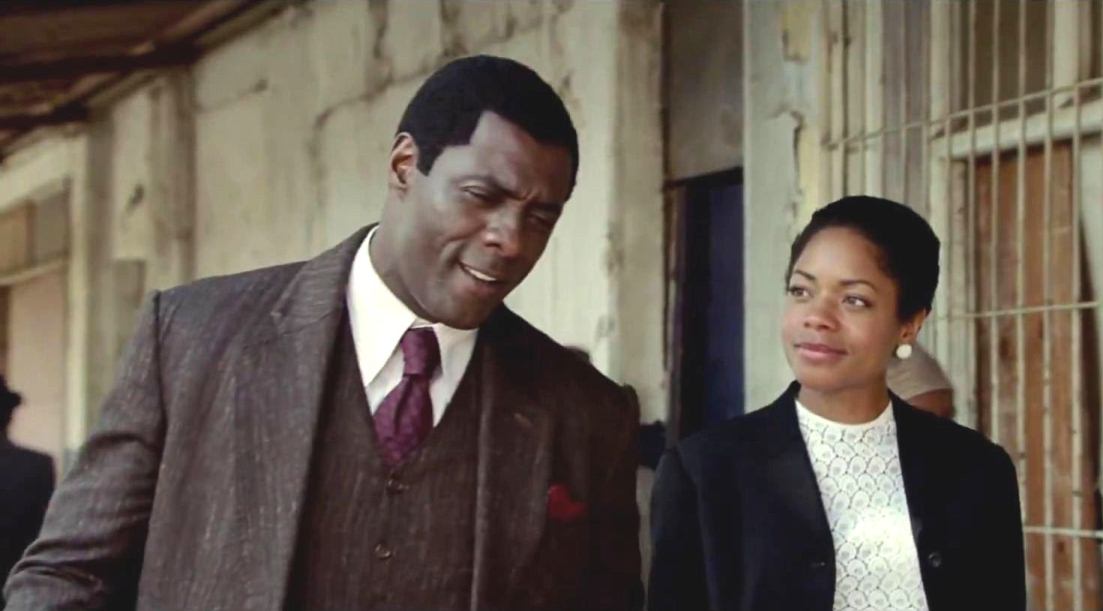
Mandela the movie portrays Mandela the man as fallible and powerful, a firebrand who revels in negotiating his way out of prison and towards equality in South Africa. It is remarkable to consider the historic shifts Mandela witnessed (and initiated in his lifetime). We see how he moved from young lawyer to ANC activist to taking up arms. His womanizing costs him a first marriage. The bombings send him to prison. We feel the high personal cost of imprisonment on Robben Island to both Mandela and his second wife, Winnie. Remarkably, his authority grows while he is incarcerated as events beyond the prison walls bring South Africa to a crisis point.
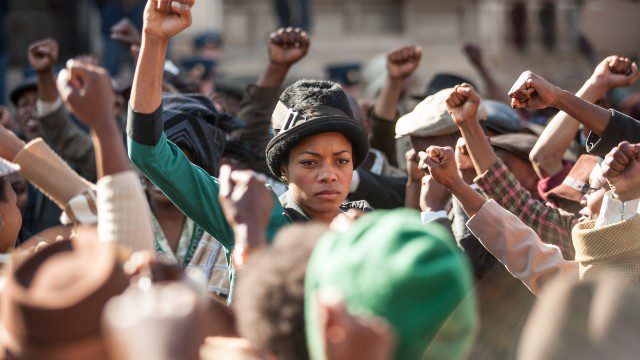
While we expect a masterful performance from Idris Elba as Nelson, it is the steely resolve of Naomie Harris as Winnie that makes the story work. The rage and bitterness that grows in Winnie’s heart during her husband’s imprisonment becomes a strong counterpoint to his comparative grace. Their monitored conversations in prison carry such weight. As she raises their daughters alone, we understand why she would push back against every police search and interrogation. Her time in solitary confinement only deepens her commitment to armed resistance. The radicalization of Winnie makes sense.
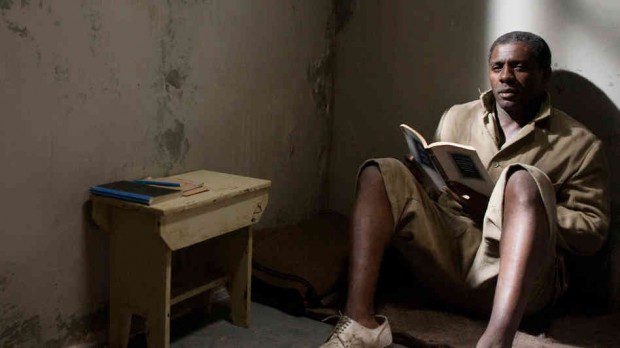
What is far more surprising and underexplored is Nelson Mandela’s ability to forgive. How does he summon the patience to negotiate with those who have jailed him? How can he approach secret meetings with Dutch South Africans with such a calm demeanor? Scenes of Mandela dressed in a new suit form such a contrast with the hard labor that he faced in prison. His cagey negotiating style earns some of the only laughter in an appropriately serious film. Perhaps the primary weaknesses in Mandela the movie is that we are never privy to the engine that drives his strength to forgive. While his comrades heighten their commitment to resistance, Mandela sees a compromising way forward. What eyes of faith informed such a transformation? We are left to wonder. The film never connects Mandela’s Christian roots to his ethics or practices.
Perhaps another film remains to be made about the faith and wisdom of Nelson Mandela. Long Walk to Freedom is a moving introduction. It reminds us how much we may have forgotten or never heard about his life, about South African history, about the key crossroads in their overlapping stories. It should spur us towards films that go into greater detail about his transition from prison to President, like the 1997 portrayal of Mandela and de Klerk by Sidney Poitier and Michael Caine. Those intrigued by Nelson’s relationship to his prison guard will find much more in Goodbye Bafana starring Dennis Haysbert and Joseph Fiennes. So much archival footage was gathered for the official, Mandela approved, 1996 documentary. Historians will have ample material to place in context.
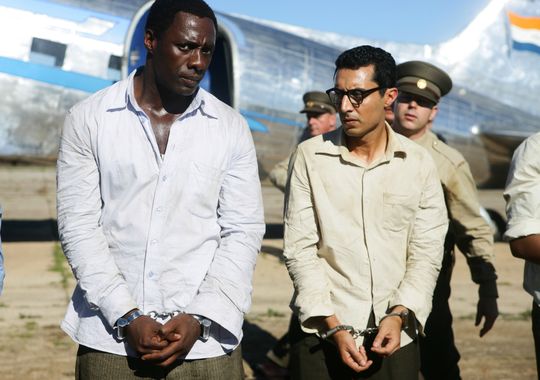
In the meantime, I came away from Mandela the movie marveling at how much change we all may experience in our lifetimes. It may not be as radical as prisoner to president, but the overturning of apartheid will look rather swift in the annals of history. A racist policy of separation was resisted from within and without South Africa. May those who seek to separate us along racial, cultural, or economic lines continue to encounter resistance. Thanks to the powerful words and witness of Nelson Mandela, we know that radical change remains possible. Truth and reconciliation are an elusive goal ever worth pursuing.
Previous Post

November 25, 2013
Abundance and Open Source or Why I Wrote iGODS
Next Post
December 17, 2013 MUSIC 2013: DANCING TO THE APOCALYPSE
Browse Our Archives
Select a Category Books Movies Music Uncategorized Upcoming Videos
Select a Month February 2023 February 2022 March 2021 January 2020 December 2019 December 2018 September 2018 August 2018 October 2017 January 2017 December 2016 October 2016 March 2016 February 2016 November 2015 October 2015 February 2015 January 2015 December 2014 November 2014 October 2014 July 2014 April 2014 February 2014 January 2014 December 2013 November 2013 October 2013 August 2013 July 2013 June 2013 May 2013 April 2013 February 2013 January 2013 December 2012 November 2012 October 2012 September 2012 August 2012 July 2012 June 2012
TAKE THE
Religious Wisdom Quiz
Who said, "Faith without works is dead"?
Select your answer to see how you score.
James John Paul Peter
Related posts from Doc Hollywood
The Finest Films of 2022: Rise, Roar, and...

Ambiguity, Complexity, and the Finest Films of 2021
BEYOND NOSTALGIA: The Best Music Docs of 2021

Real to Reel: The Best Documentaries of 2020
TRENDING AT PATHEOS Religious Music & Entertainment

"Les Diabolique" and Transgression
Alongside something like Arrival, Vertigo, or Charade, Les Diaboliques is a...

"The Plague Dogs" and Mortality
So, flashback to the late 70s, early 80s. Walt Disney Studios is...

With the recent and highly successful release of Christopher Nolan’s epic film,...

"L'avventura" and Human Weakness
Today's piece is going to be a little different for a few...

I first want to apologize for not posting or writing anything. I'm...

I've engaged in the multi-year project of reading through the Church Fathers,...
view all Religious Music & Entertainment blogs
Ad-Free & Subscriber Log-In Subscription Support
- About Us
- 2026 Calendar
- Videos
- Podcasts
- Library of World Religions
- Faith In Media Tracker
- Advertise With Us
- Write for Us
- Privacy Policy
- Terms of Service
- Do Not Sell My Data
- Contact Us
- Radiant Digital
- Manage Newsletter Subscriptions
- Unsubscribe From Notifications
- Sitemap
Copyright 2008-2026, Patheos. All rights reserved.
Subscription Support Ad-Free & Subscriber Log-In
Follow Patheos