
BuddhistCatholicContemplativeEvangelicalGeneral ChristianHinduJewishLatter-day SaintMuslimNew VisionsProgressive Christian
Beliefs
- Buddhist
- Catholic
- Contemplative
- Evangelical
- General Christian
- Hindu
- Jewish
- Latter-day Saint
- More Voices
- Muslim
- New Visions
- Pagan
- Progressive Christian
Topics
- Religion News
- Food and Religion
- Sports and Religion
- Religious Art
- Religious Music and Entertainment
- Religious Events
- History and Religion
- Style and Religion
- Politics and Religion
- Women in Religion
- Recreation Outdoors and Religion
- Business Finance and Religion
- Careers Workplace and Religion
- Education and Religion
- Family Parenting and Religion
- Health Fitness and Religion
- Home and Religion
- Relationships and Religion
- Technology and Religion
- Travel and Religion
Columnists
- Buddhist Columnists
- Business Finance and Religion Columnists
- Careers Workplace and Religion Columnists
- Catholic Columnists
- Contemplative Columnists
- Education and Religion Columnists
- Evangelists Columnists
- Family Parenting and Religion Columnists
- General Christian Columnists
- Health Fitness and Religion Columnists
- Hindu Columnists
- History and Religion Columnists
- Home and Religion Columnists
- Jewish Columnists
- More Voices Columnists
- Latter Day Columnists
- Muslim Columnists
- New Visions Columnists
- Nonreligious Columnists
- Pagan Columnists
- Politics and Religion Columnists
- Progressive Columnists
- Recreation Outdoors and Religion Columnists
- Relationships and Religion Columnists
- Religion News Columnists
- Religious Art Columnists
- Religious Events Columnists
- Religious Music and Entertainment Columnists
- Sports and Religion Columnists
- Style and Religion Columnists
- Technology and Religion Columnists
- Travel and Religion Columnists
- Women in Religion Columnists
Resource Library
- 2026 Calendar
- Library of World Religions
- The 100 Most Holy Places on Earth
- Patheos Answers
- Podcasts
- Videos
- Faith Leaders Database
- Anglican Episcopalian
- Bahai
- Baptist
- Buddhism
- Christianity
- Confucianism
- Eastern Orthodoxy
- Hinduism
- Holiness and Pentecostal
- ISKCON
- Islam
- Judaism
- Lutheran
- Methodist
- The Church of Jesus Christ of Latter-day Saints
- New Age
- Paganism
- Presbytarian and Reformed
- Protestantism
- Religion Behind the Scenes
- Roman Catholic
- Scientology
- Shia Islam
- Sikhism
- Sufism
- Sunni Islam
- Taoism
- Zen
- See all religions
Research Tools
 Ad-Free & Subscriber Log-In Subscription Support
Ad-Free & Subscriber Log-In Subscription Support
Follow Patheos 

- Trending:
- Forgiveness
- |
- Marriage
- |
- Consciousness
- |
- Death Penalty
- |
- Election
- |
- Halloween
 Doc Hollywood
- Home
- Religious Music & Entertainment
- Blessed Are the Peacemakers–Amongst the Taliban
Blessed Are the Peacemakers–Amongst the Taliban
Last updated on: November 12, 2012 at 11:20 am by Craig Detweiler
Blessed Are the Peacemakers–Amongst the Taliban 2012-11-12T11:20:58-07:00 Craig Detweiler
Patheos Explore the world's faith through different perspectives on religion and spirituality! Patheos has the views of the prevalent religions and spiritualities of the world.
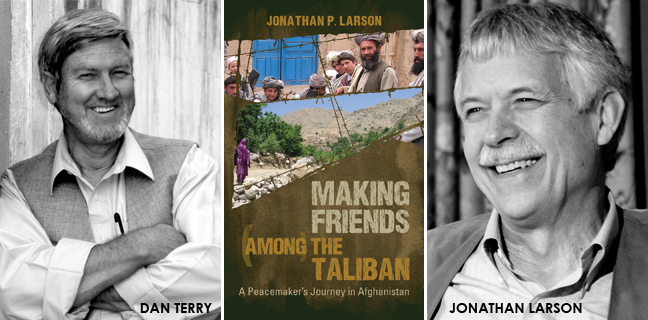
Veteran’s Day is an important time to pause, remember, and honor our fallen soldiers. We are all the beneficiaries of their blood, shed on battlefields far and wide. But what about those who fought for peace without the use of guns or ammo? How do we honor fallen peacemakers? Jonathan P. Larson celebrates the legacy of his lifelong friend, Dan Terry, in Making Friends Among the Taliban: A Peacemaker’s Journey in Afghanistan and in the companion documentary, Weaving Life. (Free copies of the book and the DVD available to two of the best responses to this article below).
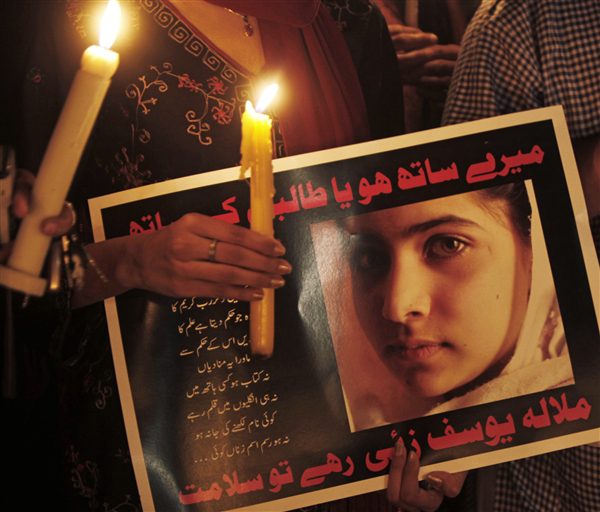
The title alone is so strange and unsettling, Making Friends Among the Taliban. It might as well read, “Why I love the Ku Klux Klan.” But then, a Civil Rights advocate like the Reverend Will Campbell already demonstrated that if we claim to be serious about loving our enemies and praying for those who persecute us, then that must include people like Klansmen. Who now provokes more fear and contempt than the Klan? Shooting brave girls like Malala Yousafzai shot in Pakistan has brought almost universal disgust toward the Taliban.
Jonathan Larson celebrates how Dan Terry “lived his life generously and joyfully in Afghanistan during a period when famine, coups, revolution, war and displacement shook society to its foundations….Dan was a good man in bad times.” While acknowledging the brutality that shot down Terry and nine more relief workers in cold blood, Making Friends Among the Taliban challenges us all to combat violence and aggression with love.
Dan Terry grew up in the foothills of the Himalayas, borne to parents who served as missionaries to India. Dan and the author, Jonathan Larson, were classmates at the Woodstock School in India, where they encountered the young Dalai Lama in 1960. After graduating from college in the States, Dan’s sense of adventure lured him back to the Himalayan region. While serving at a clinic for the Hazara people in central Afghanistan, Dan met Seija, a Finnish Lutheran nurse, who became his wife. Dan and Seija raised three daughters while working with the International Assistance Mission. During the Soviet occupation in the 1980s, Dan and Seija ferried the wounded to makeshift hospitals across Kabul.
When Dan was held captive by warlords, he considered it an opportunity to develop a new friendship. As Larson recalls, “He believed there was no reason to regard the menace of a captor as anything but friendship in disguise.” Dan Terry welcomed the chance to have tea with Taliban commanders. His extensive knowledge of Afghan customs and struggles would result in the Taliban releasing Dan (against orders). What we might consider foolish or naive, Dan embraced, declaring “Hostage-taking is just another form of hospitality.” He truly earned the nickname, Pagal, a.k.a. “Crazy.”
Yet such craziness also saved countless lives, especially amongst the remote Hazara people. When they were cut from supplies in a particularly brutal winter of 1999, Dan persevered, finding a way to get food past the Taliban to the starving Hazara. Dan was a perpetual tinkerer, keeping Jeeps, Land Rovers and trucks going amidst rocky roads and trying conditions. He rallied locals (what he called ‘enfranchising others’) to break up the ice long enough to get life saving supplies to the Hazara people along what came to be known as the ‘Dantri,’ (as in Dan Terry) road. Dan’s ability to navigate mountain passes and talk his way through roadblocks resulted in essential relief.
Dan and Seija were troubled by the primitive health care found in remote Afghan villages. How to get crucial education to women about childbirth and infant care? Dan attended countless Afghan shuras, gatherings of local (male) religious leaders. Slowly, they warmed up to the idea of women gathering for an exchange of information, where grandmothers could impart their knowledge of birth and childrearing. The Afghan government now mandates that young women and mothers exchange stories and share collective wisdom.
Despite local victories, the peacemaking work of Dan and Seija was continually challenged by geo-politics. Dan observed, “The first rule of thumb in nearly every situation here is to acknowledge conflict.” Dan’s commitment to interfaith understanding led many to describe this Christian missionary as “More Muslim than we are Muslims.” He practiced humility, was generous to widows and orphans, and constantly strove for justice and peace. In an increasingly armed and bloody conflict, Dan remained defenseless, modeling the Afghan proverb that “an unarmed person can be more dangerous than an armed one.”
It was tough to proclaim peace amidst airstrikes. As Dr. Lisa Schirch asserts in the book, “The peace that Afghanistan needs will not be delivered by helicopter.” Military campaigns to win over “the hearts and minds” of invaded peoples cast suspicion on the efforts of peacemakers and relief workers. Dan negotiated the return of a downed American drone so as to avoid further bloodshed. Yet, the slaughter of 16 Afghan civilians in the Kandahar region by United States’ Staff Sergeant Robert Bales undercuts efforts to broker a fragile peace.
The book concludes with Dan’s final mission, leading a team of nine medical aid volunteers into the remote hills of Badakhshan province. The mountain villages were only reachable on foot. Despite his reputation as a humanitarian aid worker, Dan and his colleagues were stopped and executed. Speculation of robbery was undermined by how many possessions were found amidst their bloodied bodies. Local Taliban leaders who respected Dan’s relief work took no credit for the murders. Dan’s warm relationship with Afghans suggests that Pakistani insurgents may have been responsible.
While we would cry out for justice, Dan’s family did not want to turn the deaths into an international incident. They did not demand retribution. They even declined posthumous awards for Dan, sensing that heroic honors may undermine Dan’s lifelong work amongst the Afghan people. Perhaps they took solace in Jesus’ assertion that “Blessed are the peacemakers.” The epitaph on Dan’s grave reads, “Above all, clothe yourselves in love.”
Making Friends Among the Taliban befuddled, confounded, and challenged me. How do we turn our conviction into actions? We may not all be called to befriend warlords, but we can all turn the other cheek. When tensions escalate, do we have the disposition to diffuse it with a well-timed word, a knowledge of local customs, a deep understanding of the other? We can bemoan the tribalism that continues to bewitch Afghanistan, but we must also work on the ties that threaten to unravel our relationships with friends, with family, with our fellow Americans. We must all be diligent to wage peace.
(We’ll send the book and DVD to the two best examples of peacemaking posted below. Tell me what kind of peace and reconciliation work you’ve seen in your neighborhoods and communities.)
Previous Post

November 4, 2012
ANTICIPATING THE HOBBIT? HERE IS A SHARP PREVIEW
Next Post
November 26, 2012 LIFE OF PI: Visual Splendor and Spiritual Hunger
Browse Our Archives
Select a Category Books Movies Music Uncategorized Upcoming Videos
Select a Month February 2023 February 2022 March 2021 January 2020 December 2019 December 2018 September 2018 August 2018 October 2017 January 2017 December 2016 October 2016 March 2016 February 2016 November 2015 October 2015 February 2015 January 2015 December 2014 November 2014 October 2014 July 2014 April 2014 February 2014 January 2014 December 2013 November 2013 October 2013 August 2013 July 2013 June 2013 May 2013 April 2013 February 2013 January 2013 December 2012 November 2012 October 2012 September 2012 August 2012 July 2012 June 2012
TAKE THE
Religious Wisdom Quiz
True or False: Micah prophesied that the Messiah would be born in Bethlehem.
Select your answer to see how you score.
FALSE TRUE
Related posts from Doc Hollywood

THE ESOTERIC ELVIS: Gary Tillery's "The Seeker King"
Abundance and Open Source or Why I Wrote...

FROM TAKING TO RECEIVING: EYES OF THE HEART...

Greatest Graduation Speech of our Era? DFW's This...
TRENDING AT PATHEOS Religious Music & Entertainment

"Les Diabolique" and Transgression
Alongside something like Arrival, Vertigo, or Charade, Les Diaboliques is a...

"The Plague Dogs" and Mortality
So, flashback to the late 70s, early 80s. Walt Disney Studios is...

With the recent and highly successful release of Christopher Nolan’s epic film,...

"L'avventura" and Human Weakness
Today's piece is going to be a little different for a few...

I first want to apologize for not posting or writing anything. I'm...

I've engaged in the multi-year project of reading through the Church Fathers,...
view all Religious Music & Entertainment blogs
Ad-Free & Subscriber Log-In Subscription Support
- About Us
- 2026 Calendar
- Videos
- Podcasts
- Library of World Religions
- Faith In Media Tracker
- Advertise With Us
- Write for Us
- Privacy Policy
- Terms of Service
- Do Not Sell My Data
- Contact Us
- Radiant Digital
- Manage Newsletter Subscriptions
- Unsubscribe From Notifications
- Sitemap
Copyright 2008-2026, Patheos. All rights reserved.
Subscription Support Ad-Free & Subscriber Log-In
Follow Patheos