
BuddhistCatholicContemplativeEvangelicalGeneral ChristianHinduJewishLatter-day SaintMuslimNew VisionsProgressive Christian
Beliefs
- Buddhist
- Catholic
- Contemplative
- Evangelical
- General Christian
- Hindu
- Jewish
- Latter-day Saint
- More Voices
- Muslim
- New Visions
- Pagan
- Progressive Christian
Topics
- Religion News
- Food and Religion
- Sports and Religion
- Religious Art
- Religious Music and Entertainment
- Religious Events
- History and Religion
- Style and Religion
- Politics and Religion
- Women in Religion
- Recreation Outdoors and Religion
- Business Finance and Religion
- Careers Workplace and Religion
- Education and Religion
- Family Parenting and Religion
- Health Fitness and Religion
- Home and Religion
- Relationships and Religion
- Technology and Religion
- Travel and Religion
Columnists
- Buddhist Columnists
- Business Finance and Religion Columnists
- Careers Workplace and Religion Columnists
- Catholic Columnists
- Contemplative Columnists
- Education and Religion Columnists
- Evangelists Columnists
- Family Parenting and Religion Columnists
- General Christian Columnists
- Health Fitness and Religion Columnists
- Hindu Columnists
- History and Religion Columnists
- Home and Religion Columnists
- Jewish Columnists
- More Voices Columnists
- Latter Day Columnists
- Muslim Columnists
- New Visions Columnists
- Nonreligious Columnists
- Pagan Columnists
- Politics and Religion Columnists
- Progressive Columnists
- Recreation Outdoors and Religion Columnists
- Relationships and Religion Columnists
- Religion News Columnists
- Religious Art Columnists
- Religious Events Columnists
- Religious Music and Entertainment Columnists
- Sports and Religion Columnists
- Style and Religion Columnists
- Technology and Religion Columnists
- Travel and Religion Columnists
- Women in Religion Columnists
Resource Library
- 2026 Calendar
- Library of World Religions
- The 100 Most Holy Places on Earth
- Patheos Answers
- Podcasts
- Videos
- Faith Leaders Database
- Anglican Episcopalian
- Bahai
- Baptist
- Buddhism
- Christianity
- Confucianism
- Eastern Orthodoxy
- Hinduism
- Holiness and Pentecostal
- ISKCON
- Islam
- Judaism
- Lutheran
- Methodist
- The Church of Jesus Christ of Latter-day Saints
- New Age
- Paganism
- Presbytarian and Reformed
- Protestantism
- Religion Behind the Scenes
- Roman Catholic
- Scientology
- Shia Islam
- Sikhism
- Sufism
- Sunni Islam
- Taoism
- Zen
- See all religions
Research Tools
 Ad-Free & Subscriber Log-In Subscription Support
Ad-Free & Subscriber Log-In Subscription Support
Follow Patheos 

- Trending:
- Forgiveness
- |
- Marriage
- |
- Consciousness
- |
- Death Penalty
- |
- Election
- |
- Halloween
 Doc Hollywood
- Home
- Religious Music & Entertainment
- Unlocking The Master Plan
Unlocking The Master Plan
Last updated on: September 28, 2012 at 5:04 pm by Craig Detweiler
Unlocking The Master Plan 2012-09-28T17:04:30-06:00 Craig Detweiler
Patheos Explore the world's faith through different perspectives on religion and spirituality! Patheos has the views of the prevalent religions and spiritualities of the world.
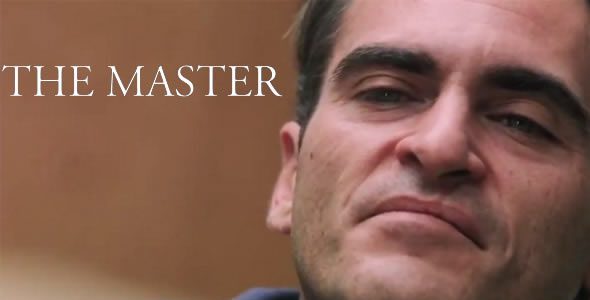
How do you make a provocative movie about the founder of one of the most litigious organizations on the planet? How deeply would you have to disguise your artistic intentions to tell hard truths? In The Master, director Paul Thomas Anderson wades into the legends surrounding the birth of Scientology and may earn Oscars rather than lawsuits. Now, that is true artistic genius.
L. Ron Hubbard’s ability to turn his cracked personal narrative into a mythic origins story is remarkable. Yet, the hagiography on the official L. Ron Hubbard website may also unlock the laconic meaning of The Master. Many have wondered why The Master follows the story of addled, alcoholic Navy vet Freddie Quell rather than the magnetic author/philosopher, Lancaster Dodd. When a movie is called, The Master, then you expect to get his origin story, rather than the flailing’s of a shell shocked G.I. trying to reenter American society after serving in the Pacific. In Scientology lore, Hubbard was a heroic Navy leader whose post war trauma and treatment in VA hospitals morphed into Dianetics. But he may also have been an undistinguished lieutenant who suffered no more than an ulcer but claimed grand battles and a remarkable recovery.
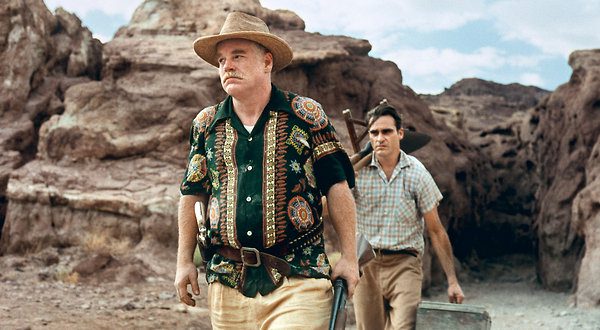
So here is my provocative thesis: Freddie Quell is Lancaster Dodd. Not necessarily within the film, but within the larger story that Paul Thomas Anderson is daring to tell. Maybe a better way to put it: Freddie Quell plus Lancaster Dodd equals L. Ron Hubbard. The dueling characters in The Master are actually two sides of the same fractured biography—the life and lies of L. Ron Hubbard. The Master shows us how, only in America, could a wasted G.I. reinvent himself as a cowboy, commodore, scientist, and mystic. As a master charlatan, Hubbard understood the power of imagery, which is why Scientology took root in Southern California. It also suggests why Scientology has been so great at promoting stars and attracting celebrities like Tom Cruise and John Travolta. It is also suggests why Scientology is so paranoid and litigious towards those who seek to peek behind the curtain.
In The Master, Paul Thomas Anderson shows us how a cult can arise through extravagant claims, brilliant storytelling, and careful image manipulation. It is a cautionary tale, questioning all manner of grandstanding and absolutism (it could be about politics or science just as easily as religion). Yet, it also celebrates a virtue rooted in a young country, still given to mythologizing. Consider The Master as Extreme Makeover: American Male Edition.
I have already written about why Paul Thomas Anderson might have chosen Scientology as a subject—as a native Angeleno, he is fascinated by all things Los Angeles. Scientology is a distinct, homegrown Hollywood creation. I’ve also meditated on the struggle that serves as the dramatic thrust of the film—the flesh versus the spirit. For all of Lancaster Dodd’s grandstanding about past lives and overcoming our animalistic instincts, he seems closer and closer to falling into rage and addiction by the end of The Master. And Freddie, despite all of his violent outbursts and unchecked sexual urges, seems almost healed, capable of living and loving again. We think the film is about Freddie mastering his demons, but perhaps it is also about the paranoia just starting to unravel Lancaster Dodd, his wife, Peggy, and the Cause. Or maybe The Master is about how frail, fallen Freddie Quell recovers enough to start one of the more imaginative (and diabolical) cults of the 20th century.
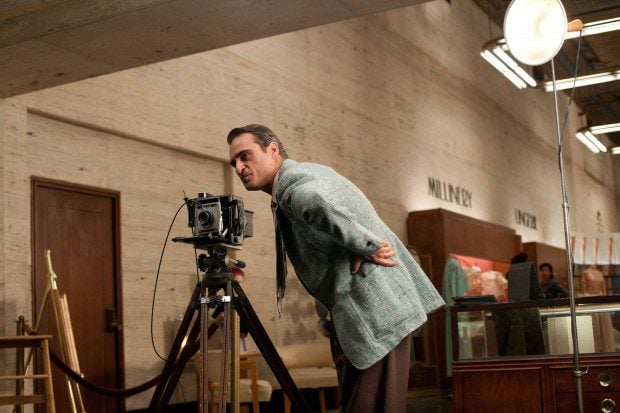
It is also easy to see The Master as a father/son story. A surrogate Dad helps an orphaned vet master his addictions. But it is also the pull of alcohol, particularly the most vile and overwhelming concoctions made from torpedo fuel, photographic chemicals, and paint thinner, that binds Freddie and Dodd together. Freddie serves as Lancaster’s secret mixologist. He is also his enforcer, the muscle that takes down all dissenters with his fists. Yet, Freddie’s hidden talent, just hinted at in the film, is as a photographer. He takes pictures. And Lancaster is definitely a man in search of a biographer. He needs someone to burnish the legend, to serve as a publicist and imagemaker.

The Master is awash in iconic images of American manhood, especially in and around World War II. Paul Thomas Anderson has gone to great lengths to recreate the era—in sight and sound. By shooting The Master in 65mm, he has snapped audiences back to the warm glow of celluloid, to the days of John Wayne and LIFE magazine. From the soldier in the trenches brandishing a cigarette to the sailor on the high seas, through the cowboy taming the Wild West to the Wild One riding a motorcycle across open plains, PTA and his ace cinematographer, Mihai Malaimare, Jr., juxtapose idealized portraits against hard realities. Freddie’s first post war job is to create gauzy, suburban portraits of parents and kids in prosperous, post World War II America. Shut out from such peace and prosperity, Freddie snaps under the glare of studio lights.
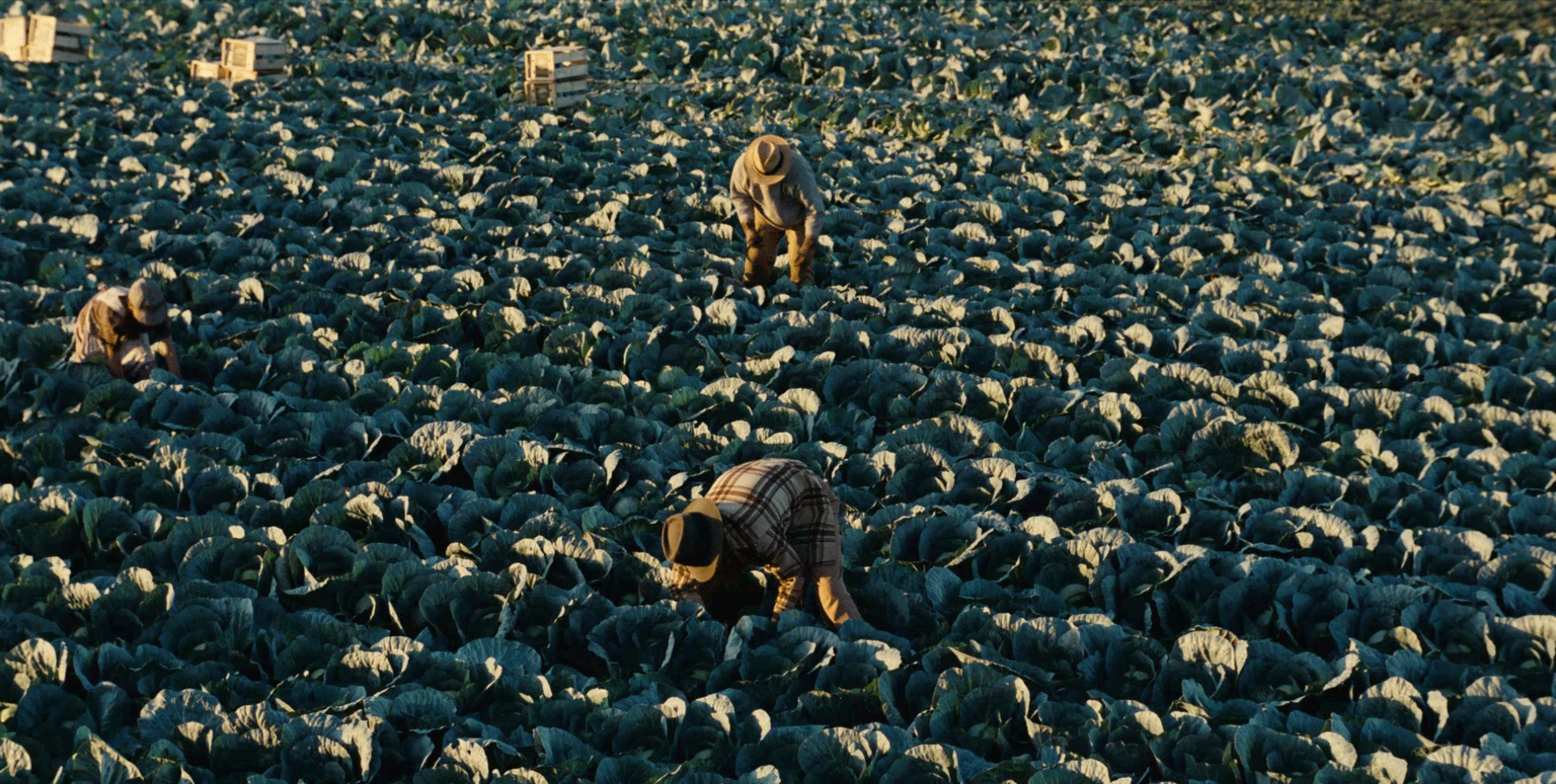
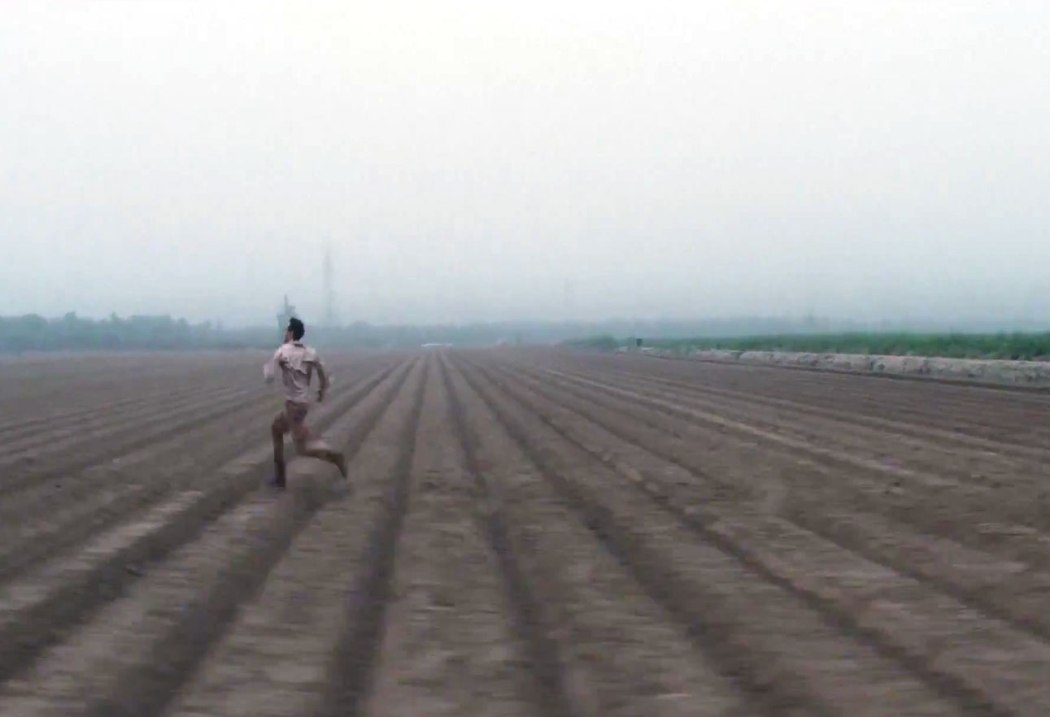
He retreats to a farm, working amongst Filipinos, pursuing the American Dream. The images in this section draw upon the Depression era photos of Dorothea Lange and Walker Evans. The setting is dark, grainy, rooted in the land. When Freddie hooch proves deadly, he must fly the scene of his crime. This is the American soldier, on the run, an image we have almost never seen.
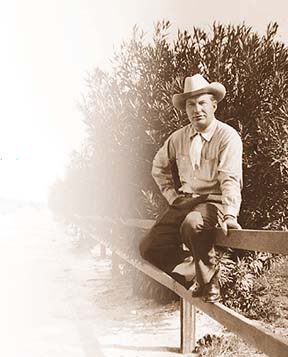
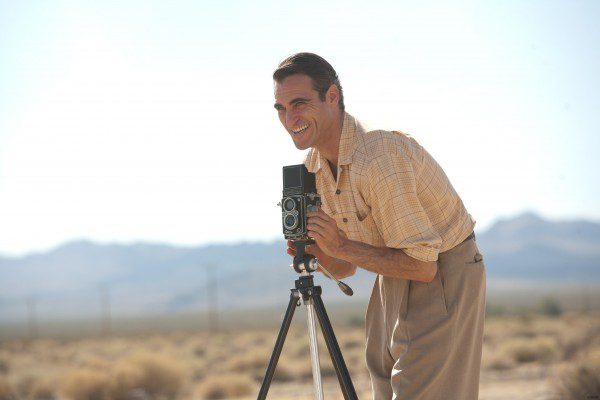
Freddie’s camera vanishes for most of the middle of the movie. He’s engaged in daily struggles to keep his rage under control. Only when he’s gotten to the far side of ‘processing,’ does he pull out his camera at the Cause’s meeting in Arizona. Freddie captures Dodd as a cowboy, at home on the range. Note the similarities to how L. Ron Hubbard presents himself comfortably wearing the hat.
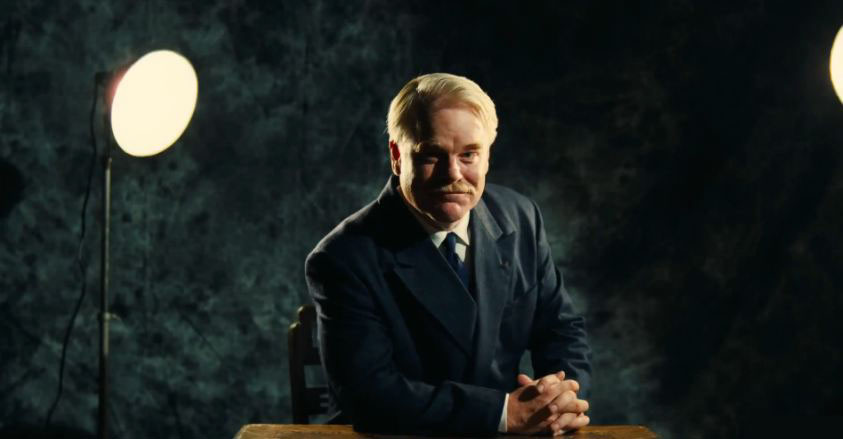
Freddie also photographs the master at his desk, striking the authoritarian pose of author/thinker/scholar. Dodd may or may not be an intellectual, but he certainly knows how to dress for the part. He exudes confidence. Through taking pictures, Freddie is slowly discovering his calling, his gift. Beyond his fists and his fixes, Freddie might have a gift for telling stories, fictional stories, through film. For me, it is Freddie as photographer that finally started to unlock the secret spine in Paul Thomas Anderson’s vexing story.
The Master had always been announced as a meditation on the life of L. Ron Hubbard. Yet, the finished film gives us almost no background on Hubbard or how he came to be a pulp fiction writer, best selling psychologist, and ultimately, founder of a New Religious Movement. For some Paul Thomas Anderson fans, The Master has arrived as a let down. For voracious critics of Scientology, The Master failed to deliver a knock out blow to an insidious cult. But if filmgoers will simply consider the imagery driving the story and burrowing into our brains, we will see PTA’s true intentions.
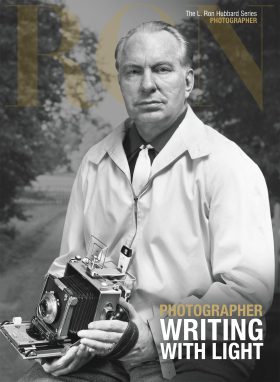
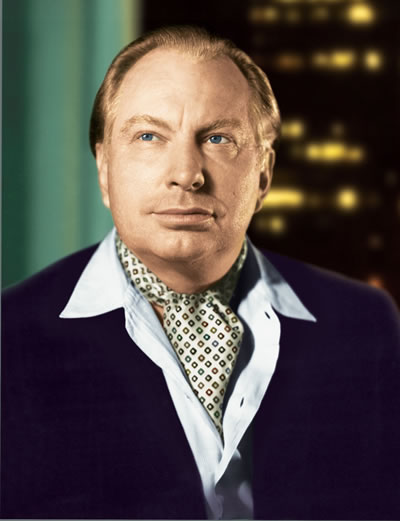
Did you know that L. Ron Hubbard considered himself a photographer? Check out the website. The photographs of and by L. Ron Hubbard demonstrate how Freddie, the scattered seaman, could refashion himself as Dodd, the grandiose leader. And look at how lighting and costume design come together to create a glowing image of Hubbard in his prime. This is an enlightened man who deserves a huge following.
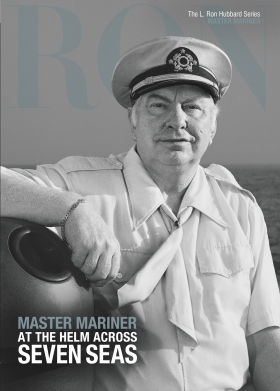
Did you also realize that L. Ron Hubbard also considered himself a seaman, maybe even a master mariner? He served in the Navy during World War II. In his self-mythologizing, Hubbard reimagined himself as a Commodore. Scientology maintained an active fleet of vessels known as the Sea Org. On the ocean, away from distractions, Scientologists engage in higher levels of training, known as Operating Thetan. They even maintain naval codes of conduct and uniforms.
The Master contains so many shots of Freddie at sea, of the wake generated by a boat. It is the key image anchoring the film together. Look at L. Ron Hubbard’s official portraits, drawing upon the sea as a boundless horizon.
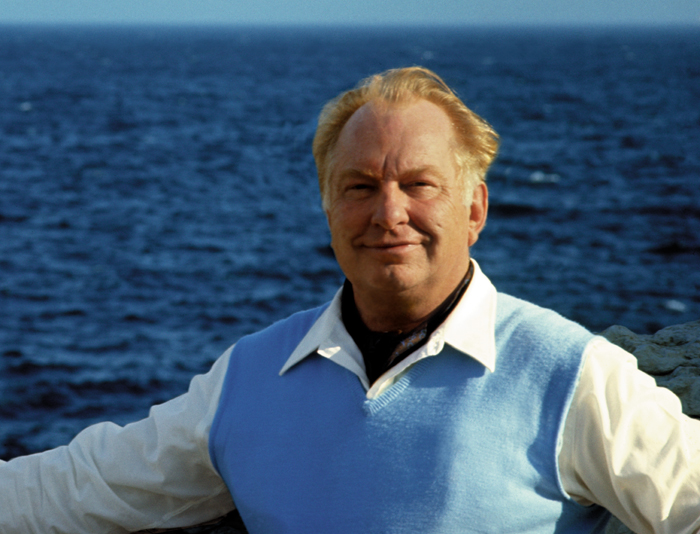
It is easy to watch The Master and equate Lancaster Dodd with L. Ron Hubbard. But the imagery suggests quite clearly that Freddie Quell is L. Ron Hubbard. Despite teaching his followers to abstain from all many of drink and drugs, Hubbard remained an active experimenter in countless pills and hallucinogens throughout his colorful life. Like Dodd, he had quite an appetite for Freddie’s mind-altering substances.
I will now turn to the third act of The Master to explain why this interpretation (Freddie + Lancaster=Hubbard) makes sense. Dodd poses a dramatic question that hovers over the entire movie, “Where have we met before?” The Cause (and Scientologist) is all about exploring past lives. It is about discovering who were in earlier eras and healing those painful memories. When does Freddie start to master his past or at least control his emotions? When he breaks free from Dodd and The Cause on a motorcycle. It is the cinematic moment when the disciple takes the master’s teaching to its logical extreme. Dodd looks awkward on a motorcycle, wearing rolled up blue jeans. But the wiry Freddie fits comfortably into the role of Marlon Brando or James Dean–rebels for the Cause. Freddie picks a point and vanishes, just like the master taught him. From that moment on (the end of the second act), Freddie is changed person—more aware, more under control, ready to revisit his hometown, able to resist Dodd’s ovations.
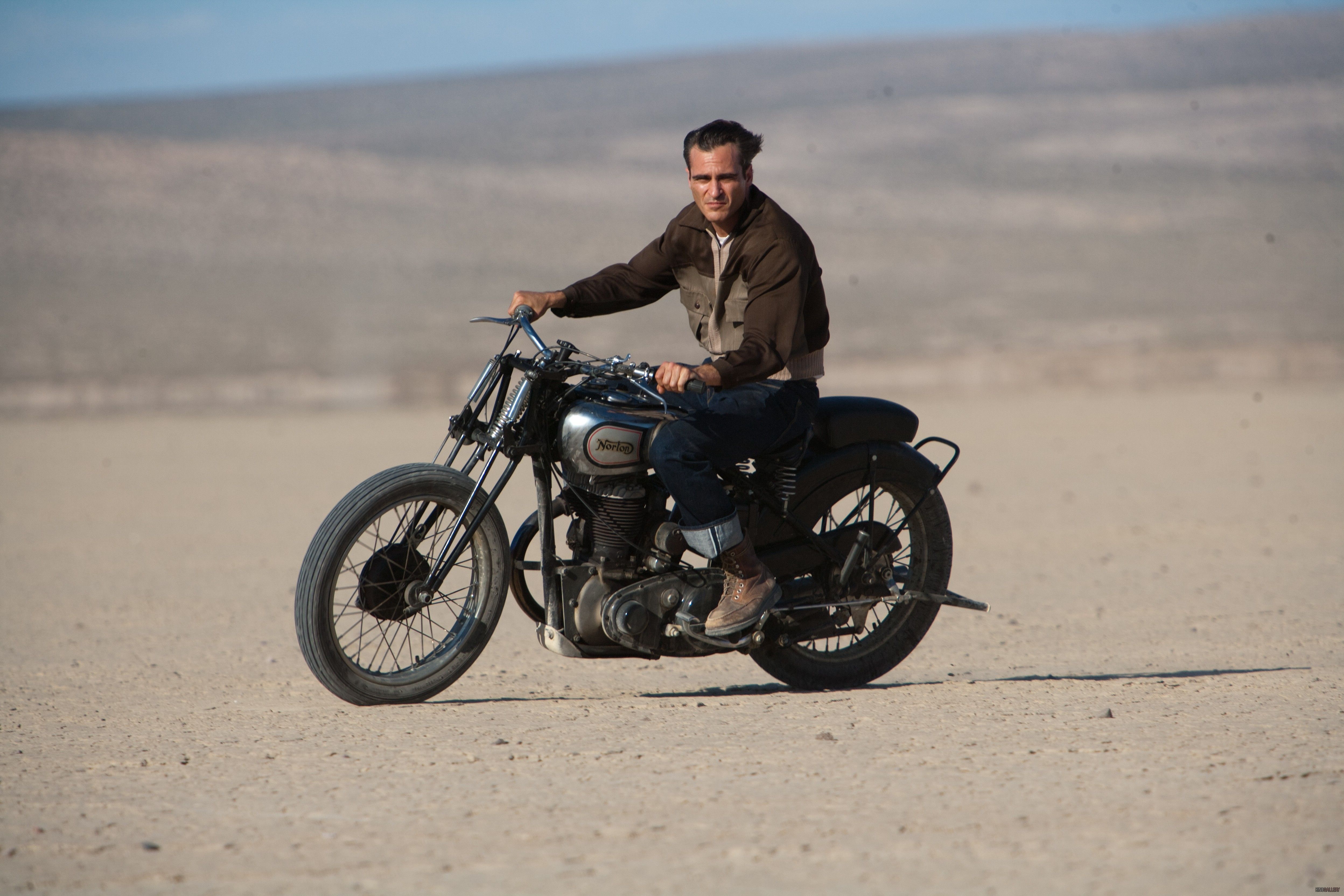
A few strange things still happen. While asleep in a movie theater, Freddie receives a phone call from Dodd. How does Dodd find him? How can a phone line reach into a movie theater? Everything about the scene is strange and dreamlike. Is this all imagined in Freddie’s head? How can he even afford to take a boat to England to reunite with Dodd?
Freddie’s interaction with Peggy and Lancaster Dodd in England is equally off-kilter. It is easy to see how the question of whether we must serve some master fits within the film. But what should we make of Dodd’s goodbye song to Freddie, “Slow Boat to China”? It is definitely a love song, a desire to sail into the sunset together. It is about cutting through a heart of stone and enjoying a meandering trip “out on the briney.” It could also be heard as a heavenly vision, an eternal journey or plea. I’m still mulling over that dramatic choice. The Master definitely demands a second viewing.
The film concludes with Freddie enjoying a playful sexual romp with a British lass, Winn Manchester. For once, he doesn’t seem menacing. Significantly, she is on top, perhaps experiencing her own sexual satisfaction. Freddie might actually be ‘giving’ for the first time, a win/Winn situation. The intense processing that Freddie endured under Dodd’s tutelage is now turned into a bit of seduction. Has Freddie discovered the power of psychology to unlock pain or to summon a subtle power? Is this final scene the birth of L. Ron Hubbard, master seducer? Paul Thomas Anderson wisely lets the viewers decide.

Previous Post

September 26, 2012
PROCESSING THE MASTER
Next Post
September 28, 2012 WON'T BACK DOWN: WORKING CLASS HEROES
Browse Our Archives
Select a Category Books Movies Music Uncategorized Upcoming Videos
Select a Month February 2023 February 2022 March 2021 January 2020 December 2019 December 2018 September 2018 August 2018 October 2017 January 2017 December 2016 October 2016 March 2016 February 2016 November 2015 October 2015 February 2015 January 2015 December 2014 November 2014 October 2014 July 2014 April 2014 February 2014 January 2014 December 2013 November 2013 October 2013 August 2013 July 2013 June 2013 May 2013 April 2013 February 2013 January 2013 December 2012 November 2012 October 2012 September 2012 August 2012 July 2012 June 2012
TAKE THE
Religious Wisdom Quiz
What animal did Samson kill with his bare hands?
Select your answer to see how you score.
Bear Lion Leopard Wolf
Related posts from Doc Hollywood
The Finest Films of 2022: Rise, Roar, and...

Ambiguity, Complexity, and the Finest Films of 2021
BEYOND NOSTALGIA: The Best Music Docs of 2021
Real to Reel: The Best Documentaries of 2020
TRENDING AT PATHEOS Religious Music & Entertainment

"Les Diabolique" and Transgression
Alongside something like Arrival, Vertigo, or Charade, Les Diaboliques is a...

"The Plague Dogs" and Mortality
So, flashback to the late 70s, early 80s. Walt Disney Studios is...

With the recent and highly successful release of Christopher Nolan’s epic film,...

"L'avventura" and Human Weakness
Today's piece is going to be a little different for a few...

I first want to apologize for not posting or writing anything. I'm...

I've engaged in the multi-year project of reading through the Church Fathers,...
view all Religious Music & Entertainment blogs
Ad-Free & Subscriber Log-In Subscription Support
- About Us
- 2026 Calendar
- Videos
- Podcasts
- Library of World Religions
- Faith In Media Tracker
- Advertise With Us
- Write for Us
- Privacy Policy
- Terms of Service
- Do Not Sell My Data
- Contact Us
- Radiant Digital
- Manage Newsletter Subscriptions
- Unsubscribe From Notifications
- Sitemap
Copyright 2008-2026, Patheos. All rights reserved.
Subscription Support Ad-Free & Subscriber Log-In
Follow Patheos