
BuddhistCatholicContemplativeEvangelicalGeneral ChristianHinduJewishLatter-day SaintMuslimNew VisionsProgressive Christian
Beliefs
- Buddhist
- Catholic
- Contemplative
- Evangelical
- General Christian
- Hindu
- Jewish
- Latter-day Saint
- More Voices
- Muslim
- New Visions
- Pagan
- Progressive Christian
Topics
- Religion News
- Food and Religion
- Sports and Religion
- Religious Art
- Religious Music and Entertainment
- Religious Events
- History and Religion
- Style and Religion
- Politics and Religion
- Women in Religion
- Recreation Outdoors and Religion
- Business Finance and Religion
- Careers Workplace and Religion
- Education and Religion
- Family Parenting and Religion
- Health Fitness and Religion
- Home and Religion
- Relationships and Religion
- Technology and Religion
- Travel and Religion
Columnists
- Buddhist Columnists
- Business Finance and Religion Columnists
- Careers Workplace and Religion Columnists
- Catholic Columnists
- Contemplative Columnists
- Education and Religion Columnists
- Evangelists Columnists
- Family Parenting and Religion Columnists
- General Christian Columnists
- Health Fitness and Religion Columnists
- Hindu Columnists
- History and Religion Columnists
- Home and Religion Columnists
- Jewish Columnists
- More Voices Columnists
- Latter Day Columnists
- Muslim Columnists
- New Visions Columnists
- Nonreligious Columnists
- Pagan Columnists
- Politics and Religion Columnists
- Progressive Columnists
- Recreation Outdoors and Religion Columnists
- Relationships and Religion Columnists
- Religion News Columnists
- Religious Art Columnists
- Religious Events Columnists
- Religious Music and Entertainment Columnists
- Sports and Religion Columnists
- Style and Religion Columnists
- Technology and Religion Columnists
- Travel and Religion Columnists
- Women in Religion Columnists
Resource Library
- 2026 Calendar
- Library of World Religions
- The 100 Most Holy Places on Earth
- Patheos Answers
- Podcasts
- Videos
- Faith Leaders Database
- Anglican Episcopalian
- Bahai
- Baptist
- Buddhism
- Christianity
- Confucianism
- Eastern Orthodoxy
- Hinduism
- Holiness and Pentecostal
- ISKCON
- Islam
- Judaism
- Lutheran
- Methodist
- The Church of Jesus Christ of Latter-day Saints
- New Age
- Paganism
- Presbytarian and Reformed
- Protestantism
- Religion Behind the Scenes
- Roman Catholic
- Scientology
- Shia Islam
- Sikhism
- Sufism
- Sunni Islam
- Taoism
- Zen
- See all religions
Research Tools
 Ad-Free & Subscriber Log-In Subscription Support
Ad-Free & Subscriber Log-In Subscription Support
Follow Patheos 

- Trending:
- Forgiveness
- |
- Marriage
- |
- Consciousness
- |
- Death Penalty
- |
- Election
- |
- Halloween
 Doc Hollywood
- Home
- Religious Music & Entertainment
- THE MASTER in CONTEXT: PTA’S CITY OF THE ANGELS
THE MASTER in CONTEXT: PTA’S CITY OF THE ANGELS
Last updated on: September 25, 2012 at 11:53 am by Craig Detweiler
THE MASTER in CONTEXT: PTA’S CITY OF THE ANGELS 2012-09-25T11:53:01-06:00 Craig Detweiler
Patheos Explore the world's faith through different perspectives on religion and spirituality! Patheos has the views of the prevalent religions and spiritualities of the world.
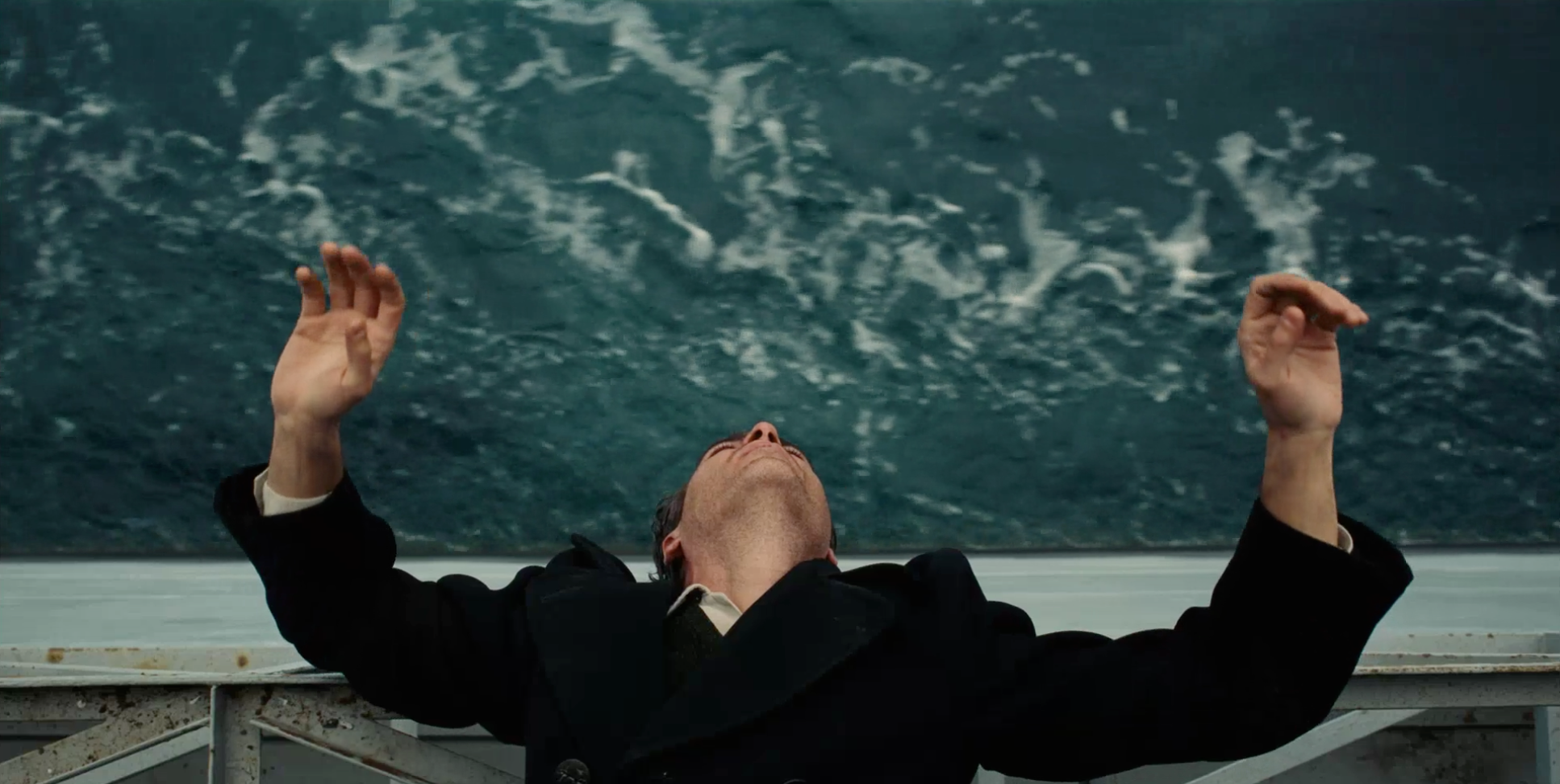
For dedicated cinephiles, wrestling with a movie and its meaning is a profound pleasure. To casual moviegoers, The Master may feel too arduous, a long slog, not worth the effort. Hollywood makes so many effects-driven, popcorn movies that it is tough to adjust to a film rooted in characters and their struggles. Especially when it doesn’t offer an easy resolution. The Master requires considerable reflection to unearth what it is saying, doing, and communicating. Such complexity will garner plenty of Oscar nominations. I agree with my colleagues at Patheos that The Master is quite naked and profane. While some were bored or offended, I was enthralled.
Why is The Master worth the investment of time and (emotional) energy? I’ve been processing this question for almost a week. Few films burrow so deeply into the psyche with scenes still bouncing around my brain. So I will dedicate a couple of columns to reflecting upon the film. I’ll begin by placing The Master in context, as the latest installment in Paul Thomas Anderson’s exploration of the American male. His recurring question: “Why do men continually look for love in all the wrong places and things?”
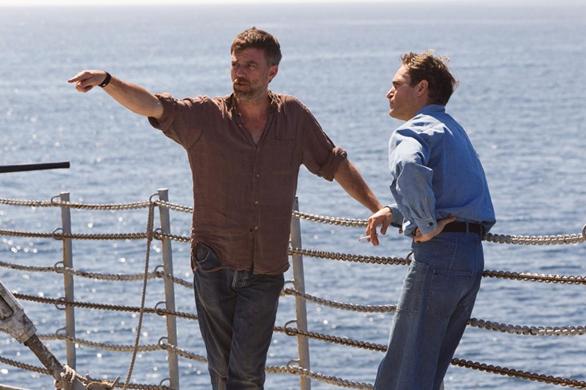
Paul Thomas Anderson loves guys, especially flawed and obsessive guys. They may be gamblers (Hard Eight), porn stars (Boogie Nights), cops (Magnolia), salesmen (Punch Drunk Love) or oil speculators (There Will Be Blood), but they are all haunted by personal demons and searching for relief. These vivid characters go to extremes, getting themselves in desperate straits where only divine intervention can break their cycle of self-destruction. Anderson’s potent films and characters are not for everyone. Their blind spots are so pronounced that their intransigence can be frustrating. Yet, plenty of men recognize their aspirations and their worst tendencies within PTA’s loners.

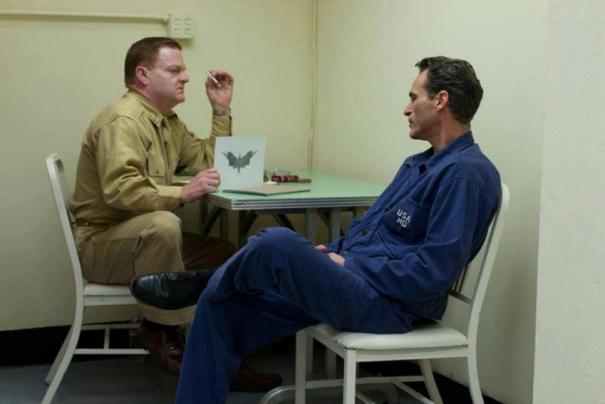
The Master focuses upon the plight of Freddie Quell, a World War II veteran whose boundless need for alcohol extends to missile fuel. Joaquin Phoenix returns to feature films looking more gaunt and emaciated than ever. His speech is slurred, his shoulders slouched, and his kidneys barely there. Sex drives his unchecked id. Who can cure Freddie of what ails him? Author Lancaster Dodd has started The Cause, teaching his followers that the mind is more powerful than the body. Philip Seymour Hoffman portrays Dodd with swagger and magnetism. Yet, whenever he’s confronted by his critics, Dodd’s hair trigger temper surfaces in startling similar ways to Freddie. Will the Master lift Freddie out of his downward spiral? Or will Freddie’s violent tendencies unravel the Cause? Anderson extends so much grace towards his broken characters that he tests the audiences’ patience.

Paul Thomas Anderson also loves Los Angeles. As a native Angeleno, PTA finds inspiration in underexplored pockets of the City of Angels. His early films focused on the overlooked side of Los Angeles—the San Fernando Valley. His most recent films look at the extremists who forged L.A. There Will Be Blood could be read as a study of Mulholland or Doheny or even Getty—the oil men whose names still mark the landscape. The Master is rooted in the colorful history of L. Ron Hubbard, author of Dianetics. After a peripatetic life, Hubbard’s teaching took root in Los Angeles as Scientology. While The Master covers far more geography than Anderson’s previous films, it still arises from his own Los Angeles upbringing, rooted in our particularly porous, spiritual soil.
Los Angeles is often lampooned as a city of fruits and nuts. The transient nature of the population makes it particularly fertile soil for New Religious Movements like Scientology. Few realize that the City of the Angels, founded by Roman Catholic missionaries, is also the home to two of the most influential Protestant movements of the past one hundred years: fundamentalism and modern Pentecostalism. In 1906, spiritual gifts like healing and speaking in tongues broke out on Azusa Street in downtown L.A. The Pentecostal movement quickly spread to every corner of the globe, spawning dynamic denominations like the Church of God in Christ, the Assemblies of God and the Four Square Gospel.
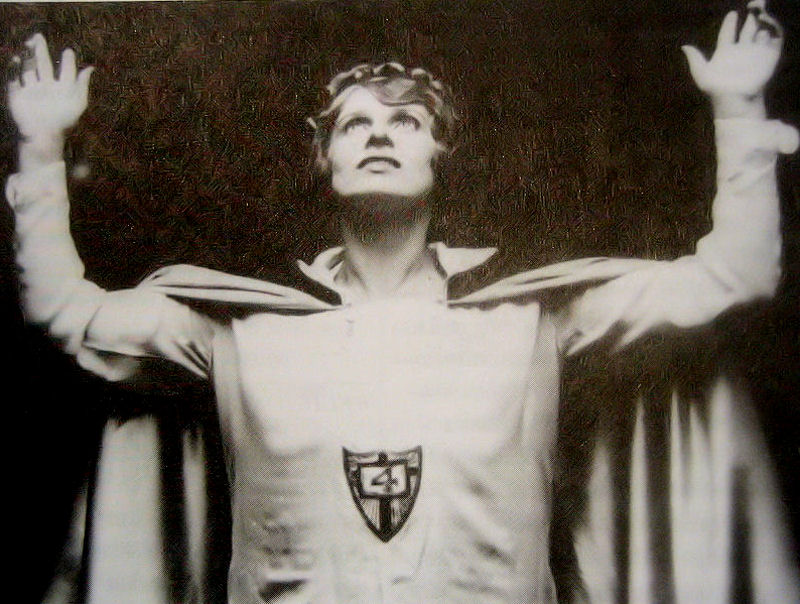
In Echo Park, flamboyant evangelist Sister Aimee Temple McPherson founded the Angelus Temple, which grew into the Foursquare Gospel movement. A Los Angeles oilman, Lyman Stewart, funded the pamphlets that defined “the fundamentals” of the Christian faith in 1910. Stewart’s charity extended to underwriting the Bible Institute of Los Angeles, now known as Biola University. We tend to think of Los Angeles exporting entertainment. But it has also served as the starting point for religious revolutions. As a filmmaker dedicated to the quirks of Los Angeles, Paul Thomas Anderson has wisely chosen to focus on faith. Or perhaps more accurately, he considers, “Why Los Angeles attracts so many rootless people who seek to fill their souls in such self-defeating ways?” I wish Anderson had concentrated more upon Dodd and the Cause, than Freddie and his addictions. Yet, the litigious nature of Scientology may have precluded a more direct reflection upon L. Ron Hubbard and his followers.
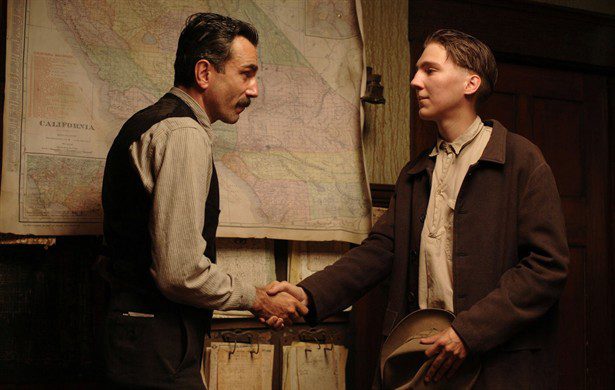
Anderson has always waded into the earthly in search of the transcendent. There Will Be Blood looked at Southern California before the oil boom. Opportunity and black smoke fill the sky. It pitted a pastor against a speculator. But the battle for power and money never felt even. In one weak moment, Daniel Plainview kneels to be baptized. But he comes roaring back against his foe. As the wildcat oilman, Daniel Day-Lewis overwhelmed Paul Dano’s young preacher right through the bloody finale promised in the title. Greed prevailed.
The Master corrects the power imbalance. The physical gap between the dueling leads is considerable. Lancaster Dodd teaches his followers to heal their painful memories, appealing to their spiritual rather than animal instincts. Dodd takes on Freddie as a project. Dodd seemingly holds the keys to tame this savage beast. Yet, whenever his authority is challenged, Dodd struggles to keep his own rage in check. Despite their physical differences, Freddie and Dodd are remarkably well matched. The flesh and the spirit prove inseparable.
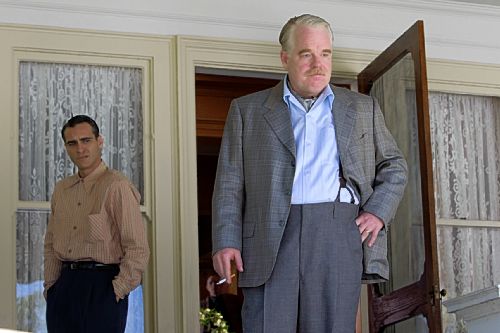
With The Master, Anderson has once again delved into the past as a way of commenting upon the present. In There Will Be Blood, the struggle between religion and oil echoed America’s war in Iraq. The Master evokes the battle we have yet to recognize: how to reintegrate our veterans from Iraq and Afghanistan. Will the best army psychologists transport them beyond the pain of combat? Will they be delivered from desert nightmares? The Master shows how long the road to reentry can be. We will all pay the price for their post-traumatic stress.
NEXT: PROCESSING THE MASTER
Previous Post

September 20, 2012
The Innocence of Muslims: Blasphemy, Pornography, and Christianity
Next Post
September 26, 2012 PROCESSING THE MASTER
Browse Our Archives
Select a Category Books Movies Music Uncategorized Upcoming Videos
Select a Month February 2023 February 2022 March 2021 January 2020 December 2019 December 2018 September 2018 August 2018 October 2017 January 2017 December 2016 October 2016 March 2016 February 2016 November 2015 October 2015 February 2015 January 2015 December 2014 November 2014 October 2014 July 2014 April 2014 February 2014 January 2014 December 2013 November 2013 October 2013 August 2013 July 2013 June 2013 May 2013 April 2013 February 2013 January 2013 December 2012 November 2012 October 2012 September 2012 August 2012 July 2012 June 2012
TAKE THE
Religious Wisdom Quiz
What did Job famously say in response to loss: "The Lord gave and..."?
Select your answer to see how you score.
I will run away The Lord has taken away May His name be praised I have nothing left
Related posts from Doc Hollywood
The Finest Films of 2022: Rise, Roar, and...

Ambiguity, Complexity, and the Finest Films of 2021
BEYOND NOSTALGIA: The Best Music Docs of 2021
Real to Reel: The Best Documentaries of 2020
TRENDING AT PATHEOS Religious Music & Entertainment

"Les Diabolique" and Transgression
Alongside something like Arrival, Vertigo, or Charade, Les Diaboliques is a...

"The Plague Dogs" and Mortality
So, flashback to the late 70s, early 80s. Walt Disney Studios is...

With the recent and highly successful release of Christopher Nolan’s epic film,...

"L'avventura" and Human Weakness
Today's piece is going to be a little different for a few...

I first want to apologize for not posting or writing anything. I'm...

I've engaged in the multi-year project of reading through the Church Fathers,...
view all Religious Music & Entertainment blogs
Ad-Free & Subscriber Log-In Subscription Support
- About Us
- 2026 Calendar
- Videos
- Podcasts
- Library of World Religions
- Faith In Media Tracker
- Advertise With Us
- Write for Us
- Privacy Policy
- Terms of Service
- Do Not Sell My Data
- Contact Us
- Radiant Digital
- Manage Newsletter Subscriptions
- Unsubscribe From Notifications
- Sitemap
Copyright 2008-2026, Patheos. All rights reserved.
Subscription Support Ad-Free & Subscriber Log-In
Follow Patheos