
BuddhistCatholicContemplativeEvangelicalGeneral ChristianHinduJewishLatter-day SaintMuslimNew VisionsProgressive Christian
Beliefs
- Buddhist
- Catholic
- Contemplative
- Evangelical
- General Christian
- Hindu
- Jewish
- Latter-day Saint
- More Voices
- Muslim
- New Visions
- Pagan
- Progressive Christian
Topics
- Religion News
- Food and Religion
- Sports and Religion
- Religious Art
- Religious Music and Entertainment
- Religious Events
- History and Religion
- Style and Religion
- Politics and Religion
- Women in Religion
- Recreation Outdoors and Religion
- Business Finance and Religion
- Careers Workplace and Religion
- Education and Religion
- Family Parenting and Religion
- Health Fitness and Religion
- Home and Religion
- Relationships and Religion
- Technology and Religion
- Travel and Religion
Columnists
- Buddhist Columnists
- Business Finance and Religion Columnists
- Careers Workplace and Religion Columnists
- Catholic Columnists
- Contemplative Columnists
- Education and Religion Columnists
- Evangelists Columnists
- Family Parenting and Religion Columnists
- General Christian Columnists
- Health Fitness and Religion Columnists
- Hindu Columnists
- History and Religion Columnists
- Home and Religion Columnists
- Jewish Columnists
- More Voices Columnists
- Latter Day Columnists
- Muslim Columnists
- New Visions Columnists
- Nonreligious Columnists
- Pagan Columnists
- Politics and Religion Columnists
- Progressive Columnists
- Recreation Outdoors and Religion Columnists
- Relationships and Religion Columnists
- Religion News Columnists
- Religious Art Columnists
- Religious Events Columnists
- Religious Music and Entertainment Columnists
- Sports and Religion Columnists
- Style and Religion Columnists
- Technology and Religion Columnists
- Travel and Religion Columnists
- Women in Religion Columnists
Resource Library
- 2026 Calendar
- Library of World Religions
- The 100 Most Holy Places on Earth
- Patheos Answers
- Podcasts
- Videos
- Faith Leaders Database
- Anglican Episcopalian
- Bahai
- Baptist
- Buddhism
- Christianity
- Confucianism
- Eastern Orthodoxy
- Hinduism
- Holiness and Pentecostal
- ISKCON
- Islam
- Judaism
- Lutheran
- Methodist
- The Church of Jesus Christ of Latter-day Saints
- New Age
- Paganism
- Presbytarian and Reformed
- Protestantism
- Religion Behind the Scenes
- Roman Catholic
- Scientology
- Shia Islam
- Sikhism
- Sufism
- Sunni Islam
- Taoism
- Zen
- See all religions
Research Tools
 Ad-Free & Subscriber Log-In Subscription Support
Ad-Free & Subscriber Log-In Subscription Support
Follow Patheos 

- Trending:
- Forgiveness
- |
- Marriage
- |
- Consciousness
- |
- Death Penalty
- |
- Election
- |
- Halloween
 Doc Hollywood
- Home
- Religious Music & Entertainment
- Olympic Alternative: Ai Weiwei
Olympic Alternative: Ai Weiwei
Last updated on: July 31, 2012 at 2:54 pm by Craig Detweiler
Olympic Alternative: Ai Weiwei 2012-07-31T14:54:41-06:00 Craig Detweiler
Patheos Explore the world's faith through different perspectives on religion and spirituality! Patheos has the views of the prevalent religions and spiritualities of the world.
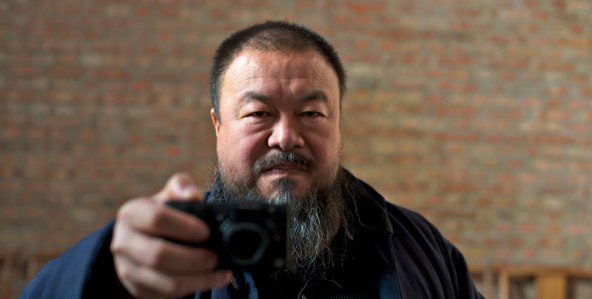
Looking for an alternative to the ubiquitous Olympics coverage? The riveting documentary, Ai Weiwei: Never Sorry, slipped quietly into theaters as the 2012 Summer Olympics opened. How appropriate for one of the most fervent advocates of democracy in China to present an alternative view of the People’s Republic. Ai Weiwei: Never Sorry is a celebration of a subversive artist and a bracing call to creative resistance. Olympic viewers who care about equality and human rights are urged to engage to embrace this brilliant counter-programming. This sly ‘Sundance Selects’ release opens in Los Angeles this weekend.

Four years ago, all eyes were focused upon the Summer Olympics in Beijing. Viewers marveled at the remarkable Birds Nest Stadium and Water Cube. The opening ceremony of the 2012 London Olympics suffered from comparisons to the spectacle mounted in Beijing. Beyond the carefully choreographed routines, Chinese dissident Ai Weiwei challenged sports fans to see through the façade. As a contributor to the Bird’s Nest design, Ai hoped that the Olympics might be a liberating event. But as the games arrived, Ai noted how many migrants were displaced by the Beijing Olympics; shoved aside for the sake of the show. He ended up literally flipping the bird at the Bird’s Nest (and the Communist Party).

Documentarian Alison Klayman has woven together a remarkable peek inside Ai’s method and madness. Ai describes himself as more chess player than artist, studying his opponent, waiting to respond to the Chinese government’s next move. He downplays the significance of his resistance, insisting, “Life is much more interesting when you make a little bit of effort.” Klayman’s cameras follow Ai to his exhibitions in Munich and London. His artistic focus shifts from the past to the present, growing in political relevance. When the government underreported the deaths from a devastating 2008 earthquake in Sichuan province, Ai decided to document and remember those who perished. Shoddy ‘tofu’ architecture resulted in the collapse of so many schools and the death of over 5,000 students. Gathering the names of the deceased becomes a living art project for Ai and his assistants. The sight of children’s backpacks covering the outside of his Munich show, “So Sorry,” is haunting.

Such bold statements are bound to attract the attention (and ire) of the Chinese government. When Ai’s blog is shut down, he takes his case to Twitter as “aiww”. His efforts to testify on behalf of fellow earthquake activist Tan Zuoren are blocked. Ai gets beaten and detained by police in Chengdu. Tan is sentenced to five years in jail. And yet, Ai persists, filing lawsuits, making official complaints because, “If you don’t act, the danger becomes stronger.” Dining in public, inviting his followers on Twitter, becomes Ai’s street art. His playful persona echoes the confrontational style of Michael Moore, but for Ai, the cameras provide much needed protection. While his techniques echo the America counterculture’s flouting of authority, Ai’s cause is a rare opportunity for Americans on the left and right to agree.

What drives Ai? Director Klayman digs into his roots, particularly his father, poet Ai Qing, who was assigned to years of “reeducation” by the communists, starting in 1957. Ai Weiwei saw government abuses from a very young age. A decade in New York as an aspiring artist gave Ai a taste of democracy–and punk rock. He embraces the role of hooligan, extending an “f. u.” attitude toward the Chinese political system. His smart phone becomes a tool for active resistance, documenting atrocities, posting photos immediately. His mother rightly worries, “They’ll bully you.”

In the final third of this compelling story, we learn what measures the Chinese government may adopt to suppress voices of dissent. Writer Liu Xiadobo is sentenced to 11 years in prison for inciting subversion. He wins the Nobel Prize, but his voice is never heard in China. Even this Spring, when the plight of the blind, dissident lawyer Chen Guangcheng made headlines across the globe, the Chinese press was reporting on their latest trade agreements with Eastern Europe. Activists like Liu, Chen, and Ai are nearly invisible to the average Chinese citizen (thus the importance of spreading the word about this documentary and movement).
Will Ai be silenced for throwing stones at a dictatorship? The true measure of his art (and impact) comes from his absence. How many will take up his cause, joining in his alternative parties? The seeds planted on Twitter give him reasons to be optimistic. Ai declares, “Freedom is a pretty strange thing. Once you’ve experienced it, it remains in your heart and no one can take it away. Then, as an individual, you can be more powerful than a whole country.” We are all challenged to join Ai’s revolutionary ways, “Never retreat, retweet!” Check out the trailer here:
Previous Post

July 30, 2012
Is Apple losing its mojo? Applefied Ads strike back
Next Post
August 9, 2012 London Olympics 2012: Women Rule
Browse Our Archives
Select a Category Books Movies Music Uncategorized Upcoming Videos
Select a Month February 2023 February 2022 March 2021 January 2020 December 2019 December 2018 September 2018 August 2018 October 2017 January 2017 December 2016 October 2016 March 2016 February 2016 November 2015 October 2015 February 2015 January 2015 December 2014 November 2014 October 2014 July 2014 April 2014 February 2014 January 2014 December 2013 November 2013 October 2013 August 2013 July 2013 June 2013 May 2013 April 2013 February 2013 January 2013 December 2012 November 2012 October 2012 September 2012 August 2012 July 2012 June 2012
TAKE THE
Religious Wisdom Quiz
How many stringed instruments were used in the Temple?
Select your answer to see how you score.
5 10 7 3
Related posts from Doc Hollywood
The Finest Films of 2022: Rise, Roar, and...

Ambiguity, Complexity, and the Finest Films of 2021

BEYOND NOSTALGIA: The Best Music Docs of 2021
Real to Reel: The Best Documentaries of 2020
TRENDING AT PATHEOS Religious Music & Entertainment

"Les Diabolique" and Transgression
Alongside something like Arrival, Vertigo, or Charade, Les Diaboliques is a...

"The Plague Dogs" and Mortality
So, flashback to the late 70s, early 80s. Walt Disney Studios is...

With the recent and highly successful release of Christopher Nolan’s epic film,...

"L'avventura" and Human Weakness
Today's piece is going to be a little different for a few...

I first want to apologize for not posting or writing anything. I'm...

I've engaged in the multi-year project of reading through the Church Fathers,...
view all Religious Music & Entertainment blogs
Ad-Free & Subscriber Log-In Subscription Support
- About Us
- 2026 Calendar
- Videos
- Podcasts
- Library of World Religions
- Faith In Media Tracker
- Advertise With Us
- Write for Us
- Privacy Policy
- Terms of Service
- Do Not Sell My Data
- Contact Us
- Radiant Digital
- Manage Newsletter Subscriptions
- Unsubscribe From Notifications
- Sitemap
Copyright 2008-2026, Patheos. All rights reserved.
Subscription Support Ad-Free & Subscriber Log-In
Follow Patheos