
BuddhistCatholicContemplativeEvangelicalGeneral ChristianHinduJewishLatter-day SaintMuslimNew VisionsProgressive Christian
Beliefs
- Buddhist
- Catholic
- Contemplative
- Evangelical
- General Christian
- Hindu
- Jewish
- Latter-day Saint
- More Voices
- Muslim
- New Visions
- Pagan
- Progressive Christian
Topics
- Religion News
- Food and Religion
- Sports and Religion
- Religious Art
- Religious Music and Entertainment
- Religious Events
- History and Religion
- Style and Religion
- Politics and Religion
- Women in Religion
- Recreation Outdoors and Religion
- Business Finance and Religion
- Careers Workplace and Religion
- Education and Religion
- Family Parenting and Religion
- Health Fitness and Religion
- Home and Religion
- Relationships and Religion
- Technology and Religion
- Travel and Religion
Columnists
- Buddhist Columnists
- Business Finance and Religion Columnists
- Careers Workplace and Religion Columnists
- Catholic Columnists
- Contemplative Columnists
- Education and Religion Columnists
- Evangelists Columnists
- Family Parenting and Religion Columnists
- General Christian Columnists
- Health Fitness and Religion Columnists
- Hindu Columnists
- History and Religion Columnists
- Home and Religion Columnists
- Jewish Columnists
- More Voices Columnists
- Latter Day Columnists
- Muslim Columnists
- New Visions Columnists
- Nonreligious Columnists
- Pagan Columnists
- Politics and Religion Columnists
- Progressive Columnists
- Recreation Outdoors and Religion Columnists
- Relationships and Religion Columnists
- Religion News Columnists
- Religious Art Columnists
- Religious Events Columnists
- Religious Music and Entertainment Columnists
- Sports and Religion Columnists
- Style and Religion Columnists
- Technology and Religion Columnists
- Travel and Religion Columnists
- Women in Religion Columnists
Resource Library
- 2026 Calendar
- Library of World Religions
- The 100 Most Holy Places on Earth
- Patheos Answers
- Podcasts
- Videos
- Faith Leaders Database
- Anglican Episcopalian
- Bahai
- Baptist
- Buddhism
- Christianity
- Confucianism
- Eastern Orthodoxy
- Hinduism
- Holiness and Pentecostal
- ISKCON
- Islam
- Judaism
- Lutheran
- Methodist
- The Church of Jesus Christ of Latter-day Saints
- New Age
- Paganism
- Presbytarian and Reformed
- Protestantism
- Religion Behind the Scenes
- Roman Catholic
- Scientology
- Shia Islam
- Sikhism
- Sufism
- Sunni Islam
- Taoism
- Zen
- See all religions
Research Tools
 Ad-Free & Subscriber Log-In Subscription Support
Ad-Free & Subscriber Log-In Subscription Support
Follow Patheos 

- Trending:
- Forgiveness
- |
- Marriage
- |
- Consciousness
- |
- Death Penalty
- |
- Election
- |
- Halloween
 The Divine Wedgie
- Home
- Catholic
- This New Mercy
This New Mercy
Last updated on: November 18, 2017 at 1:03 am by Matthew Tan
This New Mercy 2017-11-18T01:03:28+10:00 Matthew Tan
Patheos Explore the world's faith through different perspectives on religion and spirituality! Patheos has the views of the prevalent religions and spiritualities of the world.
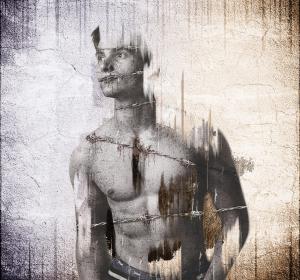
Source: Pixabay.com
We talk a lot about how bad sin is, and it is bad. As Augustine reminds us, sin is nothing short of a reduction of our personhood.
What is often experienced, but not often talked about, is how ordinary and repetitive sin can be. How often do we find ourselves stuck in a grinding routine, any routine, and find ourselves feeling demeaned, less than what we were meant to be, a less than human cog in a machine of mere existence? Sin can be like that too.
How often do we find ourselves going to confession, having been assured of the forgiveness of those sins, only to come back after a time to confess the exact same sins again? I know of accounts of priests whose normal experience in celebrating the Sacrament of Penance is not so much dismay at the singularly scandalous nature of sins confessed. Rather, it is the tedium of hearing penitents who come to say that they have committed the same sins for the umpteenth time. If the wage of sin is death, it is probably because it is a death of a thousand identical cuts.
Writing in a Girardian timbre in his Raising Abel, James Alison draws the parallel between sin and compulsive disorders (115). Here the person suffering such a disorder, in order to expel an unhealed memory and establish one’s own identity over and against that memory, tries to cast the memory out by reliving either the events of that memory or its associated pattern of behaviours over and over again. I am oversimplifying here, but it is possible to see sin as the attempt to establish one’s own self over and against God, only to find that the product of sin does not match the advertising. But rather than give up our attempts to establish an identity independent from God, we choose instead to return again and again to the the same cycle of rebellion, in the vain hope that repeating it for the hundredth time will finally deliver the novelty that the previous ninety-nine times only promised.
The reason I raise this is that there is a subtle parallel depicted in the Scriptures. In the Old Testament, we see that sin is a theme precisely because it is repeated over and over, as seen in the repetition of the phrase “and they did what was displeasing in the eyes of the Lord”. This undercurrent of sin-stained repetition in the Old Testament is given another expression in the New. When Jesus meets the Apostle Matthew, Zacchaeus or the Woman at the Well, the Gospels slip in that same theme, only this time it is depicted in terms of a life of routine. In the case of Matthew and Zacchaeus, Jesus meets them in their routine of collecting taxes. In a similar vein, the Samaritan Woman speaks of her life of sin as connected with having to “keep coming here to draw water” (John 4:15), to keep coming to the same pattern in yet another attempt to experience life afresh.
In a (not really stark) contrast to the repetitious tedium of sin, the saving work of God is framed in terms of a breaking of that tedium. With every repetition of “doing what was displeasing”, another antiphon rings through the Scriptures: “See, I make all things new”. The mercy of God comes as an interruption to our sin-stained repetition, seen in the Gospel of Matthew when, after Jesus interrupts the Apostle’s routine of tax collecting, the latter leaves behind that routine in order to follow the former. The following of Jesus is a training to not just “sin no more”, but to apprehend a divine mercy that is fresh and new, not just in a single moment in one’s history, but in every moment. This why Augustine can exclaim in his Confessions (10:27) that his experience of God as a beauty that is both “so ancient and so new”.
This novelty in God’s mercy is not only an ethical thing, limited to a novelty in human behaviour. The novelty of mercy goes right down to a restructuring of the entire metaphysics of our universe, from one that is under the compulsive dominion of sin, to one that is under the dominion of a God whose mercy is made new every morning. More specifically, every moment of our journey in this life is a singular instantiation of those three haunting words at the start of the Book of Genesis and the Gospel of John: “In the beginning…”
I mentioned in a previous post the essay “The Theological Praxis of Revolution”, in which Aaron Riches and Creston Davis argue that fidelity to the Christ Event, while operating under the form of a liturgical repetition, nonetheless bears the fruit of a perpetual renewal of the universe. The mercy of God comes as a singular – kairotic – event, which breaks the cycle of sin by bringing into our view the freshness of God’s love, a new eden woven into every moment of our experience, including the moments of sin-stained tedium.
While living under the dominion of grinding routine, the Christian life bears the possibility of another life, a new life in the Christ who makes all things new. This is a life not of the hollow novelty of a seemingly new line of consumer products, but an abundant life where the experience of routine in our lives can become a gateway to discern the singular novelty of divine mercy.
Previous Post

November 10, 2017
Don't Be Blind to the Paradoxes of Faith
Next Post

November 24, 2017 The Architecture of the Heart
Browse Our Archives
Select a Category architecture art Augustine Belloc Benedict XVI bible blogs books bourgeois Christianity Campion College Chesterton Christianisation Church and Culture Church Fathers citizen conference conservative consumer culture cybernetics Desert Fathers discipleship distributism drinking ecclesiology economics education environment Evagrius of Pontus formation Foucault George Weigel Girard Graham Ward http://schemas.google.com/blogger/2008/kind#post interfaith Jacques Ellul John Chrysostom Julia Kristeva Latin liturgy mall marriage monasticism Music Narrative news philosophy polis politics pop culture postmodern city postsecular prayer prostestant quote Quotes Radical Orthodoxy resources Rome Rule of St. Benedict saint Saints secular sociology theological anthropology theology transcendance Uncategorized videos William Cavanaugh
Select a Month December 2018 November 2018 October 2018 September 2018 August 2018 July 2018 June 2018 May 2018 April 2018 March 2018 February 2018 January 2018 December 2017 November 2017 October 2017 September 2017 August 2017 July 2017 June 2017 May 2017 April 2017 March 2017 February 2017 January 2017 December 2016 November 2016 October 2016 September 2016 August 2016 July 2016 June 2016 May 2016 April 2016 March 2016 February 2016 January 2016 December 2015 November 2015 October 2015 September 2015 August 2015 July 2015 June 2015 May 2015 April 2015 March 2015 February 2015 January 2015 December 2014 November 2014 October 2014 September 2014 August 2014 July 2014 June 2014 May 2014 April 2014 March 2014 February 2014 January 2014 December 2013 November 2013 October 2013 September 2013 August 2013 July 2013 June 2013 May 2013 April 2013 March 2013 February 2013 January 2013 December 2012 November 2012 October 2012 September 2012 August 2012 July 2012 June 2012 May 2012 April 2012 March 2012 February 2012 January 2012 December 2011 November 2011 October 2011 September 2011 August 2011 July 2011 June 2011 May 2011 April 2011 October 2009 February 2008 December 2007 October 2007 September 2007 August 2007
Follow Us!
TAKE THE
Religious Wisdom Quiz
According to Hebrews, without what is it impossible to please God?
Select your answer to see how you score.
Obedience Faith Sacrifice Love
Related posts from The Divine Wedgie

How a Train Ride Taught Me the Presence...

Images & Idolatry: What Christians Can Learn from...

The 3 Stages of Advent Waiting

Christ the King of My Disappointment
TRENDING AT PATHEOS Catholic

The Parable Of The Sower And The Word...
One of Christ’s most famous parables is that of the sower who...

Rejecting Doom: Christian Hope And Human Action
Christianity is a religion of hope. We are to have hope and...

Why I Choose the Eucharist Over the Sermon
Choose the Eucharist, Not the Sermon What are we supposed to get...

5 Design Elements Found in Spiritually Rooted Homes
Putting Spirituality Into Home Decor Our homes are more than our living...

Credo: A Story of God Told with the...
About 10 years ago, I began to imagine a personal "Credo" that...

The Anatomy of Divine Revelation in Catholic Thought
The claim that God has made Himself known to human beings is...
view all Catholic blogs
Ad-Free & Subscriber Log-In Subscription Support
- About Us
- 2026 Calendar
- Videos
- Podcasts
- Library of World Religions
- Faith In Media Tracker
- Advertise With Us
- Write for Us
- Privacy Policy
- Terms of Service
- Do Not Sell My Data
- Contact Us
- Radiant Digital
- Manage Newsletter Subscriptions
- Unsubscribe From Notifications
- Sitemap
Copyright 2008-2026, Patheos. All rights reserved.
Subscription Support Ad-Free & Subscriber Log-In
Follow Patheos