
BuddhistCatholicContemplativeEvangelicalGeneral ChristianHinduJewishLatter-day SaintMuslimNew VisionsProgressive Christian
Beliefs
- Buddhist
- Catholic
- Contemplative
- Evangelical
- General Christian
- Hindu
- Jewish
- Latter-day Saint
- More Voices
- Muslim
- New Visions
- Pagan
- Progressive Christian
Topics
- Religion News
- Food and Religion
- Sports and Religion
- Religious Art
- Religious Music and Entertainment
- Religious Events
- History and Religion
- Style and Religion
- Politics and Religion
- Women in Religion
- Recreation Outdoors and Religion
- Business Finance and Religion
- Careers Workplace and Religion
- Education and Religion
- Family Parenting and Religion
- Health Fitness and Religion
- Home and Religion
- Relationships and Religion
- Technology and Religion
- Travel and Religion
Columnists
- Buddhist Columnists
- Business Finance and Religion Columnists
- Careers Workplace and Religion Columnists
- Catholic Columnists
- Contemplative Columnists
- Education and Religion Columnists
- Evangelists Columnists
- Family Parenting and Religion Columnists
- General Christian Columnists
- Health Fitness and Religion Columnists
- Hindu Columnists
- History and Religion Columnists
- Home and Religion Columnists
- Jewish Columnists
- More Voices Columnists
- Latter Day Columnists
- Muslim Columnists
- New Visions Columnists
- Nonreligious Columnists
- Pagan Columnists
- Politics and Religion Columnists
- Progressive Columnists
- Recreation Outdoors and Religion Columnists
- Relationships and Religion Columnists
- Religion News Columnists
- Religious Art Columnists
- Religious Events Columnists
- Religious Music and Entertainment Columnists
- Sports and Religion Columnists
- Style and Religion Columnists
- Technology and Religion Columnists
- Travel and Religion Columnists
- Women in Religion Columnists
Resource Library
- 2026 Calendar
- Library of World Religions
- The 100 Most Holy Places on Earth
- Patheos Answers
- Podcasts
- Videos
- Faith Leaders Database
- Anglican Episcopalian
- Bahai
- Baptist
- Buddhism
- Christianity
- Confucianism
- Eastern Orthodoxy
- Hinduism
- Holiness and Pentecostal
- ISKCON
- Islam
- Judaism
- Lutheran
- Methodist
- The Church of Jesus Christ of Latter-day Saints
- New Age
- Paganism
- Presbytarian and Reformed
- Protestantism
- Religion Behind the Scenes
- Roman Catholic
- Scientology
- Shia Islam
- Sikhism
- Sufism
- Sunni Islam
- Taoism
- Zen
- See all religions
Research Tools
 Ad-Free & Subscriber Log-In Subscription Support
Ad-Free & Subscriber Log-In Subscription Support
Follow Patheos 

- Trending:
- Forgiveness
- |
- Marriage
- |
- Consciousness
- |
- Death Penalty
- |
- Election
- |
- Halloween
 The Divine Wedgie
- Home
- Catholic
- Things Themselves: Phenomenology After Trump
Things Themselves: Phenomenology After Trump
Last updated on: November 15, 2016 at 5:47 am by Matthew Tan
Things Themselves: Phenomenology After Trump 2016-11-15T05:47:17+10:00 Matthew Tan
Patheos Explore the world's faith through different perspectives on religion and spirituality! Patheos has the views of the prevalent religions and spiritualities of the world.
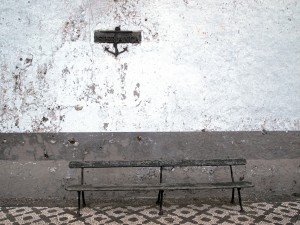
Source: Unsplash.com, CC0
Or WWJD, as in “What Would Jean (Baudrillard) Do?”
More on this later, but first, to the “things themselves”, which was a phrase coined by the German philosopher Edmund Husserl. In the twentieth century, Husserl was credited with the founding of the philosophical subdiscipline called phenomenology, broadly understood as the study of the depth of meaning found in the experience of things in and of themselves. By that, one means an experience of things not mediated by anything that could artificially distort, obscure, enlarge or minimise the experience of the depth of the reality of things.
Why this is raised is because it seems that the depth of things – or more accurately the hollowing out of that reality – lies at the heart of the recent victory of Donald Trump in the presidential race in the United States. This victory, unprecedented at one level but unsurprising at another, is the fruit of a lot of material and social causes. However, one thing seems to undergird all these causes, which is the powerful mediating role of 24-hour news, social media and round the clock online news coverage by outlets with their own angle to spin for profit.
Though not exactly unique in kind (a reading of Chanon Ross’ account of elections as spectacle in his Gifts Glittering and Poisoned bears this out), this election is striking in terms of the degree to which a people’s experience of the world is mediated by the shining veil of the screen. Opinions, evidence, factors and desires have all converged onto lights filtered through pieces of perspex or glass. More precisely, things in and of themselves have become abstracted and filtered, their depth and nuance vacuumed out to make the representation highly pliable at the point of production, and also go down nice and easy at the point of consumption.
Apart from making our eyes sore, and apart from vacuming out the fecundity of things, the saturation of our cultural landscape with these abstractions, these digitally thinned out holograms and their collapsing into our experience of the world has trained us to regard abstractions as more real than the actual things they represent.
It is here that we return to Baudrillard, because it was he that came to describe this condition of rendering simulations and simulacra as more real than actual reality in one pithy word – “hyperreality”. The abstractions may rest on actual things, but in the process of abstraction may either be blown out and isolated from their contexts, or isolated to be stuck into other narrative threads.
What this election result demonstrates, more than any other election result, is the degree to which our experience of the things themselves have become overtaken by the abstractions of things, of places, of people, of communities, of commerce, of events. Under such conditions, abstractions (on which we come to devise policy platforms) are no longer true images – icons – of people, but playthings to be manipulated by sociopolitical entrepreneurs.
If this lies at the heart of the present state of affairs, then one temptation to guard against in coming to a response to a Trump presidency is basing the response on a the same processes of abstractions that put him in the White House. If hyperreal images of things lie at the heart of the malaise, an important facet of the response might be a process of metanoia, a radical turning away from abstractions and simulations we have long taken to be reality (as an aside, it is interesting that in the Latin Vulgate version of scripture, “simulacra” was the word used for “idol”) and, to use a catchcry by Husserl, a return to “the things themselves”.
A return to the things themselves may require a desire to pay close attention to the depth and nuance what is actually in front of us, rather than the flattened out veneer that flashes across the screens of our smartphones. It may involve a return to the insignificant or mundane things (and people) we can do something with or about, and a turn away from the dazzle and the gargantuan spectacles we can do little or nothing about. It may mean realising that our vocation is not in the great winds and mighty earthquakes that shakes our world to its fundaments, but the soft whispers that brush up against our ears and our very paths.
Previous Post
November 7, 2016
The Vicious Ascetic
Next Post

November 22, 2016 Podcast: On the Catholicism of "Daredevil"
Browse Our Archives
Select a Category architecture art Augustine Belloc Benedict XVI bible blogs books bourgeois Christianity Campion College Chesterton Christianisation Church and Culture Church Fathers citizen conference conservative consumer culture cybernetics Desert Fathers discipleship distributism drinking ecclesiology economics education environment Evagrius of Pontus formation Foucault George Weigel Girard Graham Ward http://schemas.google.com/blogger/2008/kind#post interfaith Jacques Ellul John Chrysostom Julia Kristeva Latin liturgy mall marriage monasticism Music Narrative news philosophy polis politics pop culture postmodern city postsecular prayer prostestant quote Quotes Radical Orthodoxy resources Rome Rule of St. Benedict saint Saints secular sociology theological anthropology theology transcendance Uncategorized videos William Cavanaugh
Select a Month December 2018 November 2018 October 2018 September 2018 August 2018 July 2018 June 2018 May 2018 April 2018 March 2018 February 2018 January 2018 December 2017 November 2017 October 2017 September 2017 August 2017 July 2017 June 2017 May 2017 April 2017 March 2017 February 2017 January 2017 December 2016 November 2016 October 2016 September 2016 August 2016 July 2016 June 2016 May 2016 April 2016 March 2016 February 2016 January 2016 December 2015 November 2015 October 2015 September 2015 August 2015 July 2015 June 2015 May 2015 April 2015 March 2015 February 2015 January 2015 December 2014 November 2014 October 2014 September 2014 August 2014 July 2014 June 2014 May 2014 April 2014 March 2014 February 2014 January 2014 December 2013 November 2013 October 2013 September 2013 August 2013 July 2013 June 2013 May 2013 April 2013 March 2013 February 2013 January 2013 December 2012 November 2012 October 2012 September 2012 August 2012 July 2012 June 2012 May 2012 April 2012 March 2012 February 2012 January 2012 December 2011 November 2011 October 2011 September 2011 August 2011 July 2011 June 2011 May 2011 April 2011 October 2009 February 2008 December 2007 October 2007 September 2007 August 2007
Follow Us!
TAKE THE
Religious Wisdom Quiz
What type of wood was Noah’s Ark made from?
Select your answer to see how you score.
Oak Gopher wood Cedar Olive wood
Related posts from The Divine Wedgie

How a Train Ride Taught Me the Presence...

Images & Idolatry: What Christians Can Learn from...

The 3 Stages of Advent Waiting

Christ the King of My Disappointment
TRENDING AT PATHEOS Catholic

Creation, Preservation, and Teleology in Catholic Theology
As I write this, it is very early Monday morning. Like millions...

The Parable Of The Sower And The Word...
One of Christ’s most famous parables is that of the sower who...

Rejecting Doom: Christian Hope And Human Action
Christianity is a religion of hope. We are to have hope and...

Why I Choose the Eucharist Over the Sermon
Choose the Eucharist, Not the Sermon What are we supposed to get...

5 Design Elements Found in Spiritually Rooted Homes
Putting Spirituality Into Home Decor Our homes are more than our living...

Credo: A Story of God Told with the...
About 10 years ago, I began to imagine a personal "Credo" that...
view all Catholic blogs
Ad-Free & Subscriber Log-In Subscription Support
- About Us
- 2026 Calendar
- Videos
- Podcasts
- Library of World Religions
- Faith In Media Tracker
- Advertise With Us
- Write for Us
- Privacy Policy
- Terms of Service
- Do Not Sell My Data
- Contact Us
- Radiant Digital
- Manage Newsletter Subscriptions
- Unsubscribe From Notifications
- Sitemap
Copyright 2008-2026, Patheos. All rights reserved.
Subscription Support Ad-Free & Subscriber Log-In
Follow Patheos