
BuddhistCatholicContemplativeEvangelicalGeneral ChristianHinduJewishLatter-day SaintMuslimNew VisionsProgressive Christian
Beliefs
- Buddhist
- Catholic
- Contemplative
- Evangelical
- General Christian
- Hindu
- Jewish
- Latter-day Saint
- More Voices
- Muslim
- New Visions
- Pagan
- Progressive Christian
Topics
- Religion News
- Food and Religion
- Sports and Religion
- Religious Art
- Religious Music and Entertainment
- Religious Events
- History and Religion
- Style and Religion
- Politics and Religion
- Women in Religion
- Recreation Outdoors and Religion
- Business Finance and Religion
- Careers Workplace and Religion
- Education and Religion
- Family Parenting and Religion
- Health Fitness and Religion
- Home and Religion
- Relationships and Religion
- Technology and Religion
- Travel and Religion
Columnists
- Buddhist Columnists
- Business Finance and Religion Columnists
- Careers Workplace and Religion Columnists
- Catholic Columnists
- Contemplative Columnists
- Education and Religion Columnists
- Evangelists Columnists
- Family Parenting and Religion Columnists
- General Christian Columnists
- Health Fitness and Religion Columnists
- Hindu Columnists
- History and Religion Columnists
- Home and Religion Columnists
- Jewish Columnists
- More Voices Columnists
- Latter Day Columnists
- Muslim Columnists
- New Visions Columnists
- Nonreligious Columnists
- Pagan Columnists
- Politics and Religion Columnists
- Progressive Columnists
- Recreation Outdoors and Religion Columnists
- Relationships and Religion Columnists
- Religion News Columnists
- Religious Art Columnists
- Religious Events Columnists
- Religious Music and Entertainment Columnists
- Sports and Religion Columnists
- Style and Religion Columnists
- Technology and Religion Columnists
- Travel and Religion Columnists
- Women in Religion Columnists
Resource Library
- 2026 Calendar
- Library of World Religions
- The 100 Most Holy Places on Earth
- Patheos Answers
- Podcasts
- Videos
- Faith Leaders Database
- Anglican Episcopalian
- Bahai
- Baptist
- Buddhism
- Christianity
- Confucianism
- Eastern Orthodoxy
- Hinduism
- Holiness and Pentecostal
- ISKCON
- Islam
- Judaism
- Lutheran
- Methodist
- The Church of Jesus Christ of Latter-day Saints
- New Age
- Paganism
- Presbytarian and Reformed
- Protestantism
- Religion Behind the Scenes
- Roman Catholic
- Scientology
- Shia Islam
- Sikhism
- Sufism
- Sunni Islam
- Taoism
- Zen
- See all religions
Research Tools
 Ad-Free & Subscriber Log-In Subscription Support
Ad-Free & Subscriber Log-In Subscription Support
Follow Patheos 

- Trending:
- Forgiveness
- |
- Marriage
- |
- Consciousness
- |
- Death Penalty
- |
- Election
- |
- Halloween
 The Divine Wedgie
- Home
- Catholic
- The Vicious Ascetic
The Vicious Ascetic
Last updated on: November 7, 2016 at 8:21 am by Matthew Tan
The Vicious Ascetic 2016-11-07T08:21:55+10:00 Matthew Tan
Patheos Explore the world's faith through different perspectives on religion and spirituality! Patheos has the views of the prevalent religions and spiritualities of the world.
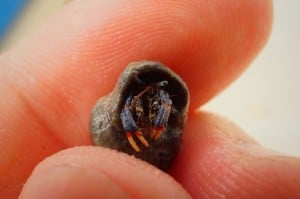
It’s a hermit crab. Get it…? Source: William LeMond, CC0 License
In the Christian tradition asceticism, or the deliberate denial of certain pleasures and appetites, is considered by many to be the path towards greater holiness and sanctity. The more one denies oneself, the stronger the indicators that the person undertaking such denials of the appetites, and the eschewing of pleasure, is on the path towards sainthood (of the non-canonised variety).
Generally, this is a correct orientation for the Christian to take to a life of asceticism. Having said that, this is not an unqualified statement. Drawing upong the writings of Thomas Aquinas, Cavin College’s Rebecca Konyndyk DeYoung argued in her Glittering Vices that the kind of asceticism described above cannot be pursued for its own sake. These denials of pleasures must be embedded within a more active pursuit of virtue. That is, the negative denial of pleasure must also be coupled with the positive good of inculcating the habits that make one fulfil the dignity and nature that God had bestowed on the persons being and on the person’s community (many tend to forget that Aristotle’s, and by extension, Aquinas’ notion of a person’s nature is tied to a being in community). In DeYoung’s words, asceticism must be tied to the “‘becoming’ or ‘befitting’all that God calls us to be and do, and for those with whom we live out that calling” (150).
According to Thomas then, insofar as the former is connected to and fulfils the latter, then would the denial of pleasure be fitting for the Christian life. Uncoupled from this, the denial of pleasure can actually become an avenue for vice.
To understand why this is so, DeYoung alerts our attention to Aquinas’ observation that pleasure in and of itself is not an evil, but is actually a temporal good befitting our embodied nature. Furthermore, Aquinas “(via DeYoung) actually says that “the more natural and necessary the activity [for our embodied person]…then the more pleasure God designed to accompany the activity” (147). Pleasure then is actually good when it is befitting our nature and when it aids in the pursuit of virtue.
Because of this, an asceticism that is uncoupled from virtue, an asceticism for its own sake, becomes an avenue for vice for a number of reasons. First, it regards as an evil that which God designated a good, a rendering unclean what God has rendered clean (to paraphrase Acts 10:15), which then feeds the vice of pride.
Second, an asceticism for its own sake denies the good of sociality, since it both draws attention away from others (including that of God), and towards the ascetic. An ascetic for its own sake will begin to emphasise one’s own virtue and compare it with the perceived vice of others when they show signs of properly enjoying the goods of this world. This is problematic because, as Augustine observed in his City of God, the gravitating of love towards one’s own person rather than another is the beginning of the negation of one’s own nature.
Third, insofar as an asceticism for its own sake makes one’s own sense of virtue the central focus and purpose, the practice of denial of pleasure as a means of self-aggrandisement can actually mutate into a practice of the vice of gluttony. This is so because, as DeYoung makes clear in her coverage on the vice of gluttony, gluttony can not only take the form of taking in too much physical food, but also the taking in of anything that feeds one’s ego and lust to dominate others.
The brake against this vicious kind of denial then is not only to practice denial in and of itself – indeed, such a denial can risk creating the “sour faced saints” from which St. Teresa of Avila asked God to deliver her – but to also make such a denial an opportunity to evaluate oneself in light of the pursuit of God’s calling to fulfil your nature and purpose. This requires not just the practice of denial, but also the other practices in one’s own life, but also one’s own life in the context of a communal living, particularly in the communion of saints. These others, far from being a distraction to the call of virtue (which is the point of asceticism anyway), can actually function as aids to it, checking the degree to which supposedly holy practices get oriented towards the self rather than to others and to God.
Previous Post

November 1, 2016
Money as Sacrifice
Next Post

November 15, 2016 Things Themselves: Phenomenology After Trump
Browse Our Archives
Select a Category architecture art Augustine Belloc Benedict XVI bible blogs books bourgeois Christianity Campion College Chesterton Christianisation Church and Culture Church Fathers citizen conference conservative consumer culture cybernetics Desert Fathers discipleship distributism drinking ecclesiology economics education environment Evagrius of Pontus formation Foucault George Weigel Girard Graham Ward http://schemas.google.com/blogger/2008/kind#post interfaith Jacques Ellul John Chrysostom Julia Kristeva Latin liturgy mall marriage monasticism Music Narrative news philosophy polis politics pop culture postmodern city postsecular prayer prostestant quote Quotes Radical Orthodoxy resources Rome Rule of St. Benedict saint Saints secular sociology theological anthropology theology transcendance Uncategorized videos William Cavanaugh
Select a Month December 2018 November 2018 October 2018 September 2018 August 2018 July 2018 June 2018 May 2018 April 2018 March 2018 February 2018 January 2018 December 2017 November 2017 October 2017 September 2017 August 2017 July 2017 June 2017 May 2017 April 2017 March 2017 February 2017 January 2017 December 2016 November 2016 October 2016 September 2016 August 2016 July 2016 June 2016 May 2016 April 2016 March 2016 February 2016 January 2016 December 2015 November 2015 October 2015 September 2015 August 2015 July 2015 June 2015 May 2015 April 2015 March 2015 February 2015 January 2015 December 2014 November 2014 October 2014 September 2014 August 2014 July 2014 June 2014 May 2014 April 2014 March 2014 February 2014 January 2014 December 2013 November 2013 October 2013 September 2013 August 2013 July 2013 June 2013 May 2013 April 2013 March 2013 February 2013 January 2013 December 2012 November 2012 October 2012 September 2012 August 2012 July 2012 June 2012 May 2012 April 2012 March 2012 February 2012 January 2012 December 2011 November 2011 October 2011 September 2011 August 2011 July 2011 June 2011 May 2011 April 2011 October 2009 February 2008 December 2007 October 2007 September 2007 August 2007
Follow Us!
TAKE THE
Religious Wisdom Quiz
Who led the Israelites into battle against Jericho?
Select your answer to see how you score.
Joshua Gideon David Moses
Related posts from The Divine Wedgie

How a Train Ride Taught Me the Presence...

Images & Idolatry: What Christians Can Learn from...

The 3 Stages of Advent Waiting

Christ the King of My Disappointment
TRENDING AT PATHEOS Catholic

Creation, Preservation, and Teleology in Catholic Theology
As I write this, it is very early Monday morning. Like millions...

The Parable Of The Sower And The Word...
One of Christ’s most famous parables is that of the sower who...

Rejecting Doom: Christian Hope And Human Action
Christianity is a religion of hope. We are to have hope and...

Why I Choose the Eucharist Over the Sermon
Choose the Eucharist, Not the Sermon What are we supposed to get...

5 Design Elements Found in Spiritually Rooted Homes
Putting Spirituality Into Home Decor Our homes are more than our living...

Credo: A Story of God Told with the...
About 10 years ago, I began to imagine a personal "Credo" that...
view all Catholic blogs
Ad-Free & Subscriber Log-In Subscription Support
- About Us
- 2026 Calendar
- Videos
- Podcasts
- Library of World Religions
- Faith In Media Tracker
- Advertise With Us
- Write for Us
- Privacy Policy
- Terms of Service
- Do Not Sell My Data
- Contact Us
- Radiant Digital
- Manage Newsletter Subscriptions
- Unsubscribe From Notifications
- Sitemap
Copyright 2008-2026, Patheos. All rights reserved.
Subscription Support Ad-Free & Subscriber Log-In
Follow Patheos