
BuddhistCatholicContemplativeEvangelicalGeneral ChristianHinduJewishLatter-day SaintMuslimNew VisionsProgressive Christian
Beliefs
- Buddhist
- Catholic
- Contemplative
- Evangelical
- General Christian
- Hindu
- Jewish
- Latter-day Saint
- More Voices
- Muslim
- New Visions
- Pagan
- Progressive Christian
Topics
- Religion News
- Food and Religion
- Sports and Religion
- Religious Art
- Religious Music and Entertainment
- Religious Events
- History and Religion
- Style and Religion
- Politics and Religion
- Women in Religion
- Recreation Outdoors and Religion
- Business Finance and Religion
- Careers Workplace and Religion
- Education and Religion
- Family Parenting and Religion
- Health Fitness and Religion
- Home and Religion
- Relationships and Religion
- Technology and Religion
- Travel and Religion
Columnists
- Buddhist Columnists
- Business Finance and Religion Columnists
- Careers Workplace and Religion Columnists
- Catholic Columnists
- Contemplative Columnists
- Education and Religion Columnists
- Evangelists Columnists
- Family Parenting and Religion Columnists
- General Christian Columnists
- Health Fitness and Religion Columnists
- Hindu Columnists
- History and Religion Columnists
- Home and Religion Columnists
- Jewish Columnists
- More Voices Columnists
- Latter Day Columnists
- Muslim Columnists
- New Visions Columnists
- Nonreligious Columnists
- Pagan Columnists
- Politics and Religion Columnists
- Progressive Columnists
- Recreation Outdoors and Religion Columnists
- Relationships and Religion Columnists
- Religion News Columnists
- Religious Art Columnists
- Religious Events Columnists
- Religious Music and Entertainment Columnists
- Sports and Religion Columnists
- Style and Religion Columnists
- Technology and Religion Columnists
- Travel and Religion Columnists
- Women in Religion Columnists
Resource Library
- 2026 Calendar
- Library of World Religions
- The 100 Most Holy Places on Earth
- Patheos Answers
- Podcasts
- Videos
- Faith Leaders Database
- Anglican Episcopalian
- Bahai
- Baptist
- Buddhism
- Christianity
- Confucianism
- Eastern Orthodoxy
- Hinduism
- Holiness and Pentecostal
- ISKCON
- Islam
- Judaism
- Lutheran
- Methodist
- The Church of Jesus Christ of Latter-day Saints
- New Age
- Paganism
- Presbytarian and Reformed
- Protestantism
- Religion Behind the Scenes
- Roman Catholic
- Scientology
- Shia Islam
- Sikhism
- Sufism
- Sunni Islam
- Taoism
- Zen
- See all religions
Research Tools
 Ad-Free & Subscriber Log-In Subscription Support
Ad-Free & Subscriber Log-In Subscription Support
Follow Patheos 

- Trending:
- Forgiveness
- |
- Marriage
- |
- Consciousness
- |
- Death Penalty
- |
- Election
- |
- Halloween
 The Divine Wedgie
- Home
- Catholic
- How Should Christians Respond to “the Feels”?
How Should Christians Respond to “the Feels”?
Last updated on: October 11, 2016 at 5:59 am by Matthew Tan
How Should Christians Respond to “the Feels”? 2016-10-11T05:59:02+10:00 Matthew Tan
Patheos Explore the world's faith through different perspectives on religion and spirituality! Patheos has the views of the prevalent religions and spiritualities of the world.
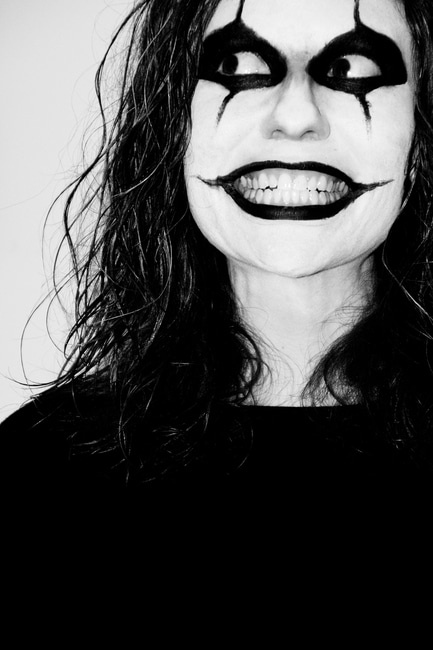
Source: gratisography.com, CC0 License
The feels…
Nowadays, it is used to describe two things at once. At one, more literal, level, it is used to describe your feelings, your emotional state. However, as a whole slew of “Right in the Feels” memes is demonstrating, it is also, at a more figurative level, referring to some part of your person that you either cannot express in words, or are just too lazy to find the words for. It is a deep, pondering part of the self which one’s feelings or emotions touch upon but never fully grasp.
Some might even go as far as to suggest that “the feels” may be the threshold of the soul. If not that, a number of New Age practitioners, astral guides, and trance music DJs would suggest at varying degrees that “the feels” denote this strange borderland where one is on the cusp of taking leave of one’s temporal existence and enters into a transcendent plane.
What is more, postmodern culture is now one that is flooded with “the feels” coming in various forms of packaging. From milk to deoderant, from shampoo to cars, from political rallies to online-generated dates, the product or event seems almost secondary to the swoon of emotion one acquires in the process of acquiring the product.
How might the Christian respond to “the feels”? Condemn it outright in a meme? Embrace it with a meme? Or should the Christian tradition delve into its own resources, which go back into the early centuries of its existence, and discover a number of surprising nuances?
Consider, for instance, the Praktikos, written by the fourth century Egyptian monk, Evagrius of Pontus. The Praktikos is striking for its incisive understanding of psychology. Yet, what is also striking is that Evagrius does not seem to make any distinction between psychology and demonology. When looking at his most oft-quoted section in the Praktikos, that concerning the “demon of Acedia”, Evagrius wrote about how one’s feelings of restlessness, despair and isolation constitute a demonic attack. “The feels” for Evagrius were thus an important part of one’s discipleship as a hermit in the desert, over which the hermit should exercise vigilance as a zone of the spiritual. As a sidenote to this, it is interesting that, before Evagrius, the greek philosopher Aristotle used the word eudaimonia to denote a person’s full flourishing, which includes the flourishing of one’s emotional life. Yet, rather than use “emotion”, Aristotle used incorporated the word daimon – spirits – into his concept of flourishing.
Speaking of Aristotle, in the medieval period, the Christian has no less than Thomas Aquinas writing on the emotions. Drawing on Aristotle, Aquinas spoke more appreciatively on the emotions, describing them in his Summa Theologiae as an important component for stirring one to live a life of virtue when they are ordered rightly. What is noteworthy for Aquinas is that the virtues are not simply good actions. They are also actions that ennoble one’s nature, preparing them for one’s end, ultimately located not in this world, but in the Beatific Vision. Left disordered, that is, disconnected from the use of one’s reason, however, “the feels” can become an obstacle to the focussed practice of virtue. Because of their constantly shifts, “the feels” can actually lead one on an erratic chase of one temporal thrill after another, anything other than the pursuit of one’s heavenly end.
These two figures (there are many others) are strong indicators for the Christian that “the feels” cannot be dismissed as mere fluff, details we can dispense with in order to focus on the life of faith. They form what Aquinas affirmatively called “the affective life” which, like all walks of life, can only come about through proper formation from someone outside the individual doing the feeling. As part of our embodied personhood, they are as much a part of the life of faith as the intellect. Yet, the attention to one’s feels should not give way to an emotionalism, a primacy of emotion over the intellect which could serve the ends of demons, insofar as the demons are charged with putting obstacles in our path towards our transcendent heavenly home.
A time flooded with “the feels”, therefore, can constitute a very important entry point for a theologically charged, postsecular scholarship.
Previous Post
October 4, 2016
Desire & Idolatry: After Debating
Next Post
October 18, 2016 Available Now: Campion College on "Stranger Things"
Browse Our Archives
Select a Category architecture art Augustine Belloc Benedict XVI bible blogs books bourgeois Christianity Campion College Chesterton Christianisation Church and Culture Church Fathers citizen conference conservative consumer culture cybernetics Desert Fathers discipleship distributism drinking ecclesiology economics education environment Evagrius of Pontus formation Foucault George Weigel Girard Graham Ward http://schemas.google.com/blogger/2008/kind#post interfaith Jacques Ellul John Chrysostom Julia Kristeva Latin liturgy mall marriage monasticism Music Narrative news philosophy polis politics pop culture postmodern city postsecular prayer prostestant quote Quotes Radical Orthodoxy resources Rome Rule of St. Benedict saint Saints secular sociology theological anthropology theology transcendance Uncategorized videos William Cavanaugh
Select a Month December 2018 November 2018 October 2018 September 2018 August 2018 July 2018 June 2018 May 2018 April 2018 March 2018 February 2018 January 2018 December 2017 November 2017 October 2017 September 2017 August 2017 July 2017 June 2017 May 2017 April 2017 March 2017 February 2017 January 2017 December 2016 November 2016 October 2016 September 2016 August 2016 July 2016 June 2016 May 2016 April 2016 March 2016 February 2016 January 2016 December 2015 November 2015 October 2015 September 2015 August 2015 July 2015 June 2015 May 2015 April 2015 March 2015 February 2015 January 2015 December 2014 November 2014 October 2014 September 2014 August 2014 July 2014 June 2014 May 2014 April 2014 March 2014 February 2014 January 2014 December 2013 November 2013 October 2013 September 2013 August 2013 July 2013 June 2013 May 2013 April 2013 March 2013 February 2013 January 2013 December 2012 November 2012 October 2012 September 2012 August 2012 July 2012 June 2012 May 2012 April 2012 March 2012 February 2012 January 2012 December 2011 November 2011 October 2011 September 2011 August 2011 July 2011 June 2011 May 2011 April 2011 October 2009 February 2008 December 2007 October 2007 September 2007 August 2007
Follow Us!
TAKE THE
Religious Wisdom Quiz
Who was turned into a pillar of salt?
Select your answer to see how you score.
Sarah Rachel Lot’s wife Lot
Related posts from The Divine Wedgie

How a Train Ride Taught Me the Presence...

Images & Idolatry: What Christians Can Learn from...

The 3 Stages of Advent Waiting

Christ the King of My Disappointment
TRENDING AT PATHEOS Catholic

Rejecting Doom: Christian Hope And Human Action
Christianity is a religion of hope. We are to have hope and...

It’s What Comes From Within Which Matters
One of the most difficult things for us to understand is why...

Why I Choose the Eucharist Over the Sermon
Choose the Eucharist, Not the Sermon What are we supposed to get...

5 Design Elements Found in Spiritually Rooted Homes
Putting Spirituality Into Home Decor Our homes are more than our living...

Credo: A Story of God Told with the...
About 10 years ago, I began to imagine a personal "Credo" that...

The Anatomy of Divine Revelation in Catholic Thought
The claim that God has made Himself known to human beings is...
view all Catholic blogs
Ad-Free & Subscriber Log-In Subscription Support
- About Us
- 2026 Calendar
- Videos
- Podcasts
- Library of World Religions
- Faith In Media Tracker
- Advertise With Us
- Write for Us
- Privacy Policy
- Terms of Service
- Do Not Sell My Data
- Contact Us
- Radiant Digital
- Manage Newsletter Subscriptions
- Unsubscribe From Notifications
- Sitemap
Copyright 2008-2026, Patheos. All rights reserved.
Subscription Support Ad-Free & Subscriber Log-In
Follow Patheos