
BuddhistCatholicContemplativeEvangelicalGeneral ChristianHinduJewishLatter-day SaintMuslimNew VisionsProgressive Christian
Beliefs
- Buddhist
- Catholic
- Contemplative
- Evangelical
- General Christian
- Hindu
- Jewish
- Latter-day Saint
- More Voices
- Muslim
- New Visions
- Pagan
- Progressive Christian
Topics
- Religion News
- Food and Religion
- Sports and Religion
- Religious Art
- Religious Music and Entertainment
- Religious Events
- History and Religion
- Style and Religion
- Politics and Religion
- Women in Religion
- Recreation Outdoors and Religion
- Business Finance and Religion
- Careers Workplace and Religion
- Education and Religion
- Family Parenting and Religion
- Health Fitness and Religion
- Home and Religion
- Relationships and Religion
- Technology and Religion
- Travel and Religion
Columnists
- Buddhist Columnists
- Business Finance and Religion Columnists
- Careers Workplace and Religion Columnists
- Catholic Columnists
- Contemplative Columnists
- Education and Religion Columnists
- Evangelists Columnists
- Family Parenting and Religion Columnists
- General Christian Columnists
- Health Fitness and Religion Columnists
- Hindu Columnists
- History and Religion Columnists
- Home and Religion Columnists
- Jewish Columnists
- More Voices Columnists
- Latter Day Columnists
- Muslim Columnists
- New Visions Columnists
- Nonreligious Columnists
- Pagan Columnists
- Politics and Religion Columnists
- Progressive Columnists
- Recreation Outdoors and Religion Columnists
- Relationships and Religion Columnists
- Religion News Columnists
- Religious Art Columnists
- Religious Events Columnists
- Religious Music and Entertainment Columnists
- Sports and Religion Columnists
- Style and Religion Columnists
- Technology and Religion Columnists
- Travel and Religion Columnists
- Women in Religion Columnists
Resource Library
- 2026 Calendar
- Library of World Religions
- The 100 Most Holy Places on Earth
- Patheos Answers
- Podcasts
- Videos
- Faith Leaders Database
- Anglican Episcopalian
- Bahai
- Baptist
- Buddhism
- Christianity
- Confucianism
- Eastern Orthodoxy
- Hinduism
- Holiness and Pentecostal
- ISKCON
- Islam
- Judaism
- Lutheran
- Methodist
- The Church of Jesus Christ of Latter-day Saints
- New Age
- Paganism
- Presbytarian and Reformed
- Protestantism
- Religion Behind the Scenes
- Roman Catholic
- Scientology
- Shia Islam
- Sikhism
- Sufism
- Sunni Islam
- Taoism
- Zen
- See all religions
Research Tools
 Ad-Free & Subscriber Log-In Subscription Support
Ad-Free & Subscriber Log-In Subscription Support
Follow Patheos 

- Trending:
- Forgiveness
- |
- Marriage
- |
- Consciousness
- |
- Death Penalty
- |
- Election
- |
- Halloween
 The Divine Wedgie
- Home
- Catholic
- Emmanuel Mounier: On Bodies & the Abstracting Power of Machines
Emmanuel Mounier: On Bodies & the Abstracting Power of Machines
Last updated on: September 27, 2016 at 7:06 am by Matthew Tan
Emmanuel Mounier: On Bodies & the Abstracting Power of Machines 2016-09-23T09:43:16+10:00 Matthew Tan
Patheos Explore the world's faith through different perspectives on religion and spirituality! Patheos has the views of the prevalent religions and spiritualities of the world.
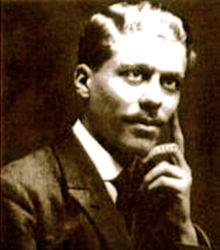
Source: Wikimedia Commons
In a tutorial in political philosophy class at Campion College Australia last week, students were introduced to passages from Personalism by Emmanuel Mounier, one of the founding figures of that movement called French Personalism. This was the early twentieth-century intellectual faction which nourished the thought of Jacques Maritain, Nikolai Berdayev and, decades later, Paul Riceour and Karol Wojtyla. Mounier’s book, written in the 1930s, could be speaking to our current postmodern and postsecular age.
This is particularly the case in a chapter entitled “Bodily Existence”. The most salient for the class were the ones concerning the body (and its relation to subjectivity, time, space and even eternity) and the abstracting power of machines.
On the body, Mounier writes…
I am a person from my most elementary existence upward, and my embodied existence, far from de-personalising me, is a factor essentaial to my personal status. My body is not one object among others, nor even the nearest object – for how then, could it be with my experience as a subject? In fact the two experiences are not separate: I exist subjectively, I exist bodily are one and the same experience. I cannot think without being and i cannot be without my body, which is my exposition – to myself to the world, to everyone else: by its means alone can I escape from the solitude of a thinking that would be only thought about thought. By its refusal to leave me wholly transparent to myself, the body takes me constantly out of myself into the problems of the world and the struggles of mankind. By the solicitation of the senses it pushes me out into space, by growing old it acquaints me with duration, and by its death, it confronts me with eternity.
Whilst on technology…
Man is unique in his invention of tools, and in his subsequent linking of htem into systems of machinery that slwoly frame a collective body for all humanity. The men of this twentieth cnetury are bewildered to see this new and all powerful body they are constructing. The power of abstraction in the machine is indeed frightening; by its severence of human contacts, it can make us forget, more dangerously, thank anything else has ever done, what happens to those whose work it controls and whose bodies it may sacrifice. Perfectly objective, altogether explicable, it de-educates us from all that is intimate, secret or inexpressible. It puts undreamed-of powers into the hands of imbecile: it entertains us by its excesses, only to distracts us from its cruelties. Left to its own blind inertia, it is the most powerful of forces making for depersonalisation.
Previous Post

September 20, 2016
Catfishing, the Synthetic Self & Confession
Next Post
October 4, 2016 Desire & Idolatry: After Debating
Browse Our Archives
Select a Category architecture art Augustine Belloc Benedict XVI bible blogs books bourgeois Christianity Campion College Chesterton Christianisation Church and Culture Church Fathers citizen conference conservative consumer culture cybernetics Desert Fathers discipleship distributism drinking ecclesiology economics education environment Evagrius of Pontus formation Foucault George Weigel Girard Graham Ward http://schemas.google.com/blogger/2008/kind#post interfaith Jacques Ellul John Chrysostom Julia Kristeva Latin liturgy mall marriage monasticism Music Narrative news philosophy polis politics pop culture postmodern city postsecular prayer prostestant quote Quotes Radical Orthodoxy resources Rome Rule of St. Benedict saint Saints secular sociology theological anthropology theology transcendance Uncategorized videos William Cavanaugh
Select a Month December 2018 November 2018 October 2018 September 2018 August 2018 July 2018 June 2018 May 2018 April 2018 March 2018 February 2018 January 2018 December 2017 November 2017 October 2017 September 2017 August 2017 July 2017 June 2017 May 2017 April 2017 March 2017 February 2017 January 2017 December 2016 November 2016 October 2016 September 2016 August 2016 July 2016 June 2016 May 2016 April 2016 March 2016 February 2016 January 2016 December 2015 November 2015 October 2015 September 2015 August 2015 July 2015 June 2015 May 2015 April 2015 March 2015 February 2015 January 2015 December 2014 November 2014 October 2014 September 2014 August 2014 July 2014 June 2014 May 2014 April 2014 March 2014 February 2014 January 2014 December 2013 November 2013 October 2013 September 2013 August 2013 July 2013 June 2013 May 2013 April 2013 March 2013 February 2013 January 2013 December 2012 November 2012 October 2012 September 2012 August 2012 July 2012 June 2012 May 2012 April 2012 March 2012 February 2012 January 2012 December 2011 November 2011 October 2011 September 2011 August 2011 July 2011 June 2011 May 2011 April 2011 October 2009 February 2008 December 2007 October 2007 September 2007 August 2007
Follow Us!
TAKE THE
Religious Wisdom Quiz
What happened to Lot’s wife when she looked back at Sodom?
Select your answer to see how you score.
She turned into a pillar of salt She disappeared She was blinded She lost her voice
Related posts from The Divine Wedgie

How a Train Ride Taught Me the Presence...

Images & Idolatry: What Christians Can Learn from...

The 3 Stages of Advent Waiting

Christ the King of My Disappointment
TRENDING AT PATHEOS Catholic

Rejecting Doom: Christian Hope And Human Action
Christianity is a religion of hope. We are to have hope and...

It’s What Comes From Within Which Matters
One of the most difficult things for us to understand is why...

Why I Choose the Eucharist Over the Sermon
Choose the Eucharist, Not the Sermon What are we supposed to get...

5 Design Elements Found in Spiritually Rooted Homes
Putting Spirituality Into Home Decor Our homes are more than our living...

Credo: A Story of God Told with the...
About 10 years ago, I began to imagine a personal "Credo" that...

The Anatomy of Divine Revelation in Catholic Thought
The claim that God has made Himself known to human beings is...
view all Catholic blogs
Ad-Free & Subscriber Log-In Subscription Support
- About Us
- 2026 Calendar
- Videos
- Podcasts
- Library of World Religions
- Faith In Media Tracker
- Advertise With Us
- Write for Us
- Privacy Policy
- Terms of Service
- Do Not Sell My Data
- Contact Us
- Radiant Digital
- Manage Newsletter Subscriptions
- Unsubscribe From Notifications
- Sitemap
Copyright 2008-2026, Patheos. All rights reserved.
Subscription Support Ad-Free & Subscriber Log-In
Follow Patheos