
BuddhistCatholicContemplativeEvangelicalGeneral ChristianHinduJewishLatter-day SaintMuslimNew VisionsProgressive Christian
Beliefs
- Buddhist
- Catholic
- Contemplative
- Evangelical
- General Christian
- Hindu
- Jewish
- Latter-day Saint
- More Voices
- Muslim
- New Visions
- Pagan
- Progressive Christian
Topics
- Religion News
- Food and Religion
- Sports and Religion
- Religious Art
- Religious Music and Entertainment
- Religious Events
- History and Religion
- Style and Religion
- Politics and Religion
- Women in Religion
- Recreation Outdoors and Religion
- Business Finance and Religion
- Careers Workplace and Religion
- Education and Religion
- Family Parenting and Religion
- Health Fitness and Religion
- Home and Religion
- Relationships and Religion
- Technology and Religion
- Travel and Religion
Columnists
- Buddhist Columnists
- Business Finance and Religion Columnists
- Careers Workplace and Religion Columnists
- Catholic Columnists
- Contemplative Columnists
- Education and Religion Columnists
- Evangelists Columnists
- Family Parenting and Religion Columnists
- General Christian Columnists
- Health Fitness and Religion Columnists
- Hindu Columnists
- History and Religion Columnists
- Home and Religion Columnists
- Jewish Columnists
- More Voices Columnists
- Latter Day Columnists
- Muslim Columnists
- New Visions Columnists
- Nonreligious Columnists
- Pagan Columnists
- Politics and Religion Columnists
- Progressive Columnists
- Recreation Outdoors and Religion Columnists
- Relationships and Religion Columnists
- Religion News Columnists
- Religious Art Columnists
- Religious Events Columnists
- Religious Music and Entertainment Columnists
- Sports and Religion Columnists
- Style and Religion Columnists
- Technology and Religion Columnists
- Travel and Religion Columnists
- Women in Religion Columnists
Resource Library
- 2026 Calendar
- Library of World Religions
- The 100 Most Holy Places on Earth
- Patheos Answers
- Podcasts
- Videos
- Faith Leaders Database
- Anglican Episcopalian
- Bahai
- Baptist
- Buddhism
- Christianity
- Confucianism
- Eastern Orthodoxy
- Hinduism
- Holiness and Pentecostal
- ISKCON
- Islam
- Judaism
- Lutheran
- Methodist
- The Church of Jesus Christ of Latter-day Saints
- New Age
- Paganism
- Presbytarian and Reformed
- Protestantism
- Religion Behind the Scenes
- Roman Catholic
- Scientology
- Shia Islam
- Sikhism
- Sufism
- Sunni Islam
- Taoism
- Zen
- See all religions
Research Tools
 Ad-Free & Subscriber Log-In Subscription Support
Ad-Free & Subscriber Log-In Subscription Support
Follow Patheos 

- Trending:
- Forgiveness
- |
- Marriage
- |
- Consciousness
- |
- Death Penalty
- |
- Election
- |
- Halloween

- Home
- Catholic
- Politics and Religion
- Doubting Richard Dawkins
Doubting Richard Dawkins
Last updated on: September 22, 2025 at 5:38 am by Robert J. Hutchinson
Doubting Richard Dawkins 2025-09-22T05:38:07-07:00 Robert J. Hutchinson
Patheos Explore the world's faith through different perspectives on religion and spirituality! Patheos has the views of the prevalent religions and spiritualities of the world.
An interesting new book has just come out, a collection of stories about people who once were true believers in Richard Dawkins’s unique brand of evolutionary atheism but who have since come to doubt their leader’s key claims.
It’s called “Coming to Faith Through Dawkins: 12 Essays on the Pathway from New Atheism to Christianity, edited by the British Christian biologist Denis Alexander and the theologian Alister McGrath. I plan on reviewing the book as soon as I get a copy.
But before I do that, I thought I’d lay out my own problems with Dawkins’s arguments — especially those presented in his magnum opus, The Blind Watchmaker. In this classic introduction to evolutionary theory, Dawkins claims that the evidence of evolution reveals “a universe without design.” But as we will see, the little evidence he does presents does no such thing.
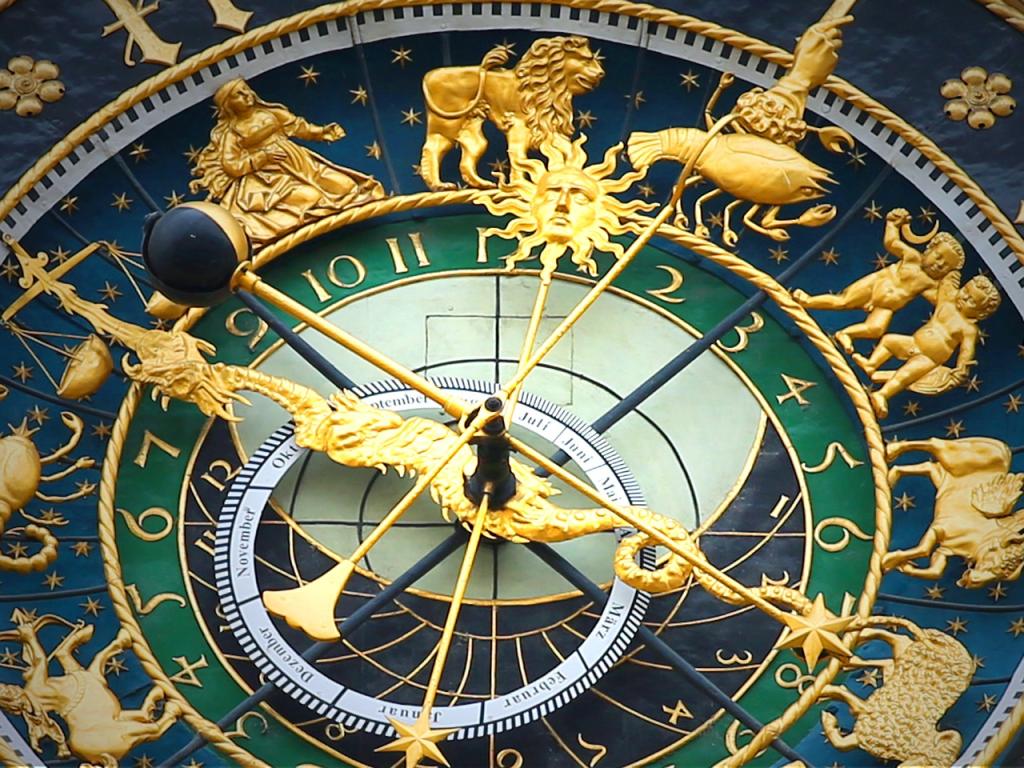
The Astronomical Clock illustrates the theory that the universe was designed. Source: Pixabay
In his very first chapter, Dawkins explains that his book is a refutation of the argument from design put forth by William Paley in his classic Natural Theology, published in 1802.
In that work, Paley used the analogy of finding a watch lying on the heath and concluding, from the complexity of the cogs and springs in it, that the watch must have had a maker. In the same way that a mechanical system like a watch must have a maker, Paley concluded, so, too, complex biological systems in nature also point to the existence of a maker, that is, to God. Dawkins’s goal is to show why this is “gloriously and utterly wrong.”
He argues convincingly that Charles Darwin’s discovery, or theory, of the mechanism of natural selection provided the first plausible explanation for how complex biological systems could give the illusion of design and planning but still be the result of unconscious physical forces. There is a “maker” of sorts in nature, Dawkins claims, but it is the opposite of intelligent.
“Natural selection, the blind, unconscious, automatic process which Darwin discovered, and which we now know is the explanation for the existence and apparently purposeful form of all life, has no purpose in mind,” he writes. “If it can be said to play the role of watchmaker in nature, it is the blind watchmaker.”
Like a good writer and unlike some scientists, Dawkins admirably defines at least some of his terms. By evolution, Dawkins means the accumulation of small changes in biological organisms over time, “gradual, step-by-step transformations from simple beginnings” that, taken together, “constitutes anything but a chance process.” The individual small changes are “simple enough… to have arisen by chance,” but the cumulative process is shaped by “a nonrandom process” in which the changes that aid survival of the species endure over time. We call this nonrandom process natural selection.
Because natural selection gives “the illusion of design and planning,” it’s important to know what is meant by “design” or complexity. A complex thing, Dawkins explains, has (1) many parts and (2) a heterogeneous structure that is (3) “highly unlikely to have been acquired by random chance alone.” When Dawkins speaks about “evidence” for these complex organisms or structures arising “without design,” he is looking for explanations for how complicated changes appear that are “highly unlikely to have been acquired by random chance alone.” These “explanations” for complicated changes are what “reveal” a “universe without design.”
Dawkins’s Evidence and Arguments
What evidence and arguments does Dawkins advance to buttress his main claim?
As an evolutionary biologist himself, Dawkins fills most of his book with detailed and fascinating descriptions of complex biological systems, from the human eyeball to the echolocation of bats, and then alludes to the speculative proposals of his fellow scientists for how these complex systems could have arisen gradually over time. The problem for Dawkins and evolutionary biologists generally is that many of these examples are highly speculative “just so” stories, with scant physical evidence of intermediary changes to back them up.
For example, Dawkins spends 21 pages discussing the complexity of bat “radar” or echolocation and how it aids bat survival. Yet while Dawkins asserts that this ingenious detection system evolved in “gradual evolutionary stages by natural selection,” he provides no evidence for how we know that to be true.
Instead, Dawkins lapses into philosophy and ad hominem attacks on theologians who question Darwinian theory.
Ad Hominem Attacks Are Dawkins’s Specialty
He argues that small changes can become big changes over time, given millions of years of evolution, and that “eyes don’t fossilize,” by which he means that we shouldn’t expect physical fossil evidence for intermediary structures that gradually became eyeballs. Yet Dawkins never does get around to providing the empirical evidence that bat radar emerged through many intermediary steps over time.
Of course, most biologists today accept as a fact that organisms have changed over time. Precisely how this change occurs, however, and whether natural selection based on random mutations and improved survivability is itself a sufficient explanation for all biological change over time, is more controversial.
One reason for this is the dearth of physical evidence for the “gradual, intermediary” stages that biologists such as Dawkins assume “must” have happened. Dawkins is himself aware of this dearth of evidence, and frequently vents his ire against what he calls “the rather pathetic ‘Argument from Personal Incredulity’” – that is, the tendency of non-biologists to question whether something as complex as a human eye could have evolved gradually. Concerning whether the eye specifically could have evolved through natural selection, Dawkins assures us that “the answer has to be yes*,* provided only that we allow ourselves a sufficiently large series of” steps.
Yet once again, Dawkins provides little evidence to support this assertion. Strangely, he makes a philosophical rather than a scientific argument: “So far, by a process of more-or-less abstract reasoning, we have concluded that there is a series of imaginable Xs” – by which he means discreet evolutionary steps – “each sufficiently similar to its neighbours that it could plausibly turn into one of its neighbours, the whole series linking the human eye back to no eye at all.” Then he concedes: “But we still haven’t demonstrated that it is plausible that this series of Xs actually existed.”
You would expect that Dawkins would then proceed to demonstrate that these steps “actually existed,” but he does not.
Once again, Dawkins digresses into page after page of ad hominem attacks on critics of evolution – in this case, a British science writer who dared question how exactly the eye evolved “by slow, steady, infinitesimally small Darwinian improvements (Dawkins, 1987: 80).” Dawkins is also critical of fellow scientists, such as the Harvard paleontologist Stephen Jay Gould, who have also challenged Darwinian orthodoxy for its lack of evidence for intermediary steps.
Eventually, Dawkins does return to the question of intermediary steps in the evolution of the eye. But once again, his arguments are philosophical, not empirical. Dawkins claims, as do some biology textbooks, that a partial eye would be better than no eye at all, and that “many an ancestor was probably saved through seeing something that really mattered, a sabre-tooth ‘tiger’ perhaps.” Yet he provides no evidence of the “partial eyes” in the past that could have plausibly evolved into the human eye, pointing instead to “a plausible series of intermediates among modern animals (Dawkins, 1987: 85),” such as the “pinhole” eyes of the Nautilus mollusk.
Dawkins does convincingly criticize “anti-evolutionary propaganda” for its assertion without evidence that complex systems “’could not possibly’ have passed through a gradual series of intermediates,” but he provides scant physical evidence that the opposite is true, namely that complex systems did pass through a gradual series of intermediates. That is the most frustrating aspect of Dawkins’s book, that he asserts rather than proves many of his key arguments, relying solely on his own authority and the authority of Science (with a capital S) to make his case. Dawkins assures us that he can’t think of a single “complex organ that could not have been formed by numerous successive slight modifications” but never provides the evidence that this is, in fact, the case.
Objections to Dawkins’s Main Thesis by Philosophers
The resistance to Darwinian theory that so disturbs Dawkins appears to have less to do with the theory itself than with the philosophical baggage that comes with it – as seen in Dawkins’s tendency to draw sweeping metaphysical conclusions from what remains, despite all claims to the contrary, a scientific hypothesis. For example, Dawkins dismisses out of hand, without real argument, the concept of “guided evolution” proposed by some thinkers Van Woundenberg and Rothuizen-van der Steen. He claims such a view is both superfluous and assumes what it must explain – namely the existence of organized complexity. “Modern theologians of any sophistication have given up believing in instantaneous creation,” Dawkins writes. “The evidence for some sort of evolution has become too overwhelming.” These theologians, he argues, “smuggle God in by the back door” by allowing him a “supervisory role,” either by “influencing key moments in evolutionary history (especially, of course, human evolutionary history), or even meddling more comprehensively in the day-to-day events that add up to evolutionary change.”
The problem is that Dawkins does not provide proof that his naturalistic interpretation of evolutionary theory (in the metaphysical sense) is a sufficient explanation for all the complexity of life, to say nothing of the physical universe.
He does show that “Darwin’s dangerous idea,” as the philosopher Daniel Dennett calls it, provides a plausible mechanism for how random changes (filtered by natural selection for greater survivability) might accumulate over time into complex structures, yet nowhere near enough evidence that this hypothesis actually explains all the complexity of life.
In other words, it’s an intriguing theory, not a demonstrated fact. In addition, the biological mechanism of natural selection does not and cannot explain the “fine tuning” phenomena of the physical universe that make life possible in the first place, such as the super-abundance of carbon in the universe. Advocates of “guided evolution” would argue that their theory provides a better explanation for all the complexity in the universe, not merely biological complexity.
This is what bothers many professional philosophers, such as Alvin Plantinga.
In his book Where the Conflict Really Lies, Plantinga examines Dawkins’s evidence for “blind and unguided” evolution – for a continuous series of gradual changes in organisms that explain, for example, the human eye — and finds it lacking. He argues that the central assumption behind Dawkins’s work, which he terms the “naturalistic origins thesis,” is that “the process of evolution is unguided – no personal agent, not even God, has guided, directed, orchestrated or shaped it (Plantinga, 2011: 11).” Plantinga insists that this is not part of the theory of evolution proper, even Darwinian evolution based on natural selection, but rather a “philosophical gloss or add-on.”
Plantinga concludes that Dawkins falls far short of demonstrating the grandiose metaphysical claim that lies at the heart of The Blind Watchmaker, that the “evidence of evolution reveals a universe without design.”
Instead, all Dawkins can offer is the much more modest claim that “it is not astronomically improbable that the living world was produced by unguided evolution and hence without design.”
There’s a big difference between the two claims.
As Plantinga says, mere possibility claims are decidedly unimpressive. “Dawkins claims that he will show that the entire living world came to be without design,” Plantinga says. “[W]hat he actually argues is only that this is possible and we don’t know that it’s not astronomically improbable.”
In addition, Plantinga is not the only philosopher who has pointed out the chasm between Dawkins’s philosophical declamations and the evidence that he actually produces.
According to the atheist thinker Thomas Nagel, Dawkins needs far more physical evidence linking the various stages of evolution to claim that genetic mutation and natural selection alone account for all the complexity in the biological world. It is not enough, Nagel argues, to merely propose imaginary “just so” scenarios – like stories from Rudyard Kipling — about how it could have happened.
The process of natural selection “cannot account for the actual history [of life] without an adequate supply of viable mutations, and I believe it remains an open question whether this could have been provided in geological time merely as a result of chemical accident, without the operation of some other factors determining and restricting the forms of genetic variation,” Nagel writes. “It is no longer legitimate simply to imagine a sequence of gradually evolving phenotypes, as if their appearance through mutations in the DNA were unproblematic – as Richard Dawkins does for the evolution of the eye.”
Conclusion
In the end, The Blind Watchmaker is a clear, well-written introduction to the theory of neo-Darwinian evolution, drawing upon examples (such as bat echolocation) familiar to anyone who has read a college-level biology textbook. He does an admirable job explaining how scientists understand evolution through the combined mechanisms of random genetic mutation and natural selection. Yet the problem that he faces is that, while there is some evidence for the gradual development of complexity in the fossil and DNA record, there does not appear to be enough to prove a “universe without design.” Dawkins’s refusal to consider guided evolution as an alternative hypothesis thus seems based less on science than on his personal philosophical presuppositions.
At the very end of The Blind Watchmaker, Dawkins concedes that “the essence of life is statistical improbability on a colossal scale” and that “the true explanation of life must embody the very antithesis of chance.”
On this, Dawkins and believers in guided evolution agree. But Dawkins argues that the theory of evolution by cumulative natural selection is “the only theory that is in principle capable of explaining the existence of organized complexity” – by which he means unguided natural selection. He claims that it is “the only workable explanation that has ever been proposed” for “life’s complex design.”
Yet what is the evidence that this is true? Apparently, that must wait for another time. “Even if the evidence did not favour it, it would still be the best theory available,” Dawkins concludes. “In fact the evidence does favour it. But that is another story.”
The evidence is another story? The reader might be forgiven for thinking that the evidence was, in fact, the subject of Dawkins’s book! In the end, therefore, we must conclude that, despite 318 pages of detailed, minute descriptions of complex biological phenomena – from peacock fans to DNA sequencing – Dawkins fails to show how this evidence reveals, much less proves, a universe “without design.” What it does reveal, however, is a biological world of almost infinite complexity, diversity and beauty that is, or so Dawkins himself admits, “the antithesis of chance.” He claims that natural selection alone is an explanation but does not provide sufficient evidence that this is true.
 Robert J. Hutchinson is an award-winning Catholic writer. He is the author of numerous books of popular history, including Searching for Jesus: New Discoveries in the Quest for Jesus of Nazareth (Thomas Nelson), The Dawn of Christianity (Thomas Nelson), The Politically Incorrect Guide to the Bible (Regnery) and When in Rome: A Journal of Life in Vatican City (Doubleday).You can contact him at his website, www.DisputedQuestions.com.
Previous Post
August 10, 2024
What is Faith?
Next Post

September 25, 2024 Intelligent Design: Pro and Con
Recent Comments
Browse Our Archives
Select a Category Science and Religion Uncategorized
Select a Month September 2024 August 2024 July 2024 June 2024
Follow Us!
TAKE THE
Religious Wisdom Quiz
Which Christian group follows the teachings of John Calvin?
Select your answer to see how you score.
Quaker Orthodox Catholic Presbyterian
Related posts from Disputed Questions

Intelligent Design: Pro and Con

J.L. Mackie and the Logical Problem of Evil

Philosopher Refutes Common Argument Against the Afterlife
TRENDING AT PATHEOS Catholic

I was strolling through the top floor of the brand new Parthenon...

What Does Gêvâh Mean For Kimberley Guifoyle &...
This week, a lot of the news is focused on Kimberly Guilfoyle....

INNER CIRCLE: Profound Mystery (Of Christ In All...
Ephesians 5:31-32 “For this reason, a man will leave his father and...

Do Not Rejoice When Your Enemy Falls: The...
Turning an execution into a public spectacle is a disturbing expression of...

'The Chosen' S6 Trailer: The Passion Gets Very...
Not many watching 'The Chosen' worry about spoilers, but just because they...

The purpose-driven labor priest
A labor activist reads Rick Warren and it gets me wondering about...
view all Catholic blogs
What Are Your Thoughts?leave a comment
Ad-Free & Subscriber Log-In Subscription Support
- About Us
- 2026 Calendar
- Videos
- Podcasts
- Library of World Religions
- Faith In Media Tracker
- Advertise With Us
- Write for Us
- Privacy Policy
- Terms of Service
- Do Not Sell My Data
- Contact Us
- Radiant Digital
- Manage Newsletter Subscriptions
- Unsubscribe From Notifications
- Sitemap
Copyright 2008-2026, Patheos. All rights reserved.
Subscription Support Ad-Free & Subscriber Log-In
Follow Patheos