
BuddhistCatholicContemplativeEvangelicalGeneral ChristianHinduJewishLatter-day SaintMuslimNew VisionsProgressive Christian
Beliefs
- Buddhist
- Catholic
- Contemplative
- Evangelical
- General Christian
- Hindu
- Jewish
- Latter-day Saint
- More Voices
- Muslim
- New Visions
- Pagan
- Progressive Christian
Topics
- Religion News
- Food and Religion
- Sports and Religion
- Religious Art
- Religious Music and Entertainment
- Religious Events
- History and Religion
- Style and Religion
- Politics and Religion
- Women in Religion
- Recreation Outdoors and Religion
- Business Finance and Religion
- Careers Workplace and Religion
- Education and Religion
- Family Parenting and Religion
- Health Fitness and Religion
- Home and Religion
- Relationships and Religion
- Technology and Religion
- Travel and Religion
Columnists
- Buddhist Columnists
- Business Finance and Religion Columnists
- Careers Workplace and Religion Columnists
- Catholic Columnists
- Contemplative Columnists
- Education and Religion Columnists
- Evangelists Columnists
- Family Parenting and Religion Columnists
- General Christian Columnists
- Health Fitness and Religion Columnists
- Hindu Columnists
- History and Religion Columnists
- Home and Religion Columnists
- Jewish Columnists
- More Voices Columnists
- Latter Day Columnists
- Muslim Columnists
- New Visions Columnists
- Nonreligious Columnists
- Pagan Columnists
- Politics and Religion Columnists
- Progressive Columnists
- Recreation Outdoors and Religion Columnists
- Relationships and Religion Columnists
- Religion News Columnists
- Religious Art Columnists
- Religious Events Columnists
- Religious Music and Entertainment Columnists
- Sports and Religion Columnists
- Style and Religion Columnists
- Technology and Religion Columnists
- Travel and Religion Columnists
- Women in Religion Columnists
Resource Library
- 2026 Calendar
- Library of World Religions
- The 100 Most Holy Places on Earth
- Patheos Answers
- Podcasts
- Videos
- Faith Leaders Database
- Anglican Episcopalian
- Bahai
- Baptist
- Buddhism
- Christianity
- Confucianism
- Eastern Orthodoxy
- Hinduism
- Holiness and Pentecostal
- ISKCON
- Islam
- Judaism
- Lutheran
- Methodist
- The Church of Jesus Christ of Latter-day Saints
- New Age
- Paganism
- Presbytarian and Reformed
- Protestantism
- Religion Behind the Scenes
- Roman Catholic
- Scientology
- Shia Islam
- Sikhism
- Sufism
- Sunni Islam
- Taoism
- Zen
- See all religions
Research Tools
 Ad-Free & Subscriber Log-In Subscription Support
Ad-Free & Subscriber Log-In Subscription Support
Follow Patheos 

- Trending:
- Forgiveness
- |
- Marriage
- |
- Consciousness
- |
- Death Penalty
- |
- Election
- |
- Halloween

- Home
- Catholic
- Politics and Religion
- How is Bodily Resurrection Possible?
How is Bodily Resurrection Possible?
Last updated on: June 26, 2024 at 12:21 pm by Robert J. Hutchinson
How is Bodily Resurrection Possible? 2024-06-26T12:21:06-07:00 Robert J. Hutchinson
Patheos Explore the world's faith through different perspectives on religion and spirituality! Patheos has the views of the prevalent religions and spiritualities of the world.
In the simplest of terms, there are basically two schools of thought involving resurrection among contemporary philosophers of religion. Each of these schools seek to explain how bodily resurrection might be possible, and the proposals that each school presents come with numerous logical problems that are difficult to resolve.
The school closest to what most Christians have believed over the centuries affirms what is called substance dualism, the belief that there are two basic substances in the universe, physical substances and mental substances. This is an idea popularized by the 17th century French philosopher Rene Descartes but has its roots in Greek philosophy, such as Plato and Pythagoras, and in Hindu writings such as the Bhagavad Gita.
The basic notion for substance dualists is that the essence of human persons is not their physical bodies but some sort of immaterial essence or soul, and these immaterial souls, while temporarily united with bodies, can survive after bodies die and decompose. If God resurrects physical bodies years or aeons after a person dies, then the soul can be reunited with a recreated physical body and the person can live again. The most famous contemporary advocate of this viewpoint is probably the British analytic philosopher Richard Swinburne.
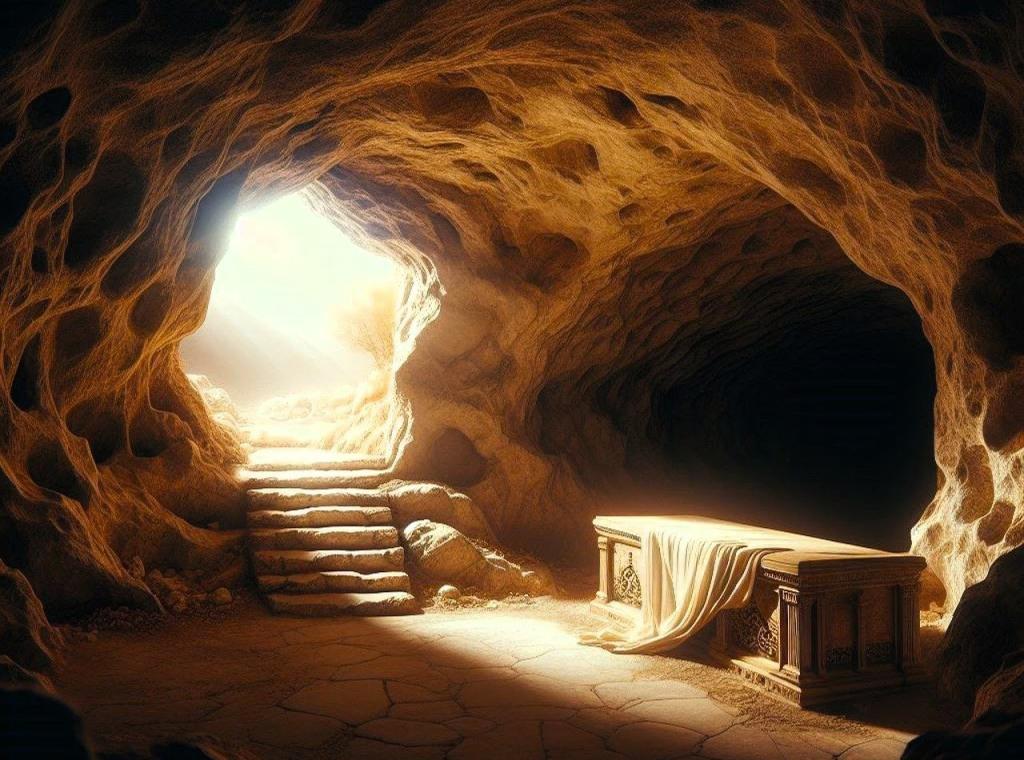
Christian philosophers have long speculated on the bodily resurrection of Jesus could have been possible. Source: Pixabay
Bodily Resurrection or Immortal Soul?
The problem with belief in an immaterial spirit or soul is that it means the person’s body truly dies. This may seem obvious, but what is not obvious is that it’s difficult to argue for a resurrected body that is still the body of the person who died. In other words, God could very well create an exact replica of the body of a person who died, but it would be a replica, not the person’s actual body. Thus, it would not be the same body that lives again but someone, or something, else. Thus, this account is not very different from belief in reincarnation, that souls can take on new bodies the way someone takes on new clothes.
The problem is, traditional Christianity has always insisted that God would raise up the same body, not create a new body.
The second, less well-known school of thought regarding resurrection is Materialism or, as it is sometimes called, Physicalism. Materialists believe that all that exists in this world is material objects, matter in motion, and that therefore human beings are their physical bodies and nothing more. (Some philosophers propose that human persons are “constituted by,” but not identical with, their physical bodies.)
Another version of this viewpoint is called Animalism, the notion that human beings are animals just as dogs or cats are animals. When the body ceases to exist, so does the human person. God might be able to create an identical physical body, but this would be a different living thing, not the same living thing that died.
In other words: bodily death is truly final. No power in the universe, not even God, could bring back to life an organism that truly died and have it be the same organism. This appears to be the dominant viewpoint among professional philosophers.
However, there are Christian philosophers who are unrepentant materialists, who agree that nothing survives the death of the body, yet who nevertheless hope for life after death through something like resurrection. Like their substance-dualist co-religionists, Christian materialists believe in God and in the witness of the Gospels. However, they deny the existence of an immaterial spirit or soul that survives the death of the body, insisting that it is unbiblical, and argue that if human beings are to survive death then their physical bodies must somehow as well.
Peter van Inwagen’s Theory of Resurrection
How could this be possible? In essence, Christian materialists propose different ways that a person’s body can survive the mere appearance of death and still stay alive. The most famous advocate for this position is the contemporary Christian philosopher Peter van Inwagen, but other philosophers in this camp include Kevin Corcoran and Hud Hudson (with help from the substance dualist Dean Zimmerman).
The problem for materialists is that it’s very difficult to come up with a plausible account for how God can somehow keep people alive when it appears, to outside observers at least, that their physical bodies have died. Peter van Inwagen’s notorious original proposal was nicknamed “body snatching,” the idea that at the moment of death God miraculously “transports” the dying body somewhere else and perhaps sometime else (where it is presumably also healed) and leaves in its place a replica corpse, a simulacrum, that goes on disintegrate.
Many philosophers have found the idea of divine body snatching to be rather messy. As the philosopher Hud Hudson notes, “there are practical problems about just where to hide all those sleeping animals” before the day of resurrection.
As a result, the American philosopher Dean Zimmerman later proposed a different idea that God, in a sense, clones the body by dividing all its cells in a split second at the moment of death, allowing the original body to die and disintegrate while the new cloned body continues alive (transported, again, somewhere else).
The clone is a continuation of the original body, in Zimmerman’s view, and therefore can be considered the same body that lived on earth but one that survives death. After all, the physical cells of everyone are continuously replaced all the time, yet we still affirm that someone is the same person he was a year ago, even though he or she likely has many new and different cells. (In philosophy, this is known as Theseus’s Paradox.)
Both of these accounts involve what theologians call instantaneous resurrection, or resurrection at death – which fits some of the Biblical testimony (such as Jesus telling the good thief on the cross that “today you will be with me in paradise”).
What About Thomas Aquinas?
Aquinas’s understanding of resurrection has often been called a hybrid view, combining both a materialist understanding that the physical body is essential to what is means to be a human person and the view that something immaterial survives the death of the body, an immortal soul.
In Aquinas’s view, human beings are composites of body and soul, both essential to what it means to be a human person. The soul may exist apart from the body for a time but it is not itself the human person. “The soul is not the whole human being, but only part of one,” Aquinas wrote in one of his commentaries. “My soul is not me.” This appears to conflict with the belief of some contemporary substance dualists, such as Richard Swinburne, who say quite emphatically that we are our souls.
Aquinas agreed with Aristotle (and some contemporary materialists) that human beings are animals, rational animals. He held that the soul (anima) is the “form” of the animal body, “whatever it is in living things that makes them alive,” as one contemporary philosopher put it, and is a kind of blueprint for the complex organization of matter that makes life possible.
The soul is not itself a substance but a “subsisting thing,” meaning that it is not complete without being united to a body. Without an immortal soul surviving death, even God could not resurrect a human person. That’s because, although the soul is not the same as the human person, it is, when combined with matter, what makes someone a unique human person. In other words, the soul is nothing more, and nothing less, that what preserves what is unique about each of us without actually being us.
In the end, what’s important to note is that many contemporary Christian philosophers share in the ancient Christian belief, noted by Adolf von Harnack, that bodily existence is part of the essence of what it means to be a human being. They are engaged in a decades-long debate about how resurrection could be possible given the necessity of this bodily existence.
It also seems the recent philosophical proposals for how resurrection might be possible create as many, if not more, philosophical problems as they solve.
Proposals in which God simply recreates a physical replica of our bodies at the end of time and reunites it with our immaterial souls mean that we will have different bodies than we had on earth, which seems to contradict both scriptural and de fide conciliar teaching. (Some people are okay with this, so long as the new body is thinner than the old one!)
For this reason, some philosophers propose that, in effect, we never actually die but are merely transported, body and soul, into another dimension or time at the moment of death. They propose this because there are strong arguments that the death of a living organism is truly final and that even God cannot bring it to life again. The best God can do is create an identical replica which is not the same organism.
Ultimately, many non-religious philosophy students engage in these debates because they involve some of the most complex and enduring issues in philosophy – metaphysics, the mind-body problem, theories of knowledge, and, at bottom, what it actually means to be a human person. The same questions that have plagued the most brilliant minds of Christendom – from Augustine and Aquinas through Descartes and Heidegger – are still being asked today, with new enthusiasm.
It turns out the problem of bodily resurrection is one of the hottest topics in philosophy and is still being actively debated. It forces students to confront, on a very personal, very practical level, fundamental questions about who and what we are.
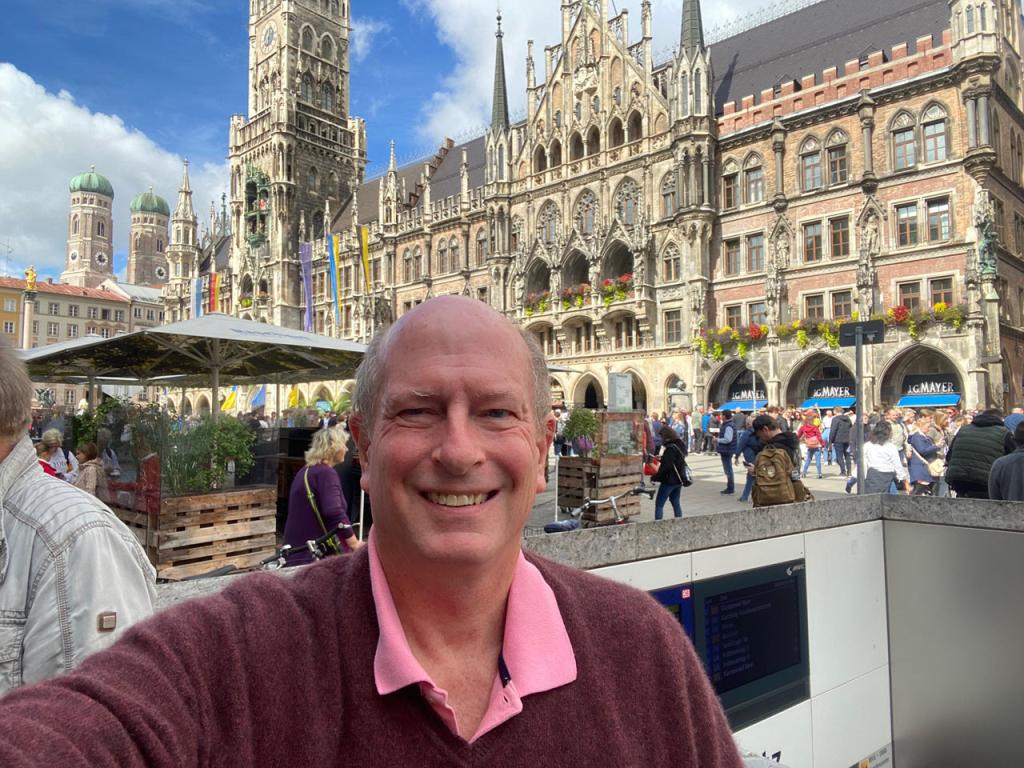
Patheos writer Robert J Hutchinson in Munich. Photo by Robert Hutchinson
Robert J. Hutchinson is an award-winning Catholic writer and the author of numerous books of popular history, including Searching for Jesus: New Discoveries in the Quest for Jesus of Nazareth (Thomas Nelson), The Dawn of Christianity (Thomas Nelson), The Politically Incorrect Guide to the Bible (Regnery) and When in Rome: A Journal of Life in Vatican City (Doubleday). Born and raised in the Pacific Northwest, he attended Catholic schools, studied philosophy at a Jesuit university, moved to Israel to learn Hebrew, and then earned a degree in New Testament studies. Hutchinson is currently pursuing graduate studies in the Philosophy of Religion in Europe and writes for many publications. You can read more about the author at www.RobertHutchinson.com.
Previous Post

June 20, 2024
Can Philosophy Make Sense of the Afterlife?
Next Post

July 10, 2024 Who’s Really in Charge in America?
Recent Comments
Browse Our Archives
Select a Category Science and Religion Uncategorized
Select a Month September 2024 August 2024 July 2024 June 2024
Follow Us!
TAKE THE
Religious Wisdom Quiz
Who said, "Silver and gold have I none, but what I have I give to you"?
Select your answer to see how you score.
James Peter John Paul
Related posts from Disputed Questions

J.L. Mackie and the Logical Problem of Evil

Philosopher Refutes Common Argument Against the Afterlife
TRENDING AT PATHEOS Catholic

Pope Leo Celebrates Mass for Nurses & Docs...
I don't have any idea how he did it, but Pope Leo...

The Sermon on the Mount, Part I: Matthew...
The Sermon on the Mount, Part I (Matthew 4:12-5:12) St. Matthew moves...

What's up from Crossway: Reviewing some of their latest A few weeks...

Janie Learns the Way of the Cross: A...
Teaching children about Jesus' Passion can be challenging. Many parents and educators...

Looking For Good Catholic Writing - October 2026
He alone extends the heavens, and he walks upon the waves of...

In "Irreplaceable," our book on vocation and technology, Trevor Sutton and I...
view all Catholic blogs
What Are Your Thoughts?leave a comment
Ad-Free & Subscriber Log-In Subscription Support
- About Us
- 2026 Calendar
- Videos
- Podcasts
- Library of World Religions
- Faith In Media Tracker
- Advertise With Us
- Write for Us
- Privacy Policy
- Terms of Service
- Do Not Sell My Data
- Contact Us
- Radiant Digital
- Manage Newsletter Subscriptions
- Unsubscribe From Notifications
- Sitemap
Copyright 2008-2026, Patheos. All rights reserved.
Subscription Support Ad-Free & Subscriber Log-In
Follow Patheos