
BuddhistCatholicContemplativeEvangelicalGeneral ChristianHinduJewishLatter-day SaintMuslimNew VisionsProgressive Christian
Beliefs
- Buddhist
- Catholic
- Contemplative
- Evangelical
- General Christian
- Hindu
- Jewish
- Latter-day Saint
- More Voices
- Muslim
- New Visions
- Pagan
- Progressive Christian
Topics
- Religion News
- Food and Religion
- Sports and Religion
- Religious Art
- Religious Music and Entertainment
- Religious Events
- History and Religion
- Style and Religion
- Politics and Religion
- Women in Religion
- Recreation Outdoors and Religion
- Business Finance and Religion
- Careers Workplace and Religion
- Education and Religion
- Family Parenting and Religion
- Health Fitness and Religion
- Home and Religion
- Relationships and Religion
- Technology and Religion
- Travel and Religion
Columnists
- Buddhist Columnists
- Business Finance and Religion Columnists
- Careers Workplace and Religion Columnists
- Catholic Columnists
- Contemplative Columnists
- Education and Religion Columnists
- Evangelists Columnists
- Family Parenting and Religion Columnists
- General Christian Columnists
- Health Fitness and Religion Columnists
- Hindu Columnists
- History and Religion Columnists
- Home and Religion Columnists
- Jewish Columnists
- More Voices Columnists
- Latter Day Columnists
- Muslim Columnists
- New Visions Columnists
- Nonreligious Columnists
- Pagan Columnists
- Politics and Religion Columnists
- Progressive Columnists
- Recreation Outdoors and Religion Columnists
- Relationships and Religion Columnists
- Religion News Columnists
- Religious Art Columnists
- Religious Events Columnists
- Religious Music and Entertainment Columnists
- Sports and Religion Columnists
- Style and Religion Columnists
- Technology and Religion Columnists
- Travel and Religion Columnists
- Women in Religion Columnists
Resource Library
- 2026 Calendar
- Library of World Religions
- The 100 Most Holy Places on Earth
- Patheos Answers
- Podcasts
- Videos
- Faith Leaders Database
- Anglican Episcopalian
- Bahai
- Baptist
- Buddhism
- Christianity
- Confucianism
- Eastern Orthodoxy
- Hinduism
- Holiness and Pentecostal
- ISKCON
- Islam
- Judaism
- Lutheran
- Methodist
- The Church of Jesus Christ of Latter-day Saints
- New Age
- Paganism
- Presbytarian and Reformed
- Protestantism
- Religion Behind the Scenes
- Roman Catholic
- Scientology
- Shia Islam
- Sikhism
- Sufism
- Sunni Islam
- Taoism
- Zen
- See all religions
Research Tools
 Ad-Free & Subscriber Log-In Subscription Support
Ad-Free & Subscriber Log-In Subscription Support
Follow Patheos 

- Trending:
- Forgiveness
- |
- Marriage
- |
- Consciousness
- |
- Death Penalty
- |
- Election
- |
- Halloween

- Home
- Evangelical
- Technology and Religion
- Religious Engagement with AI Ethics
Religious Engagement with AI Ethics
Last updated on: December 15, 2023 at 8:01 pm by Guest Contributor
Religious Engagement with AI Ethics 2023-12-15T20:01:23+00:00 Guest Contributor
Patheos Explore the world's faith through different perspectives on religion and spirituality! Patheos has the views of the prevalent religions and spiritualities of the world.
The G20 Interfaith Working Group for Research and Innovation on Science, Technology, and Infrastructure just released a set of policy recommendations for global AI ethics. The recommendations center on human dignity, agency, and rights, and they call for a more inclusive global conversation about shared cultural values and governance.
The report has specific recommendations for religious communities:
Religious communities must develop a sense of responsibility for the role that AI plays in the world and for their own role in the development of AI. Respecting their specificities, they should also further engage in public debate, giving policymakers access to shared ethical injunctions, an inter-religious understanding of cultural differences, and help identifying vulnerable social groups in need of protection and uplift.
Religious groups can position themselves to engage in discussions and debates by:
- Training religious leaders (e.g. in seminaries) with curricula that include technological literacy;
- Developing their narratives about AI technologies and how these fit into their religious worldviews while respecting global differences in religion and culture;
- Learning how and where decisions about AI are made, to act proactively rather than reacting to sensationalist press;
- Promoting the active engagement of their members in AI research and innovation;
- Publishing informed positions on technological concerns;
- Helping to create healthy norms for using AI and related technologies.
I’ve been involved with initiatives that touch on all of these, mostly in Christian contexts, and there is much work yet to be done in each area.
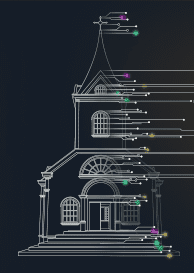
Most churches were not prepared for the digital transitions that were necessary during the pandemic—and it is not clear they are prepared for the technological changes that continue to transform our lives and world rapidly, radically, and irrevocably. Even after nearly two years of technological adaptation, many church practices continue to reflect a pre-digital information culture rather than a digitally transformed 21st-century information culture. Church communications may be mediated digitally now, but these reflect older practices—such as preaching from a pulpit to people in pews.
Libraries provide an interesting contrast in institutional development. With the second industrial revolution—or the information revolution, associated with the invention of electronic digital computers—libraries became increasingly shaped by an information society and culture. The church, for the most part, remained associated with an industrial book culture: mass-printed Bibles and hymn books in pews, supplementing the medieval pulpit Bible. Libraries, early adopters of networked digital technologies such as online public catalogs and electronic resources, changed what they did and how they served their communities. Libraries created new consortial partnerships to broaden access to information, automated the discovery of and access to information, provided early public access to computers and the internet, and taught information and digital literacy skills needed for a new information environment. Churches, late to launch websites, set up screens in sanctuaries, and automated tithing, remained largely unchanged.
In the mid-20th century, library leaders saw how new information technologies were displacing them from the center of the information environment. They realized they had to reimagine and redefine what a library was in terms of collections, services, and spaces—a transformation that was and continues to be successful, and now includes transformative technologies such as artificial intelligence.
Churches face a similar imaginative task today, for both old and new digital technologies. This report’s second recommendation—about religious groups developing “their own narratives about AI technologies”—may be the most important.
General Christian
Family, Parenting and Religion
Previous Post

September 28, 2021
Hope and Longing in Las Vegas
Next Post

March 25, 2022 Lecture on AI and the Apocalyptic Imagination
Browse Our Archives
Select a Category Uncategorized
Select a Month August 2024 December 2023 September 2023 November 2022 June 2022 March 2022 February 2022 September 2021 August 2021 July 2021 March 2021 February 2021 January 2021 November 2020 October 2020 September 2020 July 2020 June 2020 May 2020 April 2020 March 2020 February 2020 December 2019 November 2019 October 2019 September 2019 August 2019 July 2019 June 2019 May 2019 April 2019 March 2019 February 2019 January 2019 December 2018 November 2018 October 2018 September 2018 August 2018 July 2018 June 2018 May 2018 April 2018 March 2018 February 2018 January 2018
Follow Us!
TAKE THE
Religious Wisdom Quiz
What Christian group primarily follows the teachings of Martin Luther?
Select your answer to see how you score.
Methodists Lutherans Presbyterians Baptists
Related posts from Digital Wisdom



Lecture on AI and the Apocalyptic Imagination

TRENDING AT PATHEOS Evangelical

How the author of the world's best hymn...
I've been working with John Newton for a while now. This makes...

Long before this Lectio Divina, Psalm 130 - the song - started...

What About the Trees? Another Living Parable
After I finished writing the last article about falling leaves as a...

Why Classical Education Is a Conversation, Not a...
Come and Read: Joy in Classical Education When I was a little...

Falling Leaves: A Living Parable on Letting Go
I’ve spent the vast majority of my life in the southeast corner...

Cornell University has received a great deal of negative publicity and intense...
view all Evangelical blogs
Ad-Free & Subscriber Log-In Subscription Support
- About Us
- 2026 Calendar
- Videos
- Podcasts
- Library of World Religions
- Faith In Media Tracker
- Advertise With Us
- Write for Us
- Privacy Policy
- Terms of Service
- Do Not Sell My Data
- Contact Us
- Radiant Digital
- Manage Newsletter Subscriptions
- Unsubscribe From Notifications
- Sitemap
Copyright 2008-2026, Patheos. All rights reserved.
Subscription Support Ad-Free & Subscriber Log-In
Follow Patheos