
BuddhistCatholicContemplativeEvangelicalGeneral ChristianHinduJewishLatter-day SaintMuslimNew VisionsProgressive Christian
Beliefs
- Buddhist
- Catholic
- Contemplative
- Evangelical
- General Christian
- Hindu
- Jewish
- Latter-day Saint
- More Voices
- Muslim
- New Visions
- Pagan
- Progressive Christian
Topics
- Religion News
- Food and Religion
- Sports and Religion
- Religious Art
- Religious Music and Entertainment
- Religious Events
- History and Religion
- Style and Religion
- Politics and Religion
- Women in Religion
- Recreation Outdoors and Religion
- Business Finance and Religion
- Careers Workplace and Religion
- Education and Religion
- Family Parenting and Religion
- Health Fitness and Religion
- Home and Religion
- Relationships and Religion
- Technology and Religion
- Travel and Religion
Columnists
- Buddhist Columnists
- Business Finance and Religion Columnists
- Careers Workplace and Religion Columnists
- Catholic Columnists
- Contemplative Columnists
- Education and Religion Columnists
- Evangelists Columnists
- Family Parenting and Religion Columnists
- General Christian Columnists
- Health Fitness and Religion Columnists
- Hindu Columnists
- History and Religion Columnists
- Home and Religion Columnists
- Jewish Columnists
- More Voices Columnists
- Latter Day Columnists
- Muslim Columnists
- New Visions Columnists
- Nonreligious Columnists
- Pagan Columnists
- Politics and Religion Columnists
- Progressive Columnists
- Recreation Outdoors and Religion Columnists
- Relationships and Religion Columnists
- Religion News Columnists
- Religious Art Columnists
- Religious Events Columnists
- Religious Music and Entertainment Columnists
- Sports and Religion Columnists
- Style and Religion Columnists
- Technology and Religion Columnists
- Travel and Religion Columnists
- Women in Religion Columnists
Resource Library
- 2026 Calendar
- Library of World Religions
- The 100 Most Holy Places on Earth
- Patheos Answers
- Podcasts
- Videos
- Faith Leaders Database
- Anglican Episcopalian
- Bahai
- Baptist
- Buddhism
- Christianity
- Confucianism
- Eastern Orthodoxy
- Hinduism
- Holiness and Pentecostal
- ISKCON
- Islam
- Judaism
- Lutheran
- Methodist
- The Church of Jesus Christ of Latter-day Saints
- New Age
- Paganism
- Presbytarian and Reformed
- Protestantism
- Religion Behind the Scenes
- Roman Catholic
- Scientology
- Shia Islam
- Sikhism
- Sufism
- Sunni Islam
- Taoism
- Zen
- See all religions
Research Tools
 Ad-Free & Subscriber Log-In Subscription Support
Ad-Free & Subscriber Log-In Subscription Support
Follow Patheos 

- Trending:
- Forgiveness
- |
- Marriage
- |
- Consciousness
- |
- Death Penalty
- |
- Election
- |
- Halloween

- Home
- Evangelical
- Technology and Religion
- The Digital Turn and Our Post-Digital Future
The Digital Turn and Our Post-Digital Future
Last updated on: October 23, 2020 at 7:56 pm by Michael Paulus
The Digital Turn and Our Post-Digital Future 2020-10-23T19:56:10+00:00 Michael Paulus
Patheos Explore the world's faith through different perspectives on religion and spirituality! Patheos has the views of the prevalent religions and spiritualities of the world.
The year 2020 will be associated forever with the pandemic, protests, and a presidential election. It also may be remembered as the year we became post-digital. The sudden and sustained digital turn the pandemic forced upon individuals and institutions is moving our society along a path from digital transition to digital transformation. As we journey on this path, we have the opportunity to critique as well as design the new digital dimension of our reality. Through such critical and constructive engagement, we can begin to see digital technology not as something separate or added to our lives and world but something that is becoming deeply integrated into new lives in a new world. After selling his personal library to Congress, Thomas Jefferson said he could not live without books. Similarly, today, many of us would admit that we cannot live without digital technology. By the nineteenth century, print culture was Enlightenment culture. But before digital culture is just culture—before we become post-digital—we need to pass through the experience of being “digital first.”
Digital Transition
Individually, we have added new digital practices to our lives related to remote work, online ordering, and virtual celebrations. Institutionally, we were required to pursue new digital strategies for continuity of operations and service. For schools, this meant remote instruction and support. For churches, this meant virtual worship and meetings. For libraries and other organizations, this meant more online resources and services. While each of these strategies may have retained some forms of physical encounter—hybrid classes, appropriately distanced backyard gatherings, or contactless pickup—these experiences were constrained significantly. Moreover, these new digital and physical experiences are not equally accessible or equitable.
Many organizations that had prioritized physical engagement were forced to prioritize digital engagement. As a more “digital first” posture necessarily persists, we are increasingly aware of the gains and losses associated with digital technologies, as well as old and new digital inequities. If we are to recover and retain the best aspects of both physical and digital engagement, we must think about how best to leverage and appropriately integrate them together in the future. To convert our temporary digital transitions into permanent digital transformations, we need to complete the turn from being pre-digital to being post-digital. But this requires being truly “digital first” for the foreseeable future.

Screenshot from The Simpson’s opening sequence (April 2020)
Digital First
While we may think we are implementing a digital first strategy already, most of us are not truly exploring, experimenting with, and reflecting on what fully intentional and realized digital first experiences might be. That is because many of us are holding onto a “physical first” mindset.
Early on in the pandemic, hybrid strategies were promoted and pursued with the idea that we could have the best of both worlds. But the quality of the physical experiences we have been able to hold onto are rather diminished: teachers standing apart from a small number of students spread throughout a classroom, which may include a screen full of faces staring at their own screens; congregants bumping elbows and signing through masks, while others observe online; friends scattered across backyards on cold nights, trying to include through a device those who are quarantined. All of these activities are valuable, but they are diminished experiences and emphasize what is currently lost to us. At the same time, we try to manage digital substitutes for these embodied encounters. But through our devices—if we are fortunate to have, use, and connect them—we see only heads (and sometimes not even those), we receive delayed and sometimes glitchy communications, and we type more and speak less. In our present circumstances, hybrid approaches often end up giving us the worst of both worlds.
What if, instead, we focused first on creating the best digital experiences—innovative, immersive, inclusive, and inspiring encounters that would not be possible physically? Instead of a physical first approach supplemented with the digital, what if we intentionally pursed a digital first strategy supplemented with the physical? Design the best online class, digital church, and virtual organization using new and emerging technologies. Don’t settle for what Heidi Campbell describes as transferring or translating strategies (e.g., respectively, live streaming a church service or bringing worship leaders together on a web conferencing platform). Rather, pursue transforming strategies (e.g., replacing a typical order of worship with a fireside chat)—strategies that “more fully grasp the unique possibilities digital technology offers for community building and caring communication, as well as the chance to reimagine what it means to be [e.g.] a church in the digital age.”
Imagining the Post-Digital
In the early days of the printing press, print books were produced to look like manuscript books. Eventually, however, book designers began to use print technologies to create new types of books, new types of readers, and new print practices that shaped Enlightenment thinkers such as Jefferson. The Reformation, the Republic of Letters, and other literary movements created something like a “print first” culture that ordered the physical world in the West. When the first Protestant missionaries arrived in the Pacific Northwest in the early nineteenth century, they immediately started schools to teach literacy, organized libraries to provide access to books, and set up a printing press to publish literacy aids, religious literature, and laws. Print had become inseparable from the idea of American civilization—as well as a central and powerful means of colonization.
While the turn to print occurred over centuries, the turn to digital is still measured in decades—and it is accelerating now on a timescale of months. And the possibilities and perils of the digital are significantly greater. Jefferson and the Protestant missionaries were agents of an empire of print that included mass literacy as well as mass oppression of those without the “literall advantage.” Intentionally imagining our post-digital future is an opportunity as well as a moral imperative to create a better and more just world.
The digital is always physically situated, and all of us are eager to return to embodied experiences in which we may be fully engaged. But for now and the foreseeable future, our lives outside our homes will be predominately digital—so we should focus on making them as robust and just as they can be. Then, when we are able to reembrace more fully embodied lives, we will know what digital enhancements to retain. And these won’t be digital or enhancements any more—they will be part of our new and improved lives and world.
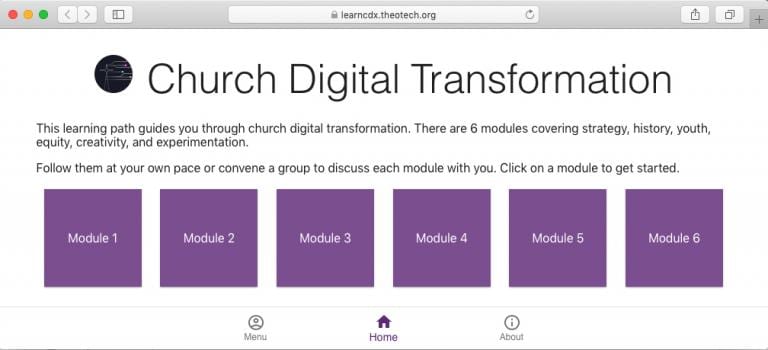
In my next post, I will summarize the resources created through the Church Digital Transformation Project at SPU to help churches navigate the digital turn and imagine possible post-digital futures.
Previous Post

September 25, 2020
Digital Futures
Next Post
November 5, 2020 The Problem with “The Social Dilemma”? It’s hiding in plain sight!
Browse Our Archives
Select a Category Uncategorized
Select a Month August 2024 December 2023 September 2023 November 2022 June 2022 March 2022 February 2022 September 2021 August 2021 July 2021 March 2021 February 2021 January 2021 November 2020 October 2020 September 2020 July 2020 June 2020 May 2020 April 2020 March 2020 February 2020 December 2019 November 2019 October 2019 September 2019 August 2019 July 2019 June 2019 May 2019 April 2019 March 2019 February 2019 January 2019 December 2018 November 2018 October 2018 September 2018 August 2018 July 2018 June 2018 May 2018 April 2018 March 2018 February 2018 January 2018
Follow Us!
TAKE THE
Religious Wisdom Quiz
By questioning Moses' authority this person became leperous?
Select your answer to see how you score.
Ithamar Miriam Aaron Caleb
Related posts from Digital Wisdom
The Relational Turn in Digital Ethics
Resources for Imagining the Post-Digital Church
TRENDING AT PATHEOS Evangelical

How the author of the world's best hymn...
I've been working with John Newton for a while now. This makes...

Long before this Lectio Divina, Psalm 130 - the song - started...

What About the Trees? Another Living Parable
After I finished writing the last article about falling leaves as a...

Why Classical Education Is a Conversation, Not a...
Come and Read: Joy in Classical Education When I was a little...

Falling Leaves: A Living Parable on Letting Go
I’ve spent the vast majority of my life in the southeast corner...

Cornell University has received a great deal of negative publicity and intense...
view all Evangelical blogs
Ad-Free & Subscriber Log-In Subscription Support
- About Us
- 2026 Calendar
- Videos
- Podcasts
- Library of World Religions
- Faith In Media Tracker
- Advertise With Us
- Write for Us
- Privacy Policy
- Terms of Service
- Do Not Sell My Data
- Contact Us
- Radiant Digital
- Manage Newsletter Subscriptions
- Unsubscribe From Notifications
- Sitemap
Copyright 2008-2026, Patheos. All rights reserved.
Subscription Support Ad-Free & Subscriber Log-In
Follow Patheos