
BuddhistCatholicContemplativeEvangelicalGeneral ChristianHinduJewishLatter-day SaintMuslimNew VisionsProgressive Christian
Beliefs
- Buddhist
- Catholic
- Contemplative
- Evangelical
- General Christian
- Hindu
- Jewish
- Latter-day Saint
- More Voices
- Muslim
- New Visions
- Pagan
- Progressive Christian
Topics
- Religion News
- Food and Religion
- Sports and Religion
- Religious Art
- Religious Music and Entertainment
- Religious Events
- History and Religion
- Style and Religion
- Politics and Religion
- Women in Religion
- Recreation Outdoors and Religion
- Business Finance and Religion
- Careers Workplace and Religion
- Education and Religion
- Family Parenting and Religion
- Health Fitness and Religion
- Home and Religion
- Relationships and Religion
- Technology and Religion
- Travel and Religion
Columnists
- Buddhist Columnists
- Business Finance and Religion Columnists
- Careers Workplace and Religion Columnists
- Catholic Columnists
- Contemplative Columnists
- Education and Religion Columnists
- Evangelists Columnists
- Family Parenting and Religion Columnists
- General Christian Columnists
- Health Fitness and Religion Columnists
- Hindu Columnists
- History and Religion Columnists
- Home and Religion Columnists
- Jewish Columnists
- More Voices Columnists
- Latter Day Columnists
- Muslim Columnists
- New Visions Columnists
- Nonreligious Columnists
- Pagan Columnists
- Politics and Religion Columnists
- Progressive Columnists
- Recreation Outdoors and Religion Columnists
- Relationships and Religion Columnists
- Religion News Columnists
- Religious Art Columnists
- Religious Events Columnists
- Religious Music and Entertainment Columnists
- Sports and Religion Columnists
- Style and Religion Columnists
- Technology and Religion Columnists
- Travel and Religion Columnists
- Women in Religion Columnists
Resource Library
- 2026 Calendar
- Library of World Religions
- The 100 Most Holy Places on Earth
- Patheos Answers
- Podcasts
- Videos
- Faith Leaders Database
- Anglican Episcopalian
- Bahai
- Baptist
- Buddhism
- Christianity
- Confucianism
- Eastern Orthodoxy
- Hinduism
- Holiness and Pentecostal
- ISKCON
- Islam
- Judaism
- Lutheran
- Methodist
- The Church of Jesus Christ of Latter-day Saints
- New Age
- Paganism
- Presbytarian and Reformed
- Protestantism
- Religion Behind the Scenes
- Roman Catholic
- Scientology
- Shia Islam
- Sikhism
- Sufism
- Sunni Islam
- Taoism
- Zen
- See all religions
Research Tools
 Ad-Free & Subscriber Log-In Subscription Support
Ad-Free & Subscriber Log-In Subscription Support
Follow Patheos 

- Trending:
- Forgiveness
- |
- Marriage
- |
- Consciousness
- |
- Death Penalty
- |
- Election
- |
- Halloween

- Home
- Evangelical
- Technology and Religion
- Science Fiction and the Technological Imagination
Science Fiction and the Technological Imagination
Last updated on: February 19, 2020 at 3:27 am by Michael Paulus
Science Fiction and the Technological Imagination 2020-02-19T03:27:48+00:00 Michael Paulus
Patheos Explore the world's faith through different perspectives on religion and spirituality! Patheos has the views of the prevalent religions and spiritualities of the world.
Last week I led a discussion of Josh Matthews’s recent article, “Towards a Robust and Scholarly Christian Engagement with Science Fiction,” with a small group of faculty and staff at Seattle Pacific University.
Arguing for greater integration of science fiction (SF) into Christian literary criticism and curricula, Matthews makes a compelling case for approaching SF as an imaginative resource for epistemological, ethical, and eschatological reflection.
One of the points Matthews makes at the beginning of his article concerns the cultural permeation of SF:
SF has permeated most aspects of modern American and even global culture—movies, music, games, technology, advertising, shopping, manufacturing, politics, economics, and so on … [creating] a set of attitudes towards technology and scientific discourse in society greatly affecting even people and institutions who do not pay much attention to the genre SF at all.
Like others in our discussion group, born after the technologically turbulent 1960s, I grew up in a world permeated with SF—Star Trek on television, Star Wars in movie theaters, and many brilliant writers (Philip K. Dick, Ursula K. Le Guin, etc.) in print. My personal interest in SF became more professional a few years ago, when my research interests turned towards the future.
First, as a library director, I was required to engage with questions about the future of the library. I started with library history, surfacing deep continuities between past and present libraries. But expectations about the future also shape the present, so to explore these I turned to SF—post-apocalyptic literature, specifically, since the most extreme conditions reveal our most fundamental values. And from Mary Shelley’s The Last Man (1826) through Neal Stephenson’s Seveneves (2015), I found again and again the image of the library as an enduring sign of and infrastructure for hope.
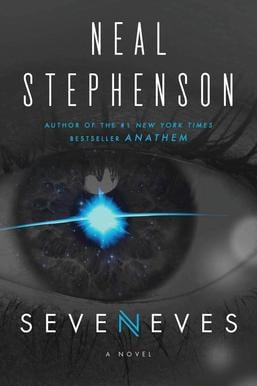
Neal Stephenson’s Seveneves (2015)
This relates to another point Matthews makes that resonated with members of our discussion group:
Much SF acts as a literature of hope … one that might move us towards the “Not-Yet” utopian state of affairs that we all desire, should we see and act on the transformative possibilities it asks us to imagine.
A third point Matthews makes, about which much more could be said, links SF hopes (and fears) with biblical literature (e.g., “Old Testament tropes of returning to paradise or arriving in the promised land”).
All three of these points are apparent in popular narratives about the future of artificial intelligence. I’ve been at too many conferences when, after AI experts have explained the limits of weak or narrow AI and stepped off the stage, attendees shrug and continue speculating about strong AI and superintelligence. As valuable as SF can be for shaping science and technology, at times fiction runs ahead of facts in unproductive ways.
Further, as Robert Geraci shows in Apocalyptic AI: Visions of Heaven in Robotics, Artificial Intelligence, and Virtual Reality, many eschatological AI narratives also draw from Jewish and Christian apocalyptic categories—without much acknowledgment or critical analysis of these appropriations. Without engaging these influences, our future is being shaped by SF and religious eschatologies in ways we do not realize fully.
Previous Post

February 11, 2020
The Good Place and a Better Place for Technology
Next Post
March 15, 2020 Digital Wisdom in the Time of Coronavirus Disease 2019
Browse Our Archives
Select a Category Uncategorized
Select a Month August 2024 December 2023 September 2023 November 2022 June 2022 March 2022 February 2022 September 2021 August 2021 July 2021 March 2021 February 2021 January 2021 November 2020 October 2020 September 2020 July 2020 June 2020 May 2020 April 2020 March 2020 February 2020 December 2019 November 2019 October 2019 September 2019 August 2019 July 2019 June 2019 May 2019 April 2019 March 2019 February 2019 January 2019 December 2018 November 2018 October 2018 September 2018 August 2018 July 2018 June 2018 May 2018 April 2018 March 2018 February 2018 January 2018
Follow Us!
TAKE THE
Religious Wisdom Quiz
Why was it significant that Jesus spoke to a Samaritan woman at the well?
Select your answer to see how you score.
She was a prophet Jews typically avoided Samaritans She was wealthy It was raining
Related posts from Digital Wisdom
AI, Faith, the Future, and the Apocalyptic Imagination
Lecture on AI and the Apocalyptic Imagination


TRENDING AT PATHEOS Evangelical

The REST of Your Life: A Creative Wrestles...
This week I had a conversation with a good friend from church....

How the author of the world's best hymn...
I've been working with John Newton for a while now. This makes...

Long before this Lectio Divina, Psalm 130 - the song - started...

What About the Trees? Another Living Parable
After I finished writing the last article about falling leaves as a...

Why Classical Education Is a Conversation, Not a...
Come and Read: Joy in Classical Education When I was a little...

Cornell University has received a great deal of negative publicity and intense...
view all Evangelical blogs
Ad-Free & Subscriber Log-In Subscription Support
- About Us
- 2026 Calendar
- Videos
- Podcasts
- Library of World Religions
- Faith In Media Tracker
- Advertise With Us
- Write for Us
- Privacy Policy
- Terms of Service
- Do Not Sell My Data
- Contact Us
- Radiant Digital
- Manage Newsletter Subscriptions
- Unsubscribe From Notifications
- Sitemap
Copyright 2008-2026, Patheos. All rights reserved.
Subscription Support Ad-Free & Subscriber Log-In
Follow Patheos