
BuddhistCatholicContemplativeEvangelicalGeneral ChristianHinduJewishLatter-day SaintMuslimNew VisionsProgressive Christian
Beliefs
- Buddhist
- Catholic
- Contemplative
- Evangelical
- General Christian
- Hindu
- Jewish
- Latter-day Saint
- More Voices
- Muslim
- New Visions
- Pagan
- Progressive Christian
Topics
- Religion News
- Food and Religion
- Sports and Religion
- Religious Art
- Religious Music and Entertainment
- Religious Events
- History and Religion
- Style and Religion
- Politics and Religion
- Women in Religion
- Recreation Outdoors and Religion
- Business Finance and Religion
- Careers Workplace and Religion
- Education and Religion
- Family Parenting and Religion
- Health Fitness and Religion
- Home and Religion
- Relationships and Religion
- Technology and Religion
- Travel and Religion
Columnists
- Buddhist Columnists
- Business Finance and Religion Columnists
- Careers Workplace and Religion Columnists
- Catholic Columnists
- Contemplative Columnists
- Education and Religion Columnists
- Evangelists Columnists
- Family Parenting and Religion Columnists
- General Christian Columnists
- Health Fitness and Religion Columnists
- Hindu Columnists
- History and Religion Columnists
- Home and Religion Columnists
- Jewish Columnists
- More Voices Columnists
- Latter Day Columnists
- Muslim Columnists
- New Visions Columnists
- Nonreligious Columnists
- Pagan Columnists
- Politics and Religion Columnists
- Progressive Columnists
- Recreation Outdoors and Religion Columnists
- Relationships and Religion Columnists
- Religion News Columnists
- Religious Art Columnists
- Religious Events Columnists
- Religious Music and Entertainment Columnists
- Sports and Religion Columnists
- Style and Religion Columnists
- Technology and Religion Columnists
- Travel and Religion Columnists
- Women in Religion Columnists
Resource Library
- 2026 Calendar
- Library of World Religions
- The 100 Most Holy Places on Earth
- Patheos Answers
- Podcasts
- Videos
- Faith Leaders Database
- Anglican Episcopalian
- Bahai
- Baptist
- Buddhism
- Christianity
- Confucianism
- Eastern Orthodoxy
- Hinduism
- Holiness and Pentecostal
- ISKCON
- Islam
- Judaism
- Lutheran
- Methodist
- The Church of Jesus Christ of Latter-day Saints
- New Age
- Paganism
- Presbytarian and Reformed
- Protestantism
- Religion Behind the Scenes
- Roman Catholic
- Scientology
- Shia Islam
- Sikhism
- Sufism
- Sunni Islam
- Taoism
- Zen
- See all religions
Research Tools
 Ad-Free & Subscriber Log-In Subscription Support
Ad-Free & Subscriber Log-In Subscription Support
Follow Patheos 

- Trending:
- Forgiveness
- |
- Marriage
- |
- Consciousness
- |
- Death Penalty
- |
- Election
- |
- Halloween

- Home
- Evangelical
- Technology and Religion
- The Limits of Digital Ethics
The Limits of Digital Ethics
Last updated on: March 4, 2019 at 8:19 pm by Michael Paulus
The Limits of Digital Ethics 2019-03-04T20:19:50+00:00 Michael Paulus
Patheos Explore the world's faith through different perspectives on religion and spirituality! Patheos has the views of the prevalent religions and spiritualities of the world.
Last Friday, New York Times reporter Cade Metz surveyed a number of ethical issues related to artificial intelligence and asked, “Is Ethical AI Even Possible?”
I recnetly had the opportunity to participate in a two-day summit on digital ethics in Seattle. I’ve been involved in such discussions before, but what impressed me about this event was (1) the increasing clarity of agreements around a number of generally accepted but specific ethical concerns, and (2) the increasing clarity about areas where disagreements are likely to persist (economic, political, cultural, etc.).
It helped that the summit opened with a keynote address by Ryan Calo, a law professor at the University of Washington School of Law and co-director of Tech Policy Lab. Calo, who emphasizes the limits of ethics, encouraged us to focus on universal but particular agreements that could become regulations.
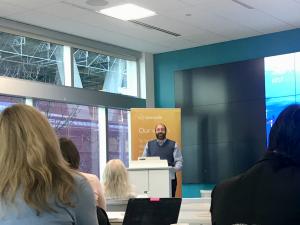
Independent Digital Ethics Summit (Seattle, 2019)
As we interacted with ethical statements that will appear in the forthcoming book We the People: A Guide to Digital Ethics for People, Organizations, and Robots of All Kinds by Peter Temes and Florin Rotar, I thought of the emerging consensus around AI ethical concerns that Luciano Floridi and others have identified. Some of these concerns have been raised previously, and some are new (with AI, what’s new is explicability).
It is encouraging that agreement may be possible about many important issues related to data collection and algorithmic control. But these issues, as important as they are, are penultimate concerns. As we make progress toward respecting individual attention, autonomy, and agency and making our society more equitable and just, further thought must be given not only to what is feasible but also to what is desirable.
Floridi calls this “soft ethics.” Shannon Vallor and others address this space within the concept of “global ethics.” Full consensus about ultimate values is—at least in the world we know—impossible. That doesn’t mean we shouldn’t seek it; it means we shouldn’t expect it.
As I participated in these ethical discussions, and we clarified points of agreement and disagreement, I began to wonder how we could document and describe our disagreements in our ethical frameworks. As our technological powers grow and accelerate, we need to be clearer and more transparent about our beliefs individually and institutinoally. As Byron Reese points out in his book The Fourth Age, “experts disagree not because they know different things, but because they believe different things.”
Wouldn’t it be wise for us to be more deliberate about creating space within our ethical discussions and frameworks where we can identify and disclose ethical disagreements as we seek shared values?
To create and live into a shared vision of the future, we need to be clear about—and explore together—our diverse beliefs and hopes. Ultimately, individually and collectively, we are constructing and affirming different eschatological narratives that must be productively and peacefully coordinated.
Previous Post

February 6, 2019
Picking and Choosing Our Technologies: A Response to Laura Turner
Next Post
March 21, 2019 The End and Beginning of Work
Browse Our Archives
Select a Category Uncategorized
Select a Month August 2024 December 2023 September 2023 November 2022 June 2022 March 2022 February 2022 September 2021 August 2021 July 2021 March 2021 February 2021 January 2021 November 2020 October 2020 September 2020 July 2020 June 2020 May 2020 April 2020 March 2020 February 2020 December 2019 November 2019 October 2019 September 2019 August 2019 July 2019 June 2019 May 2019 April 2019 March 2019 February 2019 January 2019 December 2018 November 2018 October 2018 September 2018 August 2018 July 2018 June 2018 May 2018 April 2018 March 2018 February 2018 January 2018
Follow Us!
TAKE THE
Religious Wisdom Quiz
Which king was famous for his wisdom and built the first temple in Jerusalem?
Select your answer to see how you score.
Rehoboam David Saul Solomon
Related posts from Digital Wisdom




AI, Faith, the Future, and the Apocalyptic Imagination
TRENDING AT PATHEOS Evangelical

The REST of Your Life: A Creative Wrestles...
This week I had a conversation with a good friend from church....

How the author of the world's best hymn...
I've been working with John Newton for a while now. This makes...

Long before this Lectio Divina, Psalm 130 - the song - started...

What About the Trees? Another Living Parable
After I finished writing the last article about falling leaves as a...

Why Classical Education Is a Conversation, Not a...
Come and Read: Joy in Classical Education When I was a little...

Cornell University has received a great deal of negative publicity and intense...
view all Evangelical blogs
Ad-Free & Subscriber Log-In Subscription Support
- About Us
- 2026 Calendar
- Videos
- Podcasts
- Library of World Religions
- Faith In Media Tracker
- Advertise With Us
- Write for Us
- Privacy Policy
- Terms of Service
- Do Not Sell My Data
- Contact Us
- Radiant Digital
- Manage Newsletter Subscriptions
- Unsubscribe From Notifications
- Sitemap
Copyright 2008-2026, Patheos. All rights reserved.
Subscription Support Ad-Free & Subscriber Log-In
Follow Patheos