
BuddhistCatholicContemplativeEvangelicalGeneral ChristianHinduJewishLatter-day SaintMuslimNew VisionsProgressive Christian
Beliefs
- Buddhist
- Catholic
- Contemplative
- Evangelical
- General Christian
- Hindu
- Jewish
- Latter-day Saint
- More Voices
- Muslim
- New Visions
- Pagan
- Progressive Christian
Topics
- Religion News
- Food and Religion
- Sports and Religion
- Religious Art
- Religious Music and Entertainment
- Religious Events
- History and Religion
- Style and Religion
- Politics and Religion
- Women in Religion
- Recreation Outdoors and Religion
- Business Finance and Religion
- Careers Workplace and Religion
- Education and Religion
- Family Parenting and Religion
- Health Fitness and Religion
- Home and Religion
- Relationships and Religion
- Technology and Religion
- Travel and Religion
Columnists
- Buddhist Columnists
- Business Finance and Religion Columnists
- Careers Workplace and Religion Columnists
- Catholic Columnists
- Contemplative Columnists
- Education and Religion Columnists
- Evangelists Columnists
- Family Parenting and Religion Columnists
- General Christian Columnists
- Health Fitness and Religion Columnists
- Hindu Columnists
- History and Religion Columnists
- Home and Religion Columnists
- Jewish Columnists
- More Voices Columnists
- Latter Day Columnists
- Muslim Columnists
- New Visions Columnists
- Nonreligious Columnists
- Pagan Columnists
- Politics and Religion Columnists
- Progressive Columnists
- Recreation Outdoors and Religion Columnists
- Relationships and Religion Columnists
- Religion News Columnists
- Religious Art Columnists
- Religious Events Columnists
- Religious Music and Entertainment Columnists
- Sports and Religion Columnists
- Style and Religion Columnists
- Technology and Religion Columnists
- Travel and Religion Columnists
- Women in Religion Columnists
Resource Library
- 2026 Calendar
- Library of World Religions
- The 100 Most Holy Places on Earth
- Patheos Answers
- Podcasts
- Videos
- Faith Leaders Database
- Anglican Episcopalian
- Bahai
- Baptist
- Buddhism
- Christianity
- Confucianism
- Eastern Orthodoxy
- Hinduism
- Holiness and Pentecostal
- ISKCON
- Islam
- Judaism
- Lutheran
- Methodist
- The Church of Jesus Christ of Latter-day Saints
- New Age
- Paganism
- Presbytarian and Reformed
- Protestantism
- Religion Behind the Scenes
- Roman Catholic
- Scientology
- Shia Islam
- Sikhism
- Sufism
- Sunni Islam
- Taoism
- Zen
- See all religions
Research Tools
 Ad-Free & Subscriber Log-In Subscription Support
Ad-Free & Subscriber Log-In Subscription Support
Follow Patheos 

- Trending:
- Forgiveness
- |
- Marriage
- |
- Consciousness
- |
- Death Penalty
- |
- Election
- |
- Halloween

- Home
- Evangelical
- Technology and Religion
- Deadly Thoughts and Dark Mirrors
Deadly Thoughts and Dark Mirrors
Last updated on: June 29, 2018 at 5:03 am by Michael Paulus
Deadly Thoughts and Dark Mirrors 2018-06-29T05:03:39+00:00 Michael Paulus
Patheos Explore the world's faith through different perspectives on religion and spirituality! Patheos has the views of the prevalent religions and spiritualities of the world.
Earlier this year, in a post at NPR’s “All Tech Considered” blog (which ended last month), Laura Sydell contrasts the optimism of Vint Cerf with the pessimism of William Gibson.
Cerf, “the father of the internet,” admits “all that dark stuff”—cybercrime, cyberespionage, cyberbullying, et cetera—“never crossed his mind” in the 1980s. Gibson, however, the science fiction writer who gave us the term “cyberspace,” was able to imagine the coming internet as a rather dark place. Sydell claims that those developing new technologies are “focused almost exclusively on how their devices will be used by individuals—not how those devices will change society.” Science fiction, she concludes, can help us think about broader impacts. Cerf himself says he enjoys science fiction because it teaches him “that when you’re inventing something you should try to think about what the consequences might be.”
Looking for a contemporary science fiction critique of new technologies, Sydell considers Black Mirror, an anthology series originally created for British television and now produced by Netflix. Charlie Brooker, the creator of the show, views new technologies as untested drugs “waiting to launch us on a very bad trip.” So each episode functions as a thought experiment: What happens when “common human behaviors and desires” meet a new technology?
Dark stuff happens. But the sensationalistic formula for most Black Mirror episodes—a clever technology enables extremely bad behavior—tends to conceal the moral banality of the show. We are exposed to vice so that we might desire virtue, but we aren’t helped much in exploring the thoughts or motivations that underlie both.
Deadly Thoughts
In the fourth century, the monastic scholar Evagrius Ponticus codified desert hermits’ insights into common temptations and identified eight deadly thoughts. These thoughts may lead to sins, but by focusing on what stimulates disruptive desires we can cultivate disciplines and practices that prevent us from becoming distracted by such passions.
As Diogenes Allen observes, “These passions are easily aroused, and we are so constantly distracted in our struggle with them that we are unable to be attentive to others or to grow in our awareness of God’s presence.” But as we “make the effort to become virtuous, and meet with some success, it becomes easier for us to love our neighbors and God because we suffer from fewer distractions.”
The eight deadly thoughts are related to appetite, lust, avarice, sadness, anger, acedia, vainglory, and pride. These thoughts became identified with eight sins: gluttony, lust, greed, sorrow, wrath, sloth, vainglory, and pride. The eight sins were then consolidated into seven: sorrow merged with sloth; vainglory merged with pride; and envy, initially part of sadness, was added. And seven virtues were set against the seven sins: temperance against gluttony, chastity against lust, charity against greed, diligence against sloth, patience against anger, humility against pride, and gratitude against envy.
We should know already that any new powers can extend our vices as well as virtues, but science fiction can help us imagine how technologies might enable or inhibit our moral agency. Moreover, it can help us explore the thoughts and motivations that inform our actions. Although Black Mirror is a rich collection of speculative technological stories, the series so far has added little to our understanding of human nature and behavior.
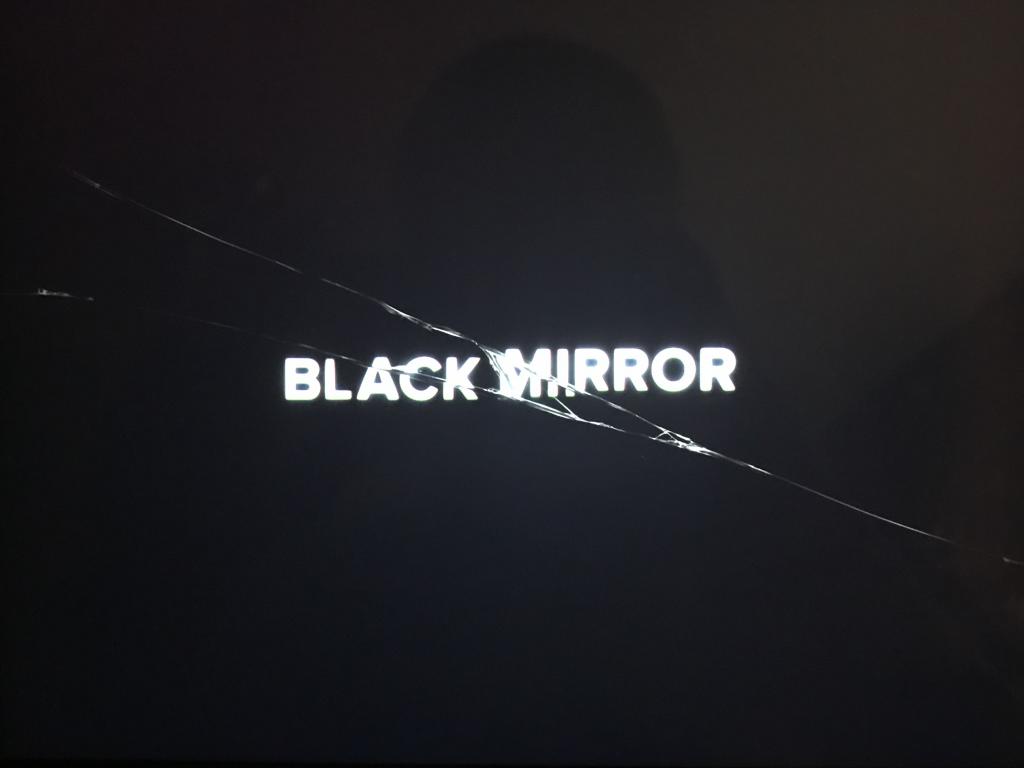
Dark Mirrors
Three of the deadly thoughts concern basic physical desires. The first, appetite, has two aspects to it. Moderation of appetitive prevents unhealthy overindulgence, but restraint from overconsumption also leaves us with more to share with others. Behavior tips into crass gluttony in a number of Black Mirror episodes—media indulgence is a recurring theme, beginning with the initial episode “The National Anthem.” The indulgent suffer, but none of the episodes deeply explores the deprivations of those who suffer because of the resources absorbed by others’ unchecked appetites.
The second basic desire, lust, concerns the desire for only external appearances. (In his poem “The Church Porch,” George Herbert provides the metaphor of lusting after a book while being unable to read its text.) This is one of the more interesting deadly thoughts explored throughout Black Mirror, although perhaps unintentionally. In “Be Right Back,” a digital and material copy of person is created to fill the void left by a lost loved one, but the simulation or appearance of the person isn’t sufficient. “San Junipero,” a virtual destination for the aged and expired, explores the integrity between offline and online identities. And “USS Callister,” in which a software engineer copies co-workers’ DNA to create simulated copies of them to control in a virtual game, stretches our understanding of what it means to respect a whole person.
Avarice is the third basic desire, which is rooted in our fear of insecurity. The desire for security and control is present in a number of episodes: keeping up public social scores in “Nosedive”; monitoring children with implants in “Arkangel”; running simulations of relationships to identify ones with the best odds of success in “Hang the DJ”; and extending life through coconsciousness transfer in “Black Museum.” But the avarice driving these behaviors isn’t identified as such; we are mostly left to be troubled by unfortunate outcomes.
The fourth and sixth through eighth deadly thoughts are corruptions of the mind, and Black Mirror scarcely attends to these. Sadness, which comes from comparing ourselves and our achievements with others, is present in the focus on social scores in “Nosedive.” But we already know the subtler social scoring of social media platforms, which present us daily with opportunities for solitary discontent. Acedia—the absence of care that leads to boredom, apathy, and despair—is also largely absent in Black Mirror, although care is the chief casualty of our distracted time. Vainglory, the need to be elevated above others, is present in “Fifteen Million Merits,” in which fifteen minutes of fame may be had for fifteen million merits. But pride, the excessive love of self that accompanies all sin, is mostly associated with the hubris of the unseen creators of all these troublesome technologies.
There is plenty in Black Mirror about the fifth deadly thought, anger, which is the desire for revenge over reconciliation. Such anger is fueled by mental time-traveling through an internal digital archive in “The Entire History of You” and the campaign of a nasty animated bear in “The Waldo Movement.” Elaborate punishments are devised in a public penal colony in “White Bear”; through digital incarceration and shunning in augmented reality in “White Christmas”; by hackers manipulating and exposing offenders in “Shut Up and Dance”; and through the endless torture of digitally extended lives in “Black Museum.” Also, implants trick soldiers into participating in a eugenics program in “Men against Fire”; robotic bees are used to kill users of a deathly hashtag in “Hated in the Nation”; and robotic guard dogs protect the world by eliminating humans in “Metalhead.”
Anger seems to emerge as the most dominant thought and passion in Black Mirror, but its treatment throughout the series doesn’t move much beyond spectacles of hatred, rage, vengeance, and self-destruction. There is little patience and no reconciliation. We don’t need science fiction to show us that we are living in an age of anger, or that technologies can exacerbate its damaging effects. More helpful would be imaginative explorations of all that stimulates our desires—good and bad—and visions of virtuous counter-practices that will equip us to live well with new technologies.
Previous Post

June 6, 2018
Technological Transformation
Next Post
July 18, 2018 The Human Scale of Technology
Browse Our Archives
Select a Category Uncategorized
Select a Month August 2024 December 2023 September 2023 November 2022 June 2022 March 2022 February 2022 September 2021 August 2021 July 2021 March 2021 February 2021 January 2021 November 2020 October 2020 September 2020 July 2020 June 2020 May 2020 April 2020 March 2020 February 2020 December 2019 November 2019 October 2019 September 2019 August 2019 July 2019 June 2019 May 2019 April 2019 March 2019 February 2019 January 2019 December 2018 November 2018 October 2018 September 2018 August 2018 July 2018 June 2018 May 2018 April 2018 March 2018 February 2018 January 2018
Follow Us!
TAKE THE
Religious Wisdom Quiz
Seek the Lord, all you humble of the land. Seek righteousness, seek what else?
Select your answer to see how you score.
Mercy Peace Humility Justice
Related posts from Digital Wisdom
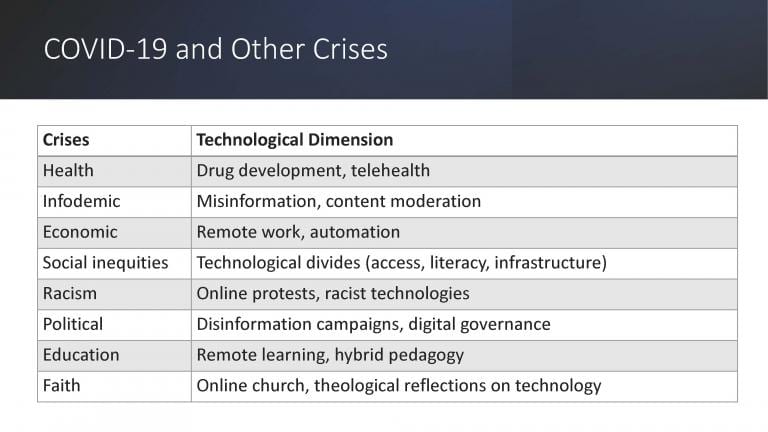
Science Fiction and the Technological Imagination


TRENDING AT PATHEOS Evangelical

The REST of Your Life: A Creative Wrestles...
This week I had a conversation with a good friend from church....

How the author of the world's best hymn...
I've been working with John Newton for a while now. This makes...

Long before this Lectio Divina, Psalm 130 - the song - started...

What About the Trees? Another Living Parable
After I finished writing the last article about falling leaves as a...

Why Classical Education Is a Conversation, Not a...
Come and Read: Joy in Classical Education When I was a little...

Cornell University has received a great deal of negative publicity and intense...
view all Evangelical blogs
Ad-Free & Subscriber Log-In Subscription Support
- About Us
- 2026 Calendar
- Videos
- Podcasts
- Library of World Religions
- Faith In Media Tracker
- Advertise With Us
- Write for Us
- Privacy Policy
- Terms of Service
- Do Not Sell My Data
- Contact Us
- Radiant Digital
- Manage Newsletter Subscriptions
- Unsubscribe From Notifications
- Sitemap
Copyright 2008-2026, Patheos. All rights reserved.
Subscription Support Ad-Free & Subscriber Log-In
Follow Patheos