
BuddhistCatholicContemplativeEvangelicalGeneral ChristianHinduJewishLatter-day SaintMuslimNew VisionsProgressive Christian
Beliefs
- Buddhist
- Catholic
- Contemplative
- Evangelical
- General Christian
- Hindu
- Jewish
- Latter-day Saint
- More Voices
- Muslim
- New Visions
- Pagan
- Progressive Christian
Topics
- Religion News
- Food and Religion
- Sports and Religion
- Religious Art
- Religious Music and Entertainment
- Religious Events
- History and Religion
- Style and Religion
- Politics and Religion
- Women in Religion
- Recreation Outdoors and Religion
- Business Finance and Religion
- Careers Workplace and Religion
- Education and Religion
- Family Parenting and Religion
- Health Fitness and Religion
- Home and Religion
- Relationships and Religion
- Technology and Religion
- Travel and Religion
Columnists
- Buddhist Columnists
- Business Finance and Religion Columnists
- Careers Workplace and Religion Columnists
- Catholic Columnists
- Contemplative Columnists
- Education and Religion Columnists
- Evangelists Columnists
- Family Parenting and Religion Columnists
- General Christian Columnists
- Health Fitness and Religion Columnists
- Hindu Columnists
- History and Religion Columnists
- Home and Religion Columnists
- Jewish Columnists
- More Voices Columnists
- Latter Day Columnists
- Muslim Columnists
- New Visions Columnists
- Nonreligious Columnists
- Pagan Columnists
- Politics and Religion Columnists
- Progressive Columnists
- Recreation Outdoors and Religion Columnists
- Relationships and Religion Columnists
- Religion News Columnists
- Religious Art Columnists
- Religious Events Columnists
- Religious Music and Entertainment Columnists
- Sports and Religion Columnists
- Style and Religion Columnists
- Technology and Religion Columnists
- Travel and Religion Columnists
- Women in Religion Columnists
Resource Library
- 2026 Calendar
- Library of World Religions
- The 100 Most Holy Places on Earth
- Patheos Answers
- Podcasts
- Videos
- Faith Leaders Database
- Anglican Episcopalian
- Bahai
- Baptist
- Buddhism
- Christianity
- Confucianism
- Eastern Orthodoxy
- Hinduism
- Holiness and Pentecostal
- ISKCON
- Islam
- Judaism
- Lutheran
- Methodist
- The Church of Jesus Christ of Latter-day Saints
- New Age
- Paganism
- Presbytarian and Reformed
- Protestantism
- Religion Behind the Scenes
- Roman Catholic
- Scientology
- Shia Islam
- Sikhism
- Sufism
- Sunni Islam
- Taoism
- Zen
- See all religions
Research Tools
 Ad-Free & Subscriber Log-In Subscription Support
Ad-Free & Subscriber Log-In Subscription Support
Follow Patheos 

- Trending:
- Forgiveness
- |
- Marriage
- |
- Consciousness
- |
- Death Penalty
- |
- Election
- |
- Halloween
 Diary of a Wimpy Catholic
- Home
- Catholic
- Darn Tootin’ Pope Francis Is A Liberal
Darn Tootin’ Pope Francis Is A Liberal
Last updated on: March 13, 2015 at 3:01 pm by Max Lindenman
Darn Tootin’ Pope Francis Is A Liberal 2015-03-13T15:01:45-06:00 Max Lindenman
Patheos Explore the world's faith through different perspectives on religion and spirituality! Patheos has the views of the prevalent religions and spiritualities of the world.
Last month, Elizabeth Scalia, my managing editor, proposed a moratorium on “liberal,” “conservative,” and suchlike labels in discussions of intra-Church divisions. I’ve been a good boy ever since, but Philadelphia’s Archbishop Chaput doesn’t seem to have gotten the memo. In an interview with National Catholic Reporter’s John Allen, Jr., he remarked that people on “the right wing of the church…generally have not been really happy” about Francis’ election.
It’s true that Francis has his critics. But there’s also been a push to stress the continuity between Francis’ pontificate and those of his two predecessors. In First Things, William Doino goes about it very soberly. Some of my friends, however, when making the same case in less formal venues, succumb to a kind of desperation. “Move along, folks! Nothing to see here! Francis and Benedict are like two papal peas in a pod! Forget what the lamestream media says — if Francis joined a spin class, you wouldn’t be able to tell him from Pius XII!”
Each side holds a share of the truth. Yes, Francis is a champion of Catholic orthodoxy. No, he’s not trying to upend any of his Benedict’s work, much less upstage the man himself. But if we’re willing to use the term “liberal” to mean something besides “in tune with the post-Woodstock West,” it applies quite well to certain qualities Francis appears to possess in special abundance, or at least certain qualities he sees fit to put forward like a best foot.
Psychologist Jonathan Haidt makes the case that “liberal” and “conservative,” “left” and “right,” refer to something more profound and less changeable than party preference. They reflect divergent moral foundations, or intuitive, sub-rational assumptions on what constitutes right and wrong. By analyzing data obtained through questionnaires completed at www.YourMorals.com, Haidt, along with University of Virginia colleague Ravi Iyer, concluded that respondents who self-identified as “liberal” or “moderate” were especially likely to base their morality on a foundation of “care” and “fairness,” but less likely to value “loyalty,” “authority,” or “purity.” Self-described conservatives tended to value all of these more or less equally.
It’s pretty plain that Francis has so far given priority to an ethic of care, or “sensitivity to the suffering and needs of others,” even when other values might urge a different course of action. He likes to tell the story about an elderly woman who cornered a young priest after Mass and asked for a blessing. With the best of intentions, the priest tried to catechize the lady, explaining that he’d already blessed the congregation during the Mass. Underwhelmed by his reasoning, the woman thanked him, then asked a blessing from another priest. To Francis, this story demonstrates that the woman’s real need was not a lesson in theology, but “to be touched by the Lord,” and he sees no problem in catering to it.
As for in-group loyalty, which “rewards team players and ostracizes those who betray the group,” Francis has tended to ignore it or even dismiss it outright. On Holy Thursday, he washed the feet of a Serbian Muslim woman. More recently, he’s celebrated Mass at Lampedusa to call attention to the hardships faced by Africans — many of them Muslims — who migrate to Europe, often over the objections of native Europeans. A line from the encyclical Lumen Fidei generally attributed to Francis maintains that “Anyone who sets on the path of doing good is already drawing near to God,” and Francis has stressed that this “anyone” includes atheists.
Haidt defines “purity” as “a revulsion toward objects that make us sick.” In some contexts, he substitutes the word “sanctity,” which also involves “an appreciation for the sacred.” Where the Church is concerned, the second value would appear to be more germane; but it’s the first that Francis has soft-pedaled. Michael Sean Winters observes that he “does not focus on the sins of men” but “on the mercies of God.” All the feet Francis washed on Holy Thursday belonged to inmates in a juvenile prison. One Rorate Caeli reader posted that he could only have countenanced the participation of these hoodlums if they’d been clapped in irons at the time. By his standard of delicacy, Francis may as well have been a chronic nose-picker.
But it may be at the hurdle of “authority,” or “sensitivity to signs of rank or status, and to when someone is not behaving according to his status,” that Francis really stumbles. He’s set out to reform the Curia not in the manner of a man on horseback, but in consultation with eight cardinals. He prefers the title Bishop of Rome to Supreme Pontiff. When Chaput warned Allen, “There has to be some distance between the general crowds and the Holy Father,” he was expressing concern for Francis’ physical safety. But I wonder whether he was also making a broader point: that close encounters with the mob compromise the dignity of his office. When Katrina Fernandez complained that Francis “acts like he doesn’t want to be pope,” she accused him of committing lèse-majesté against himself.
As many have pointed out, not all of this “liberal” behavior is unique to Francis. Pope Benedict once hosted a Christmas luncheon for homeless people, an act that seemed to favor care over purity. But in Haidt’s model for moral reasoning, intuition precedes and can even dominate reason, and according to the intuitive judgment of many, Francis is consciously tweaking the tone of the papacy. On the whole, at least for the time being, the new tone is finding a wildly enthusiastic, even ecstatic response. Chaput’s disgruntled right-wingers in time may come around themselves. As the archbishop observes, “[Francis] will have to care for them, too.” Poor babies, of course Francis will care for them. That’s what liberals are for.
Note: Probably because of some glitch on my own virus-infected computer, I am finding myself unable to post links. For a detailed review of Haidt’s research, findings and conclusions, see his book The Righteous Mind: Why Good People Are Divided By Politics and Religion. Doino’s debunking of “Five Myths About Pope Francis” is available on First Things’ website, at www.firstthings.com, as an On the Square feature. It is dated July 22. Allen’s interview with Archbishop Chaput, along with Michael Sean Winters’ commentary, appears on National Catholic Reporter’s webpage, www.ncronline.org. Both are dated July 24.
Previous Post

July 22, 2013
Deluge
Next Post
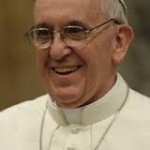
July 30, 2013 The Day the Pope Said 'Gay'
Browse Our Archives
Select a Category Uncategorized
Select a Month August 2016 July 2016 May 2016 April 2016 March 2016 January 2016 December 2015 November 2015 October 2015 September 2015 August 2015 July 2015 June 2015 May 2015 April 2015 February 2015 January 2015 July 2014 April 2014 February 2014 January 2014 December 2013 November 2013 October 2013 September 2013 August 2013 July 2013 May 2013 April 2013 March 2013 February 2013 January 2013 December 2012 November 2012 October 2012 September 2012 August 2012 July 2012 June 2012 May 2012 April 2012 March 2012 February 2012 January 2012 December 2011 November 2011 October 2011 September 2011 August 2011 July 2011 June 2011 May 2011
Follow Us!
TAKE THE
Religious Wisdom Quiz
What four things does the Pale Horse in Revelations bring upon the earth?
Select your answer to see how you score.
Sword, famine, plague, and wild beasts Wrath, power, redemption, and judgment Storms, earthquakes, floods, and darkness Silence, fire, blood, and pestilence
Related posts from Diary of a Wimpy Catholic
Amoris Laetitia and the Family Road Trip

For Veterans' Day: Reflections on the Field-Hospital Church

Generation Win: LGBT-Rights Supporters and Those Mad Enough...

"Radical Loneliness" and the Parable of the Frozen...
TRENDING AT PATHEOS Catholic

Creation, Preservation, and Teleology in Catholic Theology
As I write this, it is very early Monday morning. Like millions...

The Parable Of The Sower And The Word...
One of Christ’s most famous parables is that of the sower who...

Rejecting Doom: Christian Hope And Human Action
Christianity is a religion of hope. We are to have hope and...

Why I Choose the Eucharist Over the Sermon
Choose the Eucharist, Not the Sermon What are we supposed to get...

5 Design Elements Found in Spiritually Rooted Homes
Putting Spirituality Into Home Decor Our homes are more than our living...

Credo: A Story of God Told with the...
About 10 years ago, I began to imagine a personal "Credo" that...
view all Catholic blogs
Ad-Free & Subscriber Log-In Subscription Support
- About Us
- 2026 Calendar
- Videos
- Podcasts
- Library of World Religions
- Faith In Media Tracker
- Advertise With Us
- Write for Us
- Privacy Policy
- Terms of Service
- Do Not Sell My Data
- Contact Us
- Radiant Digital
- Manage Newsletter Subscriptions
- Unsubscribe From Notifications
- Sitemap
Copyright 2008-2026, Patheos. All rights reserved.
Subscription Support Ad-Free & Subscriber Log-In
Follow Patheos