
BuddhistCatholicContemplativeEvangelicalGeneral ChristianHinduJewishLatter-day SaintMuslimNew VisionsProgressive Christian
Beliefs
- Buddhist
- Catholic
- Contemplative
- Evangelical
- General Christian
- Hindu
- Jewish
- Latter-day Saint
- More Voices
- Muslim
- New Visions
- Pagan
- Progressive Christian
Topics
- Religion News
- Food and Religion
- Sports and Religion
- Religious Art
- Religious Music and Entertainment
- Religious Events
- History and Religion
- Style and Religion
- Politics and Religion
- Women in Religion
- Recreation Outdoors and Religion
- Business Finance and Religion
- Careers Workplace and Religion
- Education and Religion
- Family Parenting and Religion
- Health Fitness and Religion
- Home and Religion
- Relationships and Religion
- Technology and Religion
- Travel and Religion
Columnists
- Buddhist Columnists
- Business Finance and Religion Columnists
- Careers Workplace and Religion Columnists
- Catholic Columnists
- Contemplative Columnists
- Education and Religion Columnists
- Evangelists Columnists
- Family Parenting and Religion Columnists
- General Christian Columnists
- Health Fitness and Religion Columnists
- Hindu Columnists
- History and Religion Columnists
- Home and Religion Columnists
- Jewish Columnists
- More Voices Columnists
- Latter Day Columnists
- Muslim Columnists
- New Visions Columnists
- Nonreligious Columnists
- Pagan Columnists
- Politics and Religion Columnists
- Progressive Columnists
- Recreation Outdoors and Religion Columnists
- Relationships and Religion Columnists
- Religion News Columnists
- Religious Art Columnists
- Religious Events Columnists
- Religious Music and Entertainment Columnists
- Sports and Religion Columnists
- Style and Religion Columnists
- Technology and Religion Columnists
- Travel and Religion Columnists
- Women in Religion Columnists
Resource Library
- 2026 Calendar
- Library of World Religions
- The 100 Most Holy Places on Earth
- Patheos Answers
- Podcasts
- Videos
- Faith Leaders Database
- Anglican Episcopalian
- Bahai
- Baptist
- Buddhism
- Christianity
- Confucianism
- Eastern Orthodoxy
- Hinduism
- Holiness and Pentecostal
- ISKCON
- Islam
- Judaism
- Lutheran
- Methodist
- The Church of Jesus Christ of Latter-day Saints
- New Age
- Paganism
- Presbytarian and Reformed
- Protestantism
- Religion Behind the Scenes
- Roman Catholic
- Scientology
- Shia Islam
- Sikhism
- Sufism
- Sunni Islam
- Taoism
- Zen
- See all religions
Research Tools
 Ad-Free & Subscriber Log-In Subscription Support
Ad-Free & Subscriber Log-In Subscription Support
Follow Patheos 

- Trending:
- Forgiveness
- |
- Marriage
- |
- Consciousness
- |
- Death Penalty
- |
- Election
- |
- Halloween

- Home
- Hindu
- Religious Art
- Hindu…Kinda Sorta
Hindu…Kinda Sorta
Last updated on: May 24, 2024 at 10:35 am by Fred Stella
Hindu…Kinda Sorta 2024-05-24T10:35:01-04:00 Fred Stella
Patheos Explore the world's faith through different perspectives on religion and spirituality! Patheos has the views of the prevalent religions and spiritualities of the world.
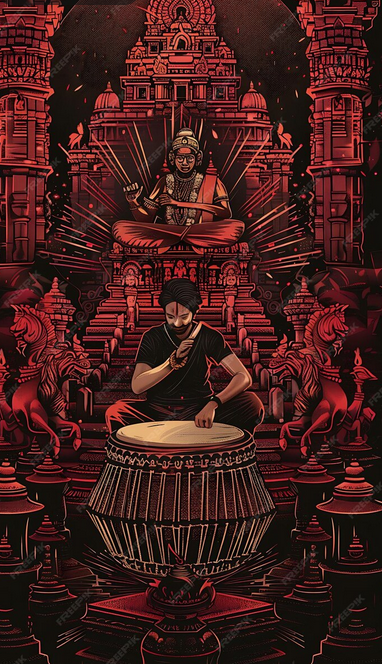
So many Westerners are drawn to the vitality of kirtan–communal chanting of the Divine Names
Suppose you had a new acquaintance, and you asked her to join you for some weekend activity. And say that she responds enthusiastically, as long as it works within her schedule. She tells you that she’ll be in church on Friday evening for a Novena, then back again on Saturday afternoon for Confession. And of course, Sunday there is Mass. You might at that moment say you didn’t realize she was Catholic. Naturally, she will confirm her spiritual identity. Of course, she is Catholic.
Now, you have another new friend whom you invite to lunch. But he politely declines, informing you that since it is Ramadan, he must forego any midday meal. However, he is thrilled to invite you to join him for Iftar, the ceremonial fast-breaking meal after sundown. This might lead you to surmise that he’s Muslim. I can’t imagine him agreeing to be anything else. But soon after this, you run into someone who studies the Bhagavad Gita, meditates with a Sanskrit mantra, is a disciple of a guru, chants bhajans and may even have replaced his or her birth name with Ram or Radhika. However, if you were to assume they were Hindu, you might not be correct. Yes, everything I just mentioned has all the markings of a Hindu; but there is a very good chance that this person might deny the label of “Hindu” or any other religious category. Perhaps they are comfortable with identifying as “Spiritual But Not Religious” or something quasi-Hindu such as “Yogi” or “Vedantist.”
WHAT’S IN A NAME?
I’ll say from the start that I have no desire to criticize anyone for how they identify religiously. My goal here is to understand the reasons for distancing oneself from Hinduism while embracing some of the most important elements of the tradition. And for our purposes here, I will focus specifically on those who are ethnically non-Indian (or non-Nepali, non-Balinese, etc.). The population in question is typically of European or African ancestry. It is true that there are South Asians who also distance themselves from The H Word, but that is a matter for a different time.While reasons for this are manifold, I suspect the main one is that the word Hindu is so heavily tied to an ethnicity and culture quite foreign to most Westerners. An educated guess suggests that perhaps upwards of 98 or 99% of all Hindus are of South Asian extraction. And up until relatively recently, Hindu was used interchangeably with Indian since another name for India was Hindustan.
The other major religions are much more diverse in their ethnicity. There are a couple of very good reasons for this, and both are quite noble. Some expansion into Southeast Asia centuries ago did happen, but Indian culture did not engage in colonization as we have come to know it. They did not usurp cultures, dethrone rulers and establish states servile to an emperor. Sure, there were wars between Indian kingdoms, but they more or less kept things “all in the family.” The other reason is that there is no Great Commission (Gospel of Mark Ch. XVI v.15-18) in Hinduism that compels devotees to convert foreign populations.
PRECEDENT SET
While there were Hindu teachers before him, the 1st major Hindu thought leader to transmit the Dharma to Americans was Swami Vivekananda. I suspect that if he had described his work as being Hindu it might have established a precedent, but that was not to be. Vivekananda disliked the word for some of the reasons I mentioned above. At the time it was just too broad a brush. He stated:
“There may not be any harm in using the word [Hindu], but it lost its significance, for you may mark that all the people who live on this side of the Indus in modern times do not follow the same religion as they did in ancient times. The word, therefore, covers not only Hindus proper, but [Muslims], Christians, Jains, and others who live in India. I, therefore, would not use the word Hindu. What word should we use then? The only other words which we can use are either the Vaidiks—followers of the Vedas—or better still, the Vedantists—followers of the Vedanta.”
And then there are some people who embrace Hindu practice that eschew any religious stamp because they just don’t like religion. Many were brought up in homes that practiced a rather severe expression of Christianity. Some will even refrain from using “God” in conversation, as visions of Chief-Punisher-In-The-Sky might retard spiritual and emotional growth. So, for this group, having an affiliation with a society that teaches from an eastern oriented position is all they need
And we cannot minimize the strong anti-Hindu bias that seems to be pervasive today. Many people might want to keep a distance due to fear that they will be labeled Fascist or Extremist This meme is certainly making the rounds currently on may college campuses.
TRYING THEM ALL ON FOR SIZE
Of course, since the world’s religions are one, why not embrace them all? This is a form of what is called radical universalism. I’ve actually heard people say that they are Christian-Hindu- Buddhist-Jewish- Muslim+. One is tempted to ask such a person, ”Do you fast during Lent, Ramadan, Yom Kippur and Ekadasi? And are you planning a pilgrimage to Jerusalem, Mecca and Varanasi?’ It is true that those who practice the more mystical expressions of the Abrahamic religions see an underlying unity among all traditions, but even they tend to focus on the rituals and practices of their own heritage.
I recall a lecture given by a swami who headed a sangha (religious sect) who avoided using “Hindu” when describing his path. His Italian devotees connected with a group of Catholics, and together they meditated, chanted and enjoyed fellowship. The local bishop called the swami in to express his displeasure at this situation. While engaging in interfaith hospitality was fine enough, this seemed to be growing into something more. At one point in his lecture he expressed frustration and said that the bishop “got me to admit we were Hindu.” Given that the bishop was addressing a renunciant who was a member of an ancient Hindu monastic order, one suspects it wasn’t a difficult concession to elicit.
SO MANY WAYS TO BE HINDU
Another reason for people to be hesitant about identifying as Hindu is that they have a very narrow understanding of what that means. Often, it is assumed that to be Hindu one must engage in temple deity worship. While many are attracted to kirtan, the Gita, gurus, etc., only a relative few as also temple members. But this is incorrect. Down through the ages, there have been plenty of deeply devout cradle-to-cremation Hindus who have found Ishwara/Bhagavan/Brahman beyond temple walls.
In recent decades, traditional Hindus are now encouraging the term Sanatana Dharma to describe what we do and believe. This, as Hindu theologians say, is really the original name for Hinduism. Meaning “eternal way”. It seems to capture a certain essence of the tradition that resonates with many adherents. I haven’t seen any movement to fully replace Hindu with Sanatana Dharma, but many believe that we should use it to some degree. And because even though it is Sanskrit, and from India, it may seem less ethnically attached than Hindu, since it avoids identification with a specific place. Several gurus who have come to the West preferred using Sanatana Dharma to describe their teachings. And so, many Westerners have acknowledged themselves as Dharmis.
As I said in the beginning, I do not seek lay a guilt trip on anyone who chooses to engage with the great wisdom and practices of the Dharma without fully embracing our community. Hinduism is very generous in sharing with the world without requiring any sort of formal membership. But those of us who are practicing Hindus should encourage those whom I’ve described to know how welcome they are in our fold.
And really, we can always use the help.
Relationships and Religion
Previous Post

March 3, 2024
Thou Should Not Grieve: Mourning And The Bhagavad Gita
Next Post

January 30, 2025 Catholic and Protestant Hindus
Recent Comments
"I wholeheartedly agree with your assessment. We are not of a fair playing field here. ..."
"Hello Fred,Thank you very much for sharing your view points on the movie poster. When ..."
Browse Our Archives
Select a Category Hinduism and the Public Square Uncategorized
Select a Month August 2026 February 2026 November 2025 May 2025 March 2025 January 2025 May 2024 March 2024 November 2023 August 2023 June 2023 April 2023 January 2023 December 2022 September 2022
Follow Us!
TAKE THE
Religious Wisdom Quiz
True or False: God spoke to Job out of a whirlwind.
Select your answer to see how you score.
FALSE TRUE
Related posts from Dhmaric Meanderings
Jesus in the Dharma: Where Christ Fits in...

Michael and Murugan: One in the Same?

The Many Incarnations of Bob Dylan

Thou Should Not Grieve: Mourning And The Bhagavad...
TRENDING AT PATHEOS Hindu

Indian Hindu pilot’s valor in line of duty...
There is a hoary maritime tradition that the captain of the...

Movie on Neem Karoli Baba’s life is a...
Neem Karoli Baba’s life (1900-1973) is associated with miracles he made in...

20 Questions to Ask Before an Interfaith Marriage,...
Four questions every interfaith couple should discuss before marriage: Conversion. Will either...

Avadhānam: The Art of Concentration and Intellectual Mastery
What is Avadhānam? In the summer of 2015, during a three-day Sanskrit...

Jesus in the Dharma: Where Christ Fits in...
Where Does Jesus Fit in Hinduism? That’s a question I get often...

Hormuz: A Shared Hindu and Zoroastrian Heritage
Every evening, somewhere in the world, a newsreader utters the words: "The...
view all Hindu blogs
What Are Your Thoughts?leave a comment
Ad-Free & Subscriber Log-In Subscription Support
- About Us
- 2026 Calendar
- Videos
- Podcasts
- Library of World Religions
- Faith In Media Tracker
- Advertise With Us
- Write for Us
- Privacy Policy
- Terms of Service
- Do Not Sell My Data
- Contact Us
- Radiant Digital
- Manage Newsletter Subscriptions
- Unsubscribe From Notifications
- Sitemap
Copyright 2008-2026, Patheos. All rights reserved.
Subscription Support Ad-Free & Subscriber Log-In
Follow Patheos