
BuddhistCatholicContemplativeEvangelicalGeneral ChristianHinduJewishLatter-day SaintMuslimNew VisionsProgressive Christian
Beliefs
- Buddhist
- Catholic
- Contemplative
- Evangelical
- General Christian
- Hindu
- Jewish
- Latter-day Saint
- More Voices
- Muslim
- New Visions
- Pagan
- Progressive Christian
Topics
- Religion News
- Food and Religion
- Sports and Religion
- Religious Art
- Religious Music and Entertainment
- Religious Events
- History and Religion
- Style and Religion
- Politics and Religion
- Women in Religion
- Recreation Outdoors and Religion
- Business Finance and Religion
- Careers Workplace and Religion
- Education and Religion
- Family Parenting and Religion
- Health Fitness and Religion
- Home and Religion
- Relationships and Religion
- Technology and Religion
- Travel and Religion
Columnists
- Buddhist Columnists
- Business Finance and Religion Columnists
- Careers Workplace and Religion Columnists
- Catholic Columnists
- Contemplative Columnists
- Education and Religion Columnists
- Evangelists Columnists
- Family Parenting and Religion Columnists
- General Christian Columnists
- Health Fitness and Religion Columnists
- Hindu Columnists
- History and Religion Columnists
- Home and Religion Columnists
- Jewish Columnists
- More Voices Columnists
- Latter Day Columnists
- Muslim Columnists
- New Visions Columnists
- Nonreligious Columnists
- Pagan Columnists
- Politics and Religion Columnists
- Progressive Columnists
- Recreation Outdoors and Religion Columnists
- Relationships and Religion Columnists
- Religion News Columnists
- Religious Art Columnists
- Religious Events Columnists
- Religious Music and Entertainment Columnists
- Sports and Religion Columnists
- Style and Religion Columnists
- Technology and Religion Columnists
- Travel and Religion Columnists
- Women in Religion Columnists
Resource Library
- 2026 Calendar
- Library of World Religions
- The 100 Most Holy Places on Earth
- Patheos Answers
- Podcasts
- Videos
- Faith Leaders Database
- Anglican Episcopalian
- Bahai
- Baptist
- Buddhism
- Christianity
- Confucianism
- Eastern Orthodoxy
- Hinduism
- Holiness and Pentecostal
- ISKCON
- Islam
- Judaism
- Lutheran
- Methodist
- The Church of Jesus Christ of Latter-day Saints
- New Age
- Paganism
- Presbytarian and Reformed
- Protestantism
- Religion Behind the Scenes
- Roman Catholic
- Scientology
- Shia Islam
- Sikhism
- Sufism
- Sunni Islam
- Taoism
- Zen
- See all religions
Research Tools
 Ad-Free & Subscriber Log-In Subscription Support
Ad-Free & Subscriber Log-In Subscription Support
Follow Patheos 

- Trending:
- Forgiveness
- |
- Marriage
- |
- Consciousness
- |
- Death Penalty
- |
- Election
- |
- Halloween

-
More
- Home
- Evangelical
- Family, Parenting and Religion
- Devotional Guide: Rev 1:1-2:17
Devotional Guide: Rev 1:1-2:17
Last updated on: May 23, 2023 at 9:07 am by Rob Dalrymple
Devotional Guide: Rev 1:1-2:17 2023-05-23T09:07:07-08:00 Rob Dalrymple
Patheos Explore the world's faith through different perspectives on religion and spirituality! Patheos has the views of the prevalent religions and spiritualities of the world.
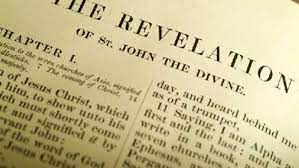 Monday: Read Revelation 1:1-8
Revelation 1:1-8 functions as the prologue or the introduction to the book of Revelation. As the prologue, it serves an important role in the book of Revelation in that it sets the context for everything that is to follow.
To begin with, we learn here that the book is “The Revelation of Jesus Christ” (1). This phrase is ambiguous in Greek and English. It likely means that the revelation is both “from” Jesus Christ and “about” Jesus Christ!
In addition, we learn that it is the revelation “which God gave Him” (1). Consequently, it is from God!
One of the difficulties of the book of Revelation is that composed of three genres: apocalypse, prophecy, and epistle.[2] The key is that each of these three genres was concerned primarily with the people to whom they were written. This means that we should not assume that the book of Revelation is about the future. This will be evident as we continue in the book and notice how often John addresses his readers with commands and exhortations to “overcome” or to have wisdom. This means that the book was understandable to its readers. After all, how could they be expected “overcome” if they do not understand what the book is about?
In addition, the book promises a blessing for those who read and do what it says (3). This too affirms that the book must have made sense to those to whom it was addressed.
A key to understanding the book of Revelation is that John believes that Jesus’ life, death, resurrection, and ascension have set in motion what is commonly called the “end-times” or more technically “the eschaton.”[3] This will become especially clear as we read the account of the slain Lamb in Rev 5:1-14.
At this point, I will simply note that the book of Revelation announces that Jesus is Lord and the world’s true King. His death and resurrection have inaugurated what the Bible terms “the last days.” God’s people are to be encouraged and remain faithful. God, after all, is the One who is eternal and, as we will see, He sits enthroned as the world’s true ruler.
For those suffering under the oppressive Roman rule and who are constantly tempted to collude with Rome simply so they may survive, this message was meant to inspire hope and courage to persevere.
Questions to ponder/discuss:
-
Compare Rev 1:1 and 22:6.[4] What words or phrases do these two verses have in common? Also, note that 1:1 is the opening verse of the introduction/prologue and 22:6 is the opening verse of the conclusion/epilogue. Thus, these two verses form an “inclusio” or frame around the book of Revelation. This is one of the primary means by which ancient authors will reveal their main purposes or objectives. If so, what then are John’s main goals?
-
As we proceed, we will observe many examples of John’s use of numbers.[5] John will often list items in threes (representing God and eternity), four (often representing creation—e.g., “four winds”), and seven (representing perfection). Read the following verses and note the occurrences of three’s:
- 1:3
- 1:4b-5a
- 1:5
- 1:8
-
Note the three titles given to Jesus in 1:5 and discuss why you think they might be important for understanding the book of Revelation. Then discuss what you think the significance of these titles is for you and/or the church today.
Tuesday: Read Revelation 1:9-20
Revelation 1:9-3:21 forms the first story or scene in the book of Revelation. This story occurs with John on the island of Patmos (9). He was likely there as some sort of political prisoner. He notes that he was there “because of the word of God and the testimony of Jesus” (9).
John begins by identifying himself as a sharer in the “tribulation”[6] and “kingdom” and “patient endurance” (9).
John then sees the resurrected, glorified Jesus (1:12-20), who commands him to write what he sees and send it to the seven churches: Ephesus, Smyrna, Pergamum, Thyatira, Sardis, Philadelphia, and Laodicea (1:11).
One of the beautiful features of the book of Revelation is that it begins with a magnificent description of the resurrected Jesus! John sees Jesus in all of His glory! John’s description of Jesus includes features that belong to the Father in the OT: such as, “His head and His hair were white like white wool, like snow” (14; see Dan 7:9). Primarily, though, John’s description of Jesus serves to affirm Him as the coming Judge. This was meant to be good news to his readers. After all, it sure seems as if Rome is in power.
The description of Jesus also assures them that Jesus, whom Rome killed, is the “living One” (18) and is alive and well!
Questions to ponder/discuss:
- What do you think is the significance of John’s three-fold description of “tribulation, kingdom, and patient endurance” (9)?
- What message do you think John was trying to tell his readers when He notes that Jesus “was dead, and behold, I am alive forevermore, and I have the keys of death and of Hades” (18)?
- What is the importance of the fact that Jesus is the One who walks among the seven churches: i.e., “lampstands” (20; see 2:1)?
Wednesday: Read Revelation 2:1-7
The seven “messages” in 2:1-3:22 are commonly referred to as the seven letters. Upon closer examination, however, these “messages” do not have much in common with ancient letters. Consequently, they are better titled as “messages.” Each of them is addressed to a church in the ancient province of Asia, which was a Roman area in what is now the western portion of Turkey. The first message is addressed to the Church in Ephesus.
The messages begin with the church in Ephesus—the capital and leading city of the Roman province of Asia. The city was renowned for its massive temple of Artemis (one of the seven wonders of the ancient world).
The church in Ephesus was known for its hard work and especially for testing and discerning of false prophets—who called themselves ‘apostles’ (2, 6).
However, the love in the church had grown cold (4). They are exhorted to rekindle that love (5).
Questions to ponder/discuss:
- It is easy to read the seven messages in isolation from one another. The messages, however, we meant to be read as a whole. Note that each of the messages closes with an exhortation that is addressed to all the churches: “let him hear what the Spirit says to the churches” (7). Also, in the very middle of the fourth and middle of the seven messages, it says, “and all the churches will know that I am He who searches the minds and hearts; and I will give to each one of you according to your deeds” (2:23). This affirms for us that, the messages were meant for them and for all Christians; including us. What then do you think is the significance of this message for you and your church?
- The unique description of Jesus in each of the seven messages is important as it reveals something about Jesus that each particular church needs to understand. After reading the message to the church in Ephesus, what do you think is the significance of the fact that Jesus is the One who walks among the seven lampstands?
Thursday: Read Revelation 2:8-11
Another feature of each of the seven messages is that they include both positive and negative features. That is, each of the churches is praised for the things that are going well and they are exhorted or warned with regard to the things that are not going well. There are some exceptions, however. Notably, the messages to Smyrna and Philadelphia have no negative features.
Those in Smyrna are told that, although they are in “poverty,” the reality is that they are the ones who are “rich” (9).[7] This corresponds with Jesus’ affirmation that the “poor” are the ones who are blessed and the rich are the ones who are cursed (see Luke 6:20, 24).
It appears that those in Smyrna were already suffering “tribulation” (9). In fact, they are told that they were about to face “ten days” of imprisonment (10). The exhortation “Be faithful until death” (10) may even suggest that some of them may face death.
In the message to Smyrna, we are informed that the one who is responsible for their persecution is the devil (10). As we progress through our study of the book of Revelation, we will learn that it is indeed the devil who stands by the opposition to the people of God.
Questions to ponder/discuss:
- After reading the message to the church in Smyrna, what do you think is the significance of the fact that Jesus is the One who is the First and the Last, and who was dead and is alive?
- Each of the seven messages includes a promise “to the one who overcomes.” The church in Smyrna clearly needed to be prepared to “overcome” as suffering was imminent. Read each of the seven exhortations to overcome ((2:7, 11, 17, 26; 3:5, 12, 21) and discern what you believe it means to “overcome.” (Note: we will continue to pursue this question as we read through the book of Revelation).[8]
- I find it interesting that the church in Smyrna was undergoing persecution and suffering and yet nothing negative is reported. Why do you suppose that this was the case?
Friday: Read Revelation 2:12-17
The message to the church in Pergamum (and Thyatira) provides a significant backdrop and as such serves as a major indication of the difficulties the Christians in the first-century Roman world faced.
We know that the Roman imperial cult was thriving throughout the region of seven churches. We also know that these cities regularly (at least once a month) held festivals in honor of the gods. A vital feature of these festivals was the sacrificing of animals to the gods. The sacrifices were then followed by banquets which were hosted by prominent city officials as well as other wealthy individuals in the city.
All of this presented a significant problem for the Christians. Could they engage in the public life of the city and attend the banquets which were in honor of the deities? Of course, not participating had serious consequences both socially and economically.
(Note: it is very difficult for us today, especially in the Western world, to grasp just how problematic this was for the Christians in the Roman world—especially those in the seven churches and the province of Asia).
When some “prophets” came along and told them that it was not a problem for them to attend the banquets and to eat the food that had been offered in religious ceremonies, we might imagine that many welcomed this news. John, however, strongly disagreed.
Questions to ponder/discuss:
-
After reading the message to the church in Pergamum, what do you think is the significance of the fact that Jesus is the One with the sharp sword?
-
Although it does not appear that the problems facing the church in Pergamum are relevant to us in the West today, there are two things we should note:
- First, there are many brothers and sisters in Christ that are facing such difficulties. As such, it is our duties to assist them with whatever resources we can so that they may be less tempted to compromise their faith. Pray for them and ask for discernment as to whether or not you are called beyond just praying for them.
- Secondly, we must be careful and discerning. Is it possible that our wealth and comfort are the result of compromise?[9]
Our goal is to keep these posts free of charge. I do not intend to ever hide them behind a paywall. I can only do this if those of you who have been blessed by them and can afford to give ($5, $10, $25, or more/month) do so. You can give a tax-deductible contribution by following this link.
Please share this post and let others know about determinetruth.
If you wish to view this blog on your smartphone through the Determinetruth app simply download the “tithe.ly church” app on your smartphone and insert “determinetruth” as the church name you wish to follow. Once it is loaded, simply click on the “blog” icon and it will automatically load.
If you would like to have Rob speak at your church or organization in person or via Zoom, please let us know by filling out the contact info on the Contact me tab on this site.
He is currently completing a commentary on the book of Revelation titled, “Revelation: a Love Story” (Cascade Books, pending 2024).
[1] This guide is meant to be done either as a group study over the course of 2 or 4 meetings (Day 1-5; 6-10; 11-15; 16-20), or as a private devotion over the course of 4 weeks (or a calendar month—5 lessons per week).
[2] See the determinetruth podcast on Mar 20, 27; Apr 3, 2023 (at determinetruth.com: then click on the “podcast” tab”; or search “determinetruth” at Itunes, Spotify, or wherever you get your podcasts) for further discussion of these genres.
[3] See the determinetruth podcast on Apr 17, 2023, for a discussion of “soon” and how John sees Jesus as the fulfillment and the inaugurator of the end-times.
[4] See the determinetruth podcast on Apr 17, 2023, for a discussion of the relationship between 1:1 and 22:6.
[5] Note: John’s use of numbers only enhances the meaning that is already in the text. Numbers are not used to establish meaning or to hide secret codes for us to discern the time of Jesus’ return. For a discussion of John’s use of numbers, see the determinetruth podcast on Apr 24, 2023.
[6] “Tribulation” occurs five times in the book of Revelation (1:9, 2:9, 10, 22: 7:14). For a discussion of “tribulation” in the NT, see my book Understanding the NT and the End Times, 100-118.
[7] The letter Laodicea affirms that material wealth is not a sign of kingdom wealth.
[8] See my book Follow the Lamb, XXX.
[9] I highly recommend Michael Gorman’s work Reading Revelation Responsibly, as well as Scot McKnight and Cody Matchett’s, Revelation for the Rest of Us.
General Christian
Family, Parenting and Religion
Education and Religion
About Rob Dalrymple
Rob Dalrymple is married to his wife Toni and is the father of four fabulous children, and two grandchildren. He has been teaching and pastoring for over 33 years at colleges, seminaries, and the local church. He has a PhD in biblical interpretation. He is the author of four books (including Follow the Lamb: A Guide to Reading, Understanding, and Applying the Book of Revelation & Understanding the New Testament and the End Times: Why it Matters) as well as numerous articles and other publications. You can read more about the author here.
Previous Post

April 17, 2023
Lying: Is it always a sin? Grace and the Gospel
Next Post

April 24, 2023 Reconciling God's love and Wrath: have we got it wrong?
Browse Our Archives
Select a Category 000 1 Cor 11:17-34 1 Corinthians 1 John 1 Peter 1 Thessalonians 1 Timothy 10 Commandments 2 Corinthians 2 John 2 Peter 2 Thessalonians 2 Timothy 3 John 666 Abortion Acts 2:42 Ahmaud Arbery AIPAC All Saints Day America antisemitism BDS Beast Betting Bible Bible study Biblical Interpretation Biden Book of Acts Boycott Campus Protests Catholicism Ceasefire Chavez Ravine Christian Nationalism Christian Zionism Christianity Today Christmas Church Colossians Communion Convict Leasing Covid-19 Craig Blaising creation Crucifixion Daoud Nassar Deception Deconstruction Democracy Devotional guide Discipleship Easter Eden Education Election End-times Ephesians Eschatology Ethnic Cleansing Evangelicalism Evangelicals Evolution Fall Famine Fascism FIFA Freedom of Speech Galatians Gary Burge Gaza Gaza; Genocide; Boycott Genesis Genocide George Floyd Global Warming God's will Gospel Gospel of John Gospel of Luke Gospel of Mark Gospel of Matthew Government Grace Great Prostitute Hamas Harris healthcare Hebrews HeGetsUs Holy Spirit Holy Week Honor Father and Mother ICJ Immigration Indigenous peoples day Iran Israel Israel Palestine Itamar Ben Gvir James Jesus Joel Willits Jude Just war Justice Kamala Harris Kingdom Of God Kings and Queens land of Israel Law (OT) Lazarus Les Miserable LGBTQ+ Love Luke Mahmoud Khalil Man of Lawlessness Mark Mark of the Beast Marriage Martin Luther King Jr Mercy Mexican Repatriation Military-Industrial-Complex Ministry Mission Money NAFTA Nakba Netanyahu New Creation New Testament Nicaragua Nicodemus Non Violence Occupation Pacifism Palestine Parable Paul Peace Pentecost Peonage Philemon Philippians Politics Poor Power Prayer Pride Month Priests Pro-life Propaganda Prophesy Prophet Qatar Queen Elizabeth Racism Reconstruction Redemption Reformation Resurrection Revelation Roe v Wade Romans Romans 13:1-7 Rome Russia Sabbath Samaritan Seals Sermon Settlements Slavery Spiritual gifts Taxes Tent of Nations Terrorism The Beast Theology Titus Torture Trump truth Ukraine Uncategorized Veteran's Day War Warsaw Ghetto wealth Wedding Women World Cup 2022 Worldview Worship Wrath Yemen Zionism
Select a Month September 2026 May 2026 February 2026 November 2025 October 2025 August 2025 July 2025 June 2025 May 2025 April 2025 March 2025 February 2025 January 2025 December 2024 November 2024 October 2024 September 2024 August 2024 July 2024 June 2024 May 2024 April 2024 March 2024 February 2024 January 2024 December 2023 November 2023 October 2023 September 2023 August 2023 July 2023 June 2023 May 2023 April 2023 March 2023 February 2023 January 2023 December 2022 November 2022 October 2022 September 2022 August 2022 July 2022 June 2022 May 2022 April 2022 March 2022 February 2022 January 2022 December 2021 November 2021 October 2021 September 2021 August 2021 July 2021 June 2021 May 2021 April 2021 March 2021 February 2021 January 2021 December 2020 October 2020 September 2020 August 2020 July 2020 June 2020 May 2020 April 2020 March 2020 February 2020 January 2020 December 2019 November 2019 October 2019 August 2019 July 2019 June 2019 May 2019 April 2019 August 2018 June 2018 May 2018 March 2018 September 2017 July 2017 May 2017 November 2016 October 2016 May 2016 April 2016 March 2016 December 2015 November 2015 October 2015 September 2015 August 2015 July 2015
Follow Us!
TAKE THE
Religious Wisdom Quiz
True or False: Paul taught the Galatians that circumcision is necessary for salvation.
Select your answer to see how you score.
TRUE FALSE
Support this
Column


Related posts from Determinetruth

The Gospel Above Party: Why I Speak Critically...

A Scholar Weighs In: Why Don't You Listen...
The victors write history: Have we also been...

What happened to American democracy?
TRENDING AT PATHEOS Evangelical

The Iron Gates and the Lion of the...
Yesterday, I didn't finish my report about, well, yesterday. So I'll...

Dolly Parton’s Last Song Wins Dove Award with...
Bluegrass band The Grascals, speaking on the red carpet at the 57th...

The Image: On the Horror of Capitalism and...
The Image Then went the Pharisees, and took counsel how they might...

We are approaching the date of our new American national holiday: October...

Letters on Living the Faith by C.S. Lewis
Most of us met C.S. Lewis as a public intellectual. Mere Christianity....

When Halloween Unmasks Married Hearts
Written by Dr. David K. Ewen from Eternal Truth Bible College Behind...
view all Evangelical blogs
Ad-Free & Subscriber Log-In Subscription Support
- About Us
- 2026 Calendar
- Videos
- Podcasts
- Library of World Religions
- Faith In Media Tracker
- Advertise With Us
- Write for Us
- Privacy Policy
- Terms of Service
- Do Not Sell My Data
- Contact Us
- Radiant Digital
- Manage Newsletter Subscriptions
- Unsubscribe From Notifications
- Sitemap
Copyright 2008-2026, Patheos. All rights reserved.
Subscription Support Ad-Free & Subscriber Log-In
Follow Patheos